
 1-4
1-4R PINCUS
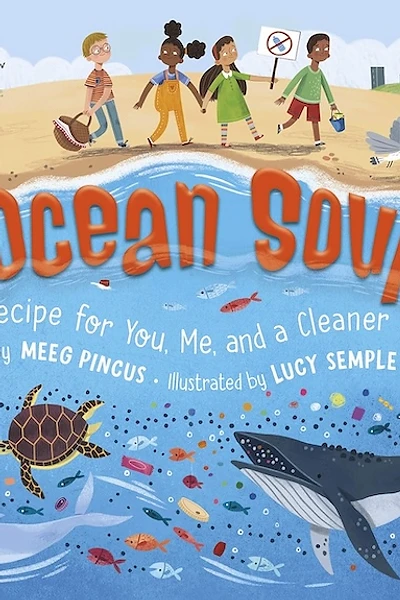
Ocean Soup: A Recipe for You, Me, and a Cleaner Sea
by Meeg Pincus
Pacing MaterialA kid-friendly look at ocean pollution — the 'soup' of plastic in our seas — and the everyday actions that can help clean it up.
Big Idea
Small choices add up to big changes, and everyone can help keep the ocean clean.
Discussion Questions
- 1.What is 'ocean soup'?
- 2.How does plastic get into the ocean?
- 3.How does ocean pollution affect animals?
- 4.What is one thing you could do to reduce plastic?
- 5.Why does every choice matter?
Classroom Activity
Plastic Audit
List five plastic items your family uses in a week. Brainserve one reusable alternative for each.
Lesson Plan
Learning Goals
- Explain how the book’s image of ocean “soup” helps readers understand plastic pollution.
- Identify five plastic items a family uses during a typical week.
- Suggest one practical reusable alternative for each identified plastic item.
- Explain how small everyday choices can help keep plastic out of the ocean.
Activity Steps
- 1.Read Ocean Soup: A Recipe for You, Me, and a Cleaner Sea aloud. Pause to ask: “What ingredients make this ocean soup?” and “How can plastic from our homes reach the sea?” Clarify that the “soup” is pollution, not food.
- 2.Model a plastic audit with a two-column chart labeled “Plastic We Use” and “Reusable Alternative.” Add a plastic water bottle and a refillable water bottle as an example.
- 3.Have students list or draw five plastic items their family might use in one week, such as shopping bags, snack bags, disposable cups, water bottles, or plastic spoons. Explain that an audit means noticing and recording, not blaming anyone.
- 4.Ask students to brainstorm one reusable alternative for each item. Partners can help generate ideas, such as cloth shopping bags, washable snack containers, reusable cups, refillable bottles, and metal spoons.
- 5.Invite students to share one pair from their charts and explain how using the alternative could reduce plastic waste. Connect their ideas to the book’s message that many small choices add up.
- 6.Have each student choose one realistic swap to discuss with their family and complete the sentence: “Our recipe for a cleaner sea could include ___ instead of ___.” Encourage reusing something they already own rather than buying something new.
Standards Connections
- ELA: CCSS.ELA-LITERACY.RI.1.2 — Identify the main topic and retell key details from an informational text.
- ELA: CCSS.ELA-LITERACY.SL.2.1 — Participate in collaborative conversations about the book and possible reusable alternatives.
- ELA: CCSS.ELA-LITERACY.W.3.8 — Recall information from experiences and gather information from sources to record plastic-use observations.
- Science: NGSS K-ESS3-3 — Communicate solutions that reduce human impacts on land, water, air, and other living things; use as a foundational connection for grades 1–4.
- SEL: Responsible decision-making — Consider how everyday choices affect the environment and select an achievable action.
Pace-Write-Read Study with Pace-Write It!
Focus question: How does an author pace information so readers both understand a real problem and feel ready to take action? In Ocean Soup: A Recipe for You, Me, and a Cleaner Sea by Meeg Pincus, the author explains ocean pollution in a clear, kid-friendly way by mixing facts, examples, and action steps. The pacing moves from helping readers picture the problem of plastic in the ocean to showing practical ways people, especially kids, can help make the sea cleaner.
| Element | How to notice or teach it in the novel |
|---|---|
| Pace | Read: Notice how Ocean Soup: A Recipe for You, Me, and a Cleaner Sea moves at a steady pace from introducing the idea of a polluted 'soup' to explaining what is in it and ending with actions readers can take. The pacing helps young readers take in a serious topic without feeling overwhelmed. Classroom Activity: Write 4 short parts for your own page called 'Park Soup' or 'River Soup'—the problem, what is in it, why it matters, and what kids can do. |
| Plot | Read: Even though this is a real-story informational text, it still has a clear sequence: the ocean has become filled with plastic, people notice the problem, and readers are invited to help. The book creates movement from problem to response. Classroom Activity: Make a beginning-middle-end chart showing the 'story' of ocean plastic, then write 3 sentences that tell that sequence. |
| Prosody | Read: Listen for places where Meeg Pincus uses smooth, readable language that sounds strong when read aloud, especially around the repeated image of 'ocean soup.' The wording supports an expressive read-aloud voice for a big topic. Classroom Activity: Choose one short part to practice reading aloud with expression, then rewrite one sentence so it sounds powerful when spoken. |
| Word pause | Read: Notice where you naturally slow down after important words such as plastic, ocean, soup, and clean. These pauses give readers time to think about the pollution problem and the solutions. Classroom Activity: Copy 2 sentences from the book or paraphrase them and mark slash lines where a reader should pause for meaning. |
| Concept | Read: The big concept is that ocean pollution can be explained through the familiar idea of soup, helping children understand that many harmful things can be mixed together in the sea. The concept makes a hard environmental issue easier to picture. Classroom Activity: Invent a new metaphor to explain a real problem, such as 'air stew' or 'trash trail,' and write 3 sentences teaching the concept. |
| Voice & World View | Read: The voice in Ocean Soup feels caring, clear, and hopeful. Meeg Pincus presents the world as a place where humans have caused harm but can also make wise choices to help the ocean. Classroom Activity: Write 5 sentences in a hopeful teaching voice about one way kids can protect nature. |
| Setting & Place | Read: Notice how the setting is the ocean, but the book also connects that place to beaches, people, trash, and everyday human actions. This helps readers understand that faraway ocean pollution is connected to places they know. Classroom Activity: Write a short paragraph that starts in a local place, like a playground or sidewalk, and shows how litter there could travel to the sea. |
| Point of View | Read: The book speaks in a way that includes the reader, making the issue feel shared by 'you, me,' and the wider community. This point of view invites responsibility instead of blame. Classroom Activity: Write the same environmental message in two ways—one using 'we' and one using 'they'—and discuss which feels more motivating. |
| Original Characters | Read: This realistic nonfiction book does not center on made-up characters, but it does treat kids and communities as real people who can make change. Readers themselves become important participants in the text. Classroom Activity: Create a child helper character who cares about the ocean and write 4 sentences showing one action that character takes to reduce plastic waste. |
| Dialogue | Read: While Ocean Soup is mainly explanatory, readers can imagine what a child, teacher, or family member might say after learning about plastic in the sea. Adding dialogue can help bring the book's ideas into everyday life. Classroom Activity: Write a 4-line conversation between a child and an adult about using less plastic after reading the book. |
| Details | Read: Notice the specific details about what ends up in the ocean and how pollution builds up into the 'soup.' These details make the topic concrete instead of vague. Classroom Activity: List 5 specific details you learned or noticed about ocean pollution, then use at least 3 of them in an informational paragraph. |
| Descriptions | Read: Meeg Pincus uses description to help readers picture the ocean not as clear blue water only, but as a place mixed with harmful human-made trash. The descriptions support understanding and emotion at the same time. Classroom Activity: Write 3 descriptive sentences that show the difference between a healthy ocean and a polluted ocean. |
| Strong First Lines | Read: Notice how the opening quickly introduces the unusual and memorable idea of 'ocean soup.' A strong first line helps readers become curious right away. Classroom Activity: Write 3 possible first lines for a nonfiction piece about protecting nature, and choose the one that grabs attention best. |
| Immediacy & Engagement | Read: The book keeps readers engaged by making the issue feel important now, not someday. The direct connection to everyday choices gives the topic urgency. Classroom Activity: Write 4 sentences that begin with 'Today we can...' to create a feeling of immediate action. |
| Story Scenes & Summaries & Unique Structures | Read: Ocean Soup combines summary-style explanation with a recipe-like structure and a central extended metaphor. This unique structure helps the book teach facts in an organized, memorable way. Classroom Activity: Make a mini 'recipe' for solving a community problem using ingredients, steps, and a final result. |
| Flashback & Flash Forward & Cliffhangers | Read: This book may look back to how the ocean became polluted and forward to what could happen if people help or do nothing. That movement through time helps readers think about causes and effects. Classroom Activity: Write 2 sentences about the past of the ocean, 2 about the present, and 2 about the future if people make better choices. |
| Tension & Suspense & Surprise | Read: The tension comes from realizing that something as beautiful as the ocean is filled with plastic and waste. Readers may feel surprise that ordinary trash can travel and become part of a giant problem. Classroom Activity: Write a short paragraph that builds surprise by starting with a normal object, like a bottle or bag, and ending with it floating in the ocean. |
| Page Turns and Chapter Breaks | Read: Notice how each new page can reveal another idea, example, or action step, helping readers absorb information bit by bit. In a picture book like this one, page turns help control pacing and curiosity. Classroom Activity: Fold a paper into 4 pages and plan what information should go on each page to make a reader want to keep turning. |
| Performance | Read: This book invites performance because the metaphor of 'ocean soup' and the calls to care for the sea sound strong in oral reading. A reader can use voice to show concern, wonder, and hope. Classroom Activity: Perform one short section as a dramatic read-aloud, changing your tone on problem words and solution words. |
| Personality | Read: The book's personality feels thoughtful, inviting, and determined. It teaches without sounding harsh, which helps younger readers stay open to learning about conservation. Classroom Activity: Write a 5-sentence informational piece with a friendly but serious personality about saving water, reducing trash, or reusing materials. |
| Humor | Read: The title image of 'soup' may feel playful at first, even though the topic is serious. This light touch helps children enter the subject before understanding the real problem underneath. Classroom Activity: Create a gentle, clever title for a nonfiction piece about an environmental issue, then explain how the title helps readers want to learn more. |
| Pause | Read: Good readers pause after important facts or surprising ideas in Ocean Soup so the meaning can sink in. The topic asks for thinking time because it connects feelings and facts. Classroom Activity: After each of 3 key ideas, write one pause-and-think note beginning with 'This matters because...'. |
| Poetry and Poetic Devices | Read: The repeated soup metaphor gives the text a poetic quality, turning scientific information into vivid imagery. The language may use sound, pattern, and image to make the message memorable. Classroom Activity: Write a 6-line poem using one repeated image, such as ocean, waves, soup, or plastic, to teach an environmental idea. |
| Repetition | Read: Notice how key ideas about the ocean, plastic, and helping may repeat across the book. Repetition helps young readers remember the message and builds pacing through pattern. Classroom Activity: Write a short piece with the repeated line 'We can help the ocean by...' and add 3 different endings. |
| Rhythm | Read: The book's sentences likely shift between short, punchy ideas and longer explanatory lines, creating a readable rhythm. This rhythm keeps information moving while still allowing reflection. Classroom Activity: Write 2 short sentences and 2 longer sentences about ocean conservation, then read them aloud to hear the rhythm. |
| Punctuation | Read: Notice how punctuation such as commas, periods, and possibly exclamation points helps control pace and emphasis in explaining the ocean's pollution and the ways to help. Punctuation guides both reading and feeling. Classroom Activity: Take a plain sentence about cleaning the ocean and revise it twice with different punctuation to change its pace. |
| Questions | Read: The book may lead readers to ask questions like what is in the ocean, how did it get there, and what can children do. Questions keep nonfiction active and engaging. Classroom Activity: Write 5 questions a curious reader might ask after hearing Ocean Soup, then answer 1 in a complete paragraph. |
| Compare-Contrast | Read: Notice the contrast between a clean ocean and a polluted one, and between harmful habits and helpful actions. These contrasts strengthen the book's conservation message. Classroom Activity: Make a T-chart comparing 'Ocean with less plastic' and 'Ocean with more plastic,' then write 4 compare-contrast sentences. |
| Objects | Read: Everyday objects, especially plastic items, matter in this book because ordinary things can become ocean pollution. The book helps readers see familiar objects in a new way. Classroom Activity: Pick one object you use often, such as a straw, bottle, or bag, and write about its path from use to trash to possible ocean harm—or to reuse. |
| Threes | Read: Look for places where ideas can be grouped in threes, such as three kinds of harmful waste, three effects on the sea, or three actions kids can take. Groups of three often sound complete and easy to remember. Classroom Activity: Write a 3-part action plan beginning with 'First,' 'Next,' and 'Then' for helping the ocean. |
| Whitespace & Negative Space | Read: In a picture book like Ocean Soup, open space on the page can slow the reader down and help important ideas stand out. Whitespace gives room for thinking about a serious issue. Classroom Activity: Design one page of your own nonfiction picture book using only 2 sentences and lots of blank space to highlight the main message. |
| Art & Graphics | Read: The illustrations and visual layout help readers picture the ocean, the pollution in the 'soup,' and the hopeful actions people can take. Art supports pacing by showing some ideas instantly instead of explaining everything in words. Classroom Activity: Create a labeled drawing or poster showing the ingredients of 'ocean soup' and add captions for 3 ways to clean it up. |
| Interactives & Gamification | Read: The book naturally invites action, such as noticing plastic use, sorting trash choices, or making cleanup plans. Its message can become interactive because readers are asked to do something in real life. Classroom Activity: Make a class challenge chart called 'Clean Sea Team' where students earn a mark each time they bring a reusable item or name a way to reduce plastic. |
Pace-Write It!
20-Minute Classroom Flow\nRead (5 min): Read aloud a key section from Ocean Soup: A Recipe for You, Me, and a Cleaner Sea by Meeg Pincus that introduces the 'soup' metaphor and another section that shifts to actions readers can take. Ask students to listen for how the book moves from problem to solution.\nNotice (5 min): Discuss: What comes first? What details help us picture the problem? When does the pacing slow down so we can think? When does it speed up with action steps? Chart student ideas under two headings: 'Problem' and 'Help.'\nWrite (7 min): Students write their own short environmental page using this frame: 'This is ______ soup. In it there is ______, ______, and ______. This is a problem because ______. We can help by ______, ______, and ______.' Encourage students to choose a real place such as a park, river, schoolyard, or neighborhood.\nShare (3 min): Partners read their pieces aloud and listen for pacing—did the writer clearly introduce the problem and end with solutions? Invite 2-3 students to share whole group.\nExit ticket: Write one sentence answering: 'How did Meeg Pincus help readers learn about a hard topic in a way that felt clear and hopeful?'
Pace-Write-Read Connection
Teach this book using the Pace-Write-Read method — Tool 33: Lists.
Open the Mastery Manual