
 K-2
K-2P BOOK-HARE
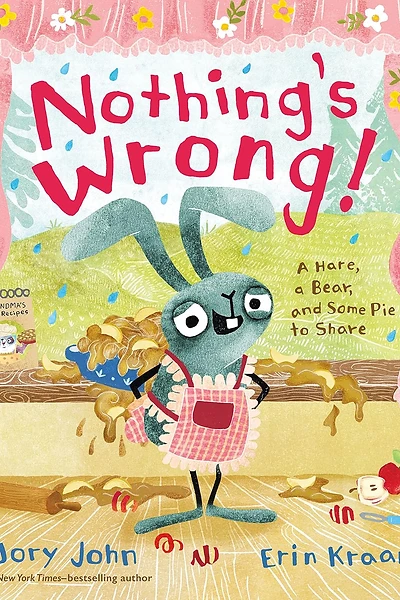
Nothing's Wrong!
by Jory John, illustrated by Erin Kraan
Pacing MaterialBear insists nothing is wrong, but his friend Hare can see otherwise — a warm, funny story about friendship, honesty, and sharing pie.
Big Idea
It's okay to not be okay — sharing what's bothering you is the first step to feeling better, and friends can help.
Discussion Questions
- 1.Why does Bear say 'nothing's wrong' when something is?
- 2.How can you tell when a friend is upset?
- 3.What helps you feel better when something's wrong?
- 4.Is it okay to ask for help?
Classroom Activity
Feelings Check-In
Students practice 'checking in' with a partner, sharing one thing that's going well and one thing that's bothering them.
Lesson Plan
Learning Goals
- Identify and name emotions.
- Practice expressing feelings using 'I feel' statements.
- Recognize when a friend might need support.
- Understand that hiding feelings doesn't make them go away.
Activity Steps
- 1.Read the book, noting how Bear hides his feelings.
- 2.Discuss why it's hard to say when something's wrong.
- 3.Pair students up for a 'check-in' conversation.
- 4.Practice using 'I feel' statements.
Standards Connections
- ELA: RL.K.1 — Ask and answer questions about key details
- ELA: RL.K.2 — Retell stories, including key details
- ELA: RL.K.3 — Describe characters, setting, and events
- ELA: RL.2.6 — Acknowledge differences in characters' points of view
- ELA: SL.K.1 — Participate in collaborative conversations about the text
- ELA: W.K.3 — Write narratives recounting events with descriptive details
- SEL: Relationship Skills
- SEL: Social Awareness
- Art: VA:Re7 — Perceive and analyze artistic work
Pace-Write-Read Study with Pace-Write It!
Focus question: How does an author slow down and speed up a story to show a character’s feelings? In Nothing’s Wrong! by Jory John, Bear keeps saying he is fine while Hare notices clues that something is bothering him. The book uses pacing through repeated dialogue, expressive page turns, and pauses between what Bear says and what the pictures show, helping readers feel the tension, humor, and warmth in this friendship story.
| Element | How to notice or teach it in the novel |
|---|---|
| Pace | Read: Notice how Nothing’s Wrong! moves slowly when Hare studies Bear’s mood and asks careful questions, then speeds up with Bear’s big reactions and the pie-sharing resolution. Classroom Activity: Write 3 short story beats about two friends—one quiet slow moment, one fast frustrated moment, and one calm ending. |
| Plot | Read: Follow the simple plot: Hare notices Bear seems upset, Bear insists nothing is wrong, tension grows, and friendship helps the truth come out. Classroom Activity: Make a 4-box plot map labeled beginning, middle, problem, ending, then write one sentence for each box about Bear and Hare. |
| Prosody | Read: Listen to how Bear’s repeated words and Hare’s gentle questions sound different when read aloud; the changing expression helps show hidden feelings. Classroom Activity: Choose one line for Bear and one line for Hare and practice reading them in two different voices, then write a new line for each character. |
| Word pause | Read: Notice where a reader naturally pauses after Bear says “Nothing’s wrong!” or after Hare spots another clue in Bear’s face and body. Classroom Activity: Write a 3-line mini-scene and add slashes / where a reader should pause for feeling. |
| Concept | Read: The big idea is that friends can notice feelings even when someone says they are fine, and honesty can help a friendship grow. Classroom Activity: Write one sentence finishing this idea: “Sometimes a friend helps by _____.” |
| Voice & World View | Read: The story’s voice is warm, playful, and understanding, showing a world where feelings are complicated but friendship is safe. Classroom Activity: Write 2-3 sentences in a kind, funny voice about a character pretending everything is okay when it is not. |
| Setting & Place | Read: Notice how the cozy outdoor world and shared pie create a comforting place for Bear and Hare’s conversation. Classroom Activity: Write a setting sentence for a place where two friends could talk honestly, and include one comforting detail like food, weather, or a seat. |
| Point of View | Read: Readers watch Bear and Hare from the outside, so we must infer Bear’s true feelings from his words, actions, and the illustrations. Classroom Activity: Rewrite one moment from Hare’s point of view using “I noticed…” to show what Hare sees in Bear. |
| Original Characters | Read: Bear and Hare feel familiar and original at the same time—Bear is blustery and denying his feelings, while Hare is observant, patient, and caring. Classroom Activity: Invent two animal friends with different feeling styles and write one sentence describing each. |
| Dialogue | Read: Dialogue drives this book as Hare keeps checking in and Bear keeps insisting nothing is wrong, creating humor and emotional tension. Classroom Activity: Write a 4-line dialogue between two friends where one character notices a problem and the other avoids telling it. |
| Details | Read: Pay attention to small clues that show Bear’s mood, such as his expression, posture, and the way Hare keeps noticing what Bear does. Classroom Activity: List 3 tiny details that could show a character is upset without saying “upset,” then use one in a sentence. |
| Descriptions | Read: The descriptions in the words and pictures help readers understand the contrast between Bear’s loud denial and his true feelings. Classroom Activity: Write two describing sentences about a character’s face and body to show a hidden feeling. |
| Strong First Lines | Read: Think about how the beginning quickly pulls readers into Bear and Hare’s emotional problem. Classroom Activity: Write a first line for a story in which a friend can tell something is wrong right away. |
| Immediacy & Engagement | Read: The book feels immediate because readers want to know why Bear is acting this way and whether he will finally tell Hare the truth. Classroom Activity: Write 2 suspenseful sentences that make a reader want to know what a grumpy character is hiding. |
| Story Scenes & Summaries & Unique Structures | Read: Most of the book unfolds in close-up scenes between Bear and Hare instead of big summaries, which slows the story enough for readers to study feelings. Classroom Activity: Write one scene of 4-5 sentences between two friends instead of summarizing the whole day. |
| Flashback & Flash Forward & Cliffhangers | Read: Even though this story does not rely on flashbacks or flash-forwards, each new denial from Bear creates a small cliffhanger because readers keep wondering what is really wrong. Classroom Activity: End a 3-sentence scene with a cliffhanger line such as “But that was not the real problem…”. |
| Tension & Suspense & Surprise | Read: Tension builds because Hare sees the truth while Bear refuses to say it, and readers wait for the surprise of his honest admission. Classroom Activity: Write 3 sentences that build tension between what a character says and what the character shows. |
| Page Turns and Chapter Breaks | Read: In this picture book, page turns help pace the humor and emotional reveal as readers turn to see Bear’s next reaction and Hare’s next response. Classroom Activity: Plan a 2-page picture-book moment by writing what happens before the page turn and what surprise comes after it. |
| Performance | Read: Bear’s strong declarations and Hare’s careful check-ins make the story feel performative and dramatic when read aloud. Classroom Activity: Perform a short partner reading of Bear and Hare, then write one new dramatic line for Bear. |
| Personality | Read: Bear’s stubborn personality and Hare’s gentle persistence shape the pacing because their different approaches stretch out the conversation. Classroom Activity: Write one sentence showing a stubborn character and one sentence showing a patient character. |
| Humor | Read: The humor comes from the mismatch between Bear’s words—“Nothing’s wrong!”—and the obvious clues that he is upset, while the friendship keeps the tone warm. Classroom Activity: Write a funny line for a character who says one thing but clearly feels another way. |
| Pause | Read: Notice the emotional pauses when Hare gives Bear room to respond and when readers stop to think about what Bear is hiding. Classroom Activity: Write a short conversation and add an ellipsis or a blank line to create a thoughtful pause. |
| Poetry and Poetic Devices | Read: The book is prose, but it uses sound, repetition, and careful phrasing in a almost poetic way to emphasize Bear’s feelings. Classroom Activity: Write a 3-line feeling poem about a character who says, “I’m fine,” but means something else. |
| Repetition | Read: Repetition is a key pacing tool in Nothing’s Wrong! because Bear repeats his denial and Hare repeats caring attention, building both humor and tension. Classroom Activity: Write a pattern of 3 repeated lines for a character, changing one word each time to show feelings growing. |
| Rhythm | Read: The back-and-forth rhythm between Hare’s questions and Bear’s answers creates a steady beat that guides readers through the story. Classroom Activity: Write a question-and-answer exchange of 4 lines that has a clear rhythm. |
| Punctuation | Read: Exclamation points, question marks, and other punctuation help show Bear’s strong emotions and Hare’s wondering tone. Classroom Activity: Write one sentence three ways—with a period, a question mark, and an exclamation point—and discuss how the feeling changes. |
| Questions | Read: Hare’s questions move the story along because each one gently invites Bear to be honest. Classroom Activity: Write 3 caring questions one friend could ask another who seems upset. |
| Compare-Contrast | Read: Compare what Bear says with what Bear looks like, and contrast Bear’s stormy mood with Hare’s calm kindness. Classroom Activity: Make a T-chart labeled “Says” and “Shows” for Bear, then write one compare-contrast sentence. |
| Objects | Read: Notice how pie and other simple story objects help create comfort, connection, and a concrete way for friendship to repair a hard moment. Classroom Activity: Choose one object, like pie, a blanket, or a cup, and write 2 sentences showing how it helps two characters reconnect. |
| Threes | Read: Look for places where actions, questions, or repeated beats can be grouped in threes to make the pacing feel satisfying and memorable. Classroom Activity: Write a set of 3 clues that show a character is upset before the character admits it. |
| Whitespace & Negative Space | Read: In a picture book like Nothing’s Wrong!, open space on the page can make a moment feel quiet, awkward, or emotionally important when Bear and Hare face each other. Classroom Activity: On paper, leave space around one sentence of dialogue to show a big feeling, then explain why you placed it there. |
| Art & Graphics | Read: Erin Kraan’s illustrations are essential for pacing because readers read Bear’s expressions and Hare’s body language between the lines of text. Classroom Activity: Draw two quick sketches of the same character—one saying “I’m fine” and one showing the true feeling—then write a caption for each. |
| Interactives & Gamification | Read: Turn the reading into a noticing game by hunting for clues in Bear’s face, voice, and actions that prove something really is wrong. Classroom Activity: Play “Feeling Detective”: students find 3 clues from the story, then write one new clue for an original character hiding a feeling. |
Pace-Write It!
20-Minute Classroom Flow Read (5 min): Read aloud Nothing’s Wrong! by Jory John. Pause to let students study Bear’s expressions and Hare’s responses. Ask students to listen for repeated words and to notice when the story feels slow, fast, funny, or tense. Notice (5 min): Discuss: What clues show Bear is not really fine? How do Bear’s repeated words, Hare’s questions, and the page turns build pacing? Chart two columns: “Bear says” and “Bear shows.” Add student observations about friendship and feelings. Write (7 min): Students write a short scene about two friends. One character says everything is fine, but the other notices clues. Writing frame: “My character said, ‘_____!’ But I noticed _____. I asked, ‘_____?’ Then my character _____.” Encourage students to include one repeated line, one feeling clue, and one object that brings comfort, like a snack or toy. Share (3 min): Partners read their scenes aloud using different voices for each character. Listeners name one pacing move they heard, such as repetition, a pause, a question, or a strong ending. Exit ticket: Write one sentence answering: “How did Jory John show Bear’s feelings even when Bear said nothing was wrong?”