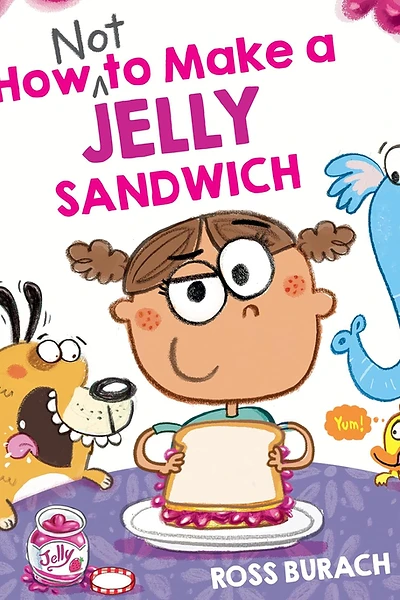
 K-2
K-2P BURACH
Not How to Make a Jelly Sandwich
by Ross Burach
Pacing MaterialA laugh-out-loud picture book about everything that can go wrong when making a jelly sandwich — and the hilarious lesson that some things are harder than they look.
Big Idea
Sometimes the best way to learn what to do is to laugh about what not to do.
Discussion Questions
- 1.What goes wrong when making the jelly sandwich?
- 2.How does the author use humor to teach a lesson?
- 3.What are the right steps to make a sandwich?
- 4.What's something you learned to do by making mistakes?
Classroom Activity
How-NOT-To Guides
Write a 'how-NOT-to' guide for a silly activity of your choice, then illustrate the wrong way and the right way to do it.
Lesson Plan
Learning Goals
- Analyze procedural text structure (how-to)
- Explore humor through reverse instructions
- Practice writing step-by-step instructions
Standards Connections
- ELA: RL.K.1 — Ask and answer questions about key details
- ELA: RL.K.2 — Retell stories, including key details
- ELA: RL.K.3 — Describe characters, setting, and events
- ELA: RL.2.6 — Acknowledge differences in characters' points of view
- ELA: SL.K.1 — Participate in collaborative conversations about the text
- ELA: W.K.3 — Write narratives recounting events with descriptive details
- SEL: Social Awareness
- SEL: Relationship Skills
- Art: VA:Re7 — Perceive and analyze artistic work
Pace-Write-Read Study with Pace-Write It!
Focus question: How does an author make simple directions feel funny, surprising, and fast-paced? In Not How to Make a Jelly Sandwich by Ross Burach, a step-by-step sandwich-making attempt turns into a silly chain of mistakes and interruptions. Burach uses quick directions, playful page turns, and comic timing to stretch one small task into a hilarious reading experience.
| Element | How to notice or teach it in the novel |
|---|---|
| Pace | Read: Notice how Not How to Make a Jelly Sandwich moves quickly from one direction to the next, then slows down at just the right moment for a funny problem or big reaction. Ross Burach paces the sandwich-making disaster so readers feel the action building with each step. Classroom Activity: Write 4 short steps for making a snack, and add 1 step where something goes wrong to change the pace. |
| Plot | Read: The plot begins with a simple goal—make a jelly sandwich—but the directions do not go smoothly, and that is what makes the story funny. Each new mistake grows out of the one before it until the whole sandwich plan becomes a comic mess. Classroom Activity: Draw and write a beginning, middle, and end for a 'not how to' story about doing a simple classroom job the wrong way. |
| Prosody | Read: Listen to how the words in Ross Burach’s story sound when read aloud with expression, especially during exciting or silly moments. The lively language helps readers know when to speed up, pause, or sound surprised. Classroom Activity: Practice reading one page aloud in two ways—calm and dramatic—and decide which sounds more like the book. |
| Word pause | Read: Notice where a reader naturally stops for a moment before a funny reveal or after an instruction that is clearly not going well. These tiny pauses help the humor in the jelly sandwich directions land. Classroom Activity: Write 3 short how-to lines and put a slash mark where a reader should pause for effect. |
| Concept | Read: The big idea in Not How to Make a Jelly Sandwich is that following directions can be harder than it seems, especially when everything starts going wrong. The book plays with the familiar how-to concept by showing the opposite of success. Classroom Activity: Finish this sentence in writing: 'Sometimes directions are hard because ______.' Then add one silly example. |
| Voice & World View | Read: Ross Burach uses a playful, confident voice that acts like giving directions should be easy, even when the sandwich-making keeps becoming more ridiculous. That cheerful point of view makes the mistakes feel even funnier. Classroom Activity: Write 3 direction sentences in a bossy-funny voice, like a narrator who thinks the job is simple. |
| Setting & Place | Read: Notice the kitchen-like food-making world of the story and how ordinary objects become part of the comedy. The familiar place helps readers understand the task, while the silly events make that everyday setting feel surprising. Classroom Activity: Make a list of 5 things you might see in a sandwich-making place and use 3 in a funny scene. |
| Point of View | Read: The book feels like someone is talking right to the reader, giving directions about how to make a jelly sandwich. This direct point of view invites readers into the joke because they can tell the plan is not working. Classroom Activity: Write 2 'you' sentences that give directions directly to a reader, then add a funny problem. |
| Original Characters | Read: Even in a direction-based story, Ross Burach creates memorable personalities through reactions, movement, and comic behavior around the sandwich-making trouble. The characters feel larger than life because of how they respond to each mistake. Classroom Activity: Invent a helper character for a how-to story, name it, and write one sentence about how it makes the job harder instead of easier. |
| Dialogue | Read: Notice any spoken lines or talk-like moments that make the directions feel lively and playful. Dialogue can speed up the action and show strong reactions when the jelly sandwich plan falls apart. Classroom Activity: Write a 2-line conversation between a cook and a helper during a sandwich disaster. |
| Details | Read: The small details about ingredients, actions, and mix-ups make Not How to Make a Jelly Sandwich feel vivid and funny. Ross Burach chooses details that help readers picture each silly mistake clearly. Classroom Activity: Write one sentence about making toast and add 3 tiny details that make the scene more interesting. |
| Descriptions | Read: Notice how the book describes actions and moments in a way that helps readers imagine the jelly, the bread, and the mess. Clear descriptions make the humor stronger because readers can really picture what goes wrong. Classroom Activity: Describe a peanut butter or jelly spill using color words and action words. |
| Strong First Lines | Read: Pay attention to how the opening sets up the idea that the book will be about making a jelly sandwich, while also hinting that this is not a normal how-to. A strong beginning quickly tells readers what kind of funny ride they are starting. Classroom Activity: Write an opening line for a 'Not How to' book called Not How to Clean Your Room. |
| Immediacy & Engagement | Read: The story grabs readers right away because the task is familiar and the trouble starts quickly. Ross Burach keeps readers engaged by making them wonder what silly mistake will happen next. Classroom Activity: Write 2 quick action sentences that begin a funny how-to scene right in the middle of the action. |
| Story Scenes & Summaries & Unique Structures | Read: This book uses a playful how-to structure instead of a traditional story shape, turning instructions into scenes of comic failure. The step-by-step format helps organize the action while still leaving room for surprises. Classroom Activity: Make a mini plan for a 'Not How to Brush Your Teeth' piece with 4 numbered steps. |
| Flashback & Flash Forward & Cliffhangers | Read: This story mostly stays in the present moment, but page-by-page it creates little cliffhanger feelings by ending on a moment that makes readers want to see what goes wrong next. The suspense comes from waiting for the next silly result. Classroom Activity: Write a sentence that ends with a cliffhanger, like 'Then I opened the jelly jar and…'. |
| Tension & Suspense & Surprise | Read: Even though the book is funny, it still builds tension because readers can feel that the sandwich plan is slipping away from success. The surprise comes from how much more mixed up each direction becomes. Classroom Activity: Write 3 steps for a simple job, and make the last step a surprise problem no one expected. |
| Page Turns and Chapter Breaks | Read: In a picture book like Not How to Make a Jelly Sandwich, page turns are important because they delay the joke for just a second and then reveal a funnier mess. Ross Burach uses turns to control when readers see the next disaster. Classroom Activity: Fold a paper into 4 parts and plan one funny event for each page so the best surprise comes after a turn. |
| Performance | Read: This book begs to be performed with big facial expressions, dramatic pauses, and excited directions. Reading it aloud like a comedy helps students feel how pacing makes humor stronger. Classroom Activity: Choose one direction from your writing and practice performing it with a gesture and a dramatic voice. |
| Personality | Read: The book has a bold, goofy personality that comes through in every direction and reaction. That strong personality makes the sandwich-making attempt feel playful instead of ordinary. Classroom Activity: Write 3 how-to steps in a silly personality, a serious personality, or an impatient personality. |
| Humor | Read: Humor is the heart of Not How to Make a Jelly Sandwich because the book takes an everyday task and turns it into a chain of ridiculous mistakes. Ross Burach makes readers laugh by showing how hard something easy can become. Classroom Activity: Write about one ordinary thing going very wrong, such as putting on socks, in a way that would make a classmate laugh. |
| Pause | Read: Notice the places where a pause before the next line or page makes the joke funnier. Pauses give readers time to predict what should happen, so the silly result feels even more surprising. Classroom Activity: Write one short sentence, then leave a line space, then write the funny surprise that comes after the pause. |
| Poetry and Poetic Devices | Read: Even though this is not a poem, some lines may use sound, repetition, or playful wording that make the directions fun to hear aloud. Those poetic touches help the story bounce along. Classroom Activity: Write a silly alliterative food phrase, such as 'jiggly jelly,' and use it in one how-to sentence. |
| Repetition | Read: Notice how repeating the idea of making a jelly sandwich—and the repeated pattern of giving directions—helps build the joke. Repetition makes the reader expect success, which makes each new mistake even funnier. Classroom Activity: Write a repeating line for your own story, such as 'That is not how to do it!' and use it 3 times. |
| Rhythm | Read: The rhythm of short directions followed by comic consequences helps the story move with energy. Ross Burach creates a pattern that feels almost like a chant as the sandwich plan keeps wobbling off course. Classroom Activity: Write 4 short action lines with the same rhythm, such as 'Pick it up. Put it down. Spread it fast. Oh no now!' |
| Punctuation | Read: Look for punctuation marks that help show excitement, surprise, or a sudden stop during the sandwich-making mishaps. Exclamation points and other marks help readers hear the humor. Classroom Activity: Take one plain sentence and rewrite it with punctuation that makes it sound more funny or dramatic. |
| Questions | Read: The book may make readers ask themselves questions like 'What will go wrong next?' or 'Why is this so hard?' Those questions keep the pacing lively and the reader involved. Classroom Activity: Write 2 questions a reader might ask during a funny cooking disaster, and answer 1 of them in a silly way. |
| Compare-Contrast | Read: A big part of the humor comes from comparing what should happen when making a jelly sandwich with what actually happens in the book. The contrast between expected directions and messy results drives the pacing. Classroom Activity: Make a T-chart with 'How it should go' and 'How it really went' for making a snack. |
| Objects | Read: The bread, jelly, tools, and other sandwich-making objects matter because each one can become part of the joke. Ross Burach turns everyday things into comedy props. Classroom Activity: Choose one object from a kitchen or lunchbox and write a sentence about how it causes a funny problem. |
| Threes | Read: Notice whether the story builds humor through patterns of three actions, three tries, or three escalating problems. Groups of three often sound satisfying and funny in read-alouds. Classroom Activity: Write 3 mistakes that happen while trying to make one simple food item, with each mistake getting sillier. |
| Whitespace & Negative Space | Read: In a picture book, open space on the page can make an action, reaction, or joke stand out. The spacing around the words and pictures in Not How to Make a Jelly Sandwich helps readers focus on the funniest moments. Classroom Activity: On a page, write one short funny sentence and leave lots of blank space around it to make it pop. |
| Art & Graphics | Read: Ross Burach’s illustrations and visual style work with the words to show the sandwich chaos, exaggerated reactions, and humor. The art helps pace the story because readers can quickly spot what has gone wrong. Classroom Activity: Draw one scene from your own 'Not How to' writing and add labels to show the funniest mistake. |
| Interactives & Gamification | Read: This book invites readers to join in by predicting the next mistake, acting out directions, and noticing clues in the pictures. That interactive feeling keeps young readers engaged from start to finish. Classroom Activity: Create a 'Guess what goes wrong next!' box on your page and write one clue for your partner to solve. |
Pace-Write It!
20-Minute Classroom Flow\nRead (5 min): Read Not How to Make a Jelly Sandwich by Ross Burach aloud with expression. Pause before page turns and ask students to listen for directions, mistakes, and funny surprises.\nNotice (5 min): Discuss: How does Ross Burach make a simple sandwich feel exciting and funny? Chart what students notice: short steps, page-turn surprises, repeated how-to structure, silly problems, expressive punctuation, and pictures that reveal the joke.\nWrite (7 min): Students write their own mini 'Not How to' piece about an everyday task, such as tying shoes, cleaning up, brushing teeth, or packing a backpack. Encourage 3-4 steps and one big silly mistake. Writing frame: 'Not How to ________. First, you ________. Next, you ________. Then, everything goes wrong when ________. Finally, you learn ________.'\nShare (3 min): Partners read their pieces aloud with dramatic pauses. Invite 2-3 volunteers to perform one funny step for the class.\nExit ticket: Write one sentence answering: 'How did Ross Burach use pacing to make the story funny?'