 K-2
K-2P SULLIVAN
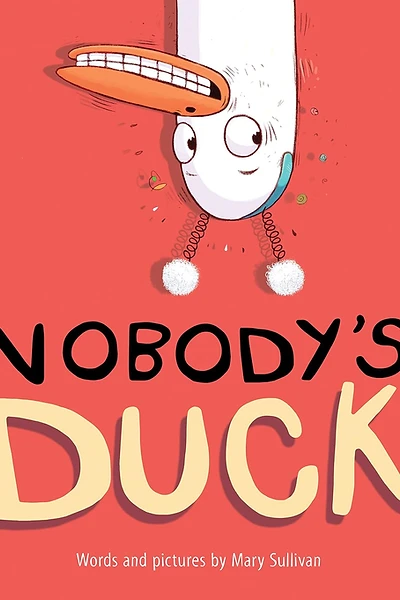
Nobody's Duck
by Mary Sullivan
Pacing MaterialBig Idea
Friendship can be found in the most unexpected places, even when we are searching for something else entirely. Through humor and shared adventure, two unlikely characters discover that belonging is often about who you choose to be with.
Discussion Questions
- 1.Why do you think the duck decided to sit on the alligator's lawn in the first place?
- 2.How does the alligator feel at the beginning of the story compared to the end?
- 3.If you were the duck, what kind of adventure would you want to go on to find your home?
- 4.What does it mean to be 'nobody's duck'—is that a lonely feeling or a free feeling?
- 5.How do the duck and the alligator show they are becoming friends throughout their journey?
Classroom Activity
The 'Who Am I?' Adventure Map
Students will create a map of the wacky places the duck and alligator visited, then draw a new, imaginary location where the pair might go next to find a friend.
Lesson Plan
Learning Goals
- Identify the sequence of events in a narrative.
- Analyze how character interactions drive the plot.
- Express creative ideas through visual storytelling.
- Understand the theme of friendship and belonging.
Activity Steps
- 1.Review the story and list the different locations the duck and alligator visited together.
- 2.Provide students with a large sheet of paper to draw a 'map' of these locations.
- 3.Ask students to brainstorm one new, silly place the characters could visit (e.g., a moon base or a giant pizza shop).
- 4.Have students draw their new location on their map and add a speech bubble showing what the duck or alligator might say there.
- 5.Share maps in small groups to explain why the characters would enjoy that new location.
Standards Connections
- CCSS.ELA-LITERACY.RL.K.3: Describe characters, settings, and major events in a story.
- CCSS.ELA-LITERACY.W.K.3: Use a combination of drawing and writing to narrate a single event.
- SEL Goal: Relationship Skills - Developing and maintaining healthy relationships.
- National Core Arts Standard: Creating - Generate and conceptualize artistic ideas and work.
Pace-Write-Read Study with Pace-Write It!
The pacing of 'Nobody's Duck' is a masterclass in comedic timing, utilizing rapid-fire scene changes to mirror the frantic energy of the duck and the exasperation of the alligator. By studying the book's structure, students can see how Mary Sullivan uses the physical act of turning the page to deliver a punchline or a sudden shift in setting. This study encourages students to look beyond the words and observe how the 'white space' and visual layout dictate the speed at which a reader consumes the story. By slowing down to analyze these elements, students learn that pacing is not just about how fast a story moves, but how effectively it controls the reader's anticipation and laughter.
| Element | How to notice or teach it in the novel |
|---|---|
| Pace | The pace is fast and energetic, reflecting the duck's unpredictable nature and the alligator's reactive frustration. |
| Plot | The plot follows a classic 'odd couple' structure where a quest for identity leads to an unexpected bond. |
| Prosody | Encourage students to read with varying volume to capture the alligator's grumpiness versus the duck's cheerful indifference. |
| Word Pause | Use pauses before page turns to build suspense about where the characters will end up next. |
| Concept | The core concept is the search for belonging, framed through a humorous, absurd lens. |
| Voice & World View | The voice is dry and witty, presenting the absurdity of a duck skydiving as a perfectly normal occurrence. |
| Setting & Place | Settings change rapidly, moving from a quiet lawn to extreme locations to emphasize the characters' wild journey. |
| Point of View | The story is told from an external perspective that highlights the contrast between the two main characters. |
| Original Characters | The characters are defined by their opposing personalities: the orderly alligator and the free-spirited duck. |
| Dialogue | Dialogue is sparse and punchy, relying on the characters' reactions to drive the humor. |
| Details | Focus on the small visual details in the illustrations that show the alligator's growing tolerance for the duck. |
| Descriptions | Descriptions are minimal, allowing the illustrations to do the heavy lifting in establishing the scene. |
| Strong First Lines | The opening immediately establishes the conflict: a duck on a lawn where it doesn't belong. |
| Immediacy & Engagement | The book engages the reader immediately by placing the characters in a high-stakes, funny situation right away. |
| Story Scenes & Summaries & Unique Structures | The structure is episodic, with each scene acting as a new 'test' for their friendship. |
| Flashback & Flash Forward & Cliffhangers | Each page turn acts as a mini-cliffhanger, asking 'Where will they go now?' |
| Tension & Suspense & Surprise | Tension is created by the alligator's desire for the duck to leave, which is constantly thwarted by the duck's antics. |
| Page Turns and Chapter Breaks | The page turns are essential for the comedic timing, often revealing the punchline of the previous page's setup. |
| Performance | This book is perfect for a dramatic reading where the reader acts out the alligator's exasperated sighs. |
| Personality | The personality of the characters is revealed through their actions rather than long descriptions. |
| Humor | Humor is derived from the juxtaposition of a serious alligator and a silly, unbothered duck. |
| Pause | Teach students to pause after the alligator asks a question to let the reader guess the duck's silly answer. |
| Poetry and Poetic Devices | The book uses repetition as a poetic device to create a rhythmic, predictable structure. |
| Repetition | The recurring question of 'Who does this duck belong to?' anchors the story. |
| Rhythm | The rhythm is fast-paced, mimicking the frantic nature of the characters' search. |
| Punctuation | Point out the use of exclamation points to show the alligator's rising frustration. |
| Questions | The story is driven by the central question of identity and belonging. |
| Compare-Contrast | Use the book to compare the alligator's need for order with the duck's need for adventure. |
| Objects | Objects like the library card or skydiving gear serve as catalysts for the characters' changing relationship. |
| Threes | The story follows a rule of three in its structure, with several failed attempts to find the duck's home. |
| Whitespace & Negative Space | The clean, simple backgrounds keep the focus entirely on the characters' expressions. |
| Art & Graphics | The art is expressive and minimalist, emphasizing the characters' body language. |
| Interactives & Gamification | The book invites the reader to play along by guessing the duck's next destination. |
Pace-Write It!
In 20 minutes, have students work in pairs to 're-pace' a scene. Give them a blank storyboard template and ask them to break one of the book's scenes into three distinct beats: the Setup (Alligator is annoyed), the Action (The duck does something silly), and the Reaction (Alligator's face). This helps them understand how pacing is built through sequential visual storytelling.