 1-3
1-3GN CLANTON
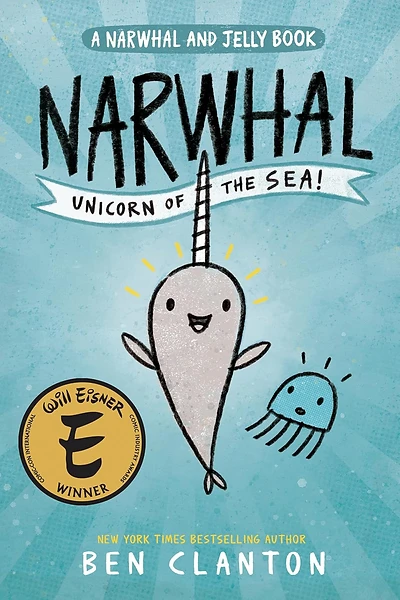
Narwhal: Unicorn of the Sea
by Ben Clanton
Pacing MaterialA cheerful narwhal and a skeptical jellyfish become unlikely friends and discover the joy of imagination and being yourself.
Big Idea
Friendship grows when we celebrate each other's differences and let imagination lead the way.
Discussion Questions
- 1.How are Narwhal and Jelly different?
- 2.Why does Jelly change their mind about Narwhal?
- 3.What does imagination add to their friendship?
- 4.How do the simple drawings show big feelings?
Classroom Activity
Imagination Pod
Imagine you're a sea creature. Draw yourself, name your best friend, and write one adventure you'd have together.
Lesson Plan
Learning Goals
- Describe Narwhal’s cheerful imagination and Jelly’s skepticism using details from the story’s words and pictures.
- Explain how Narwhal and Jelly become friends despite their differences.
- Create an imaginary sea-creature identity that reflects a personal strength or interest.
- Draw and write a short adventure showing how two different friends use their strengths together.
Activity Steps
- 1.Read selected scenes from "Narwhal: Unicorn of the Sea" aloud, displaying the panels. Ask: "What do Narwhal’s and Jelly’s words, expressions, and actions tell us about them?"
- 2.Discuss how Narwhal and Jelly are different and why their friendship works. Invite students to name one way a friend’s different interests or strengths can make play more fun.
- 3.Introduce "Imagination Pod": students imagine themselves as sea creatures. Have them draw their creature, give it a name, and label one special trait connected to something they enjoy or do well.
- 4.Ask students to draw and name a sea-creature best friend with a different trait. Prompt: "What makes your friend special? How will your two traits help you on an adventure?"
- 5.Have students create a three-panel adventure with a beginning, middle, and end. Add captions or speech bubbles showing the friends solving a problem together. Offer the starters "We set out to…," "Then…," and "Together, we…"; students may dictate, write one sentence per panel, or add more detail.
- 6.Invite students to share their adventures with a partner or the class. Close by asking: "How did your characters celebrate their differences, just as Narwhal and Jelly do?"
Standards Connections
- ELA: RL.1.3 — Describe characters and major events using key details from Narwhal and Jelly’s interactions.
- ELA: RL.2.7 — Use illustrations and words to explain characters and events in a graphic novel.
- ELA: W.1.3, W.2.3, W.3.3 — Create a grade-appropriate narrative with sequenced events about an imagined sea adventure.
- ELA: SL.1.1, SL.2.1, SL.3.1 — Participate in collaborative discussions about the story and classmates’ creations.
- SEL: Self-awareness and relationship skills — Identify personal strengths, appreciate differences, and show cooperation through imagined friendships.
Pace-Write-Read Study with Pace-Write It!
Focus question: How does Ben Clanton pace Narwhal: Unicorn of the Sea so friendship and imagination feel playful, surprising, and easy to follow? In Narwhal: Unicorn of the Sea, Ben Clanton uses a graphic novel format, quick scenes, lively dialogue, and expressive pictures to show how Narwhal’s joyful imagination helps Jelly become a friend. The pacing moves fast with jokes, page turns, and repeated playful moments, but it also slows down for feelings, reactions, and discoveries about being yourself.
| Element | How to notice or teach it in the novel |
|---|---|
| Pace | Read: Notice how the story moves quickly through short comic scenes as Narwhal chats, sings, imagines, and invites Jelly into fun. The fast pace matches Narwhal’s cheerful energy, while a few slower reaction moments help us see Jelly changing. Classroom Activity: Write 4 short panels about two unlikely friends meeting, using one fast action panel, one talk panel, one surprise panel, and one feeling panel. |
| Plot | Read: Notice the simple but satisfying plot: Narwhal meets Jelly, Jelly doubts Narwhal’s excitement, and then friendship grows through shared imagination. The plot stays easy to follow because each small event builds toward trust and fun. Classroom Activity: Write a beginning-middle-end plot for a short comic where one character teaches another character how to enjoy something new. |
| Prosody | Read: Notice how the words sound playful when read aloud, especially in Narwhal’s songs, exclamations, and bouncy speech. The lively sound helps the pacing feel upbeat and friendly. Classroom Activity: Write 3 speech bubbles for a joyful character and read them aloud to make them sound bouncy and musical. |
| Word pause | Read: Notice how single words, short phrases, and separated speech bubbles create little pauses that make jokes land and reactions stand out. Jelly’s skeptical responses often slow the moment just enough for readers to notice the contrast with Narwhal. Classroom Activity: Write a 6-line mini scene between two characters and use one one-word line to create a strong pause. |
| Concept | Read: Notice the big idea that friendship can grow when people accept differences and share imagination. The book paces this concept through small funny exchanges instead of long explanations. Classroom Activity: Write 2-3 sentences explaining a friendship lesson your comic will show, then plan one short scene that teaches it through action and dialogue. |
| Voice & World View | Read: Notice Narwhal’s sunny, open-hearted voice and Jelly’s cautious, questioning world view. Their different ways of seeing the world create the book’s pacing because each conversation moves between wonder and doubt. Classroom Activity: Write two speech bubbles about the same object—one from an excited character and one from a doubtful character. |
| Setting & Place | Read: Notice the undersea setting, where the ocean becomes a playful place for exploring, floating, and imagining. The simple setting keeps the pace clear and lets the friendship stay at the center. Classroom Activity: Draw or describe an underwater setting and write 3 details that your characters can interact with quickly in a comic scene. |
| Point of View | Read: Notice how the story lets readers mainly watch Narwhal and Jelly from the outside through pictures and dialogue, so we learn about them by what they say and do. This keeps the pacing brisk and visual. Classroom Activity: Write a comic scene that shows what two characters feel without saying 'I feel,' using only dialogue and actions. |
| Original Characters | Read: Notice how Narwhal and Jelly feel original because they are very different: Narwhal is cheerful, imaginative, and confident, while Jelly is careful, skeptical, and curious. Their contrast keeps each scene lively and well paced. Classroom Activity: Invent two sea-creature friends with opposite personalities and write one sentence about how each one talks. |
| Dialogue | Read: Notice how much of the story is carried by quick dialogue between Narwhal and Jelly. The short back-and-forth speech helps the pages move quickly while showing their growing friendship. Classroom Activity: Write 6 lines of dialogue between two characters who disagree at first but end the scene smiling. |
| Details | Read: Notice the small details in expressions, tiny jokes, and repeated references to Narwhal’s interests that make the story feel full without slowing it down. These details reward careful readers. Classroom Activity: Add 5 small details to a comic scene, such as a facial expression, sound effect, background object, repeated joke, or tiny action. |
| Descriptions | Read: Notice that the book uses simple, clear language and lets the pictures do much of the describing. This keeps the pacing light and accessible for young readers. Classroom Activity: Write 3 short description lines for a character, a place, and an object, each using 6 words or fewer. |
| Strong First Lines | Read: Notice how the opening quickly introduces Narwhal’s friendly, playful energy and invites readers into the ocean world right away. A strong opening helps the story start fast. Classroom Activity: Write an opening line for a comic that introduces a character’s personality in one sentence. |
| Immediacy & Engagement | Read: Notice how Narwhal’s direct excitement, quick jokes, and expressive faces make readers feel close to the action immediately. The book engages readers fast because something fun is always happening. Classroom Activity: Write the first 3 panels of a comic where the main character does or says something surprising on page one. |
| Story Scenes & Summaries & Unique Structures | Read: Notice how the book uses short comic scenes, mini episodes, and playful structures instead of one long block of story. These bite-sized parts help early readers stay engaged while still building the friendship theme. Classroom Activity: Plan a comic in 3 mini-scenes: meet, disagree, and imagine together. |
| Flashback & Flash Forward & Cliffhangers | Read: Notice that this story mostly stays in the present, which helps keep the pacing simple and easy to follow. Think about how a cliffhanger or quick flash forward could change the feel of Narwhal and Jelly’s adventures. Classroom Activity: Add one final panel to a comic scene that ends with a cliffhanger question about what the friends will do next. |
| Tension & Suspense & Surprise | Read: Notice that the tension is gentle, coming from whether Jelly will trust Narwhal, join the fun, or see things in a new way. Surprise often comes through Narwhal’s unexpected ideas and playful turns. Classroom Activity: Write a short comic scene where one character doubts another, then include one surprising final panel. |
| Page Turns and Chapter Breaks | Read: Notice how page turns in a graphic novel can hold jokes, reactions, and reveals, making readers want to keep going. Even short sections feel complete while also setting up the next fun moment with Narwhal and Jelly. Classroom Activity: Design a 2-page comic idea and decide what surprise or joke will happen right after the page turn. |
| Performance | Read: Notice how Narwhal’s songs, expressions, and dramatic enthusiasm feel almost like a performance onstage, while Jelly often plays the quieter responder. This performance style makes the pacing energetic. Classroom Activity: Write a comic moment where one character performs a silly song or speech and another character reacts in a very different way. |
| Personality | Read: Notice how personality drives the story: Narwhal’s brightness pushes the action forward, and Jelly’s thoughtful skepticism slows and shapes it. Their personalities create the rhythm of the book. Classroom Activity: Write 4 sentences showing a character’s personality through actions instead of telling words like 'nice' or 'shy.' |
| Humor | Read: Notice the gentle humor in wordplay, exaggeration, singing, and the mismatch between Narwhal’s excitement and Jelly’s caution. Humor makes the pacing feel quick and joyful. Classroom Activity: Create a 3-panel comic using a misunderstanding or silly overreaction between two sea characters. |
| Pause | Read: Notice how the book uses reaction faces, silent beats, and space between lines to pause before a joke or realization. These pauses help readers enjoy Jelly’s responses and Narwhal’s odd ideas. Classroom Activity: Write a comic script with one silent panel that shows a character thinking before answering. |
| Poetry and Poetic Devices | Read: Notice the playful songs and musical language that give some parts of the book a poetic feeling. Repeated sounds and rhythm help Narwhal’s voice feel memorable. Classroom Activity: Write a 4-line sea-themed chant for a character to say in a comic, using rhyme or repeated beginning sounds. |
| Repetition | Read: Notice how repeated jokes, familiar character responses, and recurring playful ideas help young readers feel confident and keep the story moving. Repetition also strengthens the friendship theme as Narwhal keeps reaching out to Jelly. Classroom Activity: Write a repeating line your main character says 3 times in a comic, with the meaning changing slightly each time. |
| Rhythm | Read: Notice the rhythm created by speech bubble length, panel changes, and alternating personalities—Narwhal bursts forward, Jelly answers, and the beat continues. This rhythm helps readers know when to laugh, pause, and turn the page. Classroom Activity: Write 6 comic lines with a pattern: long-short, long-short, long-short. |
| Punctuation | Read: Notice how exclamation points, question marks, ellipses, and bold playful wording shape the energy of Narwhal and Jelly’s conversations. Punctuation changes the pace and mood instantly. Classroom Activity: Write the same line 3 ways using different punctuation, then explain which version sounds most like Narwhal and which sounds most like Jelly. |
| Questions | Read: Notice how questions help Jelly learn, doubt, and respond, while also inviting readers to think about imagination and friendship. Questions keep the dialogue moving. Classroom Activity: Write 5 questions one character asks another when meeting a very unusual new friend. |
| Compare-Contrast | Read: Notice the strong contrast between Narwhal and Jelly in mood, beliefs, and ways of speaking, and how that contrast creates humor and growth. Their differences make the friendship more meaningful. Classroom Activity: Make a T-chart comparing two characters in your comic, then write one scene where their differences help solve a problem. |
| Objects | Read: Notice how objects in the sea world and small visual details can become part of jokes, imagination, and friendship moments. In a graphic novel, objects can move the story without many words. Classroom Activity: Choose one object a character loves and write a comic scene where that object helps two friends connect. |
| Threes | Read: Notice whether actions, jokes, or responses feel satisfying because they happen in a pattern of three. Graphic novels often use three similar beats before a funny change. Classroom Activity: Write a 3-panel sequence where a character tries something three times, with the third time ending differently. |
| Whitespace & Negative Space | Read: Notice how open space on the page helps readers focus on expressions, speech bubbles, and timing. The uncluttered design supports young readers and helps jokes and feelings land. Classroom Activity: Sketch or describe a comic page with one panel that uses lots of empty space to show surprise, waiting, or wonder. |
| Art & Graphics | Read: Notice how the simple, expressive art tells as much story as the words, especially through Narwhal’s delight and Jelly’s doubtful looks. The pictures control pacing by showing action quickly and clearly. Classroom Activity: Draw 3 facial expressions for one character—excited, confused, and happy—and write one matching speech bubble for each. |
| Interactives & Gamification | Read: Notice how the playful tone invites readers to imagine, predict, and join in with Narwhal’s fun. The book feels interactive because readers can almost answer back to the characters or guess Jelly’s next reaction. Classroom Activity: Create a 'choose the next panel' comic starter where classmates pick whether the friends sing, explore, or imagine something silly next. |
Pace-Write It!
20-Minute Classroom Flow\nRead (5 min): Read aloud a short section from Narwhal: Unicorn of the Sea by Ben Clanton that shows Narwhal meeting or talking with Jelly. Pause to show the pictures so students can notice the fast dialogue, expressive faces, and playful page design.\nNotice (5 min): Ask: How do the words and pictures make the story feel fast, funny, or calm? Chart student ideas under these headings: quick dialogue, reaction pause, repeated joke, page turn surprise, and feelings. Point out how Narwhal’s excitement speeds the scene up and Jelly’s reactions slow it down just enough.\nWrite (7 min): Students write their own 3-4 panel mini comic about two different characters becoming friends through imagination. Writing frame: 'Meet ____. ____ loves ____. Meet ____. ____ thinks ____. Then ____ says, "____!" At first, ____ replies, "____?" But after they ____, both friends ____.'. Encourage students to include one exclamation point, one question, and one silent reaction panel.\nShare (3 min): Partners read their comics aloud with expression. Listeners name one pacing move they noticed, such as a pause, a funny surprise, or quick back-and-forth dialogue.\nExit ticket: Write one sentence answering: 'How can pictures and short dialogue help a friendship story move quickly?'
Pace-Write-Read Connection
Teach this book using the Pace-Write-Read method — Tool 20: Play.
Open the Mastery Manual