
 K-3
K-3P FLEMING
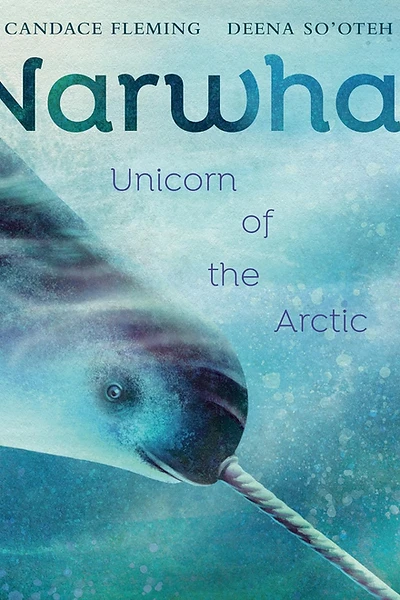
Narwhal: Unicorn of the Arctic
by Candace Fleming
Pacing MaterialA fascinating picture book about the narwhal, the Arctic whale famous for its long spiral tusk, exploring its habitat, behavior, and the mysteries scientists are still uncovering.
Big Idea
The narwhal is one of the Arctic's most mysterious creatures, and scientific curiosity helps us understand even the most elusive animals.
Discussion Questions
- 1.What is the narwhal's tusk, and what do scientists think it's used for?
- 2.How are narwhals adapted to life in the Arctic ocean?
- 3.Why is it difficult for scientists to study narwhals?
- 4.How does the narwhal's habitat connect to the polar bear's?
Classroom Activity
Arctic Animal Comparison
Students compare narwhals and polar bears, creating Venn diagrams of their adaptations, habitats, and challenges.
Lesson Plan
Learning Goals
- Understand narwhal biology, behavior, and habitat
- Compare and contrast two Arctic species
- Examine the challenges of studying marine mammals
- Connect Arctic ecosystems to climate science
Activity Steps
- 1.Read the book and discuss what makes narwhals unique
- 2.Review the polar bear book and identify key facts
- 3.Have students create Venn diagrams comparing the two species
- 4.Discuss how both animals are affected by climate change
- 5.Students write a paragraph about which Arctic animal they'd want to study
Standards Connections
- ELA: RL.K.1 — Ask and answer questions about key details
- ELA: RL.K.2 — Retell stories, including key details
- ELA: RL.K.3 — Describe characters, setting, and events
- ELA: RL.3.6 — Acknowledge differences in characters' points of view
- ELA: SL.K.1 — Participate in collaborative conversations about the text
- ELA: W.K.3 — Write narratives recounting events with descriptive details
- SEL: Responsible Decision-Making
- Art: VA:Re7 — Perceive and analyze artistic work
Pace-Write-Read Study with Pace-Write It!
Focus question: How does an author slow down and speed up information so readers stay curious about a real animal? In Narwhal: Unicorn of the Arctic by Candace Fleming, readers learn facts about the narwhal’s Arctic life, body, and behavior through clear, engaging nonfiction writing. Fleming uses pacing by balancing short bursts of exciting information, mystery about the tusk, and carefully placed details that let readers pause, wonder, and keep reading.
| Element | How to notice or teach it in the novel |
|---|---|
| Pace | Read: Notice how Candace Fleming moves quickly through big narwhal facts, then slows down to linger on the mystery of the tusk and what scientists still do not know. Classroom Activity: Write 3 fast fact sentences about an Arctic animal, then add 1 slower sentence that zooms in on one mystery readers will want to think about. |
| Plot | Read: Even though this is nonfiction, the book still has a clear path: readers meet the narwhal, learn where it lives, discover what its body can do, and end with unanswered questions about its tusk and life in the Arctic. Classroom Activity: Make a 4-box nonfiction plot map labeled meet the animal, habitat, special body part, and mystery, then plan a short piece about one real animal. |
| Prosody | Read: Listen to how the sentences can be read aloud with changing expression—calm for facts about Arctic waters and more dramatic for the strange, spiraled tusk. Classroom Activity: Choose 2 sentences you could read in a calm voice and 2 sentences you could read with excitement, then write your own sentence meant to sound amazing when read aloud. |
| Word pause | Read: Notice places where a powerful word or short phrase about the narwhal’s tusk, icy home, or behavior makes you stop and think before reading on. Classroom Activity: Write a fact sentence about a sea animal and include one strong word or short phrase that deserves a pause. |
| Concept | Read: The big concept is that nature is full of wonders scientists are still studying, especially the narwhal’s tusk and how the animal survives in the Arctic environment. Classroom Activity: Finish this idea in writing: “One amazing thing scientists are still learning about ______ is ______.” |
| Voice & World View | Read: Fleming’s voice is curious, respectful, and full of wonder, showing the natural world as both beautiful and not fully understood. Classroom Activity: Write 3 sentences about an animal in a voice of wonder by using words like amazing, mysterious, surprising, or incredible. |
| Setting & Place | Read: Pay attention to how the Arctic setting shapes the whole book—cold seas, ice, and northern waters are not just background but part of the narwhal’s life. Classroom Activity: Write 2 setting sentences that show how a place helps an animal survive. |
| Point of View | Read: The book is told from an outside nonfiction point of view, giving readers researched facts rather than the narwhal speaking for itself. Classroom Activity: Rewrite one narwhal fact in first person as if the narwhal is speaking: “I live…” or “My tusk…” |
| Original Characters | Read: The narwhal stands out as a memorable real-life subject because of its unicorn-like tusk, Arctic habitat, and the mysteries around its body. Classroom Activity: Introduce a real animal as if it were the star of a book by writing 3 sentences that make it unforgettable. |
| Dialogue | Read: This nonfiction book does not rely on character dialogue, so the facts and questions do the work of keeping readers engaged. Classroom Activity: Add one imagined line of dialogue from a scientist studying narwhals, such as what they might say when observing a tusk. |
| Details | Read: Notice the precise details about the narwhal’s body, habitat, and behavior that make the information feel trustworthy and vivid. Classroom Activity: Write 4 exact details about one animal, avoiding general words like nice or cool. |
| Descriptions | Read: Fleming describes the narwhal and its spiral tusk in ways that help readers picture this unusual Arctic whale clearly. Classroom Activity: Write a description of an animal body part that helps a reader see its shape, size, or texture. |
| Strong First Lines | Read: Think about how the opening quickly hooks readers with the narwhal’s unusual identity and invites immediate curiosity. Classroom Activity: Write 3 possible first lines for an animal nonfiction piece, trying to make one sound surprising and one sound mysterious. |
| Immediacy & Engagement | Read: The book creates immediacy by presenting fascinating facts and mysteries right away, making readers feel close to the narwhal’s world. Classroom Activity: Write an opening sentence that makes a reader want to know more immediately about a real animal. |
| Story Scenes & Summaries & Unique Structures | Read: Notice how the book mixes summary information with memorable moments of focused attention on the narwhal’s tusk, movement, and Arctic life. Classroom Activity: Write one summary sentence about an animal’s life and one zoomed-in scene sentence about a specific action it does. |
| Flashback & Flash Forward & Cliffhangers | Read: This book mostly stays in present-focused nonfiction time, but it creates a cliffhanger feeling by ending some ideas with what scientists still have yet to discover. Classroom Activity: Write a nonfiction cliffhanger sentence that ends with a question scientists are still studying. |
| Tension & Suspense & Surprise | Read: Surprise comes from how strange and impressive the narwhal is, while suspense grows from the mystery of why the tusk exists and what it does. Classroom Activity: Write 2 sentences that build suspense about an animal feature before revealing what it is. |
| Page Turns and Chapter Breaks | Read: In a picture book like this one, page turns help release new facts and surprising images, especially when readers move from one narwhal mystery to the next. Classroom Activity: Plan a 4-page mini-book about an animal and decide what fact should be saved for a page turn surprise. |
| Performance | Read: This book invites expressive reading because some parts sound full of awe, especially when discussing the narwhal’s famous tusk and life under Arctic ice. Classroom Activity: Mark one sentence to read softly, one to read slowly, and one to read with excitement, then write your own dramatic fact sentence. |
| Personality | Read: Even in nonfiction, the narwhal seems to have personality because the writing highlights its unusual, almost magical appearance and mysterious life. Classroom Activity: Write 3 factual sentences that still give an animal personality without making up pretend actions. |
| Humor | Read: The idea of a real whale that looks a bit like a unicorn can bring gentle humor and delight, even while the book stays informative. Classroom Activity: Write one light, playful comparison for a real animal feature, like comparing it to something familiar. |
| Pause | Read: Notice where a fact, image, or mystery about the narwhal invites a quiet pause so readers can think and wonder. Classroom Activity: Write a short paragraph about an animal and place a line break or dash where you want your reader to pause and think. |
| Poetry and Poetic Devices | Read: Some of the language around the Arctic, the sea, and the narwhal’s spiral tusk can feel poetic because it creates wonder and strong imagery. Classroom Activity: Write a 3-line poem about the narwhal or another Arctic animal using one simile or image. |
| Repetition | Read: Notice how key ideas—narwhal, tusk, Arctic, mystery, scientists—repeat to keep the focus clear and help readers remember the main topic. Classroom Activity: Write a short nonfiction paragraph that repeats one key word 3 times to keep the topic strong. |
| Rhythm | Read: The book’s rhythm comes from a balance of shorter striking statements and longer explanatory sentences about the narwhal and its environment. Classroom Activity: Write one short sentence and one longer sentence about the same animal fact to create rhythm. |
| Punctuation | Read: Look for punctuation that helps shape pacing, such as commas that slow the reading and question marks that highlight mystery about the narwhal’s tusk. Classroom Activity: Write 3 animal facts, using at least one comma and one question mark to control how your reader moves through the information. |
| Questions | Read: Questions are important in this book because they invite readers to think like scientists wondering about the narwhal’s tusk, habitat, and behavior. Classroom Activity: Write 2 research questions you would ask if you were studying narwhals in the Arctic. |
| Compare-Contrast | Read: The narwhal is often understood by comparing it to a unicorn or contrasting it with more familiar whales, which helps readers grasp what makes it unique. Classroom Activity: Write 2 compare-contrast sentences about the narwhal and another sea animal. |
| Objects | Read: The most important object in the book is the narwhal’s long spiral tusk, which becomes the center of both fascination and scientific mystery. Classroom Activity: Choose one important object from an animal’s life—such as a shell, beak, tusk, or fin—and write 3 sentences explaining why it matters. |
| Threes | Read: Notice how listing facts in groups of three can make information sound complete and memorable when describing an animal’s traits or behaviors. Classroom Activity: Write a sentence that names 3 things about the narwhal or another Arctic animal. |
| Whitespace & Negative Space | Read: In a picture book, open space on the page can slow the reader down and give extra attention to a striking fact or illustration of the narwhal in icy water. Classroom Activity: Create a one-page fact sheet with only 2 sentences and lots of space around your most important idea. |
| Art & Graphics | Read: The illustrations and design help pace the reading by showing the narwhal’s body, the Arctic setting, and visual moments of wonder that support the text. Classroom Activity: Sketch an animal and label 3 body parts or habitat details that your words will explain. |
| Interactives & Gamification | Read: This book encourages active thinking because readers can act like scientists, making observations and forming questions about the narwhal’s tusk and Arctic survival. Classroom Activity: Make a “Narwhal Mystery Card” with one fact, one question, and one guess about what the tusk does. |
Pace-Write It!
20-Minute Classroom Flow\nRead (5 min): Read aloud a short section of Narwhal: Unicorn of the Arctic by Candace Fleming that introduces the narwhal and describes its tusk. Pause once or twice to let students notice where the writing speeds up with facts and slows down with mystery.\nNotice (5 min): Ask: “Where did the author give us a quick fact? Where did she make us stop and wonder?” Chart student observations under two headings: Fast Facts and Slow Wonder. Include examples about the Arctic setting, the spiral tusk, and what scientists still do not know.\nWrite (7 min): Students write a 4-sentence nonfiction piece about a real animal using this frame: “This is the ______. It lives in ______. One amazing body part is ______. Scientists still wonder ______.” Encourage students to make the first 3 sentences move quickly and the last sentence slow down with mystery.\nShare (3 min): Partners read their pieces aloud and snap or raise a hand when they hear the mystery sentence that slows the pacing. Invite 1-2 students to share with the class.\nExit ticket: Write one sentence answering: “How did Candace Fleming use pacing to keep readers interested in the narwhal?”