
 3-7
3-7M DOGTOWN
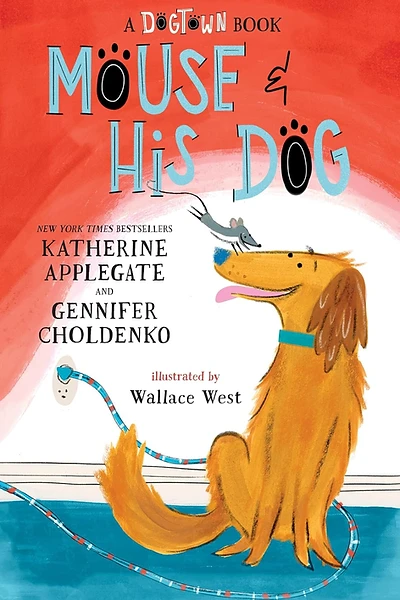
Mouse & His Dog
by Katherine Applegate and Gennifer Choldenko
Pacing MaterialBook 2 in the Dogtown series. A clever mouse and a loyal dog form an unlikely friendship as they navigate life in the shelter and search for a place to belong.
Big Idea
Even the smallest among us can be a hero — and true friends look out for each other.
Discussion Questions
- 1.How is Mouse different from the dogs at the shelter?
- 2.What does Mouse do to help his friend?
- 3.Why is the bond between Mouse and his dog so special?
- 4.What does loyalty mean to you?
Classroom Activity
Unlikely Friends
Write a story about two very different animals who become best friends. What challenges do they face, and how do they help each other?
Lesson Plan
Learning Goals
- Explain how Mouse and his dog friend demonstrate loyalty and courage, using details from Mouse & His Dog.
- Compare the animal friends’ differences and strengths, and explain how their friendship supports their search for belonging.
- Write an original animal-friendship narrative with a clear setting, challenge, sequence of events, and resolution.
- Use dialogue and descriptive details to show how two unlikely friends help each other.
Activity Steps
- 1.Introduce “Unlikely Friends.” Read or revisit a passage from Mouse & His Dog in which the friends support one another. Discuss: What makes their friendship unlikely? How can someone small make a big difference? Record students’ examples from the text.
- 2.Create a class chart comparing Mouse and his dog friend: size, abilities, needs, and ways each helps the other. Connect their actions to the shelter setting and their desire to belong.
- 3.Have students invent two very different animal characters. On a planning sheet, identify each animal’s strengths, their shared setting, and a challenge that neither can solve alone, such as finding a safe home or helping a frightened shelter newcomer.
- 4.Students draft a story showing how the animals meet, build trust, and use their different strengths to overcome the challenge. Include dialogue, a moment when the smaller or overlooked animal acts heroically, and an ending that shows friendship or belonging.
- 5.Pair students to share drafts. Partners identify one detail that shows loyalty and one place where the friends’ teamwork could be clearer. Students revise; grades 3–4 may add an illustration and captions, while grades 5–7 expand character motivation and dialogue.
- 6.Invite volunteers to share their stories. Close with a brief written reflection: How does your story connect to the idea in Mouse & His Dog that true friends look out for each other?
Standards Connections
- ELA: RL.3.3–RL.7.3 — Analyze characters, their interactions, and how their actions influence story events, with expectations adjusted by grade.
- ELA: W.3.3–W.7.3 — Write narratives using effective details, dialogue, and logically sequenced events.
- ELA: W.3.5–W.7.5 — Strengthen writing through planning, peer feedback, and revision.
- ELA: SL.3.1–SL.7.1 — Participate in collaborative discussions and build on others’ ideas.
- SEL: Relationship skills and social awareness — Recognize different strengths, practice empathy, and explore cooperation and belonging.
Pace-Write-Read Study with Pace-Write It!
Focus question: How do authors speed up and slow down a story to help readers feel friendship, worry, and hope? In Mouse & His Dog by Katherine Applegate and Gennifer Choldenko, a tiny, quick-thinking mouse and a faithful shelter dog build an unexpected friendship while trying to find safety and belonging. The authors use pacing by mixing fast problem-solving moments, tender friendship scenes, and short chapter turns that keep readers moving while also making important emotional moments stand out.
| Element | How to notice or teach it in the novel |
|---|---|
| Pace | Read: Notice how Mouse & His Dog moves quickly during shelter problems and escape-like moments, then slows down when Mouse and the dog show trust, kindness, and belonging. Classroom Activity: Write two short paragraphs about the same event in a shelter—one fast-paced and one slow-paced—to show how pacing changes a reader’s feelings. |
| Plot | Read: Track how the plot grows from life in Dogtown to the friendship between Mouse and the loyal dog, with each obstacle adding urgency to their search for a place to belong. Classroom Activity: Make a 5-step plot ladder for Mouse and the dog, then add one new middle-grade obstacle that would speed up the story. |
| Prosody | Read: Listen to how the sentences sound when read aloud; some are clipped and quick in tense scenes, while others are gentler in scenes about kindness and friendship. Classroom Activity: Choose one important moment and rewrite it to sound either hurried or calm, then read both versions aloud. |
| Word pause | Read: Notice where the authors use brief, simple wording to create a pause after a worry, surprise, or kind act between Mouse and the dog. Classroom Activity: Write a 6-8 sentence scene and add three intentional one-word or very short-sentence pauses for effect. |
| Concept | Read: Think about the big idea that friendship can grow in unlikely places, even in a shelter filled with uncertainty, and how that idea shapes the speed of the story. Classroom Activity: Write a short reflection explaining how the concept of belonging could be shown in one fast scene and one slow scene. |
| Voice & World View | Read: Notice the warm, observant, slightly playful voice that helps readers see Dogtown as both difficult and full of hope, especially through Mouse’s cleverness and the dog’s loyalty. Classroom Activity: Write a journal entry from the viewpoint of someone small but brave, using a hopeful voice even during a hard moment. |
| Setting & Place | Read: Study how the shelter setting affects pacing—tight spaces, routines, noises, and waiting can make scenes feel rushed, cramped, or stretched out. Classroom Activity: Describe one place inside an animal shelter in 5 sentences, using details that make the setting feel either busy or lonely. |
| Point of View | Read: Notice how point of view helps readers understand the unusual friendship between Mouse and the dog and shapes what feels urgent, funny, or touching. Classroom Activity: Rewrite one shelter scene first from Mouse’s point of view and then from the dog’s point of view, showing how pacing changes. |
| Original Characters | Read: Pay attention to how a clever mouse and a loyal dog make the story feel fresh, and how their differences create both humor and heart. Classroom Activity: Invent an unlikely animal pair for a shelter story and write a scene showing how their differences create movement in the plot. |
| Dialogue | Read: Notice how dialogue reveals trust, worry, and personality quickly, helping scenes move without long explanation. Classroom Activity: Write 8 lines of dialogue between two animal characters who do not trust each other at first but begin to become friends by the end. |
| Details | Read: Watch how small details from shelter life and the characters’ actions help readers picture the world and care about Mouse and the dog. Classroom Activity: List 6 concrete details you might notice in a shelter, then use at least 4 in a short scene. |
| Descriptions | Read: Notice that descriptions are selective rather than overlong, giving just enough to build emotion and keep the story moving. Classroom Activity: Write a description of a kennel, hallway, or hiding place in exactly 4 sentences, keeping the pacing tight. |
| Strong First Lines | Read: Think about how a strong opening in a middle-grade novel like Mouse & His Dog needs to quickly spark curiosity about danger, friendship, or belonging. Classroom Activity: Write three possible first lines for a story about an animal in a shelter, each creating a different kind of urgency. |
| Immediacy & Engagement | Read: Notice how the authors make readers feel close to the action by keeping scenes focused on immediate needs—safety, trust, food, escape, or comfort. Classroom Activity: Write a scene that begins with a problem happening right now, using the word 'suddenly' only once or not at all. |
| Story Scenes & Summaries & Unique Structures | Read: Notice when the story zooms into full scenes between Mouse and the dog and when it summarizes time in the shelter to move readers ahead. Classroom Activity: Write one detailed scene of a meeting between two animals, then add a 3-sentence summary of the next few days. |
| Flashback & Flash Forward & Cliffhangers | Read: Look for places where past experiences or chapter endings increase emotional stakes and keep readers wondering what will happen next to Mouse and his dog friend. Classroom Activity: End a short chapter with a cliffhanger about a shelter discovery, then write one flashback sentence that explains why it matters. |
| Tension & Suspense & Surprise | Read: Notice how tension builds when small characters face big risks, and how surprise can come from a sudden problem or an unexpected act of kindness. Classroom Activity: Write a suspenseful 10-sentence scene in which a tiny character must cross a dangerous room to help a friend. |
| Page Turns and Chapter Breaks | Read: Pay attention to how short chapters and strong stopping points make readers want to keep going in Mouse & His Dog. Classroom Activity: Write the last 2 lines of a chapter so a reader must turn the page to find out what happens next. |
| Performance | Read: Consider how this story would sound if performed aloud, especially the shifts between funny moments, tense moments, and heartfelt moments between Mouse and the dog. Classroom Activity: Mark a short paragraph with slash marks to show where a reader should pause, speed up, or slow down during oral reading. |
| Personality | Read: Notice how Mouse’s cleverness and the dog’s loyalty shape the pacing of scenes; bold choices move the story forward, while gentle moments reveal heart. Classroom Activity: Create a character chart for two animal friends with opposite personalities, then write a scene where those traits cause a problem and a solution. |
| Humor | Read: Watch for light, funny moments that keep the shelter story from feeling too heavy and make the friendship more endearing. Classroom Activity: Write a humorous moment in which a small animal misunderstands a big problem, then accidentally helps solve it. |
| Pause | Read: Notice where the authors slow down after exciting or stressful moments so readers can feel relief, sadness, or growing trust. Classroom Activity: Write a short action scene and then add a 3-sentence pause where the characters reflect on what just happened. |
| Poetry and Poetic Devices | Read: Notice any places where sound, image, or repeated phrasing makes ordinary shelter moments feel more vivid or emotional. Classroom Activity: Write 5 lines of prose using imagery and alliteration to describe Mouse moving through the shelter at night. |
| Repetition | Read: Look for repeated ideas, feelings, or phrases connected to friendship, safety, and belonging, and notice how repetition can build emotional pacing. Classroom Activity: Write a paragraph that repeats one key phrase three times to emphasize a character’s hope. |
| Rhythm | Read: Feel how sentence lengths change; short sentences can speed up danger, while longer sentences can soften moments of comfort between Mouse and the dog. Classroom Activity: Write 6 sentences about one event, alternating short and long sentences to create rhythm. |
| Punctuation | Read: Notice how punctuation helps control pace—dashes, commas, periods, and question marks shape urgency and pauses in key scenes. Classroom Activity: Rewrite a 5-sentence scene twice, once with quick, choppy punctuation and once with smoother, flowing punctuation. |
| Questions | Read: Think about the questions the story keeps alive for readers: Will Mouse and the dog stay safe? Who will help them? Where do they belong? Classroom Activity: Write 4 reader questions that could hook someone into the next chapter of an animal friendship story. |
| Compare-Contrast | Read: Compare Mouse and the dog—their size, strengths, risks, and ways of showing care—and notice how those contrasts add energy to the story. Classroom Activity: Use a T-chart to compare the two friends, then write a paragraph explaining how their differences strengthen their friendship. |
| Objects | Read: Notice how shelter objects, barriers, food, cages, bedding, or tiny pathways can become important tools or obstacles for Mouse and the dog. Classroom Activity: Choose one ordinary object from a shelter and write how it could help a small hero in a tense scene. |
| Threes | Read: Look for places where actions, attempts, or details come in groups of three, creating a satisfying rhythm as Mouse and the dog face problems. Classroom Activity: Write a scene in which a character tries three different ways to help a friend before succeeding or failing. |
| Whitespace & Negative Space | Read: Notice how short paragraphs, spacing, and brief chapters can make emotional moments land harder and make readers pause. Classroom Activity: Format a 10-line scene using paragraph breaks to highlight one important moment of fear or kindness. |
| Art & Graphics | Read: If your edition includes visual design features, notice how they support the tone of a shelter story about friendship and belonging without slowing the reading too much. Classroom Activity: Sketch a simple chapter opener or small icon that would match a scene featuring Mouse and the dog, then write 2 sentences explaining your design choice. |
| Interactives & Gamification | Read: Think about how the story invites prediction—readers can almost 'play along' by guessing how Mouse will solve problems or how the dog will show loyalty next. Classroom Activity: Create a choice board with three possible next moves for Mouse and the dog in a shelter problem, then write the outcome of one choice. |
Pace-Write It!
20-Minute Classroom Flow\nRead (5 min): Read aloud a short section from Mouse & His Dog that includes both a tense shelter problem and a warm friendship moment. Ask students to listen for places where the story speeds up and slows down.\nNotice (5 min): Students turn and talk: What made the fast part feel fast? What made the quiet part feel slow? Chart student noticings such as short sentences, dialogue, chapter stopping points, and emotional pauses between Mouse and the dog.\nWrite (7 min): Students write an original shelter scene about two unlikely animal friends. Writing frame: 'At first, _____ was worried because _____. Then _____ happened fast: _____, _____, and _____. After that, everything slowed down when _____ said/did _____. In that quiet moment, _____ realized _____.' Encourage students to use at least one short sentence, one dialogue line, and one pause for reflection.\nShare (3 min): Partners read their scenes aloud and point out one place where they used fast pacing and one place where they slowed the scene down. Invite 1-2 volunteers to share with the class.\nExit ticket: In one sentence, explain one craft move Katherine Applegate and Gennifer Choldenko use in Mouse & His Dog to control pacing, and tell how you tried it in your own writing.