 K-3
K-3P MARIE
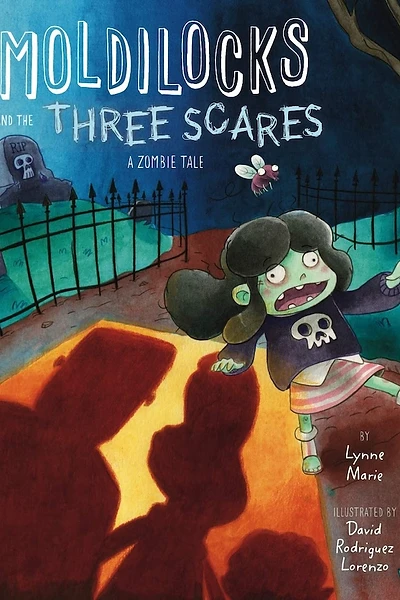
Moldilocks and the Three Scares
by Lynne Marie
Pacing MaterialA spooky, funny twist on Goldilocks — Moldilocks wanders into the home of three monsters and finds the scares are just right.
Big Idea
Classic stories can be retold in surprising new ways, and seeing a familiar tale from a new angle is half the fun.
Discussion Questions
- 1.How is this story like Goldilocks? How is it different?
- 2.Which 'scare' is your favorite, and why?
- 3.How does the author make the story funny AND spooky?
- 4.What fairy tale would you retell, and how?
Classroom Activity
Fractured Fairy Tale
Choose a fairy tale and retell it with a twist. Change the setting, the characters, or the ending.
Lesson Plan
Learning Goals
- Identify the characters, setting, and major events in "Moldilocks and the Three Scares."
- Compare the book with "Goldilocks and the Three Bears," noticing how monster characters and spooky humor change the familiar tale.
- Retell a familiar fairy tale with a deliberate change to its characters, setting, or ending.
- Create and share a story with a clear beginning, middle, and end using drawings, dictation, or writing.
Activity Steps
- 1.Introduce or briefly retell "Goldilocks and the Three Bears." Ask students to name its characters, setting, and important events so everyone knows the original tale.
- 2.Read "Moldilocks and the Three Scares" aloud. Pause to ask: "What feels familiar?" and "How do the monsters and spooky details make this version different or funny?"
- 3.Make a class comparison chart labeled "Original Tale" and "Moldilocks." Record similarities and differences in characters, setting, events, and ending. Explain that a fractured fairy tale changes a familiar story in surprising ways.
- 4.Invite students to choose a familiar fairy tale and plan one main twist. Model an idea inspired by the book, such as replacing ordinary characters with friendly monsters or moving a tale into a haunted house. Students tell a partner what they will change and what will stay familiar.
- 5.Have students create a three-part story labeled beginning, middle, and end. K–1 students may draw and dictate or add labels; grades 2–3 students may write sentences and illustrate. Encourage details that show how their twist changes the story.
- 6.Hold a story-sharing circle. After each retelling, classmates identify the original fairy tale and the new twist. Ask: "How did changing one part help us see the story in a new way?"
Standards Connections
- ELA: RL.K.3 — With prompting and support, identify characters, settings, and major events in a story.
- ELA: RL.1.9 — Compare and contrast the adventures and experiences of characters in stories.
- ELA: RL.2.9 — Compare and contrast two or more versions of the same story by different authors.
- ELA: W.3.3 — Write narratives using descriptive details and clear event sequences.
- ELA: SL.1.1 — Participate in collaborative conversations with peers and adults.
Pace-Write-Read Study with Pace-Write It!
Focus question: How does an author slow down and speed up a funny spooky story to keep readers eager for the next page? In Moldilocks and the Three Scares by Lynne Marie, a familiar fairy tale becomes a playful monster adventure as Moldilocks explores the home of three monsters and discovers which scares are too much, too little, and just right. The pacing moves quickly through repeated patterns, page turns, and surprises, then slows down to highlight funny details and suspenseful moments.
| Element | How to notice or teach it in the novel |
|---|---|
| Pace | Read: Notice how Moldilocks and the Three Scares moves at a lively pace as Moldilocks tries one scary thing after another, while key moments slow down so readers can enjoy the spooky jokes. Classroom Activity: Write 3 short sentences about a character entering a strange house, making the first sentence quick, the second slower with details, and the third quick again. |
| Plot | Read: Notice the clear plot pattern borrowed from Goldilocks: Moldilocks enters the monsters’ home, tests different scares, and finds one that feels just right. Classroom Activity: Write a beginning, middle, and end for your own fractured fairy tale in 3 parts. |
| Prosody | Read: Listen to how the repeated patterns and playful spooky language make the story fun to read aloud with expression. Classroom Activity: Choose one repeated-style line and practice reading it in a creepy, funny, and excited voice, then write your own read-aloud line. |
| Word pause | Read: Notice where a spooky or silly word makes you naturally pause, especially before the reveal of whether a scare is too much or just right. Classroom Activity: Write a sentence about a scary object and place a dash or ellipsis before the final word for effect. |
| Concept | Read: Notice how the book takes the familiar Goldilocks concept and twists it into a monster story about scares instead of porridge, chairs, and beds. Classroom Activity: Write one sentence that changes a fairy tale object into a spooky version, such as soup into slime or a bed into a coffin-shaped cot. |
| Voice & World View | Read: Notice the playful voice that treats spooky monsters as funny rather than truly frightening, helping young readers enjoy the world of the story. Classroom Activity: Write 2 sentences in a cheerful spooky voice about visiting a monster house. |
| Setting & Place | Read: Notice how the monsters’ home creates the perfect setting for suspense, humor, and discovery as Moldilocks moves from one scary space to another. Classroom Activity: Draw or describe one room in a monster house and write 3 details that make it spooky-funny. |
| Point of View | Read: Notice that readers mainly follow what Moldilocks sees and experiences, which helps us discover each scare alongside her. Classroom Activity: Rewrite one moment from the point of view of one of the three monsters coming home and finding Moldilocks there. |
| Original Characters | Read: Notice how Moldilocks and the three monsters echo the original fairy tale characters but feel fresh because of the spooky monster twist. Classroom Activity: Invent a new fractured fairy tale character, name them, and describe what makes them unusual. |
| Dialogue | Read: Notice how any spoken words or imagined reactions can add humor and make the monster-family situation feel more alive. Classroom Activity: Write 4 lines of dialogue between Moldilocks and one monster when they meet. |
| Details | Read: Notice the small spooky details that help each scare feel different, from too scary to not scary enough to just right. Classroom Activity: Make a list of 5 sensory details for a haunted-but-funny room and use 2 in a sentence. |
| Descriptions | Read: Notice how descriptions help readers picture the monsters’ house and feel the contrast between creepy and silly. Classroom Activity: Write 2 descriptive sentences about a monster object using color, shape, and texture words. |
| Strong First Lines | Read: Notice how the beginning quickly invites readers into a fractured fairy tale world and signals a spooky-funny mood. Classroom Activity: Write an opening line for a story about a child who wanders into a monster place. |
| Immediacy & Engagement | Read: Notice how the action starts quickly and keeps readers close to Moldilocks as she tests each scare. Classroom Activity: Write 3 action sentences that begin with strong verbs such as crept, peeked, or tiptoed. |
| Story Scenes & Summaries & Unique Structures | Read: Notice how the story uses repeated scenes of trying different scares, which creates a familiar structure with a fresh monster twist. Classroom Activity: Create a 3-part pattern for your own story: first try, second try, third try just right. |
| Flashback & Flash Forward & Cliffhangers | Read: Notice that picture books like this often stay in the present moment, but page endings can still act like mini cliffhangers before the next reveal. Classroom Activity: Write one page-end line that makes a reader want to turn the page to see what happens next. |
| Tension & Suspense & Surprise | Read: Notice how readers wonder what Moldilocks will touch next and how the monsters will react when they return. Classroom Activity: Write 2 sentences that build suspense before a character opens a creaky door. |
| Page Turns and Chapter Breaks | Read: Notice how each page turn can reveal a new scare, a bigger joke, or the approach of the three monsters. Classroom Activity: Plan a 4-page picture-book sequence and write what surprise appears after each page turn. |
| Performance | Read: Notice how this story invites dramatic reading with spooky pauses, repeated phrases, and exaggerated reactions. Classroom Activity: Mark one short passage with arrows or notes to show where you would whisper, gasp, or speak loudly. |
| Personality | Read: Notice Moldilocks’s curious personality and how the monsters’ family identity adds charm rather than pure fear. Classroom Activity: Write 3 personality traits for your main character and show one trait through an action. |
| Humor | Read: Notice how the book gets laughs by mixing spooky monster ideas with the familiar Goldilocks pattern of too much, too little, and just right. Classroom Activity: Write one funny comparison for a monster item, such as a pillow soft as bat fur or a soup bowl big as a cauldron. |
| Pause | Read: Notice how a pause before the words just right can make the joke and the pattern stronger. Classroom Activity: Write a repeated 3-line pattern ending with just right, and decide where a reader should pause. |
| Poetry and Poetic Devices | Read: Notice the sound play and repeated language that make the text musical even though it is a story. Classroom Activity: Write one alliterative spooky phrase, such as slimy, squishy slime, and use it in a sentence. |
| Repetition | Read: Notice how repetition helps build pacing as Moldilocks compares the different scares in a pattern readers can predict and enjoy. Classroom Activity: Write a 3-sentence pattern using too scary, not scary enough, and just right. |
| Rhythm | Read: Notice the beat created by the repeated comparisons and the movement from one test to the next. Classroom Activity: Clap the rhythm of a repeated line, then write your own line with a clear beat. |
| Punctuation | Read: Notice how exclamation marks, commas, and other punctuation can shape the spooky-funny mood and control pacing during exciting moments. Classroom Activity: Write one sentence about finding a monster and punctuate it two different ways to change the feeling. |
| Questions | Read: Notice the questions readers naturally ask: What will Moldilocks try next? Will the monsters catch her? Which scare will be just right? Classroom Activity: Write 3 reader questions that could fit before the ending of your own spooky fairy tale. |
| Compare-Contrast | Read: Notice how the story compares the three scares to show differences in size, intensity, or feeling while keeping the pattern familiar. Classroom Activity: Use a T-chart to compare two monster scares, then write one compare-contrast sentence. |
| Objects | Read: Notice how important objects in the monsters’ house drive the action, just as fairy tale objects do in Goldilocks. Classroom Activity: Choose one spooky object and write how a character uses it in the story. |
| Threes | Read: Notice the power of three in Moldilocks, the three monsters, and the three tries before something is just right. Classroom Activity: Plan a story with 3 objects, 3 tries, or 3 characters and write the pattern. |
| Whitespace & Negative Space | Read: Notice how the space on a picture-book page can make a spooky moment feel quiet, suspenseful, or focused on one funny detail. Classroom Activity: Sketch a page layout with one short sentence and lots of empty space to make the moment dramatic. |
| Art & Graphics | Read: Notice how the illustrations in a spooky-funny picture book help pace the story by showing reactions, room details, and page-turn surprises. Classroom Activity: Draw one illustration idea for a just-right scare and label 3 visual details. |
| Interactives & Gamification | Read: Notice how readers can almost play along by guessing which scare will be too much, too little, or just right before the page turn. Classroom Activity: Create a class guessing game with 3 spooky choices and have classmates predict which one your character will choose. |
Pace-Write It!
20-Minute Classroom Flow\nRead (5 min): Read aloud Moldilocks and the Three Scares by Lynne Marie. Pause to let students predict what Moldilocks will try next and listen for the repeated pattern of comparing scares.\nNotice (5 min): Ask: How does the story speed up and slow down? Chart student ideas such as repetition, the rule of three, page turns, spooky-funny details, and the just-right pattern. Point out how the fractured fairy tale structure helps readers know what to expect while still enjoying surprises.\nWrite (7 min): Students write their own mini fractured fairy tale scene in which a character enters a spooky place and tries 3 things. Writing frame: In the house of the three ________, ________ found the first ________. It was too ________. Next, ________ tried the second ________. It was not ________ enough. Then, ________ found the third ________. It was just right because ________.\nShare (3 min): Students read their 3-part pattern to a partner using expressive spooky pacing. Invite 2 or 3 volunteers to share aloud and have the class listen for repetition and the just-right ending.\nExit ticket: Write one sentence answering: How did repetition help the pacing in your story?
Pace-Write-Read Connection
Teach this book using the Pace-Write-Read method — Tool 20: Play.
Open the Mastery Manual