 3-7
3-7GN GARCIA
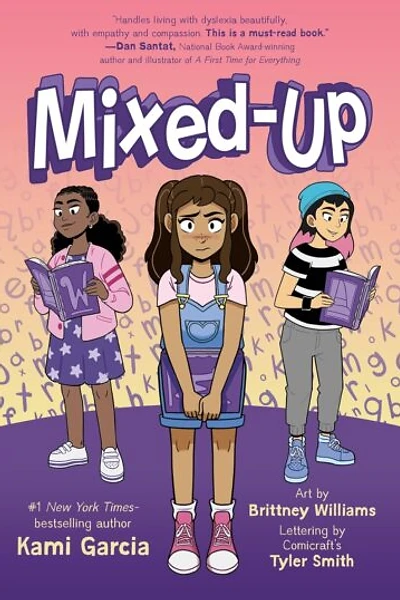
Mixed-Up
by Kami Garcia
Pacing MaterialA girl with dyslexia navigates school, friendship, and self-acceptance in this heartfelt story about finding your strengths when things feel mixed up.
Big Idea
Your brain works differently — and that's not a weakness. It's a different kind of strength.
Discussion Questions
- 1.What does the main character discover about how her brain works?
- 2.How does dyslexia affect her school experience?
- 3.What strengths does she discover in herself?
- 4.What's something that's hard for you? What strengths do you have because of it?
Classroom Activity
My Strengths
Write down three things you're good at, even if they're different from what others are good at. Share one with the class and celebrate what makes you unique.
Lesson Plan
Learning Goals
- Describe how the main character in Mixed-Up responds to challenges involving dyslexia, school, and friendship, using evidence from words and illustrations.
- Explain that dyslexia is a learning difference, not a measure of intelligence, and that people can have different strengths and support needs.
- Identify three personal strengths and give an example of using one of them.
- Practice respectful listening and celebrate classmates’ strengths without comparing or ranking them.
Activity Steps
- 1.Read or revisit selected pages from Mixed-Up that show the main character facing a school challenge and discovering or using a strength. Ask: “What do the words and illustrations tell us about how she feels?”
- 2.Discuss the book’s big idea: brains work in different ways, and needing help does not erase someone’s strengths. Ask how supportive friends and teachers can help someone feel accepted. Do not ask students to disclose learning differences.
- 3.Model a “My Strengths” page with three strengths and a concrete example, such as “I notice when someone feels left out, so I invite them to join.” Include creative, practical, academic, and friendship strengths.
- 4.Have students create their own pages naming three things they are good at. Offer drawing, dictation, speech-to-text, or writing, and provide the frame “One of my strengths is ___. I use it when ___.”
- 5.Invite each student to share one strength with the class, with options to share through a partner or pass. After each contribution, classmates offer a respectful acknowledgment, such as “That strength helps you or others by ___.”
- 6.Close by asking students to connect their work to Mixed-Up: “How can recognizing strengths help someone when things feel mixed up?” Display pages only with students’ permission.
Standards Connections
- ELA: CCSS RL.3.3–RL.7.3 — Describe or analyze characters, their responses to challenges, and their development; select the grade-appropriate standard.
- ELA: CCSS SL.3.1–SL.7.1 — Participate in collaborative discussions, listen respectfully, and build on others’ ideas.
- ELA: CCSS SL.3.4–SL.7.4 — Present ideas clearly with relevant details and examples.
- SEL: Self-awareness — Recognize personal strengths, emotions, and support needs.
- SEL: Social awareness — Show empathy and respect for different learning experiences and abilities.
Pace-Write-Read Study with Pace-Write It!
Focus question: How does an author speed up or slow down a story so we can feel a character’s confusion, courage, and growth? In Mixed-Up by Kami Garcia, a girl with dyslexia moves through school struggles, friendship challenges, and moments of self-discovery in a graphic novel that feels both fast and deeply personal. Garcia uses the pacing of panels, page turns, dialogue, and quiet reflective moments to help readers experience what it feels like when life feels overwhelming and when courage begins to build.
| Element | How to notice or teach it in the novel |
|---|---|
| Pace | Read: Notice how Mixed-Up moves quickly during stressful school moments and slows down when the main character reflects on her dyslexia, friendships, and self-worth. The pacing helps readers feel both the rush of confusion and the slower growth of resilience. Classroom Activity: Write two short scenes about a student having a hard day—one paced fast with short sentences and one paced slowly with reflection. |
| Plot | Read: Track how the plot in Mixed-Up follows the main character as she faces reading difficulties, social pressure, and moments that push her toward courage and self-acceptance. Each problem leads to a new emotional beat that shapes the story’s momentum. Classroom Activity: Create a 5-step plot ladder showing challenge, reaction, setback, support, and growth for an original character. |
| Prosody | Read: Listen to how the dialogue and thought patterns in Mixed-Up would sound if read aloud, especially in tense school scenes versus calmer friendship scenes. The emotional ups and downs create a speaking rhythm that matches the main character’s experience. Classroom Activity: Choose one emotional moment and rewrite it for a read-aloud, marking where the reader should speed up, slow down, or stress a word. |
| Word pause | Read: Notice where single words, short phrases, or broken thoughts in Mixed-Up make readers pause and feel the character’s uncertainty or frustration. These small stops mirror the feeling of getting stuck and then trying again. Classroom Activity: Write a short internal monologue for a character facing a challenge, using at least three intentional one-word pauses. |
| Concept | Read: The central concept in Mixed-Up is that differences like dyslexia can feel isolating at first but can become part of a person’s strength and identity. Notice how this idea shapes the story’s emotional pacing from confusion to confidence. Classroom Activity: Write a paragraph explaining a hidden strength your character discovers after struggling with something difficult. |
| Voice & World View | Read: Pay attention to how Mixed-Up presents the world through the feelings and perspective of a girl trying to make sense of school and herself. Her voice shapes how readers understand fairness, frustration, courage, and belonging. Classroom Activity: Write a journal entry in the voice of a student who feels misunderstood but wants others to see their strengths. |
| Setting & Place | Read: Notice how school spaces, classrooms, hallways, and home moments in Mixed-Up affect the story’s pacing and mood. Some places make the main character feel pressure, while others give her room to breathe and regroup. Classroom Activity: Describe two places in a character’s day—one that raises stress and one that brings comfort. |
| Point of View | Read: Mixed-Up keeps readers close to the main character’s experiences, helping us feel the personal impact of dyslexia, friendship struggles, and brave choices. This point of view builds empathy and makes the pacing feel immediate. Classroom Activity: Rewrite a school scene twice—once from the struggling student’s point of view and once from a friend’s point of view. |
| Original Characters | Read: Look at how the characters in Mixed-Up are built through their reactions to challenge, kindness, misunderstanding, and growth. The main character stands out because her struggle with dyslexia connects directly to the theme of resilience and courage. Classroom Activity: Invent a character with a specific learning or personal challenge and list three traits that make them memorable beyond that challenge. |
| Dialogue | Read: Notice how dialogue in Mixed-Up reveals support, tension, misunderstanding, and connection between the main character and the people around her. Conversations often move the story quickly while also showing emotional stakes. Classroom Activity: Write a dialogue between a student and a friend in which the friend first misunderstands the problem and then begins to listen. |
| Details | Read: Pay attention to the small details in Mixed-Up that show how schoolwork, reading, and social situations feel for the main character. These details make the emotional experience specific and believable. Classroom Activity: Write a scene about a difficult class assignment using at least four concrete details that show the character’s feelings without naming the feelings. |
| Descriptions | Read: In Mixed-Up, descriptions work with the graphic novel format to show confusion, pressure, and relief. Notice how descriptive choices help readers picture both the outside world and the inside emotional world of the main character. Classroom Activity: Describe a classroom moment when everything feels overwhelming, then revise it to show the same setting after the character finds support. |
| Strong First Lines | Read: Think about how the opening of Mixed-Up invites readers into a problem, emotion, or situation that quickly creates curiosity. A strong beginning helps set the pace and tells readers this story matters right away. Classroom Activity: Write three possible first lines for a graphic novel about a student facing a challenge and choose the one with the most energy. |
| Immediacy & Engagement | Read: Mixed-Up feels immediate because readers are placed close to the main character’s daily struggles and small victories. The story keeps us engaged by making each school or friendship moment feel emotionally important. Classroom Activity: Write a paragraph that begins in the middle of a stressful moment so the reader feels pulled in right away. |
| Story Scenes & Summaries & Unique Structures | Read: Notice how Mixed-Up balances scene-by-scene moments with the broader movement of the character’s growth. In a graphic novel, panels can zoom in on a single reaction or move quickly through time, creating a unique structure. Classroom Activity: Plan a story using one fully written scene and one short summary paragraph to show time passing. |
| Flashback & Flash Forward & Cliffhangers | Read: As you read Mixed-Up, notice whether memories, hints of what might happen, or end-of-scene uncertainties increase emotional tension. These pacing moves can deepen our understanding of why the main character reacts strongly in the present. Classroom Activity: Write a scene that ends with a cliffhanger right before a student must make a brave choice. |
| Tension & Suspense & Surprise | Read: Mixed-Up builds tension through school expectations, social worries, and the fear of being misunderstood. Surprise can come through unexpected kindness, insight, or a new way of seeing the main character’s strengths. Classroom Activity: Write a short scene where a character expects embarrassment but is surprised by support instead. |
| Page Turns and Chapter Breaks | Read: In Mixed-Up, think about how page turns in the graphic novel format can reveal new emotions, reactions, or problems at just the right moment. Breaks help control suspense and give readers space to process what the main character is facing. Classroom Activity: Storyboard a 4-panel page and decide what important reveal should happen only after the page turn. |
| Performance | Read: Consider how Mixed-Up could be performed aloud, with changes in expression, pacing, and tone to capture confusion, frustration, and courage. The story’s emotional shifts invite expressive reading. Classroom Activity: Practice performing a short dialogue, showing one line as worried, one as defensive, and one as hopeful. |
| Personality | Read: The personality of the main character in Mixed-Up comes through in how she thinks, reacts, and keeps going even when she feels mixed up. Notice how her personality affects the pace of scenes and the reader’s connection to her journey. Classroom Activity: Write a character sketch that shows personality through actions during a hard moment, not just adjectives. |
| Humor | Read: Even in a heartfelt story like Mixed-Up, moments of humor can break tension and make characters feel real and relatable. Notice where lighter interactions with friends or observations about school help balance the harder parts of the story. Classroom Activity: Add one gentle, character-based humorous moment to a serious school scene. |
| Pause | Read: Mixed-Up includes moments where the story seems to pause so readers can sit with the main character’s feelings, confusion, or growing confidence. These pauses are important because they slow the pace and deepen meaning. Classroom Activity: Write a 5-sentence reflective pause after a tough event, showing what the character is thinking before acting again. |
| Poetry and Poetic Devices | Read: Look for places in Mixed-Up where repeated images, strong emotion, or carefully chosen words feel poetic even within a graphic novel. Poetic language can make the character’s experience with dyslexia and resilience feel more powerful. Classroom Activity: Write a short free-verse poem from the main character’s perspective using imagery about mixed-up letters, tangled thoughts, or brave steps forward. |
| Repetition | Read: Notice if Mixed-Up repeats words, worries, images, or school challenges to show how the main character feels stuck—or how she slowly changes. Repetition can build rhythm and emphasize theme. Classroom Activity: Write a paragraph that repeats one key phrase three times, changing its meaning each time as the character grows. |
| Rhythm | Read: The rhythm of Mixed-Up comes from alternating between stress and relief, dialogue and silence, effort and breakthrough. This pattern helps readers feel the emotional beats of resilience. Classroom Activity: Write six sentences that create rhythm by alternating a short sentence with a longer one. |
| Punctuation | Read: In Mixed-Up, punctuation such as question marks, ellipses, dashes, and exclamation points can help show hesitation, worry, interruption, or urgency. These choices shape how fast or slow readers move through a moment. Classroom Activity: Rewrite the same two-line dialogue in three ways by changing only punctuation to show nervousness, anger, and hope. |
| Questions | Read: The main character in Mixed-Up likely asks questions about herself, school, and whether others understand her. These questions help reveal inner conflict and move the story toward courage and self-acceptance. Classroom Activity: Write five questions a character might ask privately during a difficult school day, then answer one in a hopeful way. |
| Compare-Contrast | Read: Compare the main character’s early feelings in Mixed-Up with her later growth, or contrast moments of isolation with moments of support. These shifts show how pacing and character development work together. Classroom Activity: Make a T-chart comparing the character at the start of the story and later in the story, then write a paragraph about what changed. |
| Objects | Read: Notice how school objects like books, papers, desks, or other everyday items in Mixed-Up may carry emotional meaning for a student with dyslexia. Objects can become symbols of stress, challenge, or progress. Classroom Activity: Choose one object from school and write how it changes meaning for a character across a story. |
| Threes | Read: Watch for patterns of three in Mixed-Up, such as three challenges, three reactions, or three supportive moments that build momentum. Groups of three often make pacing feel complete and memorable. Classroom Activity: Write a scene in which a character tries three different ways to solve a problem before succeeding or asking for help. |
| Whitespace & Negative Space | Read: In Mixed-Up, blank space between panels or around images can slow the reader down and highlight emotion, isolation, or reflection. Negative space can be especially powerful in showing what the main character cannot easily say out loud. Classroom Activity: Plan a comic panel idea that uses empty space to show a character feeling alone or overwhelmed, then write a caption for it. |
| Art & Graphics | Read: Because Mixed-Up is a graphic novel, the art and panel design help tell the story of dyslexia, school stress, and resilience alongside the words. Notice how facial expressions, layout, and visual symbolism affect the story’s pacing. Classroom Activity: Create a 3-panel comic showing a character moving from confusion to courage using both pictures and short text. |
| Interactives & Gamification | Read: While Mixed-Up is not a game, readers can track patterns such as moments of challenge, support, and bravery to interact more actively with the text. This kind of noticing can help students see how resilience is built step by step. Classroom Activity: Make a ‘Courage Tracker’ chart with three columns—Challenge, Support, Brave Action—and fill it in for a character or for your own story idea. |
Pace-Write It!
20-Minute Classroom Flow Read (5 min): Read a short excerpt or selected pages from Mixed-Up by Kami Garcia that show the main character struggling in school and then reflecting on what she is feeling. Ask students to listen for places where the story speeds up and places where it slows down. Notice (5 min): Students turn and talk: Where did the pacing feel fast? Where did it feel slow? What did the pictures, dialogue, and panel spacing make you feel about the character’s experience with dyslexia, friendship, and courage? Chart student noticings under two headings: ‘Fast pacing’ and ‘Slow pacing.’ Write (7 min): Students write their own short graphic-novel-style scene about a student facing a challenge and finding one small moment of courage. Writing frame: ‘At first, ______ felt mixed up because ______. Everything happened fast when ______. Then time seemed to slow down as ______. A person/object/thought that helped was ______. By the end, ______ showed courage by ______.’ Encourage students to include at least one short line of dialogue, one pause with ellipses or dashes, and one detail about a school setting. Share (3 min): Partners read their scenes aloud and identify one place where the pacing speeds up and one place where it slows down. Invite 1-2 volunteers to share how they used pacing to show resilience. Exit ticket: In one or two sentences, answer: How can slowing down or speeding up a scene help a reader understand a character’s feelings?
Pace-Write-Read Connection
Teach this book using the Pace-Write-Read method — Tool 29: Questions.
Open the Mastery Manual