 K-2
K-2P BURACH
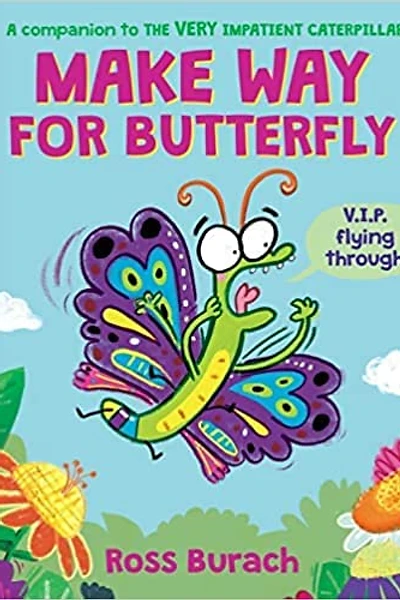
Make Way for Butterfly
by Ross Burach
Pacing MaterialThe bold and confident Butterfly declares herself a V.I.P. in this laugh-out-loud companion to The Very Impatient Caterpillar about confidence, pollinators, and knowing your worth.
Big Idea
Everyone has something important to contribute — and everyone deserves their moment to shine.
Discussion Questions
- 1.Why does Butterfly think she's a V.I.P.?
- 2.How do the other characters react to Butterfly's confidence?
- 3.What makes someone a Very Important Pollinator?
- 4.What makes you feel important?
Classroom Activity
V.I.P. Pollinator Badges
Design a V.I.P. badge for a classroom 'Very Important Pollinator' and write a short speech introducing the butterfly to the class.
Lesson Plan
Learning Goals
- Explore pollinator roles in ecosystems
- Analyze character confidence and self-worth
- Practice persuasive speech writing
Standards Connections
- ELA: RL.K.1 — Ask and answer questions about key details
- ELA: RL.K.2 — Retell stories, including key details
- ELA: RL.K.3 — Describe characters, setting, and events
- ELA: RL.2.6 — Acknowledge differences in characters' points of view
- ELA: SL.K.1 — Participate in collaborative conversations about the text
- ELA: W.K.3 — Write narratives recounting events with descriptive details
- SEL: Self-Management
- SEL: Responsible Decision-Making
- Art: VA:Re7 — Perceive and analyze artistic work
Pace-Write-Read Study with Pace-Write It!
Focus question: How does an author use pacing to make a character feel bold, funny, and unforgettable? In Make Way for Butterfly by Ross Burach, Butterfly bursts onto the page with huge confidence and lots to say, which makes the story move quickly and playfully. Burach uses short lines, funny interruptions, page turns, and expressive art to control pacing while showing Butterfly’s self-worth and larger-than-life personality.
| Element | How to notice or teach it in the novel |
|---|---|
| Pace | Read: Notice how Butterfly’s confident announcements make the story feel fast and lively, while a few calmer moments let readers take in her feelings and the pollinator world around her. Classroom Activity: Write 3 short lines for a bug character who enters dramatically, then add 1 slower line that shows what the character really wants others to know about them. |
| Plot | Read: Watch how the story builds around Butterfly presenting herself as important and special, with each moment adding to her big personality and message about worth. Classroom Activity: Make a beginning-middle-end plan for a new character who wants everyone to notice them, including one funny problem and one proud ending. |
| Prosody | Read: Listen to how Butterfly’s speech sounds when read aloud—bouncy, bold, and full of performance—so the rhythm matches her confidence. Classroom Activity: Write 4 read-aloud lines for Butterfly or another insect and practice saying them with strong expression. |
| Word pause | Read: Notice where single words or short bursts of text create a pause before the next joke or declaration from Butterfly. Classroom Activity: Write a mini scene with one line that ends in a dramatic pause, then put one powerful word on the next line. |
| Concept | Read: Think about the big idea that confidence and self-worth can shine brightly, especially when a character knows she matters. Classroom Activity: Finish this sentence three ways: “I know I matter because…” and then turn one answer into a character line for Butterfly. |
| Voice & World View | Read: Butterfly’s voice is flashy, self-assured, and funny, and the whole story is shaped by the way she sees herself as a V.I.P. Classroom Activity: Write 5 first-person lines from Butterfly’s point of view that show how she sees the world as a place where she belongs in the spotlight. |
| Setting & Place | Read: Notice how the natural world of flowers, pollinators, and outdoor spaces supports Butterfly’s grand entrance and reminds readers of her role in nature. Classroom Activity: Describe a flower garden setting in 3 sentences so it feels like the perfect stage for Butterfly’s arrival. |
| Point of View | Read: Pay attention to whose thoughts and personality lead the story and how that shapes what feels important, funny, and urgent. Classroom Activity: Rewrite one moment from the point of view of another garden creature watching Butterfly show off. |
| Original Characters | Read: Butterfly feels memorable because she is not just a butterfly—she is a bold, talkative, self-celebrating star with a very specific attitude. Classroom Activity: Invent an original insect character with one big personality trait, one catchphrase, and one reason they think they are special. |
| Dialogue | Read: Notice how Butterfly’s spoken lines carry so much of the humor, pacing, and character development. Classroom Activity: Write a dialogue exchange between Butterfly and a shy bee in which Butterfly helps the bee feel proud too. |
| Details | Read: Look for small details in Butterfly’s words and behavior that show she wants attention, admiration, and space to shine. Classroom Activity: List 5 tiny details that could show a character is confident without saying “confident,” then use 2 in a sentence. |
| Descriptions | Read: Notice how the descriptions and illustrations work together to make Butterfly seem dazzling, dramatic, and impossible to ignore. Classroom Activity: Write 3 vivid describing phrases for Butterfly’s movement, wings, or entrance. |
| Strong First Lines | Read: Study how the opening quickly introduces Butterfly’s bold energy so readers instantly know this character will take over the story. Classroom Activity: Write an opening line for a picture book character who thinks everyone should look at them right away. |
| Immediacy & Engagement | Read: Notice how Butterfly talks and acts in ways that pull readers in immediately, making it feel like the action is happening right now. Classroom Activity: Write 3 present-tense sentences that make a character’s entrance feel immediate and exciting. |
| Story Scenes & Summaries & Unique Structures | Read: Watch how the book leans on lively scenes and performance-like moments instead of long explanations, helping the story stay quick and funny. Classroom Activity: Write one short scene showing Butterfly in action, then one summary sentence telling what happened after. |
| Flashback & Flash Forward & Cliffhangers | Read: Even in a playful picture book, pauses before the next reveal or turn can act like mini cliffhangers that keep readers curious about what Butterfly will do next. Classroom Activity: End a 4-sentence bug story with a cliffhanger line: “But then…” |
| Tension & Suspense & Surprise | Read: Notice how Butterfly’s oversized confidence can create funny tension because readers wonder how others will react and what she will say next. Classroom Activity: Write a moment where a character makes a huge announcement and everyone waits for the response. |
| Page Turns and Chapter Breaks | Read: In this picture book, page turns do the work of building surprise, timing jokes, and revealing Butterfly’s next big moment. Classroom Activity: Plan a 2-page spread by writing what goes before the page turn and what surprising line comes after it. |
| Performance | Read: Butterfly behaves like a performer on a stage, and that theatrical energy helps shape the pacing of every scene. Classroom Activity: Write 4 lines for Butterfly to say as if she is onstage introducing herself to a crowd of garden insects. |
| Personality | Read: Butterfly’s personality is huge—proud, funny, dramatic, and sure of her own value—and that is what drives the story forward. Classroom Activity: Create a character web with 4 personality traits for Butterfly and add a sentence that matches each trait. |
| Humor | Read: Notice how humor comes from exaggeration, Butterfly’s self-important voice, and the contrast between her grand attitude and everyday garden life. Classroom Activity: Write one exaggerated line Butterfly might say about herself that would make readers laugh. |
| Pause | Read: Look for moments where a pause in text or action gives readers time to enjoy a joke, a look, or a reaction. Classroom Activity: Write a 3-line sequence with a funny pause in the middle, using a line break to slow the reader down. |
| Poetry and Poetic Devices | Read: Listen for playful sound and repeated phrasing that give Butterfly’s lines a poetic, chant-like feeling. Classroom Activity: Write a 2-line chant for Butterfly using alliteration, such as repeated beginning sounds. |
| Repetition | Read: Notice how repeated ideas, patterns, or bold declarations help build Butterfly’s identity and make the story easy to follow and fun to join. Classroom Activity: Write a repeated sentence starter for a character, such as “Make way for me because…” and complete it 3 times. |
| Rhythm | Read: Feel the beat of short, punchy lines that match Butterfly’s dramatic energy and keep the story moving. Classroom Activity: Write 4 short sentences with a strong beat that could be read like a character’s marching introduction. |
| Punctuation | Read: Study how exclamation points, commas, and question marks help Ross Burach control Butterfly’s loudness, pauses, and comic timing. Classroom Activity: Write one sentence three ways—with a period, question mark, and exclamation point—and discuss how the feeling changes. |
| Questions | Read: Notice how questions can create interaction, curiosity, and humor as readers think about Butterfly’s big claims and what others might be thinking. Classroom Activity: Write 3 questions another garden animal might ask Butterfly about being a V.I.P. |
| Compare-Contrast | Read: Compare Butterfly’s bold confidence with how a quieter or less flashy character might act in the same garden space. Classroom Activity: Make a T-chart comparing Butterfly with a shy insect, then write 2 compare-contrast sentences. |
| Objects | Read: Pay attention to objects from the pollinator world—flowers, wings, petals, and garden spaces—that help build Butterfly’s stage and identity. Classroom Activity: Choose one object from Butterfly’s world and write 3 sentences showing why it matters to the character. |
| Threes | Read: Notice how listing ideas in groups of three can sound satisfying, funny, and dramatic for a character like Butterfly. Classroom Activity: Write a line where Butterfly names 3 amazing things about herself in a row. |
| Whitespace & Negative Space | Read: Look at how open space on the page can make Butterfly’s words feel bigger, slower, louder, or more important. Classroom Activity: Create a mini picture-book page with one short line in the center and lots of blank space around it for emphasis. |
| Art & Graphics | Read: The illustrations and text placement help show Butterfly’s confidence, motion, and comedy, adding pacing that words alone could not create. Classroom Activity: Sketch a simple storyboard panel for Butterfly’s entrance and add where the words should go for the funniest effect. |
| Interactives & Gamification | Read: This book invites active read-aloud thinking because students can join Butterfly’s repeated boldness, predict page turns, and perform her dramatic style. Classroom Activity: Create a class chant for Butterfly with motions, then write one new chant for an original insect character. |
Pace-Write It!
20-Minute Classroom Flow\nRead (5 min): Read Make Way for Butterfly by Ross Burach aloud with lots of expression. Pause to emphasize Butterfly’s bold declarations, dramatic punctuation, and funny page turns.\nNotice (5 min): Ask students: How does Butterfly sound? Which pages feel fast? Which words, pauses, or illustrations make her seem important? Chart student noticings under: short lines, repetition, punctuation, humor, page turns, and big personality.\nWrite (7 min): Invite students to write their own bold character entrance inspired by Butterfly. Writing frame: “Make way for ______! I am ______. I can ______, ______, and ______. Everyone should notice me because ______. But really, I want you to know ______.” Encourage students to use at least one exclamation point, one repeated phrase, and one dramatic short line.\nShare (3 min): Students read their character entrance with performance voices. Classmates listen for strong pacing moves like repetition, pauses, and funny emphasis.\nExit ticket: Write one sentence answering: “How did Ross Burach make Butterfly feel confident and exciting?”