 K-3
K-3P TOURVILLE
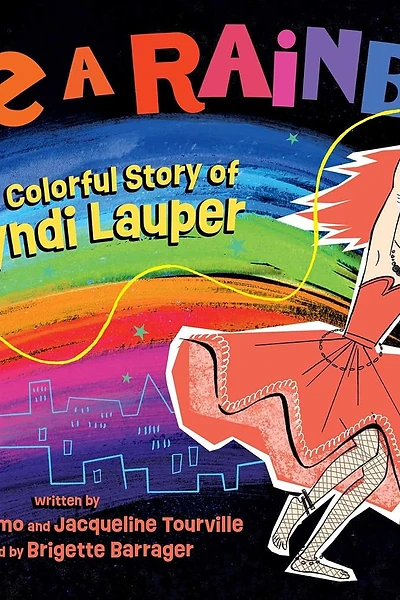
Like a Rainbow: The Colorful Story of Cyndi Lauper
by Amy Guglielmo and Jacqueline Tourville
Pacing MaterialThe colorful story of Cyndi Lauper, a girl from Queens who became a music icon by being unapologetically herself.
Big Idea
Music and color have the power to express who we are and bring people together.
Discussion Questions
- 1.How did Cyndi Lauper use color and music to express herself?
- 2.What challenges did Cyndi Lauper face in her career?
- 3.How can music and art help people feel seen?
- 4.What color would you be, and why?
Classroom Activity
Songs as Colors
Choose a song that feels like a color to you and write about why, then illustrate the song as a rainbow.
Lesson Plan
Learning Goals
- Understand biographical narrative
- Explore themes of self-expression and identity
- Connect music and visual art
Standards Connections
- ELA: RL.K.1 — Ask and answer questions about key details
- ELA: RL.K.2 — Retell stories, including key details
- ELA: RL.K.3 — Describe characters, setting, and events
- ELA: RL.3.6 — Acknowledge differences in characters' points of view
- ELA: SL.K.1 — Participate in collaborative conversations about the text
- ELA: W.K.3 — Write narratives recounting events with descriptive details
- SEL: Self-Awareness
- SEL: Social Awareness
- Art: VA:Re7 — Perceive and analyze artistic work
Pace-Write-Read Study with Pace-Write It!
Focus question: How does a writer make a true story feel lively, musical, and full of personality? In Like a Rainbow: The Colorful Story of Cyndi Lauper by Amy Guglielmo and Jacqueline Tourville, readers follow young Cyndi from Queens as she learns to express herself boldly and creatively. The authors use pacing by mixing quick, energetic moments with slower reflective ones, helping us feel Cyndi’s struggles, dreams, and joyful self-expression.
| Element | How to notice or teach it in the novel |
|---|---|
| Pace | Read: Notice how the story moves quickly through exciting moments of Cyndi’s childhood and musical growth, then slows down when her feelings and self-expression matter most. Classroom Activity: Write 3-4 sentences about a time you felt proud to be yourself, using one quick action sentence and one slower feeling sentence. |
| Plot | Read: Track how Cyndi begins as a creative girl in Queens, faces challenges, and grows into a music icon by staying true to herself. Classroom Activity: Make a beginning-middle-end organizer and write one sentence for each part of Cyndi’s journey. |
| Prosody | Read: Listen to how the words sound musical and expressive, matching a story about a future singer like Cyndi Lauper. Classroom Activity: Read a favorite page aloud and then write two sentences that sound bouncy, bold, or musical about a character who loves to create. |
| Word pause | Read: Notice where the language invites you to stop briefly and think about Cyndi’s emotions, dreams, or bold choices. Classroom Activity: Write a sentence about Cyndi or yourself and add a dash or ellipsis to create a thoughtful pause. |
| Concept | Read: The big idea is that self-expression and identity matter, and being different can become a strength, just as it does for Cyndi. Classroom Activity: Finish this sentence frame: 'Being myself means ______ because ______.' |
| Voice & World View | Read: Notice how the storytelling celebrates creativity, difference, and courage, showing the world through a lens that values individuality. Classroom Activity: Write 2-3 sentences in a voice that cheers on a child who dresses, sings, or thinks differently from others. |
| Setting & Place | Read: Pay attention to Queens and the places of Cyndi’s childhood, which help ground her story in a real community while showing where her dreams begin. Classroom Activity: Describe your neighborhood or a place you know well in 3 sentences, including one detail about color, sound, or people. |
| Point of View | Read: Notice that the story is told from an outside narrator who stays close to Cyndi’s experiences and feelings. Classroom Activity: Rewrite one moment from the book or from your own life using 'I' to show how the main character feels inside. |
| Original Characters | Read: Cyndi stands out as an unforgettable character because of her bold style, strong feelings, and determination to be herself. Classroom Activity: Invent a character who is proudly different and write 3 details that make that character memorable. |
| Dialogue | Read: Notice how spoken words, if included or imagined from the text, help us hear Cyndi’s personality and the reactions of people around her. Classroom Activity: Write a short dialogue between Cyndi and a friend where Cyndi explains why she likes expressing herself in her own way. |
| Details | Read: Look for small details about Cyndi’s clothes, art, music, and emotions that make her identity feel vivid and real. Classroom Activity: Write a sentence about a character using at least three details, such as clothing, sound, and feeling. |
| Descriptions | Read: Notice how descriptions help readers picture Cyndi’s colorful world and understand her personality. Classroom Activity: Describe Cyndi’s style or your own style using colorful adjectives in 2-3 sentences. |
| Strong First Lines | Read: Think about how the opening introduces Cyndi with energy and invites readers into a story about creativity and courage. Classroom Activity: Write a strong first line for a story about a child who is not afraid to stand out. |
| Immediacy & Engagement | Read: Notice how the book quickly helps readers care about Cyndi by showing her passions, challenges, and unique way of seeing the world. Classroom Activity: Write two opening sentences that make a reader want to know more about a bold character right away. |
| Story Scenes & Summaries & Unique Structures | Read: Notice how some parts zoom into important scenes while other parts summarize time passing as Cyndi grows and changes. Classroom Activity: Write one scene sentence about Cyndi singing or creating, and one summary sentence that tells what happened over many days or years. |
| Flashback & Flash Forward & Cliffhangers | Read: Think about how a biography can look back on Cyndi’s childhood while also hinting at the famous future ahead of her. Classroom Activity: Write one sentence about young Cyndi and one flash-forward sentence that hints at what she will become later. |
| Tension & Suspense & Surprise | Read: Notice the tension when Cyndi feels different or misunderstood, and how readers wonder whether she will find a place where her true self is celebrated. Classroom Activity: Write 2-3 sentences about a character who worries others will not understand them, then add a surprising hopeful ending. |
| Page Turns and Chapter Breaks | Read: In this picture book, page turns help reveal new stages in Cyndi’s growth, new feelings, or a stronger sense of confidence. Classroom Activity: Plan a two-page mini-book spread by writing what happens before the page turn and what exciting idea is revealed after it. |
| Performance | Read: This story connects naturally to performance because Cyndi expresses herself through music, style, and stage presence. Classroom Activity: Write a tiny performance script with one line Cyndi might sing or say to show confidence. |
| Personality | Read: Notice how Cyndi’s personality shines as bold, creative, determined, and unapologetically herself. Classroom Activity: List four personality traits for Cyndi and then write one sentence explaining which trait you admire most. |
| Humor | Read: Look for playful or light moments that come from Cyndi’s bold choices and lively self-expression. Classroom Activity: Write a funny but kind sentence about a character wearing an outfit so bright or unique that everyone notices. |
| Pause | Read: Notice where the story gives readers a quiet moment to think about Cyndi’s feelings, identity, or struggles before moving ahead. Classroom Activity: Write 2 sentences about a big feeling, leaving a short pause between ideas with a line break or extra space. |
| Poetry and Poetic Devices | Read: Notice how the language may use vivid imagery and musical phrasing to match Cyndi’s colorful life and artistic spirit. Classroom Activity: Write a 3-line poem comparing Cyndi’s voice or style to something bright in nature, such as a rainbow, bird, or sunrise. |
| Repetition | Read: Listen for repeated ideas about being yourself, using your voice, and embracing difference. Classroom Activity: Write a short piece that repeats the phrase 'She was herself' or 'I am me' two or three times for emphasis. |
| Rhythm | Read: Notice how sentence length and word choice create a rhythm that feels upbeat, matching a story about music and self-expression. Classroom Activity: Write three short sentences and one longer sentence about dancing, singing, or creating to build rhythm in your writing. |
| Punctuation | Read: Look at how punctuation helps shape excitement, pauses, and expression in Cyndi’s story. Classroom Activity: Write one sentence about Cyndi using an exclamation mark and another using commas to list her talents or traits. |
| Questions | Read: Think about the questions the book raises, such as how someone stays true to themselves when others do not understand them. Classroom Activity: Write two questions you would ask Cyndi Lauper about being creative and brave. |
| Compare-Contrast | Read: Notice how Cyndi may be shown as different from others around her, which helps highlight her individuality and courage. Classroom Activity: Write two sentences comparing Cyndi’s style or choices with another character’s or with your own. |
| Objects | Read: Pay attention to meaningful objects connected to art, clothing, music, or performance that symbolize Cyndi’s identity. Classroom Activity: Choose one object, like a microphone, sketchbook, or bright outfit, and write 2 sentences explaining how it shows who a character is. |
| Threes | Read: Notice whether ideas come in groups of three, such as three traits, three actions, or three dreams, to make them easier to remember. Classroom Activity: Write a sentence naming three ways Cyndi expresses herself, such as singing, dressing boldly, and creating art. |
| Whitespace & Negative Space | Read: Notice how open space on a page can slow readers down and help important words or emotions stand out in a picture book like this one. Classroom Activity: Write a very short 2-line piece about feeling different, leaving space between the lines for emphasis. |
| Art & Graphics | Read: Look at how the illustrations add color, energy, and emotion to Cyndi’s story, helping show her identity in ways words alone cannot. Classroom Activity: Draw a quick picture of a character expressing themselves and add one caption sentence that matches the art. |
| Interactives & Gamification | Read: Think about playful ways readers can engage with Cyndi’s story by spotting colors, feelings, or moments when she chooses to be herself. Classroom Activity: Make a 'Find the Brave Moment' chart with three boxes and write or draw three times Cyndi shows confidence or creativity. |
Pace-Write It!
20-Minute Classroom Flow\nRead (5 min): Read aloud a few pages from Like a Rainbow: The Colorful Story of Cyndi Lauper that show Cyndi’s creativity, struggles, and bold self-expression. Ask students to listen for places where the story speeds up and places where it slows down.\nNotice (5 min): Discuss: Where did the story feel fast? Where did it feel slow? How did the words and illustrations help us feel Cyndi’s emotions and personality? Chart student ideas under 'Fast action' and 'Slow feeling moments.'\nWrite (7 min): Students write about a time they expressed themselves bravely. Use this writing frame: 'I felt ______. At first, ______. Then, I ______. I showed who I was by ______. That moment mattered because ______.' Encourage students to include one quick action sentence and one slower feeling sentence.\nShare (3 min): Partners read their writing aloud with expression. Listeners name one place where the writing sped up and one place where it slowed down.\nExit ticket: Write one sentence answering: 'How did Amy Guglielmo and Jacqueline Tourville use pacing to help us understand Cyndi Lauper?'
Pace-Write-Read Connection
Teach this book using the Pace-Write-Read method — Tool 20: Play.
Open the Mastery Manual