
 K-3
K-3P HILLENBRAND
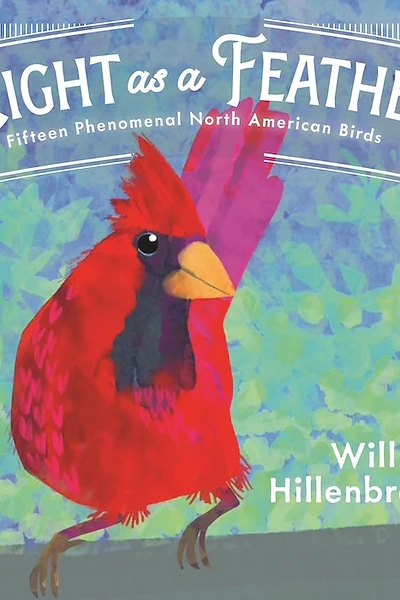
Light as a Feather: Fifteen Phenomenal North American Birds
by Will Hillenbrand
Pacing MaterialA vivid tour of North America's most fascinating birds with the science behind the skill.
Big Idea
Understanding wildlife helps people appreciate and protect the natural world and encourages students to become bird watchers.
Discussion Questions
- 1.Which bird surprised you the most? Why?
- 2.What adaptations help birds survive?
- 3.How do feathers serve different purposes?
- 4.Which bird would you most like to observe in nature?
- 5.Why is it important to protect bird habitats?
Classroom Activity
Be a Bird Detective
Pick one bird from the book. Research what makes it unique: habitat, diet, special skills, and interesting things it does.
Lesson Plan
Learning Goals
- Identify one adaptation that helps a bird survive
- Record two observations about a chosen bird's behavior
- Create a labeled bird profile with habitat, diet, and a special skill
Activity Steps
- 1.Read the story, listing birds and their special skills on the board.
- 2.Discuss: 'What is an adaptation? Why do different birds have different skills?'
- 3.Each student picks one bird and examines the field guide page for it.
- 4.Students create a bird profile: name, habitat, diet, one special skill, and an illustration.
- 5.Pair up and present profiles; classmates ask one question each.
Standards Connections
- ELA: RL.K.1 — Ask and answer questions about key details
- ELA: RL.K.2 — Retell stories, including key details
- ELA: RL.K.3 — Describe characters, setting, and events
- ELA: RL.3.6 — Acknowledge differences in characters' points of view
- ELA: SL.K.1 — Participate in collaborative conversations about the text
- ELA: W.K.3 — Write narratives recounting events with descriptive details
- SEL: Responsible Decision-Making
- Art: VA:Re7 — Perceive and analyze artistic work
Pace-Write-Read Study with Pace-Write It!
Focus question: How does an author slow down and speed up information so readers can enjoy both beautiful bird facts and exciting reading? In Light as a Feather: Fifteen Phenomenal North American Birds, Will Hillenbrand takes readers on a lively picture-book tour of remarkable birds and the science behind what makes each one special. The pacing moves quickly from bird to bird, but it also pauses to spotlight important details, vivid illustrations, and fascinating facts so young readers can wonder, learn, and keep turning pages.
| Element | How to notice or teach it in the novel |
|---|---|
| Pace | Read: Notice how Light as a Feather: Fifteen Phenomenal North American Birds moves briskly through fifteen birds, but slows down to highlight each bird’s amazing ability, such as flight, feathers, or movement. Classroom Activity: Write 3 short sentences about one made-up “phenomenal” animal, using 2 fast action sentences and 1 slow, detailed fact sentence. |
| Plot | Read: Notice that this book does not follow one character through a traditional story plot; instead, the sequence of birds creates a learning journey from one fascinating example to the next. Classroom Activity: Make a mini plan for an information story with a beginning bird, a middle bird, and an ending bird, showing how your reader will move through your topic. |
| Prosody | Read: Listen to how the bird names and scientific explanations in Will Hillenbrand’s text can be read with expression, wonder, and emphasis on striking words. Classroom Activity: Choose one bird page and practice reading it aloud, then write one sentence of your own that should be read with excitement. |
| Word pause | Read: Notice places where a powerful bird word or science word makes you stop and think before reading on. Classroom Activity: Write a bird fact sentence and underline one word where you want your reader to pause for effect. |
| Concept | Read: Notice the central concept that birds have phenomenal features, and the book explains the science behind those features in a way young readers can understand. Classroom Activity: Write, “My animal is amazing because _____,” and add one science-based reason. |
| Voice & World View | Read: Notice how the book’s voice feels curious, admiring, and full of respect for North American birds and the natural world. Classroom Activity: Write 2 sentences about an animal in a voice of wonder, as if you are teaching someone to admire it. |
| Setting & Place | Read: Notice that the birds belong to real North American habitats, and place matters because each bird’s body and behavior fit where it lives. Classroom Activity: Pick a habitat like forest, shoreline, desert, or backyard, and write 2 sentences showing how that place helps a bird survive. |
| Point of View | Read: Notice that the book is told from an outside teaching point of view that shares facts directly with the reader. Classroom Activity: Rewrite one bird fact from the bird’s point of view, starting with “I am…”. |
| Original Characters | Read: Notice that each bird becomes memorable almost like a character because of its special feature, movement, or look, even in a nonfiction-style tour. Classroom Activity: Invent your own original bird character and write 3 traits that make it unforgettable. |
| Dialogue | Read: Notice that this book likely teaches mostly through description and facts instead of conversation, which keeps the focus on birds and science. Classroom Activity: Add 2 lines of dialogue between a child and a bird, where the child asks about the bird’s special skill. |
| Details | Read: Notice how specific details help readers picture feathers, flight, shape, color, and behavior in each bird entry. Classroom Activity: Write a 4-detail description of one bird using what it looks like, how it moves, where it lives, and what makes it special. |
| Descriptions | Read: Notice how Will Hillenbrand uses vivid description to make each phenomenal bird feel lively and real for young readers. Classroom Activity: Write 2 descriptive sentences about a bird without naming it, and let a partner guess which bird you mean. |
| Strong First Lines | Read: Notice how each bird’s introduction needs to quickly grab attention because the book moves from one bird to the next. Classroom Activity: Write an opening line for a bird page that starts with strong interest, such as a surprising fact or bold description. |
| Immediacy & Engagement | Read: Notice how the book keeps readers engaged by quickly showing what is amazing about each bird and why that feature matters. Classroom Activity: Write one sentence that begins with “Watch how…” or “Look closely at…” to pull your reader right in. |
| Story Scenes & Summaries & Unique Structures | Read: Notice that the book uses a showcase structure rather than one long story, giving readers short spotlight moments and concise explanations for each bird. Classroom Activity: Create a 3-part page plan for your own animal book: spotlight, science fact, and why it matters. |
| Flashback & Flash Forward & Cliffhangers | Read: Notice that this book likely does not use full flashbacks or cliffhangers like a novel, but it can create forward pull by making readers wonder which phenomenal bird comes next. Classroom Activity: End a bird paragraph with a teaser sentence such as, “But another bird has an even stranger trick…”. |
| Tension & Suspense & Surprise | Read: Notice that the surprise comes from discovering unusual bird abilities and the science behind them, not from danger in a plot. Classroom Activity: Write a fact sentence that saves the most surprising word or idea for the end. |
| Page Turns and Chapter Breaks | Read: Notice how page turns help each bird feel like a new discovery, encouraging readers to keep going through the collection. Classroom Activity: Plan a page turn by writing one sentence on page 1 that makes readers want to flip to page 2 for the answer. |
| Performance | Read: Notice how this book invites dramatic read-aloud performance through expressive bird names, exciting facts, and pauses for wonder. Classroom Activity: Choose one bird fact and mark it with slashes where a reader should pause while performing it aloud. |
| Personality | Read: Notice how the birds can seem bold, graceful, clever, or mysterious because of the way their actions and features are presented. Classroom Activity: Pick one bird and write, “This bird seems _____ because _____.” |
| Humor | Read: Notice that some bird features or movements may feel funny, surprising, or delightfully odd, adding lightness to the science. Classroom Activity: Write a playful sentence about a bird’s body part or movement that could make a class smile while still teaching a fact. |
| Pause | Read: Notice how readers may naturally pause after a big fact or striking illustration to absorb what they learned about a phenomenal bird. Classroom Activity: Write a 2-sentence bird description and place a line break between the sentences where you want the biggest pause. |
| Poetry and Poetic Devices | Read: Notice how the title Light as a Feather and the vivid language suggest poetic comparison, sound, and image even while teaching science. Classroom Activity: Write one simile or alliterative phrase about a bird, such as “soft as…” or “feathered flyer…”. |
| Repetition | Read: Notice how the repeating pattern of introducing a bird and then explaining its special science creates steady pacing across the book. Classroom Activity: Write 3 sentences about different animals that all begin with the same starter, such as “This animal can…”. |
| Rhythm | Read: Notice how short and long sentences together can make the reading feel bouncy, smooth, or dramatic, matching the movement of birds. Classroom Activity: Write one short sentence and one longer sentence about the same bird to create rhythm. |
| Punctuation | Read: Notice how punctuation helps the author control pacing, especially when sharing exciting facts, important names, or quick bits of information. Classroom Activity: Write a bird fact using an exclamation point, a comma, or a dash to control how it sounds when read aloud. |
| Questions | Read: Notice how the book’s topic naturally sparks questions about how birds fly, survive, and use their bodies in nature. Classroom Activity: Write 2 wondering questions about one bird in the book, then answer 1 of them with your own science idea. |
| Compare-Contrast | Read: Notice how each bird can be compared with the next, helping readers think about different feathers, habitats, shapes, or skills across North American birds. Classroom Activity: Write 2 sentences comparing two birds: one way they are alike and one way they are different. |
| Objects | Read: Notice the importance of physical objects and body parts—feathers, wings, beaks, claws, nests—that help explain each bird’s phenomenal skill. Classroom Activity: Choose one bird body part and write how that object helps the bird live. |
| Threes | Read: Notice how listing things in groups of three can make facts sound complete and memorable when describing birds. Classroom Activity: Write a sentence that names 3 things about a bird, such as its color, movement, and habitat. |
| Whitespace & Negative Space | Read: Notice how picture books often use open space on the page so readers can focus on one bird, one fact, or one illustration without feeling rushed. Classroom Activity: Make a simple page layout with one bird sentence at the top and a space below for the most important picture. |
| Art & Graphics | Read: Notice how Will Hillenbrand’s art helps pace the reading by giving readers time to study each phenomenal bird’s shape, motion, and setting. Classroom Activity: Sketch a bird and add 2 labeled arrows that point to features you mention in your writing. |
| Interactives & Gamification | Read: Notice that the book invites readers to guess, notice, and discover each bird’s amazing feature, which can feel interactive even without games. Classroom Activity: Create a “Guess the bird” card with 3 clues and 1 science fact for classmates to solve. |
Pace-Write It!
20-Minute Classroom Flow\nRead (5 min): Read aloud 2-3 bird spreads from Light as a Feather: Fifteen Phenomenal North American Birds by Will Hillenbrand. Pause to let students notice how each page introduces a bird and then explains the science behind its special feature.\nNotice (5 min): Ask: “Where did the book move quickly? Where did it slow down?” Chart student ideas under two headings: Fast pace and Slow-down details. Notice the pattern of vivid bird spotlight + science explanation + page turn to a new bird.\nWrite (7 min): Students write their own short “phenomenal animal” page. Writing frame: “This is the ________. It can ________. One amazing thing about it is ________. This helps it ________.” Encourage students to include 1 exciting opening line and 1 science detail.\nShare (3 min): Partners read their animal pages aloud with expression. Listeners say: “I noticed you sped up when…” and “I noticed you slowed down when…”.\nExit ticket: Write one sentence answering: “How can a writer use pacing to teach facts and keep readers interested?”
Pace-Write-Read Connection
Teach this book using the Pace-Write-Read method — Tool 11: Details.
Open the Mastery Manual