 K-3
K-3P GUGLIELMO
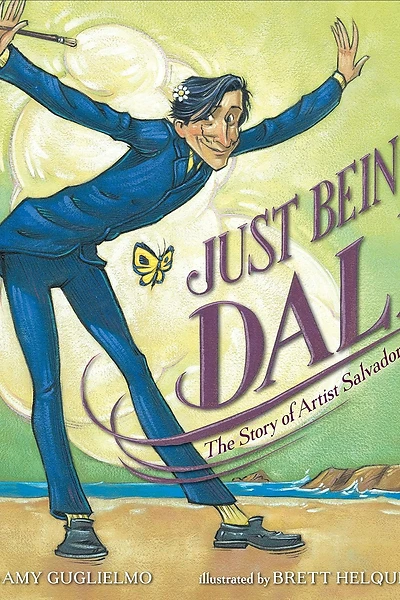
Just Being Dalí: The Story of Artist Salvador Dalí
by Amy Guglielmo
Pacing MaterialThe story of Salvador Dalí, the eccentric artist who turned his wild imagination and unique personality into world-changing art.
Big Idea
Being true to yourself — even when the world thinks you're strange — is what makes you a masterpiece.
Discussion Questions
- 1.What made Salvador Dalí's art different from other artists?
- 2.How did Dalí stay true to himself even when people didn't understand him?
- 3.What does it mean to be 'just being yourself'?
- 4.How can being different be a strength?
Classroom Activity
Surreal Self-Portraits
Create a surreal self-portrait that includes three things that represent who you are, no matter how strange.
Lesson Plan
Learning Goals
- Understand biographical narrative about artists
- Explore themes of individuality and self-expression
- Practice surreal art techniques
Standards Connections
- ELA: RL.K.1 — Ask and answer questions about key details
- ELA: RL.K.2 — Retell stories, including key details
- ELA: RL.K.3 — Describe characters, setting, and events
- ELA: RL.3.6 — Acknowledge differences in characters' points of view
- ELA: SL.K.1 — Participate in collaborative conversations about the text
- ELA: W.K.3 — Write narratives recounting events with descriptive details
- SEL: Social Awareness
- SEL: Relationship Skills
- Art: VA:Re7 — Perceive and analyze artistic work
Pace-Write-Read Study with Pace-Write It!
Focus question: How does a writer slow down and speed up a story to help readers feel a character’s creativity and individuality? In Just Being Dalí: The Story of Artist Salvador Dalí by Amy Guglielmo, the author tells about young Salvador’s unusual ideas, feelings, and artwork in a lively, playful way. The pacing moves between quick moments of action and slower, descriptive parts so readers can pause to notice how Dalí’s imagination grows into art.
| Element | How to notice or teach it in the novel |
|---|---|
| Pace | Read: Notice how the story moves quickly through some parts of Salvador Dalí’s childhood but slows down for his strange, vivid ideas and artistic moments. Classroom Activity: Write 3 sentences about a child having an unusual idea; make the first sentence quick, the second slow with details, and the third quick again. |
| Plot | Read: Follow how Salvador begins as a child who does not fit in, then keeps creating, and finally becomes known for his original art. Classroom Activity: Make a beginning-middle-end chart showing how Salvador’s individuality leads to success, then write one sentence for each part. |
| Prosody | Read: Listen to how the book sounds when read aloud, especially in parts that celebrate Salvador Dalí’s big personality and bold imagination. Classroom Activity: Read a favorite page aloud with expression, then write one sentence that should be read softly and one that should be read boldly. |
| Word pause | Read: Notice places where a strong or surprising word makes you stop and think about Salvador’s creativity or unusual behavior. Classroom Activity: Write a sentence about an artist using one powerful word that deserves a pause, then underline it. |
| Concept | Read: Think about the big idea that being different can become a strength, just like Salvador Dalí’s wild imagination became art. Classroom Activity: Write 2 sentences explaining how being different can help someone create something new. |
| Voice & World View | Read: Notice how the book’s voice feels admiring, energetic, and open to Salvador Dalí’s unusual way of seeing the world. Classroom Activity: Write in a cheerful voice about something strange or silly that turns into something beautiful. |
| Setting & Place | Read: Pay attention to where Salvador is and how each place helps shape the feeling of the scene, from ordinary spaces to spaces transformed by imagination. Classroom Activity: Write 3 setting details that turn a normal room into a place an imaginative artist would love. |
| Point of View | Read: Notice that the story is told from an outside narrator who helps readers understand Salvador Dalí’s actions and inner creativity. Classroom Activity: Rewrite one moment from the story as if Salvador is saying, “I saw… I felt… I made…”. |
| Original Characters | Read: Notice how Salvador Dalí is shown as an original character whose behavior, ideas, and art make him stand out. Classroom Activity: Invent a child character with one unusual talent and write 4 sentences showing how that talent makes the character memorable. |
| Dialogue | Read: Listen for how spoken words can reveal reactions to Salvador’s uniqueness and help move the story along. Classroom Activity: Write a short 2-line dialogue between Salvador and someone who does not understand his art at first. |
| Details | Read: Notice the small details that help readers picture Salvador Dalí’s habits, art, and personality. Classroom Activity: Write 3 precise details about a pretend painting made by Salvador. |
| Descriptions | Read: Pay attention to how description slows the story down so readers can picture Salvador’s dreamlike imagination. Classroom Activity: Describe one unusual object as if Salvador Dalí might paint it in a surprising way. |
| Strong First Lines | Read: Notice how the opening invites readers into the life of a child who sees the world differently. Classroom Activity: Write an opening line for a story about a creative child that makes readers curious right away. |
| Immediacy & Engagement | Read: Notice how the story keeps readers close to Salvador by showing his feelings, actions, and surprising ideas in the moment. Classroom Activity: Write 2-3 sentences about a child creating art right now, using action words like splashed, imagined, or stared. |
| Story Scenes & Summaries & Unique Structures | Read: Notice how some parts zoom in on special scenes from Salvador Dalí’s life while other parts summarize time passing and his growth as an artist. Classroom Activity: Write one detailed scene about a child painting, then one summary sentence that tells what happened over many days. |
| Flashback & Flash Forward & Cliffhangers | Read: Notice whether the story stays mostly in order and how readers still feel eager to see what Salvador Dalí will become. Classroom Activity: Write a cliffhanger sentence for a biography page: “But no one knew that this strange young artist would soon…”. |
| Tension & Suspense & Surprise | Read: Notice moments when Salvador’s unusual choices might confuse others, creating tension before his creativity is appreciated. Classroom Activity: Write 3 sentences showing a character doing something unexpected with art, ending with a surprise. |
| Page Turns and Chapter Breaks | Read: Notice how page turns can build curiosity about Salvador Dalí’s next idea, artwork, or change in life. Classroom Activity: Write a page-turn sentence that makes a reader want to flip the page to see the next strange invention or painting. |
| Performance | Read: Think about how this book could be performed with dramatic voice, facial expressions, and gestures to match Salvador Dalí’s larger-than-life personality. Classroom Activity: Choose one sentence and mark where you would pause, smile, or widen your eyes when reading it aloud. |
| Personality | Read: Notice how Salvador Dalí’s personality drives the pacing because his confidence, oddness, and imagination keep the story lively. Classroom Activity: Write 4 describing words for Salvador’s personality, then use two of them in a sentence. |
| Humor | Read: Look for playful or funny moments in the way Salvador’s eccentric behavior and imagination are presented. Classroom Activity: Write a funny sentence about an artist using an everyday object in a silly new way. |
| Pause | Read: Notice where the story gives readers time to stop and think about Salvador Dalí’s feelings, art, or uniqueness. Classroom Activity: Add a pause dash or line break into your own sentence to make an important idea stand out. |
| Poetry and Poetic Devices | Read: Listen for vivid language and image-making that feels poetic, matching Salvador Dalí’s imaginative world. Classroom Activity: Write a simile or metaphor about creativity, such as “His idea was like…”. |
| Repetition | Read: Notice any repeated ideas about being different, imagining boldly, or turning strange thoughts into art. Classroom Activity: Write a 3-line piece that repeats the starter “He imagined…” to show growing creativity. |
| Rhythm | Read: Listen to the rhythm of short and long sentences as the story shifts between energetic action and thoughtful description. Classroom Activity: Write one short sentence and one longer flowing sentence about making art. |
| Punctuation | Read: Notice how punctuation helps shape the mood, excitement, and pauses in a story about Salvador Dalí’s bold life. Classroom Activity: Write 2 sentences about a surprising painting, using an exclamation mark in one and commas in the other. |
| Questions | Read: Think about the questions readers might ask, such as why Salvador acted differently or how his strange ideas became famous art. Classroom Activity: Write 2 questions you would ask Salvador Dalí, then answer one in your own words. |
| Compare-Contrast | Read: Notice how Salvador Dalí can be compared with other children who try to fit in, while he follows his own imagination. Classroom Activity: Write 2 sentences comparing an ordinary artist and Salvador’s unusual artistic style. |
| Objects | Read: Pay attention to meaningful objects connected to art, creativity, and the unusual images Salvador Dalí is known for. Classroom Activity: Choose one object, like a clock, chair, or paintbrush, and write how Salvador might turn it into something surprising in a painting. |
| Threes | Read: Notice if ideas or descriptions come in groups of three to make Salvador’s world feel full and memorable. Classroom Activity: Write a sentence listing three unusual things an imaginative artist might paint. |
| Whitespace & Negative Space | Read: Notice how open space on a page can slow readers down and help important words or illustrations about Salvador Dalí stand out. Classroom Activity: Write a tiny 2-line poem about imagination and leave a blank line between the lines for emphasis. |
| Art & Graphics | Read: Notice how the illustrations and page design help tell the story of Salvador Dalí’s individuality and creative spirit along with the words. Classroom Activity: Sketch a quick picture to match one sentence you wrote about an unusual artist, then add one label. |
| Interactives & Gamification | Read: Think about how readers can interact by hunting for strange details, unusual objects, or clues about Salvador Dalí’s imagination on each page. Classroom Activity: Make a “Find 3 Creative Clues” list for a partner to spot in an illustration or in your writing about a quirky artist. |
Pace-Write It!
20-Minute Classroom Flow\nRead (5 min): Read aloud a few pages from Just Being Dalí: The Story of Artist Salvador Dalí by Amy Guglielmo. Ask students to listen for parts that move fast and parts that slow down with rich description.\nNotice (5 min): Discuss: Where did the story speed up? Where did it pause on Salvador’s thoughts, art, or personality? Chart student observations under two headings: “Fast Parts” and “Slow Parts.”\nWrite (7 min): Students write a short 3-5 sentence piece about a child with a unique idea. Challenge them to use pacing like this book: a quick beginning, a slower descriptive middle, and a strong ending. Writing frame: “________ was not like everyone else. One day, ________. Slowly, he/she noticed ________, ________, and ________. It felt ________. Then, ________ turned that unusual idea into ________.”\nShare (3 min): Partners read their pieces aloud and point out one sentence that felt fast and one that felt slow. Invite 1-2 students to share with the class.\nExit ticket: Write one sentence answering: How did Amy Guglielmo use pacing to help readers understand Salvador Dalí’s individuality and creativity?
Pace-Write-Read Connection
Teach this book using the Pace-Write-Read method — Tool 20: Play.
Open the Mastery Manual