 K-3
K-3P BLACKALL
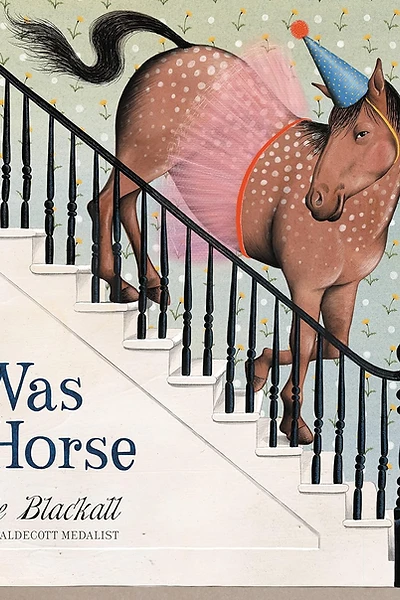
If I Was a Horse
by Sophie Blackall
Pacing MaterialA child imagines being a horse — galloping, eating apples, and living free — in a whimsical exploration of identity and imagination.
Big Idea
Imagination lets us explore who we could be — and helps us discover who we already are.
Discussion Questions
- 1.What animal did the child in the story choose to be? Why do you think they chose that one?
- 2.If you could be any animal, which would you choose and why?
- 3.What would you do differently if you were that animal?
- 4.What do you think the story is really about — being an animal, or being yourself?
- 5.Would you rather be a horse wearing a tutu or a regular horse? What makes that fun?
Classroom Activity
If I Were an Animal Drawings
Students draw a two-panel comic showing themselves as they are now and as the animal they'd most like to be, then write one sentence explaining what that animal would do.
Lesson Plan
Learning Goals
- Use imagination to explore perspective-taking
- Express ideas through drawing and writing
- Make text-to-self connections
- Understand the concept of metaphorical thinking
Activity Steps
- 1.Distribute paper with two panels side by side.
- 2.In the left panel, students draw themselves as they are.
- 3.In the right panel, students draw themselves as their chosen animal.
- 4.Below the panels, students write: 'If I were a ___, I would ___.'
- 5.Students share their comics with a partner and explain their choices.
Standards Connections
- ELA: RL.K-3.6 (Point of View)
- ELA: W.K-3.3 (Narrative Writing)
- SEL: Self-Awareness
- Art: Creative Expression
Pace-Write-Read Study with Pace-Write It!
Focus question: How does an author slow down and speed up a story to show imagination at work? In If I Was a Horse by Sophie Blackall, a child imagines what life would be like as a horse—running free, eating apples, and seeing the world in a playful new way. The pacing moves gently through short thoughts, vivid images, and page-by-page wonder, giving readers time to enjoy each imagined moment of self-expression.
| Element | How to notice or teach it in the novel |
|---|---|
| Pace | Read: Notice how If I Was a Horse moves at a calm, dreamy pace as the child imagines one horse-like idea at a time, such as galloping and living freely. Classroom Activity: Write 4 short sentences that imagine being a different animal, making one sentence fast action and one sentence slow description. |
| Plot | Read: Notice that the plot is simple and imagination-based: the child wonders what it would be like to be a horse and then explores that idea through playful scenes. Classroom Activity: Make a beginning-middle-end plan for an "If I was a ___" story with 3 imagined events. |
| Prosody | Read: Listen to how the story sounds when read aloud; the gentle phrasing matches the dreamy voice of the child imagining a horse’s life. Classroom Activity: Read one page aloud with expression, then write 2 lines that sound smooth and playful when spoken. |
| Word pause | Read: Notice where you naturally stop on the page to think about the child’s wish to gallop, munch apples, or be free like a horse. Classroom Activity: Write 3 sentences about an imagined transformation and underline the word in each sentence where a reader should pause. |
| Concept | Read: The big concept in If I Was a Horse is imagination as a way to explore identity and self-expression. Classroom Activity: Finish this sentence three ways: "If I was a ___, I would ___." Then choose one idea and turn it into a mini story. |
| Voice & World View | Read: Notice the childlike voice and the hopeful world view that sees becoming a horse as joyful, free, and full of possibility. Classroom Activity: Write in a child’s voice about becoming an animal and include a line that shows what feels exciting or important. |
| Setting & Place | Read: Notice how the imagined horse world feels open and welcoming, with room to run, eat apples, and be free. Classroom Activity: Draw and label a place where your imagined animal-self would live, then write 3 setting details. |
| Point of View | Read: The story is told from the child’s perspective, which helps readers feel close to the imagination and wishes in the book. Classroom Activity: Write 3 first-person sentences that begin with "If I was..." to show your own point of view. |
| Original Characters | Read: The main character is memorable because the child blends ordinary childhood feelings with the unusual dream of being a horse. Classroom Activity: Invent an original child character who wants to become an animal and list 3 things that make that character special. |
| Dialogue | Read: Even when the book leans on reflection more than conversation, readers can imagine what the child might say while pretending to be a horse. Classroom Activity: Write a short dialogue between the child and a friend about why being a horse would be wonderful. |
| Details | Read: Notice the specific details—like galloping and eating apples—that make the fantasy feel real and playful in If I Was a Horse. Classroom Activity: Write 5 small details your animal-self would do, eat, or feel. |
| Descriptions | Read: Sophie Blackall uses clear, appealing descriptions to help readers picture the child’s horse imagination. Classroom Activity: Write 3 describing sentences about moving like a horse without using the word "nice." |
| Strong First Lines | Read: Notice how the opening idea invites readers right into the child’s imagination by wondering about being a horse. Classroom Activity: Write 2 strong first lines for your own imagination story, each beginning with "If I was..." |
| Immediacy & Engagement | Read: The book feels immediate because the child’s thoughts are direct and easy to step into right away. Classroom Activity: Write 3 sentences that make your reader feel they are inside your imagined moment right now. |
| Story Scenes & Summaries & Unique Structures | Read: Notice how the book moves through a series of imagined moments instead of a complicated plot, creating a gentle, list-like structure of possibilities. Classroom Activity: Plan your story as 3 scenes—what you do first, next, and last as your chosen animal. |
| Flashback & Flash Forward & Cliffhangers | Read: This book stays mostly in the present imagination, but readers can think forward to what the child might do next as a horse. Classroom Activity: Add one flash forward sentence to your story: "Tomorrow, as a ___, I will ___." |
| Tension & Suspense & Surprise | Read: The story is more whimsical than suspenseful, but surprise comes from unexpected imagined horse experiences and the child’s playful thinking. Classroom Activity: Write one surprising thing your animal-self can do that readers would not expect. |
| Page Turns and Chapter Breaks | Read: In this picture book, page turns help reveal each new horse idea a little at a time, keeping the imagination moving. Classroom Activity: Fold a paper into 4 parts and plan one new imagined action for each page turn. |
| Performance | Read: This story invites performance because children can act out galloping, trotting, munching apples, and tossing their heads like a horse. Classroom Activity: Act out one page, then write the action sentence that matches your movement. |
| Personality | Read: The child’s personality shines through curiosity, confidence, and delight in pretending to be a horse. Classroom Activity: Write 4 lines that show your character’s personality while imagining being an animal. |
| Humor | Read: Notice the light humor in the idea of a child seriously imagining all the funny and wonderful parts of horse life. Classroom Activity: Write one silly but believable detail about being your chosen animal. |
| Pause | Read: Some pages create a pause so readers can enjoy one image or idea before moving to the next part of the child’s horse fantasy. Classroom Activity: Write a sentence, then leave a line break before your next sentence to create a thoughtful pause. |
| Poetry and Poetic Devices | Read: The language in If I Was a Horse feels poetic because it is simple, image-rich, and musical as it follows the child’s imagination. Classroom Activity: Write 3 lines of an animal poem using imagery, such as what you see, hear, or feel. |
| Repetition | Read: Notice how the repeated idea of "If I was a horse" helps hold the book together and builds its steady rhythm. Classroom Activity: Write a short piece with the repeated starter "If I was a ___." Use it in 3 sentences. |
| Rhythm | Read: The rhythm of the book is soft and flowing, matching the dreamy movement of imagining life as a horse. Classroom Activity: Write 3 short lines and 1 longer line about your animal-self to create a pattern readers can hear. |
| Punctuation | Read: Look at how punctuation helps control the smooth pacing, giving readers places to stop, wonder, and enjoy each horse image. Classroom Activity: Write 4 sentences and use a period, comma, and exclamation mark to change how the lines sound. |
| Questions | Read: The whole book grows from a wondering idea, almost like the child is asking what it would be like to live as a horse. Classroom Activity: Start your writing with a question about becoming an animal, then answer it in 3 sentences. |
| Compare-Contrast | Read: Readers can compare the child’s real life with the imagined freedom of horse life—walking versus galloping, snacks versus apples, indoors versus open space. Classroom Activity: Make a T-chart comparing "Me" and "Me as a horse," then write 2 compare-contrast sentences. |
| Objects | Read: Important objects, like apples and other horse-related details, help ground the child’s fantasy in things readers can picture. Classroom Activity: Choose 3 objects your animal-self would need or love and write a sentence about each one. |
| Threes | Read: The book’s idea can be retold in groups of three, such as three things the child would do as a horse, which helps pacing feel balanced. Classroom Activity: Write "As a ___, I would..." and list exactly 3 actions in order. |
| Whitespace & Negative Space | Read: Notice how space on the pages gives the child’s horse thoughts room to breathe and lets each idea stand out. Classroom Activity: On a page, write only 3 strong lines and leave plenty of blank space around them. |
| Art & Graphics | Read: Sophie Blackall’s illustrations help pace the story by showing emotion, motion, and imagination alongside the text. Classroom Activity: Draw one scene of your animal imagination and add 2 labels or captions that match the picture. |
| Interactives & Gamification | Read: This book invites playful participation because children can pretend, predict the next horse idea, and act out the scenes. Classroom Activity: Create a class guessing game called "If I Was a..." and write 3 clues about your animal-self for classmates to solve. |
Pace-Write It!
20-Minute Classroom Flow\nRead (5 min): Read If I Was a Horse by Sophie Blackall aloud. Pause at a few pages to let students notice how each new horse idea gets its own moment.\nNotice (5 min): Ask: How does the story slow down so we can enjoy the child’s imagination? Chart student ideas such as repetition, short sentences, page turns, details like galloping and apples, and open space in the illustrations.\nWrite (7 min): Students write their own imitation piece about becoming an animal. Writing frame: "If I was a ____, I would ____. I would ____. I would ____. Maybe I would even ____." Encourage students to include one action, one food, one feeling, and one surprising detail.\nShare (3 min): Students read their favorite line to a partner or the class using expressive voice and pauses. Invite listeners to name one pacing move they heard, such as repetition or a strong pause.\nExit ticket: Write one sentence answering: "How did Sophie Blackall help readers enjoy each imagined moment in If I Was a Horse?"