 K-2
K-2P OHI
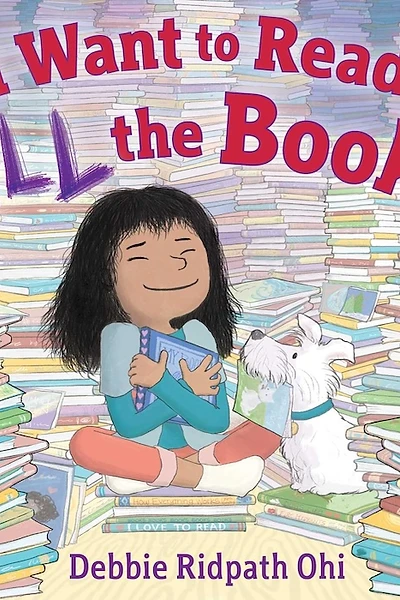
I Want to Read All the Books
by Debbie Ridpath Ohi
Pacing MaterialA young reader wants to read every single book in the world — but discovers that sharing stories is even better than reading alone.
Big Idea
Reading opens every world, and sharing a book multiplies its magic.
Discussion Questions
- 1.Why does the main character want to read everything?
- 2.Can one person read all the books? Why or why not?
- 3.How does sharing a book change it?
- 4.What book would you want to share with a friend?
Classroom Activity
My Reading Wish List
List five books you want to read this year. Draw your reading spot and one book you'd share.
Lesson Plan
Learning Goals
- Describe the young reader’s wish to read every book and explain how sharing stories changes the reading experience.
- Identify five books to read this year using personal interests, favorite topics, or illustrations.
- Draw a comfortable reading spot and select one book to share with someone.
- Practice listening and speaking by sharing a reading choice and explaining why it interests them.
Activity Steps
- 1.Introduce "I Want to Read All the Books" by Debbie Ridpath Ohi. Ask: "If you could read about anything, what would you choose?" Read aloud, pausing to notice the young reader’s enthusiasm for books.
- 2.Discuss the story: "What does the young reader want? What makes sharing a story special?" Invite children to connect the character’s experience to reading with friends or family.
- 3.Browse a selection of classroom or library books. Have children choose five books they want to read this year. Explain that a wish list is a starting point, not a race to finish every book.
- 4.Create a page titled "My Reading Wish List." Children record their five choices with titles, copied cover words, or drawings. Offer adult dictation support as needed.
- 5.On the same page, children draw their ideal reading spot and one book they would share. Help them complete: "I would share ___ with ___ because ___."
- 6.Have partners share their pages and listen to each other’s reasons. Close by inviting children to name one way sharing a book can make reading more enjoyable.
Standards Connections
- ELA: RL.K.3 / RL.1.3 / RL.2.3 — Discuss the main character and key events, including the character’s response to discovering the joy of sharing stories.
- ELA: W.K.2 / W.1.2 / W.2.2 — Use drawing, dictation, or writing to name reading choices and provide information about a book to share.
- ELA: SL.K.1 / SL.1.1 / SL.2.1 — Participate in collaborative conversations, listen to others, and take turns speaking.
- SEL: Self-awareness — Recognize personal reading interests and preferences.
- SEL: Relationship skills — Connect with others by recommending books and sharing reading experiences.
Pace-Write-Read Study with Pace-Write It!
Focus question: How does an author make a reading adventure feel fast, exciting, and full of heart? In I Want to Read All the Books by Debbie Ridpath Ohi, a book-loving child dreams of reading every book in the world and races through that big idea with energy and delight. The pacing shifts from eager, lively moments about wanting more and more books to a warmer, slower realization that sharing stories with others can be even more meaningful than reading alone.
| Element | How to notice or teach it in the novel |
|---|---|
| Pace | Read: Notice how the story moves quickly when the young reader is imagining reading all the books, then slows down when the character begins to connect reading with sharing and community. Classroom Activity: Write 3 short sentences that speed through something you love, then 2 slower sentences that show why sharing it matters. |
| Plot | Read: Track the simple but meaningful plot: the child wants to read every book, discovers the challenge of that huge dream, and learns that stories can bring people together. Classroom Activity: Draw and label a beginning, middle, and end showing the child's reading dream, problem, and shared-story ending. |
| Prosody | Read: Listen to how the read-aloud voice can sound excited in the big reading dream and softer in the sharing moments at the end. Classroom Activity: Practice reading one page in an excited voice and one page in a calm voice, then write one sentence for each mood. |
| Word pause | Read: Notice places where a reader might naturally pause to think about just how many books there are or to enjoy the idea of reading with others. Classroom Activity: Choose a sentence about books and mark with a slash where you would pause when reading aloud. |
| Concept | Read: The big concept is that loving books is wonderful, but stories become even richer when shared. Classroom Activity: Finish this frame: 'At first, the child thinks reading is about ____. By the end, reading is also about ____.' |
| Voice & World View | Read: Notice the joyful, book-loving voice that sees the world as full of stories, possibility, and wonder. Classroom Activity: Write 2 sentences in the voice of a child who is excited about books everywhere they look. |
| Setting & Place | Read: Notice how the story world feels surrounded by books and reading spaces, creating a cozy place for imagination. Classroom Activity: Draw a favorite reading place and write 2 sentences explaining how that place helps stories feel special. |
| Point of View | Read: Think about how close readers feel to the young book-lover's thoughts, wishes, and discoveries. Classroom Activity: Write a first-person sentence beginning 'I want to read...' and a third-person sentence beginning 'The child wants to read...'. |
| Original Characters | Read: Notice that the main character stands out because of their enormous wish to read every single book and their growing understanding about sharing stories. Classroom Activity: Invent a new character who loves one thing as much as this child loves books, and write 3 describing sentences. |
| Dialogue | Read: Listen for moments where spoken words could help show excitement, invitation, or sharing around books. Classroom Activity: Write 2 speech bubbles: one where the child says something about wanting all the books, and one where the child invites someone to read together. |
| Details | Read: Notice small details about books, reading, and reactions that help the child's big dream feel real. Classroom Activity: Make a list of 5 tiny details you might see in a reading corner, then use 3 of them in one sentence. |
| Descriptions | Read: Notice how the book can make books and reading feel exciting, cozy, and full of possibility without needing long explanations. Classroom Activity: Describe a stack of books using 3 feeling words and 2 color words. |
| Strong First Lines | Read: Pay attention to how the opening quickly introduces the child's huge desire to read, pulling readers into the story right away. Classroom Activity: Write your own strong first line for a story about loving books, beginning with 'I want...'. |
| Immediacy & Engagement | Read: Notice how the child's urgent wish to read every book makes readers feel involved immediately. Classroom Activity: Write 2 sentences that make your reader feel a big feeling right away, such as excitement about books or libraries. |
| Story Scenes & Summaries & Unique Structures | Read: Notice how some parts feel like quick summary of a giant dream while other parts feel like close moments of realizing what stories can do between people. Classroom Activity: Write one summary sentence about reading many books and one scene sentence about sharing one book with a friend. |
| Flashback & Flash Forward & Cliffhangers | Read: Think about how this story mostly stays in the present dream and discovery, instead of using flashbacks or cliffhangers, which helps younger readers follow the pacing easily. Classroom Activity: Add a simple flash forward sentence: 'One day, the child will...'. |
| Tension & Suspense & Surprise | Read: Notice the gentle tension in wondering whether anyone could really read every book and the surprise that the heart of the story is about sharing, not just collecting reading experiences. Classroom Activity: Write 2 sentences: one that sets up the huge challenge, and one that reveals a gentle surprise. |
| Page Turns and Chapter Breaks | Read: In this picture book, page turns help build excitement as the child's reading dream grows and then help reveal the warm change toward reading together. Classroom Activity: Plan a 4-page mini-book and write what surprise or new idea will happen after each page turn. |
| Performance | Read: Notice how this book invites animated reading with big gestures for excitement and softer gestures for togetherness. Classroom Activity: Choose one line to perform with wide arms and one line to perform with a quiet, welcoming voice, then write both lines. |
| Personality | Read: The main character's personality shines through as enthusiastic, determined, imaginative, and loving toward books. Classroom Activity: Write 4 personality words for the child and add one sentence of evidence for one word. |
| Humor | Read: Notice the playful humor in the oversized idea of reading every book in the world, a dream that feels both impossible and delightfully childlike. Classroom Activity: Write a funny sentence about trying to read an enormous pile of books. |
| Pause | Read: Notice where the story invites a quiet pause so readers can think about what stories mean beyond finishing many books. Classroom Activity: After rereading the ending, write one sentence that begins 'I paused when...'. |
| Poetry and Poetic Devices | Read: Listen for playful, lyrical language about books and for repeated ideas that make the text feel musical and child-friendly. Classroom Activity: Write a 3-line poem about books using the word 'books' in each line. |
| Repetition | Read: Notice how repeated ideas about wanting books or reading more can build energy and show the depth of the child's love of reading. Classroom Activity: Write a 4-line piece that repeats the starter 'I want to read...'. |
| Rhythm | Read: Hear how short, lively phrases can create a bouncy rhythm when the child is excited, while slower lines can fit the theme of sharing. Classroom Activity: Write one fast line with 5 or fewer words and one slower line with more detail. |
| Punctuation | Read: Notice how punctuation such as exclamation points or commas can help show excitement, stopping, and thinking in a book about big reading feelings. Classroom Activity: Write one excited sentence about books with an exclamation point and one thoughtful sentence with a comma. |
| Questions | Read: Think about questions readers may ask, like 'Can anyone read all the books?' and 'What makes reading special?' Classroom Activity: Write 2 questions the child might ask about books or sharing stories. |
| Compare-Contrast | Read: Compare the beginning, when the child focuses on reading every book alone, with the ending, when sharing stories becomes important too. Classroom Activity: Complete this chart in writing: 'At first... But later...' with 2 sentences. |
| Objects | Read: Books are the central objects, but they become symbols of curiosity, joy, and connection. Classroom Activity: Choose one object from reading life, such as a book, bookmark, or library card, and write 3 sentences about why it matters. |
| Threes | Read: Notice whether ideas can be grouped in threes, such as three feelings about books or three ways stories are shared, to help young readers remember. Classroom Activity: Write 3 reasons the child loves books and 3 reasons sharing stories matters. |
| Whitespace & Negative Space | Read: Notice how open space in a picture book can slow readers down, highlight one big idea, and let the child's feelings about books stand out clearly. Classroom Activity: Create a page with one short sentence in the middle and draw only one important picture detail around it. |
| Art & Graphics | Read: Pay attention to how the illustrations support pacing by making reading feel energetic, inviting, and emotional as the child moves from wanting all books to sharing them. Classroom Activity: Sketch two panels: one with a giant, exciting book dream and one with a cozy shared-reading moment; label each with a sentence. |
| Interactives & Gamification | Read: Turn the reading into a game by noticing each time the child's goal gets bigger or each time the meaning of reading deepens. Classroom Activity: Make a 'Book Love Hunt' checklist with 4 things to spot in the story, then write one new page idea for the character. |
Pace-Write It!
20-Minute Classroom Flow\nRead (5 min): Read I Want to Read All the Books by Debbie Ridpath Ohi aloud. Pause to emphasize the child's excited dream of reading every book and the softer ending about sharing stories.\nNotice (5 min): Ask: 'Where did the story feel fast? Where did it slow down?' Chart student ideas under two headings: 'Big Excited Reading Dream' and 'Warm Sharing Moments.' Notice repeated ideas about books, the simple plot shift, and how illustrations and page turns help pacing.\nWrite (7 min): Students write their own mini pacing piece about something they love to read or share. Use this writing frame: 'I want to read ____. I want to read ____. I want to read ____. But then I discover ____. Now I can ____. ' Encourage students to make the first 3 lines quick and repetitive, then slow down in the last 2 lines to show a new understanding.\nShare (3 min): Partners read their writing aloud twice: once with an excited fast voice for the beginning and once with a calm slower voice for the ending. Invite 2-3 students to share how their pacing changed.\nExit ticket: Complete this sentence on a sticky note: 'Pacing helps a reader feel ____ when ____.'
Pace-Write-Read Connection
Teach this book using the Pace-Write-Read method — Tool 33: Lists.
Open the Mastery Manual