 PreK-3
P TRACY
I Quit!
by Kristen Tracy
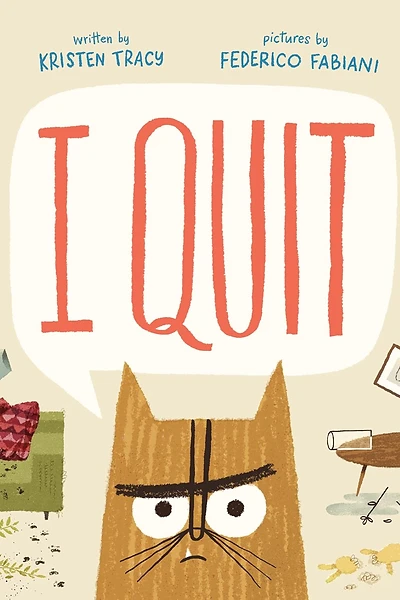
Pacing MaterialA grumpy orange cat has had enough — of everything. But quitting isn't as easy as it sounds, and this cat discovers that giving up might mean giving up the good things too.
Big Idea
It's okay to feel frustrated, but quitting too quickly can mean missing out on the things — and people — that make life worthwhile.
Discussion Questions
- 1.What makes the cat want to quit?
- 2.What does the cat miss when it quits?
- 3.Have you ever wanted to quit something? What happened?
- 4.What are some good reasons to keep trying?
Classroom Activity
Try Again Chart
Create a chart where students list something they wanted to quit but are glad they didn't. Share and celebrate perseverance.
Lesson Plan
Learning Goals
- Identify the orange cat’s frustration and explain how its feelings influence its wish to quit.
- Explain how quitting can mean missing enjoyable experiences or time with people we care about.
- Draw, dictate, or write about something students wanted to quit but are glad they kept trying.
- Identify a helpful response to frustration, such as taking a break, asking for help, or trying a different way.
Activity Steps
- 1.Read “I Quit!” aloud, pausing to ask: “How does the orange cat feel?” and “What might the cat miss by quitting?” Invite students to use words, facial expressions, or illustrations to explain their answers.
- 2.Discuss the difference between feeling frustrated and deciding to quit. Explain that taking a break or asking for help can support another try, and that students should stop activities that feel unsafe.
- 3.Create a class “Try Again Chart” with three columns: “I Wanted to Quit,” “What Helped Me Try Again,” and “What I’m Glad I Didn’t Miss.” Model an example, such as struggling with a puzzle, asking for help, and enjoying the finished picture.
- 4.Have students draw, dictate, or write a personal example for the chart. Offer prompts such as learning to zip a coat, build a block tower, read a word, or join a game. Students without an example may illustrate something they would like to try again.
- 5.Invite volunteers to share their entries and add them to the chart. Celebrate specific strategies and efforts rather than whether students succeeded immediately.
- 6.Return to the orange cat’s experience. Ask students to complete the sentence, “When I feel like quitting, I can ___,” and name one good thing another try might help them experience.
Standards Connections
- ELA: RL.K.3 — With prompting and support, identify characters and major events while discussing the orange cat’s experience.
- ELA: RL.1.3 — Describe the orange cat and key events using details from the story.
- ELA: SL.1.1 — Participate in collaborative conversations about frustration and trying again.
- SEL: Self-awareness — Recognize and name feelings of frustration.
- SEL: Self-management — Practice strategies such as pausing, seeking help, and trying a different approach.
Pace-Write-Read Study with Pace-Write It!
Focus question: How does an author slow down and speed up a story to show a character changing? In I Quit! by Kristen Tracy, a grumpy orange cat dramatically decides to quit everything, but the story keeps moving through funny moments, emotional turns, and discoveries about what really matters. The pacing helps readers feel the cat’s frustration, pause at big decisions, and then notice how giving up can lead to courage, resilience, and a new understanding.
| Element | How to notice or teach it in the novel |
|---|---|
| Pace | Read: Notice how I Quit! moves quickly when the orange cat makes bold quitting announcements and then slows down when the cat has to face what quitting really means. The pacing matches the cat’s big emotions and changing heart. Classroom Activity: Write 4 short sentences about a character who says, "I quit!" Make the first 2 sentences fast and dramatic, and the last 2 slower and more thoughtful. |
| Plot | Read: Follow the cat’s problem, decision to quit, and growing realization that quitting also means leaving behind good things. The plot builds from grumpy frustration to a deeper lesson about resilience and courage. Classroom Activity: Draw or write the beginning, middle, and end of a story about a character who wants to quit but learns something important. |
| Prosody | Read: Listen to how the words would sound aloud when the cat is grumpy, loud, or stubborn, and how the tone can soften as the story shifts. The rhythm of reading helps show the cat’s emotions. Classroom Activity: Choose one line a grumpy cat might say and one line the same cat might say after calming down. Practice reading both with different expression marks. |
| Word pause | Read: Notice places where a reader would naturally pause after a strong statement like quitting, helping the cat’s dramatic mood stand out. Those pauses make the humor and emotional turns stronger. Classroom Activity: Write 3 short lines for a dramatic animal character and add slash marks / where a reader should pause. |
| Concept | Read: The big idea in I Quit! is that quitting may sound powerful in the moment, but it can also mean losing things we love. The story turns a simple cat complaint into a lesson about resilience, courage, and choice. Classroom Activity: Finish this frame: "At first, my character wants to quit ____. Then my character learns ____." |
| Voice & World View | Read: Pay attention to the cat’s grumpy, fed-up voice and the way the story lets readers see the world through that dramatic point of view. The cat’s worldview makes everyday frustrations feel huge and funny. Classroom Activity: Write 3 first-person sentences in the voice of a very grumpy animal who thinks everything is too hard. |
| Setting & Place | Read: Notice how the places the cat moves through help shape the story, showing what the cat is leaving behind or reacting to. Even ordinary places matter because they hold the comforts and routines the cat may miss. Classroom Activity: Write about one place your character wants to leave and one reason that place still matters to the character. |
| Point of View | Read: Think about how the story centers the orange cat’s experience so readers understand the cat’s feelings, even when the cat is being dramatic. That point of view helps us laugh and still care. Classroom Activity: Rewrite a quitting moment from the point of view of another character or observer watching the cat. |
| Original Characters | Read: The grumpy orange cat feels memorable because the character is exaggerated, emotional, and relatable at the same time. The cat’s quitting idea becomes original because of the cat’s strong attitude and funny stubbornness. Classroom Activity: Invent an original animal character with one big mood and one surprising soft side. Write 2-3 sentences introducing the character. |
| Dialogue | Read: Notice how spoken words can reveal the cat’s frustration quickly and make the story feel lively. Dialogue can speed up pacing because readers hear the character’s feelings right away. Classroom Activity: Write a 4-line dialogue between a cat who wants to quit and a friend who asks, "Are you sure?" |
| Details | Read: Small details help readers understand what the cat is tired of and what the cat might miss by quitting. These details make the emotional shift believable. Classroom Activity: List 3 tiny things your character is annoyed by and 3 tiny things the character would miss if they left. |
| Descriptions | Read: Notice how description can make the orange cat seem especially grumpy, dramatic, or softhearted. Description slows the story just enough for readers to picture the cat’s mood. Classroom Activity: Describe a character’s face, tail, hands, or shoulders to show they are upset without saying "mad." |
| Strong First Lines | Read: Think about how a book called I Quit! promises action right away and pulls readers into the cat’s problem from the start. A strong opening creates immediate curiosity. Classroom Activity: Write 3 possible first lines for a story about a character who has finally had enough. |
| Immediacy & Engagement | Read: The cat’s strong feelings make the story feel immediate, as if the quitting decision is happening right now. Readers stay engaged because they want to see whether the cat will really leave everything behind. Classroom Activity: Write 2-4 sentences that begin in the middle of a big feeling, such as "I was done." or "That was it." |
| Story Scenes & Summaries & Unique Structures | Read: Notice when the story may zoom into a specific moment of the cat’s frustration and when it moves more quickly through events or ideas. This balance helps the pacing stay lively and clear for young readers. Classroom Activity: Write one detailed scene of a character stomping away, then one summary sentence that tells what happened next. |
| Flashback & Flash Forward & Cliffhangers | Read: Even if the story stays mostly in the present, readers can imagine what happened before the cat quit and what might happen next if the cat leaves. The title and emotional turns create mini-cliffhanger feelings. Classroom Activity: Add one flashback sentence beginning "Yesterday..." and one cliffhanger ending beginning "But then..." to your own quitting story. |
| Tension & Suspense & Surprise | Read: The tension comes from wondering whether the cat truly will quit and what that choice will cost. Surprise grows when readers see that quitting may not bring the relief the cat expected. Classroom Activity: Write a moment when a character gets what they asked for but realizes it is not exactly what they wanted. |
| Page Turns and Chapter Breaks | Read: In a picture book like I Quit!, page turns help hold suspense, especially after a dramatic statement from the cat. Readers turn the page to find out what the cat does next or discovers next. Classroom Activity: Create a 2-page mini-book plan. On page 1, end with a big quitting line. On page 2, reveal what happens next. |
| Performance | Read: This story invites dramatic read-aloud performance because the orange cat’s feelings are so big and expressive. Acting out the cat’s voice can help readers feel the pacing changes. Classroom Activity: Perform one line as an angry cat, one as a tired cat, and one as a brave cat. Then write a sentence that fits each voice. |
| Personality | Read: The cat’s personality drives the entire story; the pacing works because the cat reacts strongly to everything. That big personality makes the lesson about resilience feel earned instead of preachy. Classroom Activity: Make a character web with 3 personality traits for a main character and 1 way each trait affects the story. |
| Humor | Read: The humor in I Quit! grows from the cat’s oversized grumpiness and the mismatch between quitting dramatically and facing real consequences. Readers laugh, but they also understand the cat’s feelings. Classroom Activity: Write a funny complaint from an animal who is upset about something small but acts like it is enormous. |
| Pause | Read: Important pauses in the story let readers think about what the cat might lose by quitting and how the cat’s feelings are changing. Pauses help emotional moments land. Classroom Activity: Write 3 lines of a story and leave a blank line before the most important final line to create a pause. |
| Poetry and Poetic Devices | Read: Notice how repeated sounds, dramatic phrasing, or image-rich language could make the cat’s mood feel musical or memorable. Even in a prose picture book, poetic choices strengthen pacing and feeling. Classroom Activity: Write 2 lines about a grumpy cat using alliteration, such as "fuzzy, fiery, fed-up feline." |
| Repetition | Read: Repetition fits this story well because a frustrated cat might repeat complaints or the idea of quitting again and again. Repeated words can sound funny and also build emotional intensity. Classroom Activity: Write a short piece in which a character repeats one line 3 times, but each time it means something a little different. |
| Rhythm | Read: The rhythm of short, punchy statements can match the cat’s irritated mood, while longer lines can slow the story when the cat reflects. Rhythm helps shape how quickly readers move through the page. Classroom Activity: Write one section with 3 very short sentences and one section with 1 long sentence about the same character. |
| Punctuation | Read: Exclamation marks, commas, and periods can all help show the cat’s emotion in I Quit! An exclamation point can make the cat sound explosive, while a period can make the cat sound firm or sad. Classroom Activity: Write the sentence "I quit" three ways using different punctuation, and explain how each one sounds. |
| Questions | Read: Readers may ask, "Why is the cat so upset?" and "Will the cat really quit?" Questions keep the pages turning and deepen thinking about courage and resilience. Classroom Activity: Write 3 questions a reader might ask during the middle of a story about a character who wants to give up. |
| Compare-Contrast | Read: Compare the cat at the beginning of the story with the cat later on, especially in attitude, choices, and understanding. The contrast helps readers see character growth. Classroom Activity: Make a T-chart: "Before quitting" and "After learning." Add at least 3 ideas to each side for the cat or a new character. |
| Objects | Read: Think about the objects in the cat’s world that could represent comfort, routine, frustration, or belonging. Everyday items can show what the cat might lose by storming away. Classroom Activity: Choose one object your character leaves behind and write 2 sentences explaining why it matters. |
| Threes | Read: Stories for young readers often use groups of three to build rhythm and humor, and the cat’s complaints or discoveries could feel especially strong in sets of three. Three examples help ideas feel complete. Classroom Activity: Write 3 complaints your character makes, then 3 reasons your character decides to stay or try again. |
| Whitespace & Negative Space | Read: In a picture book, open space on the page can make a dramatic line like a quitting declaration feel bigger and louder. Space can also slow readers down for an emotional beat. Classroom Activity: Plan a page with only one short sentence in the middle. Write the sentence your character says in the biggest moment. |
| Art & Graphics | Read: The illustrations in a picture book like I Quit! help show the orange cat’s body language, facial expressions, and emotional journey. Art works with the words to control pacing by zooming in on feelings or opening up a scene. Classroom Activity: Draw the same cat in 2 pictures: one quitting angrily and one realizing something important. Add a caption to each. |
| Interactives & Gamification | Read: This story invites playful interaction because students can predict what the cat will do next, act out emotions, and sort reasons to quit versus reasons to keep going. Interactive responses help young readers connect to the theme of resilience. Classroom Activity: Create a class game with two cards: "Quit" and "Try Again." Read a scenario for a character, and students choose a card, then write one sentence explaining their choice. |
Pace-Write It!
20-Minute Classroom Flow\nRead (5 min): Read I Quit! by Kristen Tracy aloud with dramatic expression. Pause after strong cat moments so students can predict what the grumpy orange cat will do next.\nNotice (5 min): Ask: How did the story speed up when the cat was upset? How did it slow down when the cat started to realize quitting has consequences? Chart student ideas under "Fast Parts" and "Slow Parts."\nWrite (7 min): Students write a tiny story about a character who wants to quit something but learns a reason to stay, try again, or be brave. Writing frame: "I quit ____. I was tired of ____. Then I noticed ____. If I quit, I would also lose ____. So I decided to ____." Encourage students to use one exclamation mark, one repeated phrase, and one feeling detail.\nShare (3 min): Partners read their stories aloud twice: once in a dramatic grumpy voice and once in a thoughtful voice. Invite 2-3 students to share how their pacing changed from the beginning to the end.\nExit ticket: Complete this sentence: "The story slowed down when ____ because ____."
Pace-Write-Read Connection
Teach this book using the Pace-Write-Read method — Tool 20: Play.
Open the Mastery Manual