 3-7
3-7M DOGTOWN
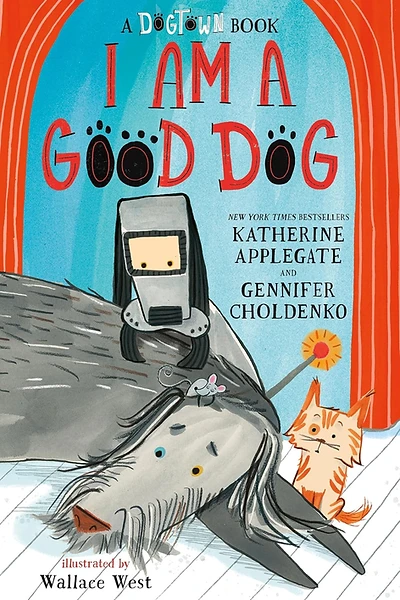
I Am a Good Dog
by Katherine Applegate and Gennifer Choldenko
Pacing MaterialBook 3 in the Dogtown series. A dog who has been labeled 'bad' sets out to prove that he is, in fact, a good dog — a story of redemption, courage, and being seen for who you truly are.
Big Idea
Labels don't define us — we can choose who we want to be, and everyone deserves a chance to be good.
Discussion Questions
- 1.Why has this dog been called 'bad'?
- 2.What does he do to prove he's a good dog?
- 3.Have you ever been judged unfairly? How did it feel?
- 4.What does it mean to be 'good'?
Classroom Activity
Good Dog Poster
Create a poster that shows all the qualities that make a 'good dog.' Display them around the classroom to celebrate positive traits.
Lesson Plan
Learning Goals
- Explain how the dog’s efforts to overcome a 'bad' label develop the theme that labels do not define identity.
- Identify positive qualities, such as courage, kindness, and perseverance, and support them with examples from the story.
- Create a 'Good Dog' poster that communicates how choices and actions reveal character.
- Reflect on how giving someone another chance can help them feel understood and included.
Activity Steps
- 1.Introduce the activity after reading the book or selected passages about the dog’s attempts to prove he is good. Discuss: What is the difference between doing something wrong and being labeled 'bad'?
- 2.Build a class list of 'good dog' qualities, including courage, kindness, responsibility, and perseverance. Invite students to connect each quality to a specific action or event in the book.
- 3.Have students select three qualities for their poster and plan an illustration showing the dog demonstrating them. Emphasize that being good does not mean being perfect.
- 4.Create posters titled 'I Am a Good Dog.' Include the illustration, three labeled qualities, and a brief explanation connecting at least one quality to a story event. For grades 6–7, require two textual examples and a sentence explaining the theme.
- 5.Display the posters for a gallery walk. Have students notice different ways classmates represented positive traits and discuss how the posters challenge the dog’s 'bad' label.
- 6.Close with a written reflection: 'One way I can give someone a chance to be seen for who they truly are is…' Allow students to use a fictional example rather than share personal experiences.
Standards Connections
- ELA: CCSS RL.3.3–RL.7.3 — Describe and analyze characters, motivations, and how actions influence events.
- ELA: CCSS RL.3.2–RL.7.2 — Determine a central message or theme and support it with story details.
- ELA: CCSS SL.3.1–SL.7.1 — Participate effectively in collaborative discussions.
- SEL: Self-awareness — Recognize strengths and distinguish identity from labels or mistakes.
- SEL: Social awareness — Practice empathy and recognize the importance of inclusion and second chances.
Pace-Write-Read Study with Pace-Write It!
Focus question: How do authors speed up and slow down a story so readers feel a character’s fear, hope, and courage? In I Am a Good Dog by Katherine Applegate and Gennifer Choldenko, the story follows a dog who has been judged unfairly and is determined to show who he really is. The authors use pacing to balance action, emotional reflection, and high-stakes moments so readers feel both the urgency of the adventure and the steady growth of resilience and courage.
| Element | How to notice or teach it in the novel |
|---|---|
| Pace | Read: Notice how the authors move quickly through moments of danger and uncertainty, then slow down when the dog reflects on being called 'bad' and what it means to be good. This changing pace helps the theme of resilience feel personal and urgent. Classroom Activity: Write a short scene in which a character rushes into a risky situation, then slows down to think about what others believe about them. |
| Plot | Read: Track how the plot centers on a dog trying to prove he is a good dog, with each obstacle raising the stakes of his journey toward redemption. Notice how the sequence of problems and choices keeps the story moving forward. Classroom Activity: Create a 5-step plot ladder for a character who has been misunderstood and must complete actions that reveal their true self. |
| Prosody | Read: Listen to how the sentences sound when read aloud, especially in emotional or suspenseful parts, where the rhythm can feel clipped, hopeful, or tense. In this story, sound supports the dog’s courage and vulnerability. Classroom Activity: Choose one emotional moment and rewrite it in a read-aloud style using short and long sentences to shape feeling. |
| Word pause | Read: Notice single words or brief phrases that make readers stop and absorb the dog’s fear, hope, or determination. These pauses help emphasize his struggle to be seen for who he truly is. Classroom Activity: Write 6-8 lines about a character facing a hard choice, using one-word lines or very short phrases to create pauses. |
| Concept | Read: Notice how the big idea of redemption shapes the pacing: the dog is not just on an adventure, but on a journey to redefine himself beyond a label. The story returns to courage, identity, and second chances. Classroom Activity: Write a paragraph explaining how an adventure plot can also teach a lesson about being misunderstood. |
| Voice & World View | Read: Pay attention to the emotional honesty in the storytelling and how the book invites readers to care about a character others may judge too quickly. The voice helps us see the world through the lens of loyalty, hurt, and hope. Classroom Activity: Write a first-person reflection from a character who feels unseen, using a voice that sounds honest, tender, and brave. |
| Setting & Place | Read: Notice how the places in the story affect pacing—some settings feel tense and confining, while others open up possibilities for action or escape. Setting helps shape the dog’s journey from limitation toward courage. Classroom Activity: Describe two places for the same character: one that makes them feel trapped and one that makes them feel hopeful. |
| Point of View | Read: Notice how the point of view keeps readers close to the dog’s thoughts and emotions, helping us experience his fear and determination directly. This closeness makes the pacing feel immediate because readers understand what each moment means to him. Classroom Activity: Rewrite a tense moment from two points of view: the misunderstood dog and a person who assumes the dog is 'bad.' |
| Original Characters | Read: Notice how the central dog stands out because he is flawed, judged, and deeply determined to change how others see him. Supporting characters help challenge, support, or misunderstand him, which adds momentum to the story. Classroom Activity: Invent an animal character with a bad reputation and list three traits, one fear, and one action that reveals their goodness. |
| Dialogue | Read: Listen for dialogue that reveals trust, doubt, judgment, or encouragement. In a story about redemption, what characters say—and refuse to say—can speed up conflict or slow down a moment for emotional impact. Classroom Activity: Write a dialogue between a character trying to prove themselves and someone who does not believe them yet. |
| Details | Read: Notice which details the authors include when the dog feels scared, determined, or hurt by labels. Small details can make the emotional stakes stronger without slowing the story too much. Classroom Activity: Write a scene in which three specific details show that a character is nervous but trying to be brave. |
| Descriptions | Read: Pay attention to how description is used selectively so the story keeps moving, especially in adventure scenes. The strongest descriptions help readers feel the dog’s world without stopping the action for too long. Classroom Activity: Describe a high-stakes moment in 5-6 sentences, using only details that increase tension or reveal emotion. |
| Strong First Lines | Read: Notice how an effective opening in a story like this must quickly introduce conflict, personality, and a problem to solve. A strong first line can immediately make readers wonder whether the dog will overcome the 'bad' label. Classroom Activity: Write three possible opening lines for a story about a character trying to prove a rumor is wrong. |
| Immediacy & Engagement | Read: Notice how the story creates immediacy by keeping the dog’s goal clear and placing him in situations where each choice matters. Readers stay engaged because they want to know if courage will be enough to change how others see him. Classroom Activity: Write a scene that begins with the sentence frame 'If I do this now, everything could change.' |
| Story Scenes & Summaries & Unique Structures | Read: Notice when the authors zoom in on a full scene and when they summarize time passing to keep the adventure moving. This balance helps the book focus on the most important emotional and action-filled moments. Classroom Activity: Write one full scene of a character making a brave choice, then add a 2-3 sentence summary of what happens over the next few days. |
| Flashback & Flash Forward & Cliffhangers | Read: Notice how references to what has happened before can deepen our understanding of why the dog has been labeled unfairly, while cliffhanger moments push readers into the next chapter. These choices increase empathy and suspense at the same time. Classroom Activity: Write a paragraph with a brief flashback that explains a character’s reputation, ending with a cliffhanger sentence. |
| Tension & Suspense & Surprise | Read: Track how tension rises when the dog’s good intentions may not be enough and readers worry that one mistake could confirm others’ worst beliefs. Surprise matters in a redemption story because unexpected actions can reveal true character. Classroom Activity: Write a suspenseful scene where a misunderstood character is about to be blamed, but does something surprising instead. |
| Page Turns and Chapter Breaks | Read: Notice where a chapter might end on a question, danger, or emotional realization that makes readers keep going. In an adventure about courage, strong breaks help build urgency around whether the dog will succeed. Classroom Activity: Write a mini-chapter of 8-10 lines and end it with a sentence that would make a reader want to turn the page. |
| Performance | Read: Think about how scenes from this book would sound if performed aloud, especially moments of fear, loyalty, or determination. The pacing of spoken lines can highlight the dog’s emotional journey from shame to courage. Classroom Activity: Script a short read-aloud performance between the dog and another character, marking where the reader should speed up, slow down, or pause. |
| Personality | Read: Notice how the dog’s personality drives the pacing: his persistence keeps the story moving, while his hurt feelings and self-doubt create quieter moments. Personality is not separate from plot; it shapes every decision. Classroom Activity: Write a character sketch of someone whose determination keeps them going even when others expect them to fail. |
| Humor | Read: Look for moments when humor lightens the emotional weight of the dog’s struggle. In middle grade adventure, humor can give readers a breathing space before the next tense moment. Classroom Activity: Write a short scene in which a serious mission is interrupted by a funny misunderstanding involving an animal character. |
| Pause | Read: Notice where the story pauses after a hard moment so readers can feel the dog’s disappointment, hope, or resolve. These pauses make the action matter more because they show the cost of each event. Classroom Activity: Write a paragraph that pauses after a mistake, showing what a character thinks before deciding what to do next. |
| Poetry and Poetic Devices | Read: Notice places where language may feel especially vivid or emotional through repetition, imagery, or sound. Even in prose, poetic devices can deepen the dog’s longing to be known as good. Classroom Activity: Write 4-6 lines of prose-poetry from the dog’s perspective about what the word 'good' means to him. |
| Repetition | Read: Notice repeated ideas, emotions, or words connected to being 'good,' being judged, and trying again. Repetition reinforces the central theme of resilience and helps the book’s emotional pacing feel steady. Classroom Activity: Write a short paragraph that repeats one key phrase three times to show a character’s determination. |
| Rhythm | Read: Listen to how the rhythm of the sentences changes between exciting scenes and reflective ones. Faster rhythm can match danger, while slower rhythm can reveal the dog’s inner struggle. Classroom Activity: Write two versions of the same moment—one with fast rhythm and one with slow rhythm. |
| Punctuation | Read: Notice how punctuation such as dashes, ellipses, and exclamation points can shape tension, hesitation, or excitement. In a story about courage under pressure, punctuation can control how quickly readers move through a scene. Classroom Activity: Rewrite a tense paragraph three ways, changing punctuation to create urgency, uncertainty, and relief. |
| Questions | Read: Pay attention to the questions raised by the story: Can a bad reputation be changed? Who gets to decide who is 'good'? These questions pull readers forward and deepen the theme. Classroom Activity: Write five questions a reader might ask while reading about a character trying to earn trust. |
| Compare-Contrast | Read: Notice contrasts between how others see the dog and how he sees himself, and between moments of danger and moments of tenderness. These contrasts sharpen both pacing and theme. Classroom Activity: Make a T-chart comparing 'What others believe' and 'What is actually true' about a misunderstood character, then write a paragraph using both sides. |
| Objects | Read: Notice whether certain objects in the dog’s world may carry emotional meaning or become important in key scenes. Objects can anchor fast-moving action and symbolize belonging, fear, or hope. Classroom Activity: Choose one object a misunderstood character keeps close and write a scene showing why it matters. |
| Threes | Read: Notice patterns of three in actions, challenges, or descriptions, since groups of three often create satisfying pacing in middle grade storytelling. A character may try, fail, and try again, which fits the book’s theme of resilience. Classroom Activity: Write a sequence of three attempts a character makes to prove they can be trusted. |
| Whitespace & Negative Space | Read: Notice how short paragraphs, breaks, or isolated lines can make emotional or suspenseful moments feel bigger on the page. Space can slow readers down and add emphasis to the dog’s hardest realizations. Classroom Activity: Write a brief scene using paragraph breaks and one isolated sentence to emphasize a turning point. |
| Art & Graphics | Read: Think about how cover art, chapter design, or visual presentation might shape expectations for an adventurous, heartfelt dog story. Visual choices can support pacing by signaling humor, danger, or hope. Classroom Activity: Design a chapter opener for a scene in which the dog makes a brave choice, including one image and a 2-sentence caption. |
| Interactives & Gamification | Read: Think about how the book’s conflicts could be turned into choices, challenges, or decision points: what would the dog do next, and what risk would each choice carry? This helps readers notice how pacing depends on decisions under pressure. Classroom Activity: Create a choose-your-path chart with three decisions for a misunderstood animal hero, showing how each choice changes the story’s pace. |
Pace-Write It!
20-Minute Classroom Flow\n\nRead (5 min): Read aloud a short excerpt from a high-tension moment and a quieter reflective moment from I Am a Good Dog by Katherine Applegate and Gennifer Choldenko. Ask students to listen for where the story speeds up and where it slows down as the dog tries to prove he is good.\n\nNotice (5 min): Discuss: What words, sentence lengths, or chapter moments make the scene feel fast? What details or pauses make it feel slower and more emotional? Chart student observations under two headings: 'Fast Pace' and 'Slow Pace.'\n\nWrite (7 min): Students write their own redemption scene about a misunderstood character. Writing frame: 'Everyone thought I was ________. But when ________ happened, I had to choose. First, I ________. Then, when things got worse, I ________. For one moment, I stopped and thought, ________. That was when I decided to ________. Maybe now they would see that I was really ________.' Encourage students to use at least one fast-paced sentence, one pause for reflection, and one ending line that creates suspense or hope.\n\nShare (3 min): Partners read their scenes aloud and identify one place where the writer sped up the action and one place where the writer slowed down for feeling. Invite 1-2 volunteers to share a strong line with the class.\n\nExit ticket: In one or two sentences, explain how pacing can help readers understand a character’s courage.