 K-3
K-3P TOURVILLE
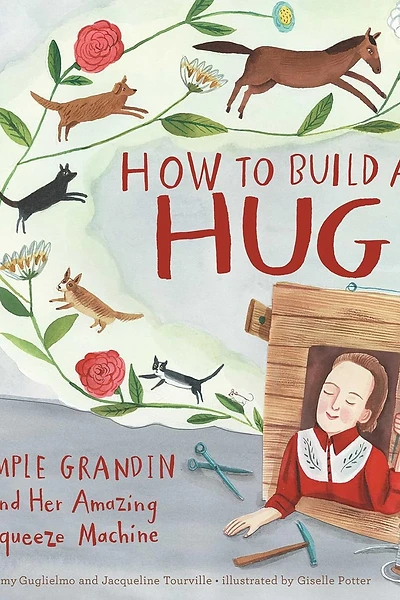
How to Build a Hug: Temple Grandin and Her Amazing Squeeze Machine
by Amy Guglielmo and Jacqueline Tourville
Pacing MaterialThe story of Temple Grandin, a scientist who saw the world differently and invented a machine that gave her the comfort she needed — and changed how we understand animals and autism.
Big Idea
When the world feels overwhelming, you can build something that helps you feel safe — and that invention might help others too.
Discussion Questions
- 1.What was Temple Grandin's 'squeeze machine' and why did she build it?
- 2.How did Temple Grandin turn a challenge into an invention?
- 3.What does it mean to think differently, and why is that valuable?
- 4.What would you invent to make yourself feel better?
Classroom Activity
Comfort Invention Design
Design an invention that helps you feel calm or comfortable, labeling its parts and how it works.
Lesson Plan
Learning Goals
- Understand biographical narrative
- Explore themes of neurodiversity and empathy
- Practice design thinking and invention
Standards Connections
- ELA: RL.K.1 — Ask and answer questions about key details
- ELA: RL.K.2 — Retell stories, including key details
- ELA: RL.K.3 — Describe characters, setting, and events
- ELA: RL.3.6 — Acknowledge differences in characters' points of view
- ELA: SL.K.1 — Participate in collaborative conversations about the text
- ELA: W.K.3 — Write narratives recounting events with descriptive details
- SEL: Social Awareness
- SEL: Relationship Skills
- Art: VA:Re7 — Perceive and analyze artistic work
Pace-Write-Read Study with Pace-Write It!
Focus question: How can the way a story moves help us understand how a character thinks, feels, and solves a problem? In How to Build a Hug: Temple Grandin and Her Amazing Squeeze Machine by Amy Guglielmo and Jacqueline Tourville, readers follow Temple as she experiences the world in a unique way and invents something that brings her comfort. The pacing helps us slow down with Temple’s feelings, notice important moments of problem-solving, and feel the excitement of her idea taking shape.
| Element | How to notice or teach it in the novel |
|---|---|
| Pace | Read: Notice how the story speeds up during Temple’s thinking and building, but slows down when the book shows how sounds, touch, and crowded spaces feel overwhelming for her. This pacing helps readers experience Temple’s world and understand why the squeeze machine matters. Classroom Activity: Write 3-4 sentences about a time a character has a big feeling; make one sentence short and quick, and one sentence longer and slower to change the pace. |
| Plot | Read: Notice the clear sequence: Temple feels the world intensely, searches for comfort, notices how animals respond, and creates the squeeze machine. The plot shows how a problem can lead to an invention. Classroom Activity: Make a beginning-middle-end organizer for Temple’s story, then write one sentence for each part. |
| Prosody | Read: Listen to how the words sound when read aloud, especially in parts that describe pressure, calm, or busy sensory moments in Temple’s life. The flow of the language can sound gentle in comforting moments and busier in overwhelming ones. Classroom Activity: Read one page aloud with a partner and mark where your voice should go slower, softer, or stronger; then write one sentence meant to be read in a calm voice. |
| Word pause | Read: Notice where a reader might naturally pause on important words about Temple’s feelings, autism, animals, or the squeeze machine. These pauses help meaning land and give readers time to think. Classroom Activity: Choose one sentence about Temple and add slash marks where a reader should pause, then write your own sentence with two planned pauses. |
| Concept | Read: Notice the big idea that different ways of thinking can lead to important discoveries. Temple’s need for comfort and her careful noticing become the starting point for innovation. Classroom Activity: Write a sentence frame: “Because Temple experienced ___, she was able to invent ___.” Then write your own example about a problem turning into an idea. |
| Voice & World View | Read: Notice how the book presents Temple with respect and warmth, showing that her way of seeing the world is valuable. The voice helps readers understand neurodiversity as a strength, not something to hide. Classroom Activity: Write 2-3 sentences in a kind, respectful voice about a character who notices the world differently. |
| Setting & Place | Read: Notice the places that matter in Temple’s story, including spaces that feel too loud or too busy and places where she can observe animals and think. Each setting affects her feelings and actions. Classroom Activity: Write about one place Temple might feel calm and one place she might feel overwhelmed; explain each in one sentence. |
| Point of View | Read: Notice that the story is told from an outside narrator, but it stays close to Temple’s experiences and feelings. This helps readers understand her sensory world while still learning about her life story. Classroom Activity: Rewrite one moment from Temple’s story using “I” as if Temple is telling it herself. |
| Original Characters | Read: Notice that Temple is a real and memorable character because of the way she thinks in images, studies animals, and solves problems in her own way. Her originality drives the whole book. Classroom Activity: Invent a character who notices something other people miss, and write 3 traits that make the character original. |
| Dialogue | Read: Notice any spoken words and how they can reveal what people around Temple understand, wonder, or say about her ideas. Dialogue can also make scenes feel more immediate. Classroom Activity: Write a two-line conversation between Temple and someone she trusts about her invention idea. |
| Details | Read: Notice the small details about pressure, touch, animals, and Temple’s observations. These details help readers understand both her challenges and her brilliance. Classroom Activity: Write 3 sensory details that could belong in Temple’s story, such as what she sees, hears, or feels. |
| Descriptions | Read: Notice how descriptions help readers picture Temple’s experiences and the squeeze machine itself. The descriptive language turns a scientific idea into something children can imagine clearly. Classroom Activity: Describe an invention that helps someone feel better using at least 3 describing words. |
| Strong First Lines | Read: Notice how the opening invites readers into Temple’s world right away and prepares them to think about how she experiences life differently. A strong beginning creates curiosity and empathy. Classroom Activity: Write a first line for a story about a child inventor who solves a personal problem. |
| Immediacy & Engagement | Read: Notice how the book keeps readers close to Temple’s feelings and discoveries so her story feels important in the moment. Readers stay engaged because they want to know how she will find comfort and create a solution. Classroom Activity: Write 2 sentences that begin with “Right now…” to make a scene feel immediate. |
| Story Scenes & Summaries & Unique Structures | Read: Notice how some parts feel like close-up scenes from Temple’s life while other parts summarize larger ideas about her growth and work. This balance helps fit a big life story into picture book form. Classroom Activity: Write one scene sentence about Temple noticing an animal and one summary sentence about how she kept learning over time. |
| Flashback & Flash Forward & Cliffhangers | Read: Notice whether the story mostly stays in order and how a biography can still build anticipation without many flashbacks or cliffhangers. The suspense comes from wondering what Temple will do with her observations. Classroom Activity: Write a cliffhanger sentence for Temple’s story, such as what happens just before she tests an idea. |
| Tension & Suspense & Surprise | Read: Notice the tension when Temple feels misunderstood or uncomfortable and the surprise when her need for deep pressure leads to an inventive machine. The emotional tension makes the solution feel powerful. Classroom Activity: Write 3 sentences that show a problem, a worry, and then a surprising solution. |
| Page Turns and Chapter Breaks | Read: Notice how page turns can hold a feeling or reveal a new step in Temple’s thinking, especially in a picture book with no chapters. A page turn can act like a tiny pause before an important reveal. Classroom Activity: Plan a 4-page mini-book and decide what important idea should be saved for a page turn. |
| Performance | Read: Notice how this story could be performed with expressive reading, especially by changing tone in overwhelming moments and softening during calm, comforting ones. Performance helps students feel the pacing in their bodies and voices. Classroom Activity: Practice reading one short part as if you are showing Temple’s change from stress to calm, then write one stage direction in parentheses. |
| Personality | Read: Notice Temple’s curiosity, determination, and careful observing. Her personality shapes the pacing because she keeps thinking, noticing, and inventing instead of giving up. Classroom Activity: Write 3 personality words for Temple and one sentence explaining how one trait helped her invent. |
| Humor | Read: Notice whether the book uses lightness gently rather than broad jokes, since the tone is respectful and thoughtful. Any playful moments often come from the joy of discovery rather than comedy. Classroom Activity: Write one gentle, happy sentence about the fun of making an invention work. |
| Pause | Read: Notice the moments when the story seems to pause on Temple’s feelings or observations. These pauses let readers reflect on why comfort, understanding, and design matter. Classroom Activity: Write a sentence, then add a dash or line break to create a thoughtful pause before the final idea. |
| Poetry and Poetic Devices | Read: Notice any imagery, repeated sounds, or carefully chosen words that make Temple’s experience vivid and emotional. Even in a biography, poetic language can help readers feel what facts alone cannot show. Classroom Activity: Write a simile for Temple’s feelings, such as “The noise felt like ___.” |
| Repetition | Read: Notice if ideas about seeing differently, feeling deeply, or noticing animals appear more than once. Repetition helps important themes stay with readers. Classroom Activity: Write a 3-sentence piece that repeats the same beginning, such as “Temple noticed…” each time. |
| Rhythm | Read: Notice the rhythm of the sentences as they move between crowded, intense moments and calmer, steadier ones. The rhythm supports the emotional pacing of Temple’s story. Classroom Activity: Write one choppy sentence to show stress and one smooth sentence to show calm. |
| Punctuation | Read: Notice how punctuation may shape the pace by stopping, pausing, or adding energy to key moments in Temple’s experience and invention process. Marks on the page help readers hear emotion. Classroom Activity: Write the same sentence two ways, once with a period and once with an exclamation mark, and explain which fits Temple’s invention moment better. |
| Questions | Read: Notice the questions readers might ask: Why does Temple need deep pressure? How do animals help her think? How will her invention work? These questions keep the pages turning. Classroom Activity: Write 3 questions a reader could ask while listening to Temple’s story. |
| Compare-Contrast | Read: Notice how the book invites readers to compare Temple’s way of experiencing the world with the way others may experience it, and to contrast discomfort with relief. These comparisons deepen understanding of neurodiversity. Classroom Activity: Complete this frame: “Before the squeeze machine, Temple felt ___. After the squeeze machine, Temple felt ___.” |
| Objects | Read: Notice how the squeeze machine is more than an object; it becomes a symbol of comfort, problem-solving, and innovation. Other objects in Temple’s environment may also help tell her story. Classroom Activity: Draw or describe one object that could help a character solve a problem, and write 2 sentences about it. |
| Threes | Read: Notice if the book groups ideas in threes, such as three feelings, three observations, or three steps in Temple’s process. Groups of three can make ideas sound complete and memorable. Classroom Activity: Write a sentence listing three things Temple might notice about animals. |
| Whitespace & Negative Space | Read: Notice how open space on the pages can give readers room to breathe and think, especially during emotional or important moments in Temple’s story. In a picture book, empty space can slow the pace. Classroom Activity: Create a one-page layout for a sentence about calm, leaving extra blank space around the words. |
| Art & Graphics | Read: Notice how the illustrations help show Temple’s sensory experiences, emotions, and invention in ways words alone cannot. The art works with the text to shape pacing and understanding. Classroom Activity: Sketch one scene from Temple’s story and label 2 picture details that help show her feelings. |
| Interactives & Gamification | Read: Notice that while the book is not a game, readers can interact by tracking Temple’s problem, observations, and solution like inventors. This active reading helps students engage with the pacing of discovery. Classroom Activity: Make an “Inventor Hunt” chart with three boxes: problem, observation, solution, and fill it in as you reread. |
Pace-Write It!
20-Minute Classroom Flow\nRead (5 min): Read aloud a key section from How to Build a Hug: Temple Grandin and Her Amazing Squeeze Machine by Amy Guglielmo and Jacqueline Tourville that shows Temple feeling overwhelmed and then moving toward her invention idea. Ask students to listen for places where the story slows down and speeds up.\nNotice (5 min): Discuss: Where did the story pause on Temple’s feelings? Where did it move more quickly when she began thinking like an inventor? Chart two columns: “Slow moments” and “Fast moments.”\nWrite (7 min): Students write a short paced scene about a character solving a problem. Writing frame: “At first, ___ felt ___. Everything was ___. Then ___ noticed ___. A new idea began to grow. Soon, ___ built/used ___. At last, ___ felt ___.” Encourage students to use one short sentence for tension and one longer sentence for calm or thinking.\nShare (3 min): Partners read their scenes aloud and point out one place where the pacing slowed down and one place where it sped up. Invite 1-2 volunteers to share with the class.\nExit ticket: Write one sentence answering: “How did the pacing in Temple’s story help me understand her feelings and her invention?”