 3-6
3-6R LEVINE
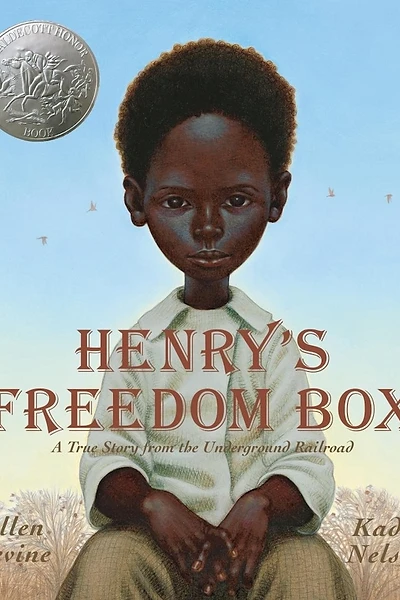
Henry's Freedom Box
by Ellen Levine
Pacing MaterialThe true story of Henry Brown, an enslaved man who mailed himself to freedom in a wooden crate — one of the most famous escapes on the Underground Railroad.
Big Idea
Courage and resilience can lead to freedom, even in the darkest circumstances.
Discussion Questions
- 1.Why did Henry decide to mail himself to freedom?
- 2.What risks did Henry take to become free?
- 3.What does freedom mean to you?
Classroom Activity
Freedom Box Map
Students map Henry's journey and write a letter from Henry's perspective about what freedom means.
Lesson Plan
Learning Goals
- Understand the Underground Railroad
- Practice empathy through perspective writing
- Identify cause and effect in history
Activity Steps
- 1.Read the story and trace Henry's journey on a map
- 2.Discuss the emotions Henry may have felt
- 3.Write a letter as Henry describing the journey
- 4.Share letters in small groups
Standards Connections
- ELA: RI.3.1 — Ask and answer questions about key details
- ELA: RI.3.2 — Identify main topic and retell key details
- ELA: RI.3.3 — Describe connection between events
- ELA: RI.6.6 — Acknowledge differences in characters' points of view
- ELA: SL.3.1 — Participate in collaborative conversations about the text
- ELA: W.3.3 — Write narratives recounting events with descriptive details
- SEL: Self-Management
- SEL: Responsible Decision-Making
Pace-Write-Read Study with Pace-Write It!
Focus question: How does Ellen Levine slow down and speed up moments in Henry's Freedom Box to help readers feel Henry Brown’s courage and longing for freedom? In Henry's Freedom Box by Ellen Levine, readers follow the true story of Henry Brown, an enslaved man who escapes by mailing himself in a wooden crate. The book uses pacing by lingering on painful losses, speeding through stretches of waiting, and then tightening every moment of Henry’s dangerous journey so readers feel suspense, hope, and relief.
| Element | How to notice or teach it in the novel |
|---|---|
| Pace | Read: Notice how the story moves steadily through Henry Brown’s life, then slows way down when he is placed inside the box and carried toward freedom. Ellen Levine changes the pace so readers feel both the long years of enslavement and the intense danger of the escape. Classroom Activity: Write two short paragraphs about one brave moment in a character’s life—one paragraph fast and one slow—to show how pacing changes feeling. |
| Plot | Read: Notice the clear sequence in Henry’s story: childhood in slavery, separation from family, growing grief, making a plan, the trip in the box, and arrival in freedom. The plot builds from everyday hardship to a daring turning point. Classroom Activity: Create a 6-step plot ladder for Henry Brown’s escape, then write a new final step imagining what Henry might do on his first full day of freedom. |
| Prosody | Read: Listen to how the sentences sound when read aloud, especially in sad scenes about Henry’s family and tense scenes inside the crate. The flow of the language helps readers hear sorrow, fear, and hope. Classroom Activity: Choose 4 lines from a tense part of the story and mark where your voice should slow, soften, or rise, then practice reading them aloud. |
| Word pause | Read: Notice places where a single important word or short phrase makes readers stop, such as freedom, box, or up. These word pauses help the danger and meaning sink in. Classroom Activity: Write 5-6 lines about a character waiting for something important, and place one powerful single-word line by itself for emphasis. |
| Concept | Read: Notice that the big idea of the book is that freedom is so precious that Henry risks everything to reach it. Ellen Levine turns a historical event into a story about courage, love, and human dignity. Classroom Activity: Write a theme statement for Henry’s story using the words courage and freedom, then support it with two details from the book. |
| Voice & World View | Read: Notice the respectful, serious voice of the narration and how the story shows the cruelty of slavery through Henry’s experiences. The world view centers human freedom and shows enslaved people as brave, loving, and determined. Classroom Activity: Write 6-8 sentences in a respectful storytelling voice about a person facing unfairness, making sure the narrator clearly shows what is right and wrong. |
| Setting & Place | Read: Notice how places matter in the story: the plantation, the warehouse, the road, the ship, and especially the cramped wooden box. Each setting changes the pacing by making some moments feel wide and others painfully tight. Classroom Activity: Describe one setting from Henry’s journey using at least three sensory details and explain how that place affects the mood. |
| Point of View | Read: Notice that the book is told in third person, but it stays close to Henry Brown’s feelings and experiences. Readers understand slavery and freedom through what happens to Henry. Classroom Activity: Rewrite one scene from the point of view of Nancy, Dr. Smith, or James and show how that character sees Henry’s plan. |
| Original Characters | Read: Notice how Henry Brown stands out as a real historical figure whose courage drives the story, while characters like Nancy, Dr. Smith, and James help reveal his love, loss, and determination. Because this is a true story, the people feel grounded and meaningful rather than invented for fun. Classroom Activity: Choose one character from the book and write a character sketch showing that person’s role in Henry’s journey to freedom. |
| Dialogue | Read: Notice that the book uses little dialogue, which makes the few spoken moments feel important and keeps the focus on narration and action. This choice also helps the story feel solemn and historical. Classroom Activity: Add a short dialogue scene between Henry and a trusted helper before he gets into the box, using no more than 6 lines to keep tension high. |
| Details | Read: Notice the specific historical and emotional details, such as Henry’s work, the loss of his family, and the measurements and movement of the box. These details make the true story vivid and believable. Classroom Activity: Make a two-column chart labeled Historical Details and Emotional Details, then write a paragraph using at least one of each. |
| Descriptions | Read: Notice how Ellen Levine describes Henry’s sorrow and the frightening trip in ways that help readers picture and feel each moment. The descriptions are strong but controlled, matching the serious topic. Classroom Activity: Write a descriptive paragraph about being inside a tiny dark space, using sight, sound, and body sensations to build suspense. |
| Strong First Lines | Read: Notice how the beginning quickly introduces Henry as a child born into slavery, which immediately gives the story emotional and historical weight. A strong opening helps readers understand what is at stake from the start. Classroom Activity: Write three different opening lines for a true story about bravery, and choose the one that creates the strongest feeling right away. |
| Immediacy & Engagement | Read: Notice how the story makes readers care immediately by showing what Henry loses and what he longs for. The emotional closeness keeps readers engaged even before the escape begins. Classroom Activity: Write 5-7 sentences that make readers care about a character before a big event happens by showing what the character loves most. |
| Story Scenes & Summaries & Unique Structures | Read: Notice how some parts of Henry’s life are summarized to move time forward, while other scenes—like the trip in the box—are stretched out in close detail. This balance helps the book cover many years but spotlight the most important event. Classroom Activity: Write one summary sentence about a whole year in Henry’s life, then write one full scene from a single minute of his journey. |
| Flashback & Flash Forward & Cliffhangers | Read: Notice that the story mostly moves forward in time, but readers naturally think back to Henry’s family as he travels in the box, which deepens the emotion. The moments when readers wonder whether Henry will survive act like cliffhangers. Classroom Activity: Write a short scene that ends with Henry hearing a frightening sound from outside the box, then stop the scene at the most suspenseful moment. |
| Tension & Suspense & Surprise | Read: Notice how suspense grows as Henry is nailed into the crate, turned upside down, and carried for hours without readers knowing what will happen next. The surprise of escaping by mail makes the true story unforgettable. Classroom Activity: Write a suspense paragraph in which a character must stay silent in a dangerous situation, using at least three details that increase tension. |
| Page Turns and Chapter Breaks | Read: Notice that as a picture book, Henry's Freedom Box relies on page turns instead of chapters. Many page turns sharpen suspense, especially during the journey, because readers must physically turn the page to find out if Henry is safe. Classroom Activity: Plan a 4-page mini picture book scene about an escape or rescue and write what surprise or question will make readers turn each page. |
| Performance | Read: Notice that this story invites expressive read-aloud performance, especially in the contrast between quiet sadness and urgent suspense. A reader’s pauses, volume, and speed can help bring Henry Brown’s emotions to life. Classroom Activity: Prepare a 30-second read-aloud of one passage, deciding where to whisper, pause, or speed up to match the action. |
| Personality | Read: Notice Henry’s personality traits—hardworking, loving, patient, and brave—shown through actions more than long explanation. His personality shapes the pacing because readers understand why he endures so much for freedom. Classroom Activity: Write a paragraph showing Henry’s personality through three actions instead of simply listing traits. |
| Humor | Read: Notice that this book has very little humor because the subject of slavery and family separation is serious. The absence of humor helps keep readers focused on Henry’s suffering and courage. Classroom Activity: Write 3-4 sentences explaining why an author might choose not to use humor in a serious true story like Henry Brown’s. |
| Pause | Read: Notice how the story creates emotional pauses after heartbreaking events, such as when Henry’s family is taken away, allowing readers to sit with his grief. These pauses slow the reading and deepen understanding. Classroom Activity: Write a short paragraph about a painful moment and include one sentence that acts as a pause by being very short and quiet. |
| Poetry and Poetic Devices | Read: Notice the lyrical language and repeated images of freedom, darkness, and light that give the story a poetic feel even though it is nonfiction. These poetic touches heighten emotion without changing the true events. Classroom Activity: Write 6 lines of free verse from Henry’s point of view while he is inside the box, using one image of darkness and one image of hope. |
| Repetition | Read: Notice how repeated ideas—work, waiting, loss, and freedom—help build the emotional rhythm of Henry’s life. Repetition makes his longing for freedom feel stronger each time it returns. Classroom Activity: Write a paragraph that repeats a key phrase such as I waited or I hoped three times to show a character’s growing feeling. |
| Rhythm | Read: Notice that the rhythm of the sentences often becomes slower and heavier in sorrowful parts, then tighter in dangerous moments. This changing rhythm affects how quickly readers move through the story. Classroom Activity: Write two sentences with a slow, heavy rhythm about sadness and two short, quick sentences about fear. |
| Punctuation | Read: Notice how punctuation helps guide pacing, especially periods for weighty statements and commas that stretch out tense moments. In a dramatic true story like Henry’s, punctuation helps control breath and feeling. Classroom Activity: Take a plain sentence about Henry’s journey and revise it three ways using different punctuation to create calm, fear, and relief. |
| Questions | Read: Notice the questions readers naturally ask: Will Henry survive? Will he reach freedom? What would it feel like to trust a box with your life? These unspoken questions keep the pages turning. Classroom Activity: Write three reader questions for the middle of the story, then answer one of them in a reflective response. |
| Compare-Contrast | Read: Notice the sharp contrasts between slavery and freedom, open space and cramped space, family love and family loss, waiting and action. These contrasts help readers feel the stakes of Henry’s escape. Classroom Activity: Make a compare-contrast chart for Henry’s life before the box and after reaching freedom, then write a paragraph using the chart. |
| Objects | Read: Notice how the wooden box becomes the central object in the story, symbolizing both danger and hope. Other objects, like work tools and clothing, also connect to Henry’s daily life under slavery. Classroom Activity: Choose one important object from the book and write from its point of view, explaining what it witnesses in Henry’s journey. |
| Threes | Read: Notice places where ideas can be grouped in threes—Henry’s losses, his helpers, or the stages of his escape—which makes events easier to remember and stronger in writing. Grouping details in threes often creates satisfying pacing. Classroom Activity: Write three linked sentences about Henry’s courage using this frame: He lost ____. He risked ____. He reached ____. |
| Whitespace & Negative Space | Read: Notice how the spacing of text and the quiet room around the words in a picture book can slow readers down, especially during sad or suspenseful moments. The visual stillness matches Henry’s silence inside the box. Classroom Activity: Write a 5-line passage about waiting and arrange it with line breaks and space so it feels quiet and tense on the page. |
| Art & Graphics | Read: Notice how the illustrations help pace the story by expanding emotional moments, showing facial expressions, and making the box feel confining and dangerous. The art works with Ellen Levine’s words to tell Henry Brown’s true story powerfully. Classroom Activity: Sketch one scene from Henry’s journey and add 3 captions explaining how the picture would slow down or speed up a reader’s experience. |
| Interactives & Gamification | Read: Notice that although the book itself is not a game, students can interact with its pacing by mapping Henry’s route, tracking tension, or sequencing scenes. This helps readers study how a true story is built for suspense. Classroom Activity: Create a tension meter from 1 to 5 for five major moments in Henry’s story and write one sentence explaining each rating. |
Pace-Write It!
20-Minute Classroom Flow Read (5 min): Read aloud the section that shows Henry Brown’s loss, his plan with Dr. Smith and James, and the trip inside the box. Pause briefly at page turns so students feel the suspense. Notice (5 min): Ask: Where does Ellen Levine slow the story down? Where does she speed it up? Chart student ideas under two headings: Slow Pacing and Fast Pacing. Be sure students notice how the story lingers on Henry’s feelings and stretches the dangerous journey in the crate. Write (7 min): Students write a suspense paragraph from Henry’s point of view during the trip in the box. Writing frame: “Inside the box, I could ______. I thought about ______. Every sound made me feel ______. When the box ______, I ______. I told myself ______ because freedom was ______.” Challenge students to include one short sentence for tension and one sensory detail. Share (3 min): Partners read their paragraph aloud and underline one place where the pacing feels slow and one place where it speeds up. Invite 1-2 students to share examples with the class. Exit ticket: Write one sentence answering: How did Ellen Levine use pacing in Henry’s Freedom Box to help you feel Henry’s courage?