 K-5
K-5C HENRY
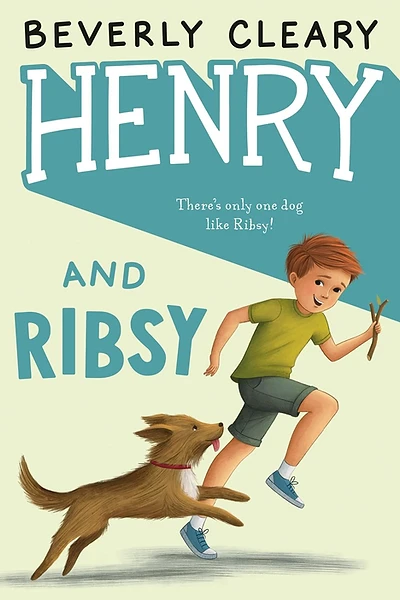
Henry and Ribsy
by Beverly Cleary
Pacing MaterialHenry and Ribsy is the third book in the Henry Huggins series of humorous children's novels written by Beverly Cleary. Henry's dad has promised to take him salmon fishing on one condition – he has to keep his dog Ribsy out of trouble for two months. That's not easy to do, especially when Ramona Quimby gets involved. First published in 1954, Henry and Ribsy was originally illustrated by Louis Darling.
Big Idea
Responsibility and the bond between a boy and his dog are tested when Henry must prove he can manage Ribsy's mischievous nature to earn a special reward. This story highlights how humor and patience are essential when navigating the unpredictable challenges of growing up.
Discussion Questions
- 1.Why does Henry's father set a condition for the fishing trip, and is it a fair request?
- 2.How does Ramona Quimby's presence complicate Henry's goal of keeping Ribsy out of trouble?
- 3.What does Ribsy's behavior tell us about his personality, and why does Henry remain so loyal to him?
- 4.How does the setting of Klickitat Street contribute to the types of 'scrapes' Henry and Ribsy get into?
- 5.If you were in Henry's shoes, what strategies would you use to keep a mischievous dog well-behaved for two months?
Classroom Activity
The Klickitat Street 'Good Behavior' Log
Students create a 'behavior log' for Ribsy, documenting his various mishaps and brainstorming creative, responsible solutions Henry could have used to prevent them.
Lesson Plan
Learning Goals
- Analyze character motivations and the consequences of their actions.
- Identify the cause-and-effect relationships within the plot.
- Practice creative problem-solving by proposing alternative outcomes for story events.
- Understand the theme of responsibility in realistic fiction.
Activity Steps
- 1.Review the major 'mischief' events involving Ribsy from the book.
- 2.Divide students into small groups and assign each group one of Ribsy's trouble-making incidents.
- 3.Have students fill out a log entry: 'The Incident,' 'Why it happened,' and 'A responsible plan to prevent it.'
- 4.Groups present their 'Prevention Plan' to the class.
- 5.Discuss as a class whether these plans would actually work given Ribsy's personality.
Standards Connections
- ELA: RL.3.3 (Describe characters in a story and explain how their actions contribute to the sequence of events)
- ELA: W.3.1 (Write opinion pieces on topics or texts)
- SEL: Responsible Decision-Making
Pace-Write-Read Study with Pace-Write It!
Beverly Cleary’s writing is a masterclass in the 'everyday adventure.' She paces her stories by grounding them in the relatable, high-stakes world of a child, where a fishing trip is as significant as a grand quest. By focusing on the immediate, tangible consequences of Ribsy’s actions, she keeps the reader invested in every chapter. In 'Henry and Ribsy,' Cleary uses a clear, episodic structure that allows the reader to breathe between the chaotic 'scrapes' Henry and his dog encounter. This pacing study will help students see how Cleary uses short, punchy sentences and humorous dialogue to build tension, ensuring that even the quietest moments on Klickitat Street feel full of life and potential for disaster.
| Element | How to notice or teach it in the novel |
|---|---|
| Pace | Notice how Cleary speeds up the narrative during Ribsy's chaotic moments and slows down during Henry's reflective conversations with his dad. |
| Plot | The plot is driven by a clear goal: the fishing trip, which acts as a ticking clock for Henry's behavior management. |
| Prosody | Read aloud the scenes with Ramona to capture her persistent, energetic, and slightly annoying tone. |
| Word Pause | Look for how Cleary uses commas to create a natural, conversational rhythm that mimics a child's storytelling voice. |
| Concept | The central concept is the 'contract' between father and son, which provides a framework for all the book's events. |
| Voice & World View | The voice is distinctly that of a 1950s neighborhood boy, focusing on simple joys like ice cream and fishing. |
| Setting & Place | Klickitat Street is a character itself; notice how the neighborhood layout dictates where Ribsy can get into trouble. |
| Point of View | The third-person limited perspective keeps us close to Henry's frustrations and hopes. |
| Original Characters | Ramona is the quintessential 'pest' character; analyze how her unpredictability forces Henry to grow. |
| Dialogue | Cleary uses dialogue to show, not tell, the tension between Henry and his parents regarding the dog. |
| Details | Focus on the specific, messy details of Ribsy's antics, like his interactions with the garbage man. |
| Descriptions | Cleary describes Ribsy's actions with physical verbs that make his mischief feel immediate and real. |
| Strong First Lines | Examine how the opening establishes the stakes of the fishing trip immediately. |
| Immediacy & Engagement | The book engages readers by placing Henry in situations where he is constantly on the verge of losing his reward. |
| Story Scenes & Summaries & Unique Structures | The book is structured as a series of episodic 'troubles' that build toward the final goal. |
| Flashback & Flash Forward & Cliffhangers | Each chapter often ends on a note of uncertainty regarding Ribsy's behavior, acting as a mini-cliffhanger. |
| Tension & Suspense & Surprise | The suspense lies in whether Henry will succeed; the surprise comes from the creative ways Ribsy finds to cause chaos. |
| Page Turns and Chapter Breaks | Notice how chapter breaks often occur right after a disaster, forcing the reader to turn the page to see the fallout. |
| Performance | Encourage students to perform the dialogue between Henry and his dad to hear the difference in their authority levels. |
| Personality | Ribsy's personality is defined by his curiosity; discuss how his 'dog-ness' drives the story. |
| Humor | The humor comes from the contrast between Henry's serious intentions and Ribsy's silly, impulsive actions. |
| Pause | Identify moments where Henry stops to think; these pauses show his maturity developing. |
| Poetry and Poetic Devices | Look for alliteration in the descriptions of Ribsy's movements. |
| Repetition | The recurring threat of 'no fishing trip' serves as a rhythmic anchor for the story. |
| Rhythm | The rhythm of the book mimics the back-and-forth of a child's daily life—school, home, and neighborhood play. |
| Punctuation | Observe how Cleary uses exclamation points to emphasize the suddenness of Ribsy's mischief. |
| Questions | Henry often asks himself questions about how to handle Ribsy, mirroring the reader's own curiosity. |
| Compare-Contrast | Compare Henry's behavior with Ribsy's to highlight the theme of responsibility. |
| Objects | Objects like the ice cream cone or the fishing gear are central to the plot's conflict. |
| Threes | Look for sequences where Ribsy gets into three distinct types of trouble in a single outing. |
| Whitespace & Negative Space | The simple, clean prose leaves room for the reader to imagine the neighborhood scenes. |
| Art & Graphics | Discuss how Louis Darling's original illustrations capture the 'scruffy' nature of Ribsy. |
| Interactives & Gamification | The 'two-month' challenge acts as a game-like structure that keeps the reader tracking progress. |
Pace-Write It!
Students have 20 minutes to write a 'New Trouble' scene. They must describe one specific, funny way Ribsy could cause a problem on Klickitat Street, focusing on using strong verbs and keeping the tone light and humorous, just like Cleary.