 K-2
K-2P FALATKO
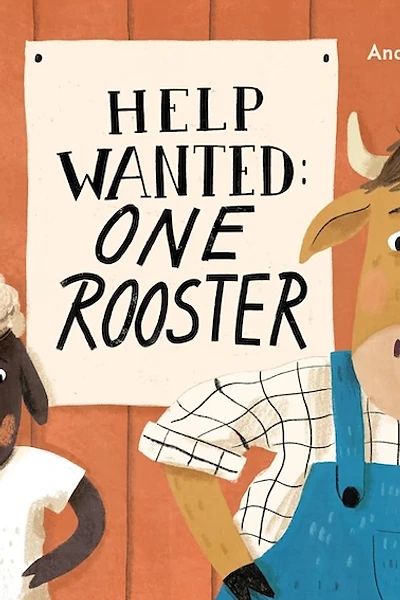
Help Wanted: One Rooster
by Julie Falatko, illustrated by Andrea Stegmaier
Pacing MaterialWhen the farm's rooster quits, the remaining animals hold interviews to find the perfect replacement — a humorous look at hiring, teamwork, and finding the right fit.
Big Idea
Everyone has strengths — finding the right job means matching what you're good at with what's needed.
Discussion Questions
- 1.Why do the animals need a rooster?
- 2.What qualities make a good rooster?
- 3.How do the animals decide who to hire?
- 4.Have you ever had to interview for something?
Classroom Activity
Help Wanted: Classroom Job Ads
Students write their own 'Help Wanted' ad for a classroom job, listing the ideal qualities needed.
Lesson Plan
Learning Goals
- Identify qualities needed for a specific job.
- Write a 'Help Wanted' ad with clear criteria.
- Practice interviewing and speaking skills.
- Match personal strengths to roles.
Activity Steps
- 1.Read the book, noting how the animals interview for the rooster job.
- 2.Discuss what makes a good candidate for a job.
- 3.Students pick a classroom job and write a 'Help Wanted' ad.
- 4.Swap ads and 'interview' for each other's jobs.
Standards Connections
- ELA: RL.K.1 — Ask and answer questions about key details
- ELA: RL.K.2 — Retell stories, including key details
- ELA: RL.K.3 — Describe characters, setting, and events
- ELA: RL.2.6 — Acknowledge differences in characters' points of view
- ELA: SL.K.1 — Participate in collaborative conversations about the text
- ELA: W.K.3 — Write narratives recounting events with descriptive details
- SEL: Relationship Skills
- SEL: Social Awareness
- Art: VA:Re7 — Perceive and analyze artistic work
Pace-Write-Read Study with Pace-Write It!
Focus question: How does an author make a funny story move quickly while helping readers notice each character’s special role? In Help Wanted: One Rooster by Julie Falatko, illustrated by Andrea Stegmaier, the farm animals try to replace the rooster after he quits, leading to a series of lively interviews and surprises. The pacing feels quick because the story moves from one candidate to the next, using humor, dialogue, and page turns to keep readers wondering who will be the right fit.
| Element | How to notice or teach it in the novel |
|---|---|
| Pace | Read: Notice how the story moves briskly from the rooster quitting to the farm animals interviewing one animal after another. The fast pace matches the farm’s problem and keeps the search for a new rooster funny and active. Classroom Activity: Write 3 short sentences that show a problem happening fast on a farm, then introduce 1 animal who tries to help. |
| Plot | Read: Notice the clear sequence in this book: the rooster leaves, the farm animals need help, candidates are interviewed, and the group learns what kind of teamwork really works. Each part builds the search for the right fit. Classroom Activity: Make a 4-box plot map with beginning, middle, problem, and ending for a new farm job story. |
| Prosody | Read: Listen to how the interview scenes can be read with changing expression—serious voices for questions, silly voices for unusual answers, and excited voices when the farm gets busy. The rhythm of the read-aloud adds to the humor. Classroom Activity: Choose 2 lines you might hear in an interview and mark them with feeling words like serious, nervous, or proud, then practice reading them aloud. |
| Word pause | Read: Notice places where a reader naturally pauses, especially before or after a surprising animal answer or a funny moment in the interviews. These pauses help the joke land and give readers time to think about what will happen next. Classroom Activity: Write 2 interview questions and add slash marks / where a reader should pause for effect. |
| Concept | Read: The story explores the concept of finding the right person—or animal—for a job, while showing that a community works best when everyone contributes different strengths. The farm does not just need noise; it needs teamwork. Classroom Activity: Write about 1 classroom job and explain which student or animal would be the best fit and why. |
| Voice & World View | Read: Notice the playful, matter-of-fact voice that treats the farm hiring process like a real job search. This funny world view helps young readers see farm life, work, and community through a humorous lens. Classroom Activity: Write 4 sentences in a serious interview voice about a silly job, such as hiring a cow to ring a bell. |
| Setting & Place | Read: The farm setting shapes every part of the story because mornings, chores, and animal sounds all depend on the rooster’s job. The setting makes the problem feel important and the search feel believable in this funny farm world. Classroom Activity: Describe a farm at sunrise in 3-5 sentences and explain what goes wrong when one important helper is missing. |
| Point of View | Read: Notice that readers watch the hiring process from outside the action, seeing how the whole group responds to each candidate. This point of view lets us compare many animals and understand the farm community as a team. Classroom Activity: Rewrite 1 interview moment from the point of view of an animal applying for the rooster’s job. |
| Original Characters | Read: Each animal candidate feels original because it brings its own habits, sounds, and personality to the rooster problem. The fun comes from seeing how each animal is different and not quite the same as the rooster. Classroom Activity: Invent a new farm animal applicant and write its name, job skill, and 2 funny reasons it might or might not fit the job. |
| Dialogue | Read: The interview structure creates lots of dialogue, helping the story move quickly while revealing personality. Questions and answers show what the farm animals want and what each candidate can actually do. Classroom Activity: Write a 4-line interview between a goat and the animals hiring for a barnyard job. |
| Details | Read: Notice the small details about chores, sounds, and animal behavior that make the hiring search feel lively and specific. These details help readers imagine why replacing the rooster is harder than it seems. Classroom Activity: List 5 farm details a writer could include in a job interview scene, then use 3 in your own sentence set. |
| Descriptions | Read: Descriptions in this book work quickly, giving just enough information about each animal and each situation to keep the action moving. The story does not stop too long; it describes only what helps the joke or the problem. Classroom Activity: Describe 1 animal candidate in 3 sentences using what it looks like, how it sounds, and how it acts. |
| Strong First Lines | Read: Notice how the opening quickly presents a problem and pulls readers right into the farm’s trouble. A strong beginning helps the pacing start fast because readers immediately want to know what the animals will do. Classroom Activity: Write an opening line for a story about an animal who quits an important job. |
| Immediacy & Engagement | Read: The farm’s need feels urgent because morning work depends on the rooster, and readers are quickly engaged by the question of who can replace him. The interview format keeps readers involved because each new candidate might solve the problem. Classroom Activity: Write 3 sentences that create urgency by showing why a job must be filled today. |
| Story Scenes & Summaries & Unique Structures | Read: The book uses a repeated interview structure, almost like a series of scenes, to show many tryouts without slowing down. This unique setup helps the story feel organized, quick, and funny. Classroom Activity: Plan a story with 3 short interview scenes and 1 summary sentence that tells what happened between them. |
| Flashback & Flash Forward & Cliffhangers | Read: While this story stays mostly in the present, readers can think about what happened before the rooster quit and what might happen if no one can do the job. The page turns sometimes act like small cliffhangers before the next candidate appears. Classroom Activity: Write 1 flashback sentence about why the rooster left and 1 flash-forward sentence about what might happen if the farm never hires anyone. |
| Tension & Suspense & Surprise | Read: Tension builds because the farm really needs help, but surprise comes from the silly mismatch between the rooster’s job and the animals applying for it. Readers keep wondering whether any candidate will actually work. Classroom Activity: Write 4 sentences that build suspense before revealing a funny, surprising job applicant. |
| Page Turns and Chapter Breaks | Read: In this picture book, page turns help pacing by setting up a question or funny possibility and then revealing the next animal or outcome. Even without chapters, the turns work like little stopping points and surprises. Classroom Activity: Create a 2-page mini-book plan where page 1 asks who will help and page 2 reveals the candidate. |
| Performance | Read: This story invites performance because students can act out interviews, animal sounds, and serious hiring voices. Performing the parts shows how pacing speeds up with quick questions and funny answers. Classroom Activity: Write and perform a 3-line interview for a pig, duck, or cow applying for a farm job. |
| Personality | Read: The candidates’ personalities matter because being loud or eager is not the same as being right for the rooster’s role. Personality shapes the humor and helps readers think about teamwork in a community. Classroom Activity: Write 3 personality traits for an animal candidate and explain how those traits help or hurt the job fit. |
| Humor | Read: Humor grows from the serious way the farm treats a silly hiring problem and from the mismatch between animal talents and the rooster’s duties. The interviews make the joke stronger because each try feels both hopeful and ridiculous. Classroom Activity: Write a funny job interview answer an animal might give when asked, “Why are you right for this job?” |
| Pause | Read: Notice how short pauses after a question, after an animal’s strange answer, or before a page turn make the story funnier. A pause gives readers a second to predict and laugh. Classroom Activity: Take a 3-line interview you wrote and add stage directions such as [pause] or [look around] to control pacing. |
| Poetry and Poetic Devices | Read: Even though this is prose, the repeated interview pattern and animal sounds can create a musical feeling. Sound words and repeated phrasing make the read-aloud lively and memorable. Classroom Activity: Write a 4-line poem with animal sounds about the farm searching for a morning helper. |
| Repetition | Read: Repetition appears in the interview pattern and in the repeated problem of needing someone to do the rooster’s work. This repetition helps young readers follow the structure and anticipate each new try. Classroom Activity: Write a repeated sentence starter such as “Can you...” or “We need...” and use it in 3 lines of a job interview scene. |
| Rhythm | Read: The rhythm of question-answer, question-answer keeps the story moving and gives it a steady beat. That pattern makes the pacing feel snappy and easy to follow for K-2 readers. Classroom Activity: Write 4 short lines in a question-and-answer rhythm for an animal interview. |
| Punctuation | Read: Notice how question marks, commas, and exclamation points help control the sound and speed of the interviews. Punctuation tells readers when to pause, wonder, or laugh at a surprising answer. Classroom Activity: Write 3 interview lines and use at least 1 question mark and 1 exclamation point correctly. |
| Questions | Read: Questions drive the whole book because the animals must ask who can do the rooster’s job and what each candidate can offer. Questions keep readers thinking and move the action forward. Classroom Activity: Write 5 interview questions the farm animals could ask a new candidate. |
| Compare-Contrast | Read: Readers compare each animal candidate with the rooster and with one another to decide who fits the job best. This compare-contrast structure deepens the teamwork theme by showing different strengths. Classroom Activity: Make a T-chart comparing the rooster with 1 other animal applicant, then write 2 sentences about the better fit. |
| Objects | Read: Farm objects such as the barn, fence, feed, or morning tools help ground the story in daily work and show why the rooster matters. Objects make the setting concrete and can add visual humor in the illustrations. Classroom Activity: Choose 1 farm object and write how 2 different animals would use it in silly or helpful ways. |
| Threes | Read: Think about how groups of three can organize funny storytelling—three candidates, three questions, or three reasons a job is hard. This pattern can help young writers copy the book’s clear, playful pacing. Classroom Activity: Write 3 reasons the farm needs help and 3 possible animal candidates for the job. |
| Whitespace & Negative Space | Read: In a picture book like this one, open space on the page can make readers focus on the characters, the interview moment, or a funny reaction. Whitespace can slow the eye just enough before the next reveal. Classroom Activity: Plan a picture-book page by deciding where to leave empty space around 1 important line of dialogue. |
| Art & Graphics | Read: Andrea Stegmaier’s illustrations help pacing by showing the animals’ expressions, body language, and farm chaos quickly, sometimes adding jokes beyond the words. The art helps readers understand each candidate’s personality right away. Classroom Activity: Draw 1 animal candidate for the rooster’s job and label 3 visual clues that show its personality. |
| Interactives & Gamification | Read: This story naturally invites students to guess which animal will interview next and whether it will be a good fit. The job-search structure turns reading into a playful prediction game about teamwork and community. Classroom Activity: Make a class voting chart for 3 animal applicants and write 1 sentence to defend your choice. |
Pace-Write It!
20-Minute Classroom Flow\nRead (5 min): Read aloud Help Wanted: One Rooster by Julie Falatko, stopping at a few interview moments to let students predict whether each animal will be a good replacement. Emphasize the quick movement from problem to candidate to funny result.\nNotice (5 min): Ask: How does the story move so fast? Chart student observations such as repeated interviews, short dialogue, page turns, funny surprises, and different animal personalities. Revisit how the farm community needs teamwork, not just any loud animal.\nWrite (7 min): Students write their own short farm interview for a new helper. Writing frame: “The ___ quit. The farm needed a new ___. First, ___ came to interview. ‘Can you ___?’ asked the animals. ‘I can ___,’ said ___. But ___ was not the right fit because ___. Then, ___ tried to help.” Encourage students to use at least 1 question, 1 funny answer, and 1 detail about teamwork.\nShare (3 min): Students read their interview with expression, using pauses for humor. Invite listeners to name what made the pacing feel quick or funny.\nExit ticket: Write one sentence answering: How did Julie Falatko make the search for a new rooster feel fast and funny?