 2-5
2-5P BRUNELLE
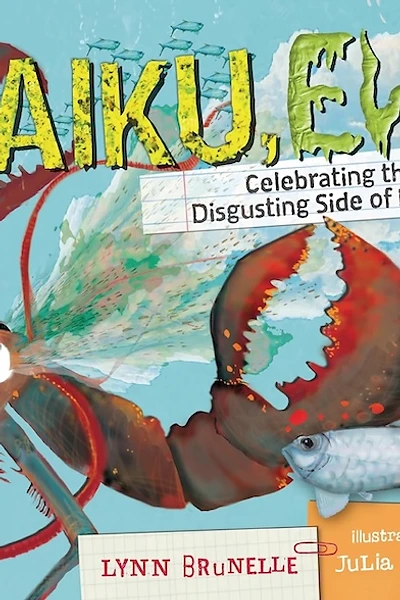
Haiku, Ew!
by Lynn Brunelle
Pacing MaterialA hilarious and informative collection of haiku poems celebrating the disgusting side of nature.
Big Idea
Even the grossest parts of nature have beauty and purpose.
Discussion Questions
- 1.What is a haiku?
- 2.Can you think of something gross in nature that is actually important?
Classroom Activity
Gross Nature Haiku
Students write haiku poems about surprising or 'gross' aspects of nature.
Lesson Plan
Learning Goals
- Understand the 5-7-5 haiku structure
- Appreciate the role of decomposition in ecosystems
Activity Steps
- 1.Read selected poems aloud
- 2.Discuss the haiku format
- 3.Brainstorm gross-but-important nature topics
- 4.Write and illustrate original haiku
Standards Connections
- ELA: RL.2.1 — Ask and answer questions about key details
- ELA: RL.2.2 — Retell stories, including key details
- ELA: RL.2.3 — Describe characters, setting, and events
- ELA: RL.5.6 — Acknowledge differences in characters' points of view
- ELA: SL.2.1 — Participate in collaborative conversations about the text
- ELA: W.2.3 — Write narratives recounting events with descriptive details
- SEL: Responsible Decision-Making
- Art: VA:Re7 — Perceive and analyze artistic work
Pace-Write-Read Study with Pace-Write It!
Focus question: How does a poet make short poems feel lively, surprising, and funny? In Haiku, Ew! by Lynn Brunelle, each haiku captures a gross or fascinating moment from nature in just a few words. The pacing feels quick because the poems are brief, image-packed, and arranged so readers pause, react, and turn the page eager for the next disgusting surprise.
| Element | How to notice or teach it in the novel |
|---|---|
| Pace | Read: Notice how Haiku, Ew! moves quickly because each poem is short, punchy, and focused on one gross nature moment at a time. The fast pace lets readers hop from one surprising creature or slimy science fact to the next. Classroom Activity: Write 3 tiny nature poems, each about a different disgusting outdoor discovery, and keep each poem to just 3 lines so the reading feels quick. |
| Plot | Read: Even though this is a collection of haiku, the book creates movement by taking readers through a series of disgusting wonders from the natural world. The poems do not tell one long story, but together they build a playful journey through nature’s yucky side. Classroom Activity: Create a beginning-middle-end sequence of 3 haiku: first a student spots something gross in nature, next they examine it, and last they react with surprise or disgust. |
| Prosody | Read: Listen to the sound of the lines in Haiku, Ew! and how the words are arranged to make the poems feel bouncy, crisp, and memorable when read aloud. Lynn Brunelle uses sound and line breaks to help each gross image land at just the right moment. Classroom Activity: Read one haiku aloud twice and mark where your voice speeds up, slows down, or stresses an important word, then write your own haiku to sound good out loud. |
| Word pause | Read: Notice how a single word or a line break in Haiku, Ew! can make you pause before the disgusting reveal. Those pauses help the joke or the image pop. Classroom Activity: Write a 3-line poem about a creepy crawly creature and place one surprising gross word alone at the end of a line for effect. |
| Concept | Read: The big idea of Haiku, Ew! is that nature can be both gross and amazing at the same time. The poems teach science while celebrating slimy, smelly, squishy details. Classroom Activity: Choose one disgusting animal or plant fact and write a haiku that shows both the ew feeling and the science idea. |
| Voice & World View | Read: The voice in Haiku, Ew! is playful, curious, and unafraid to say that nature is nasty in a funny way. The worldview suggests that even revolting things in the natural world are worth noticing and learning about. Classroom Activity: Write a haiku in the voice of a curious kid who says “ew” but still wants to lean in and learn more. |
| Setting & Place | Read: The poems in Haiku, Ew! are rooted in natural places where readers might encounter bugs, muck, slime, mud, or other outdoor surprises. Even in a tiny poem, the setting helps the gross image feel real. Classroom Activity: Pick one outdoor setting such as a pond, forest floor, garden, or beach tide pool and write a haiku that places one disgusting nature detail there. |
| Point of View | Read: Some poems in Haiku, Ew! feel as if a close observer is peering at nature, while others may invite readers to imagine the creature itself. This shifting point of view keeps the collection fresh and lively. Classroom Activity: Write two haiku about the same gross nature topic, one from the observer’s point of view and one from the creature’s point of view. |
| Original Characters | Read: The creatures in Haiku, Ew! act like memorable mini-characters because each poem highlights one odd, gross, or funny trait. Even without human characters, the animals and natural subjects stand out through their disgusting habits. Classroom Activity: Invent a gross nature character based on a real creature and write a haiku that shows its most unforgettable trait. |
| Dialogue | Read: Haiku, Ew! does not rely heavily on conversation, but readers can almost hear reactions like “Ew!” or “No way!” because the poems invite strong responses. Imagined dialogue can add humor and voice. Classroom Activity: Write a haiku that includes a spoken reaction from a person or a creature, using quotation marks if needed. |
| Details | Read: Lynn Brunelle fills Haiku, Ew! with specific gross details that make each poem vivid, such as slimy textures, strange animal behaviors, or yucky body features. These precise details help the science feel real and unforgettable. Classroom Activity: Make a list of 5 exact gross details from nature, then use 2 or 3 of them in your own haiku. |
| Descriptions | Read: The descriptions in Haiku, Ew! are brief but strong, helping readers picture squishy, sticky, smelly, or creepy scenes right away. The short form means every describing word matters. Classroom Activity: Write a haiku about something in nature using at least 2 sensory description words that make the reader see or feel the grossness. |
| Strong First Lines | Read: In Haiku, Ew!, the opening line of a poem often pulls readers in fast with a strange image, an unexpected creature, or a gross setup. A strong first line matters because the whole poem is so short. Classroom Activity: Draft 3 possible first lines for a disgusting nature haiku, then choose the one that grabs attention the fastest. |
| Immediacy & Engagement | Read: The poems in Haiku, Ew! feel immediate because they zoom in on a single moment of seeing, squirming, or discovering something gross in nature. Readers are engaged right away because the reactions are so relatable. Classroom Activity: Write a haiku that begins in the middle of a gross discovery, as if the reader has just spotted it right now. |
| Story Scenes & Summaries & Unique Structures | Read: Each haiku in Haiku, Ew! is more like a tiny scene than a full summary, capturing one sharp image or event. The collection’s unique structure—many short poems instead of one long narrative—creates a stop-and-start pacing full of quick reactions. Classroom Activity: Write one haiku as a tiny scene happening right now, then write one sentence explaining why a scene feels stronger than a summary for this topic. |
| Flashback & Flash Forward & Cliffhangers | Read: Haiku, Ew! usually stays in the present moment, but some poems create anticipation by delaying the gross reveal until the last line. That ending can work almost like a mini cliffhanger. Classroom Activity: Write a haiku where the first 2 lines build suspense about a mystery in nature and the last line reveals the disgusting answer. |
| Tension & Suspense & Surprise | Read: Surprise is a big part of Haiku, Ew! because readers often expect beauty in nature poetry and instead get slime, stink, or squish. That contrast builds a playful kind of tension. Classroom Activity: Write a haiku that starts with something peaceful in nature and ends with a surprising disgusting twist. |
| Page Turns and Chapter Breaks | Read: In a picture book like Haiku, Ew!, each new page or poem acts like a reset, giving readers a pause before the next gross surprise. The page turn helps control timing and reaction. Classroom Activity: Create 2 haiku for facing pages and decide which one should come first so the page turn makes the second one funnier or grosser. |
| Performance | Read: Haiku, Ew! is perfect for dramatic read-alouds because the short lines, funny gross topics, and surprise endings invite expressive voices and facial reactions. Performance can stretch or sharpen the pacing. Classroom Activity: Practice reading your haiku aloud with one planned pause and one dramatic word, then perform it for a partner. |
| Personality | Read: The poems in Haiku, Ew! have lots of personality because they are mischievous, curious, and gleefully gross. That strong personality keeps a science-themed poetry book from feeling dry. Classroom Activity: Choose a personality for your poem—disgusted, amazed, excited, or silly—and write a haiku that matches that feeling. |
| Humor | Read: Humor drives Haiku, Ew! by turning nasty natural facts into laugh-out-loud poetry. The funny grossness makes readers want to keep going. Classroom Activity: Write a haiku about a real nature fact that is both true and funny, and make the last line the funniest part. |
| Pause | Read: Pauses in Haiku, Ew! give readers time to imagine the gross image and react before moving on. In short poems, a pause can be as important as a word. Classroom Activity: Add a deliberate pause to your haiku using a line break, dash, or punctuation mark, and explain what reaction you want from the reader. |
| Poetry and Poetic Devices | Read: Haiku, Ew! uses the haiku form along with imagery, surprise, and word choice to turn science content into poetry. The poetic devices help tiny poems carry big pictures and feelings. Classroom Activity: Write a haiku that uses vivid imagery and one comparison or sound device to bring a disgusting nature topic to life. |
| Repetition | Read: Across Haiku, Ew!, repeated patterns of short lines, strong images, and disgusted delight help unify the collection. Repetition can also build humor when a phrase or structure echoes across poems. Classroom Activity: Write 3 haiku that all begin with the same first word or phrase, such as “In the mud…” or “Look out…,” to create a repeated pattern. |
| Rhythm | Read: The rhythm in Haiku, Ew! helps the poems feel quick and satisfying, almost like little verbal snapshots. A smooth rhythm makes the gross reveal hit harder. Classroom Activity: Clap the beat of a favorite haiku from the book, then write your own 3-line poem with a rhythm that sounds natural when spoken aloud. |
| Punctuation | Read: Punctuation in Haiku, Ew! can sharpen the joke, slow readers down, or highlight an “ew” moment. A well-placed exclamation point, dash, or comma changes the pacing of such short poems. Classroom Activity: Write one haiku with no end punctuation and one with strong punctuation, then compare how the pacing feels different. |
| Questions | Read: The poems in Haiku, Ew! may spark questions such as how a creature survives, why it looks so strange, or what makes it so gross. Questions keep curiosity moving alongside the humor. Classroom Activity: Write a haiku that includes a question about a disgusting nature mystery, then add one factual answer underneath it. |
| Compare-Contrast | Read: A key pleasure of Haiku, Ew! is the contrast between beautiful nature poetry expectations and revolting science content. The poems often balance wonder and disgust at the same time. Classroom Activity: Write a haiku that compares something gross in nature to something beautiful, or contrasts what it looks like with how it really behaves. |
| Objects | Read: Small natural objects and body parts—slime, shells, mud, wings, ooze, or other yucky features—become central images in Haiku, Ew! Focusing on one object helps a short poem stay clear. Classroom Activity: Choose one gross object from nature and write a haiku that zooms in closely on it like a magnifying glass. |
| Threes | Read: Haiku, Ew! naturally uses the power of three because haiku has three lines, and each line can add a new beat: setup, build, and gross reveal. That three-part structure helps pacing feel complete. Classroom Activity: Plan your haiku in 3 steps: line 1 names the creature or scene, line 2 adds a detail, and line 3 delivers the funny or disgusting surprise. |
| Whitespace & Negative Space | Read: The empty space around each short haiku in Haiku, Ew! gives readers room to pause, picture, and laugh or cringe. Whitespace slows the eye just enough to make each poem stand alone. Classroom Activity: Write your haiku on a page with lots of blank space and decide how the spacing helps the gross image feel bigger. |
| Art & Graphics | Read: As a picture book, Haiku, Ew! uses illustrations and design to support the poems’ humor, tone, and scientific interest. The art helps the pacing by giving readers extra details to notice between short texts. Classroom Activity: Illustrate your haiku with one gross-but-accurate science detail that adds meaning beyond the words. |
| Interactives & Gamification | Read: Haiku, Ew! invites playful interaction because readers can guess the creature, react to the gross fact, or rank the poems by funniest or most disgusting. This game-like response keeps energy high. Classroom Activity: Write a mystery haiku about a disgusting creature without naming it, then let classmates guess the answer from your clues. |
Pace-Write It!
20-Minute Classroom Flow\nRead (5 min): Read aloud 3-5 haiku from Haiku, Ew! by Lynn Brunelle. Pause after each poem so students can react to the gross nature image and notice how quickly each poem delivers its idea.\nNotice (5 min): Ask: How does Lynn Brunelle make such short poems feel funny, surprising, and full of science? Chart student observations about line breaks, strong last lines, gross details, and pauses that build anticipation.\nWrite (7 min): Students write their own disgusting-nature haiku inspired by the book. Encourage them to choose one real creature, plant, or natural object and focus on one vivid gross detail. Writing frame: \nLine 1: In the ___ / Look at the ___ / Under the ___\nLine 2: it is ___, ___, and ___\nLine 3: Ew! It ___ / Surprise—it ___ / I can’t believe ___\nStudents may revise to sound more natural while keeping the quick haiku pacing.\nShare (3 min): Partners read their haiku aloud with expression, including one planned pause before the gross reveal. Invite 2-3 volunteers to perform for the class.\nExit ticket: Write one sentence answering: What pacing move from Haiku, Ew! did you use today—short lines, a pause, a surprise ending, or a strong gross detail?