 K-2
K-2P TATER-TALES
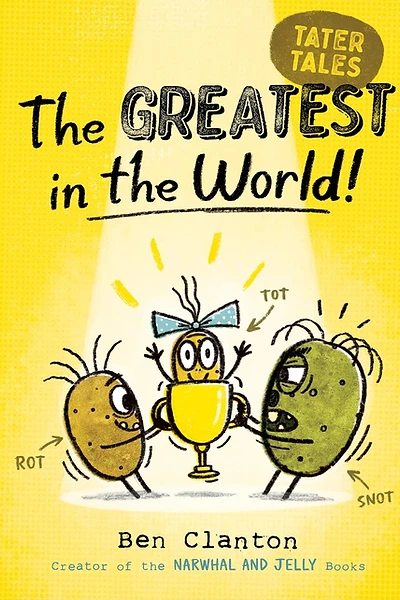
Greatest in the World
by Ben Clanton
Pacing MaterialRot the mutant potato is convinced he is the greatest in the world until he faces unexpected competition. This humorous tale teaches a valuable lesson about humility and finding worth beyond being the best.
Big Idea
True greatness is found in friendship rather than competition.
Discussion Questions
- 1.Why did Rot think he was the greatest?
- 2.How did meeting a challenger change Rot's feelings?
- 3.Is it okay to want to be the best at something?
- 4.How can you be a good sport if you don't win?
- 5.What makes a friend 'great'?
Classroom Activity
The Humility Cup
Students design a fictional trophy for a 'friendship contest' instead of a winning contest.
Lesson Plan
Learning Goals
- Understand the concept of humility
- Differentiate between competition and cooperation
- Apply creative design to represent a value
Activity Steps
- 1.Discuss why Rot changed his mind
- 2.Brainstorm attributes of a good friend
- 3.Draw a design for a trophy that celebrates those traits
- 4.Write a small speech about why the trophy is awarded
- 5.Share designs with the class
Standards Connections
- CCSS.ELA-LITERACY.RL.K.2
- SEL.CASEL.RelationshipSkills
- National Core Arts Standard VA:Cr2.2
Pace-Write-Read Study with Pace-Write It!
Focus question: How does an author slow down and speed up a story to show a character learning an important lesson? In Greatest in the World by Ben Clanton, Rot the mutant potato proudly believes he is the greatest until other characters and events challenge his bragging. The book uses quick, funny moments, expressive dialogue, and well-timed page turns to pace Rot’s journey from showing off to understanding humility and friendship.
| Element | How to notice or teach it in the novel |
|---|---|
| Pace | Read: Notice how the story moves quickly when Rot boasts and slows down when he reacts to being challenged, helping readers feel both the silliness and the lesson about humility. Classroom Activity: Write 3 short sentences about a character bragging fast, then 3 slower, longer sentences showing what the character feels when someone else is good too. |
| Plot | Read: Track how Rot begins by thinking he is the greatest in the world, then faces unexpected competition, and finally learns that being a friend matters more than being the best. Classroom Activity: Make a beginning-middle-end chart for Rot’s story, then write one sentence for each part. |
| Prosody | Read: Listen to how Rot’s proud words can be read loudly and boldly, while moments of surprise or realization can be read with a softer voice. Classroom Activity: Choose one line Rot might say proudly and one line he might say after learning a lesson, and write them to show how your voice would sound when reading aloud. |
| Word pause | Read: Notice places where a pause after Rot’s bragging or after a surprising reveal makes the joke stronger and gives readers time to think. Classroom Activity: Write a 2-line mini-scene where a character says, “I am the greatest...” and then add a pause before the surprise on the next line. |
| Concept | Read: The big idea in this book is that confidence can turn into bragging, and true worth comes from humility and friendship, not from being number one. Classroom Activity: Write a sentence that starts, “Being the greatest is not as important as...” and finish it with a friendship idea inspired by Rot. |
| Voice & World View | Read: Ben Clanton gives Rot a big, goofy, self-important voice that lets readers see the world through a character who thinks he is amazing. Classroom Activity: Write 4 sentences in Rot’s voice about why he thinks he is special, using funny and exaggerated language. |
| Setting & Place | Read: Notice how the simple picture-book world keeps attention on Rot, the other characters, and the lesson, instead of on a complicated setting. Classroom Activity: Draw or describe a place where your own silly character could brag about being the greatest, and write 2 sentences showing how the setting fits the scene. |
| Point of View | Read: Readers stay close to Rot’s experience, so we understand his pride, his surprise, and his changing feelings as the story unfolds. Classroom Activity: Rewrite one moment from the point of view of a friend or rival who hears Rot bragging. |
| Original Characters | Read: Rot the mutant potato is an unusual, memorable main character, and that playful character choice makes the lesson about humility feel fresh and funny. Classroom Activity: Invent an original vegetable, food, or creature character who thinks they are the best at something, and write 3 sentences introducing them. |
| Dialogue | Read: Pay attention to how dialogue shows Rot’s boasting and helps the humor bounce between characters. Classroom Activity: Write a 4-line dialogue between Rot and another character where Rot brags and the other character responds in a kind but surprising way. |
| Details | Read: Small details about Rot’s words, reactions, and the competition he faces help readers understand both the joke and the lesson. Classroom Activity: Write 3 details that show a character is proud without saying “proud.” |
| Descriptions | Read: The descriptions are playful and clear, helping readers picture Rot’s confidence and the funny moments when that confidence is tested. Classroom Activity: Describe Rot or your own character using 3 vivid describing words and 1 action that shows personality. |
| Strong First Lines | Read: Think about how a strong opening in a humorous book quickly introduces a big personality like Rot and sets up the central problem of bragging. Classroom Activity: Write an opening line for a story about a character who believes they are the greatest in the world. |
| Immediacy & Engagement | Read: The story grabs attention right away because Rot’s bold claim creates an instant question: will he really stay the greatest? Classroom Activity: Write 2 opening sentences that make readers want to know what happens when a character makes a huge boast. |
| Story Scenes & Summaries & Unique Structures | Read: Notice how the book likely uses clear scenes of bragging, challenge, and realization rather than long explanations, which keeps the pacing lively for young readers. Classroom Activity: Plan a 3-scene story: Scene 1 bragging, Scene 2 challenge, Scene 3 lesson learned; then write one sentence for each scene. |
| Flashback & Flash Forward & Cliffhangers | Read: Even if the book stays mostly in the present, you can notice how a page ending can feel like a tiny cliffhanger when Rot is about to discover someone else’s talent. Classroom Activity: Write a page-end sentence that leaves readers wondering if your character will still be “the greatest” after they turn the page. |
| Tension & Suspense & Surprise | Read: Rot’s confidence creates tension because readers begin to suspect he may be surprised by what happens next, and that surprise helps deliver the message about humility. Classroom Activity: Write 3 sentences that build suspense before your bragging character meets someone who can do the same thing—or better. |
| Page Turns and Chapter Breaks | Read: In a picture book like this one, page turns help pace jokes and surprises, especially when Rot expects praise but discovers competition instead. Classroom Activity: Write a left-page sentence where Rot-like character boasts, and a right-page sentence revealing the surprise after the page turn. |
| Performance | Read: Rot feels almost like a performer on a stage, showing off with dramatic confidence that invites expressive read-alouds. Classroom Activity: Write one line your character could perform with a big gesture, then add stage directions in parentheses, like (stands tall) or (gasps). |
| Personality | Read: Rot’s outsized personality drives the whole story; his pride, silliness, and ability to change make him interesting. Classroom Activity: Make a 3-word personality list for Rot, then write 2 new sentences showing one of those traits in action. |
| Humor | Read: The humor comes from Rot being a mutant potato with enormous confidence, plus the funny mismatch between how great he thinks he is and what he learns. Classroom Activity: Write a funny brag for a silly character, then add a humorous twist that shows they are not the only one with that talent. |
| Pause | Read: Notice how a pause before a reaction, reveal, or lesson lets the humor land and gives readers time to feel Rot’s surprise. Classroom Activity: Write a short scene and use an ellipsis or line break to create a pause before the funniest or most important moment. |
| Poetry and Poetic Devices | Read: Even in a prose picture book, you can listen for playful sound, repeated phrasing, and punchy lines that make Rot’s boasts memorable. Classroom Activity: Write a 2-line chant for Rot, such as “Greatest this, greatest that,” using rhyme or alliteration. |
| Repetition | Read: Repeated boasting words or repeated ideas about being “the greatest” help build rhythm and also show how strongly Rot believes in himself. Classroom Activity: Write 3 sentences that repeat a key phrase like “I am the greatest...” and then change the last sentence to show a lesson learned. |
| Rhythm | Read: The rhythm of short, energetic lines matches Rot’s bold personality and keeps the story moving briskly. Classroom Activity: Write a set of 4 short lines about a bragging character, making each line sound punchy and fast. |
| Punctuation | Read: Look for exclamation points, speech marks, and pauses that help show Rot’s excitement, boasting, and surprise. Classroom Activity: Write 3 lines of dialogue for a boastful character using at least one exclamation point, one question mark, and one ellipsis. |
| Questions | Read: Readers may ask, “Is Rot really the greatest?” or “What will he do when someone else shines?” and these questions keep the pages turning. Classroom Activity: Write 2 questions a reader might ask during the middle of Rot’s story, then answer one in a complete sentence. |
| Compare-Contrast | Read: Compare the proud Rot at the beginning with the more humble Rot at the end to see how the pacing supports character change. Classroom Activity: Make a T-chart labeled “Beginning Rot” and “Ending Rot,” then write 2 phrases in each column. |
| Objects | Read: Rot’s potato body and any objects or visual details around moments of competition can add comedy and help tell the story quickly. Classroom Activity: Choose one object your character uses to prove they are “the greatest,” and write 2 sentences about how that object helps the story. |
| Threes | Read: Many funny picture books use groups of three for jokes or structure, such as three boasts, three tries, or three surprises, which can fit Rot’s style well. Classroom Activity: Write a list of 3 bragging statements for a character, making the third one the funniest. |
| Whitespace & Negative Space | Read: In picture books, open space on the page can spotlight Rot’s words or reactions, making a brag or surprise feel bigger and slowing the reader for emphasis. Classroom Activity: Plan a page with just one big line of text for your character, and write that line so it feels important enough to stand alone. |
| Art & Graphics | Read: The illustrations in a humorous picture book like Greatest in the World work with the words to show Rot’s expressions, competition, and emotional change. Classroom Activity: Sketch Rot or your own character in two panels—one bragging, one learning—and write a caption for each panel. |
| Interactives & Gamification | Read: This story invites children to predict, act out Rot’s boasting, and guess when he will learn his lesson, making reading feel interactive. Classroom Activity: Create a “Brag or Humble?” sorting game with 4 short character statements, then write one new humble statement for Rot. |
Pace-Write It!
20-Minute Classroom Flow\nRead (5 min): Read Greatest in the World by Ben Clanton aloud. Stop once or twice to let students notice when Rot brags and when the pacing changes as he faces competition.\nNotice (5 min): Ask: “Where did the story feel fast? Where did it slow down?” Chart student ideas under Fast Moments and Slow Moments. Notice how dialogue, page turns, repetition of being “the greatest,” and Rot’s reactions help the story’s pacing.\nWrite (7 min): Students write their own mini picture-book scene about a character who thinks they are the greatest at something. Writing frame: “I am the greatest at ______! I can ______. But then ______. I felt ______. Now I know ______ is more important than being the best.” Encourage students to use one exclamation point, one pause, and one surprising page-turn idea.\nShare (3 min): Partners read their scene aloud using a proud voice first and a changed voice at the end. Invite 2 volunteers to share how they changed the pacing in their writing.\nExit ticket: Write one sentence answering: “How did Ben Clanton use pacing to help Rot learn about humility and friendship?”