 K-2
K-2P BURACH
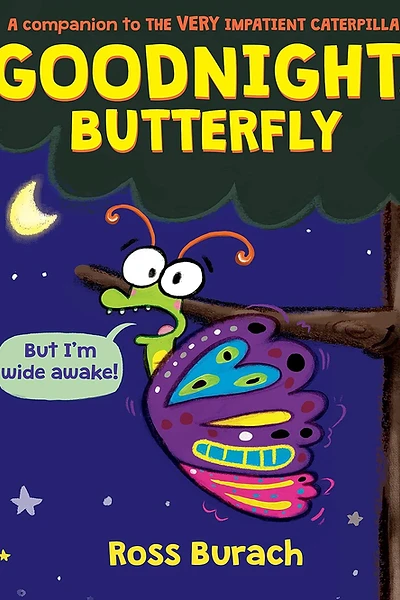
Goodnight, Butterfly
by Ross Burach
Pacing MaterialA wide-awake butterfly just can't settle down in this laugh-out-loud bedtime companion to The Very Impatient Caterpillar about winding down and finding rest.
Big Idea
Even when you're wide awake, a good routine helps you find your way to sleep.
Discussion Questions
- 1.Why can't Butterfly fall asleep?
- 2.What does Butterfly try to do to get sleepy?
- 3.How does the author use humor to talk about bedtime?
- 4.What helps you fall asleep at night?
Classroom Activity
Goodnight Routine Books
Create a 'goodnight' routine book — write and illustrate the steps you take to get ready for bed, just like Butterfly learns to wind down.
Lesson Plan
Learning Goals
- Explore healthy sleep habits and routines
- Analyze character emotions and self-regulation
- Practice writing procedural text (steps)
Standards Connections
- ELA: RL.K.1 — Ask and answer questions about key details
- ELA: RL.K.2 — Retell stories, including key details
- ELA: RL.K.3 — Describe characters, setting, and events
- ELA: RL.2.6 — Acknowledge differences in characters' points of view
- ELA: SL.K.1 — Participate in collaborative conversations about the text
- ELA: W.K.3 — Write narratives recounting events with descriptive details
- SEL: Social Awareness
- SEL: Relationship Skills
- Art: VA:Re7 — Perceive and analyze artistic work
Pace-Write-Read Study with Pace-Write It!
Focus question: How does an author make a bedtime story feel busy, funny, and finally calm? In Goodnight, Butterfly by Ross Burach, a very awake butterfly keeps stretching out bedtime with chatty interruptions, silly worries, and energetic reactions. Burach uses fast dialogue, expressive page turns, repetition, and changing visual space to create lively pacing at first and a slower, sleepier feeling by the end.
| Element | How to notice or teach it in the novel |
|---|---|
| Pace | Read: Notice how the story starts with a wide-awake butterfly who keeps delaying sleep, making the pages feel quick and bouncy, and then gradually slows as bedtime routines take over. Classroom Activity: Write 3 short sentences about a character trying to avoid bedtime, making the first 2 sentences fast and the last sentence calm and slow. |
| Plot | Read: Notice the simple bedtime plot in Goodnight, Butterfly: Butterfly is supposed to settle down, but each new thought or reaction keeps the bedtime routine going. Classroom Activity: Write a beginning-middle-end plot for a tiny bedtime story where a character cannot fall asleep at first but finally rests. |
| Prosody | Read: Listen to how Ross Burach’s playful phrasing and read-aloud sound make Butterfly’s voice dramatic, whiny, excited, and funny. Classroom Activity: Write 2 lines of bedtime dialogue and practice reading one line quickly and one line slowly to match the mood. |
| Word pause | Read: Notice where single words, short bursts, or spaced-out phrases make readers pause before Butterfly says or does something unexpected. Classroom Activity: Write a sentence about a sleepy character using dashes or line breaks to create a pause before the final word. |
| Concept | Read: The main idea is that bedtime can feel hard when your body is tired but your mind is still busy; the story turns that familiar routine into comedy. Classroom Activity: Write one sentence explaining the bedtime problem in the book, then write one new bedtime problem your own character could have. |
| Voice & World View | Read: Notice how Butterfly’s voice sees bedtime as a big problem, turning ordinary winding-down moments into dramatic events. Classroom Activity: Write 3 first-person sentences from the point of view of a character who thinks bedtime is unfair. |
| Setting & Place | Read: Notice the cozy bedtime setting and how the nighttime space matters because Butterfly should be resting, not buzzing with energy. Classroom Activity: Describe a bedtime place in 4 details that show it is ready for sleep, even if the character is not. |
| Point of View | Read: Notice how the story closely follows Butterfly’s reactions so readers experience the bedtime struggle through Butterfly’s feelings and comments. Classroom Activity: Rewrite a bedtime moment from the point of view of a grown-up trying to help a child or creature sleep. |
| Original Characters | Read: Butterfly is memorable because the character is tiny, expressive, dramatic, and completely unable to wind down, which makes the bedtime problem feel fresh and funny. Classroom Activity: Invent an animal character with one strong bedtime habit and write 3 traits that make the character original. |
| Dialogue | Read: Notice how much of the pacing comes from lively back-and-forth talk, with Butterfly’s comments keeping the action moving. Classroom Activity: Write 4 lines of dialogue between a sleepy helper and a character who keeps making excuses not to sleep. |
| Details | Read: Notice the small bedtime details that make the routine feel real while also showing Butterfly’s resistance to settling down. Classroom Activity: Make a list of 5 bedtime details your character notices instead of going to sleep, then use 2 of them in a sentence. |
| Descriptions | Read: Ross Burach uses expressive descriptions in words and pictures to show Butterfly’s energy, silliness, and eventual winding down. Classroom Activity: Write 2 describing sentences about a character who looks very awake and 1 describing sentence about the same character finally getting sleepy. |
| Strong First Lines | Read: Notice how the opening quickly introduces the bedtime problem and grabs attention by showing Butterfly is not ready to sleep. Classroom Activity: Write an opening line for a bedtime story that immediately shows a character refusing to settle down. |
| Immediacy & Engagement | Read: The story feels immediate because Butterfly reacts in the moment, making readers feel like bedtime is happening right now. Classroom Activity: Write 3 present-tense sentences about a character trying to stay awake right now. |
| Story Scenes & Summaries & Unique Structures | Read: Notice how the book mostly uses scene-by-scene moments of bedtime interruptions instead of long summaries, so each page feels active and funny. Classroom Activity: Write one scene showing a bedtime interruption, then write one summary sentence telling what happened after that. |
| Flashback & Flash Forward & Cliffhangers | Read: This story stays mostly in the present, but page endings can feel like tiny cliffhangers because readers wonder what Butterfly will say or do next. Classroom Activity: End a short bedtime paragraph with a cliffhanger question or action that makes a reader want to turn the page. |
| Tension & Suspense & Surprise | Read: The tension is gentle and funny: will Butterfly ever settle down, or will another silly problem pop up first? Classroom Activity: Write 3 sentences building suspense about whether a character will finally go to sleep, and make the third sentence a surprise. |
| Page Turns and Chapter Breaks | Read: Because this is a picture book, page turns are important; Ross Burach uses them to reveal Butterfly’s next interruption, expression, or joke. Classroom Activity: Plan a 2-page mini-book idea by writing what happens before the page turn and what surprise appears after it. |
| Performance | Read: Goodnight, Butterfly invites big read-aloud performance with dramatic pauses, sleepy voices, and excited outbursts. Classroom Activity: Mark one line of your writing with stage directions like [whisper], [yawn], or [shout]. |
| Personality | Read: Butterfly’s huge personality drives the pacing because every bedtime moment becomes a dramatic event. Classroom Activity: Write a character card with 3 personality traits for a bedtime struggler, then write one sentence that shows each trait. |
| Humor | Read: Notice how humor comes from Butterfly’s over-the-top reactions and from the mismatch between bedtime calm and Butterfly’s restless energy. Classroom Activity: Write a funny bedtime excuse your character uses to avoid sleep. |
| Pause | Read: Notice how pauses in the text and art give readers a beat to notice Butterfly’s face, feelings, or the awkward silence before the next comment. Classroom Activity: Write a short line, then add an ellipsis to create a sleepy pause before the next idea. |
| Poetry and Poetic Devices | Read: Even though the book is fiction, it uses sound, repetition, and playful language that can feel musical during read-aloud. Classroom Activity: Write a 2-line bedtime chant using repeated sounds like sleepy, slow, soft. |
| Repetition | Read: Notice repeated bedtime ideas, reactions, and patterns that make Butterfly’s struggle funnier and help young readers predict what might happen next. Classroom Activity: Write a repeated phrase your character says 3 times during bedtime, with a small change each time. |
| Rhythm | Read: The rhythm of short lines, quick dialogue, and visual beats helps the story feel energetic before it becomes calmer. Classroom Activity: Write 3 short lines with a quick rhythm about not being tired, then 1 longer line about finally getting sleepy. |
| Punctuation | Read: Notice how punctuation such as question marks, exclamation points, and ellipses helps show Butterfly’s feelings and controls the speed of the reading. Classroom Activity: Write one bedtime sentence 3 ways using different punctuation to change how it sounds. |
| Questions | Read: Questions in the story help show Butterfly’s busy brain and keep the bedtime conversation moving. Classroom Activity: Write 3 questions a character might ask instead of falling asleep. |
| Compare-Contrast | Read: Compare Butterfly’s awake, buzzy energy at the start with the calmer bedtime feeling later in the story. Classroom Activity: Make a T-chart comparing Butterfly at the beginning and end, then write 2 compare-contrast sentences. |
| Objects | Read: Notice how bedtime objects and nighttime surroundings help tell the story and remind readers of routines meant to help Butterfly rest. Classroom Activity: Choose one bedtime object, like a blanket or pillow, and write 2 sentences about how it helps a character get sleepy. |
| Threes | Read: Look for places where actions, reactions, or repeated attempts feel grouped in a satisfying pattern that builds humor. Classroom Activity: Write 3 bedtime interruptions for one character, making each one a little sillier than the last. |
| Whitespace & Negative Space | Read: Notice how open space on the page can slow readers down, spotlight Butterfly’s expression, and make a moment feel quieter or funnier. Classroom Activity: Create a one-page story plan with only 8-10 words and decide where blank space would make the moment feel calm. |
| Art & Graphics | Read: Ross Burach’s bold, expressive illustrations and comic-style visual energy shape the pacing by showing Butterfly’s emotions instantly. Classroom Activity: Draw 3 quick face sketches for your character: wide awake, worried, and sleepy, then label each with a matching line of text. |
| Interactives & Gamification | Read: The playful style of Goodnight, Butterfly makes readers want to join in by predicting Butterfly’s next excuse or reading the dialogue with expression. Classroom Activity: Make a class guessing game called What Will Butterfly Say Next? and then write your own interactive bedtime question for readers. |
Pace-Write It!
20-Minute Classroom Flow\nRead (5 min): Read Goodnight, Butterfly aloud with expression. Pause to let students hear how Butterfly’s interruptions make the story feel fast and funny at first.\nNotice (5 min): Ask: How do the words and pictures show that Butterfly is not ready for bed? Chart student observations such as dialogue, repetition, question marks, page turns, and big facial expressions.\nWrite (7 min): Students write a short bedtime scene about a character who does not want to sleep yet but finally begins to calm down. Writing frame: “My character is __________. It is bedtime, but __________. ‘__________!’ says my character. The room is __________. At last, __________.” Encourage students to use one question, one repeated phrase, and one punctuation mark that shows feeling.\nShare (3 min): Partners read their scenes aloud twice: first with a fast, awake voice, then slowing down at the ending. Invite 2-3 students to share how they changed the pacing.\nExit ticket: Write one sentence answering: What did Ross Burach do in Goodnight, Butterfly to make bedtime feel fast at first and slower at the end?