 K-2
K-2P BOYD
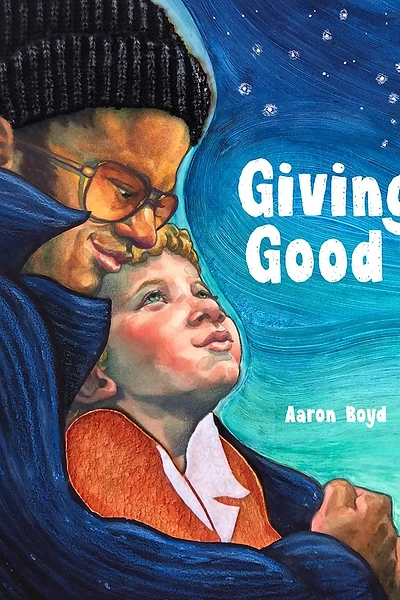
Giving Good
by Aaron Boyd
Pacing MaterialA joyful celebration of the many ways we give to one another — from smiles and kindness to time, help, and love.
Big Idea
Giving doesn't require money — the best gifts are kindness, time, and care for others.
Discussion Questions
- 1.What are some ways the characters give to each other?
- 2.Can a smile be a gift? How?
- 3.What is something you could give today?
- 4.How does giving make you feel?
Classroom Activity
Giving Jar
Decorate a jar and fill it with slips of paper naming things you can give to others this week.
Lesson Plan
Learning Goals
- Identify ways people give kindness, time, help, and love in Giving Good.
- Explain that meaningful gifts do not have to cost money.
- Draw or write at least two specific acts of giving that students can try during the coming week.
- Describe how an act of kindness might help another person feel cared for.
Activity Steps
- 1.Read Giving Good by Aaron Boyd aloud. Pause to ask, “What is being given here?” and “Does this gift cost money?” Invite students to notice examples of smiles, kindness, time, help, and love.
- 2.Make a class chart titled “Gifts That Don’t Cost Money.” Connect students’ suggestions to the book’s message, using examples such as inviting someone to play, listening to a friend, or helping put away supplies.
- 3.Give each student a clean plastic jar or cup to decorate with paper, crayons, and stickers. Add the label “My Giving Jar.”
- 4.Have students draw or write two or three giving ideas on separate paper slips. Encourage specific plans, such as “I will help clean up after snack.” Offer the sentence starter “This week, I can give ___ by ___,” and take dictation as needed.
- 5.Invite partners to share one slip and explain how that action could help someone. Place the slips in the jars, then have each student choose one action to try this week.
- 6.Close by asking, “How does our Giving Jar show the big idea of Giving Good?” Plan a brief check-in later in the week so students can share what they tried and what they noticed.
Standards Connections
- ELA: RL.1.2 — Retell key details from the book and explain its central message about giving.
- ELA: SL.1.1 — Participate in collaborative conversations about the book and students’ giving ideas.
- ELA: W.K.2 — Use drawing, dictating, and writing to communicate ideas for acts of giving.
- SEL: Social awareness — Consider others’ feelings and recognize ways to show empathy and care.
- SEL: Relationship skills — Practice kindness, helping, listening, and inclusion through planned giving actions.
Pace-Write-Read Study with Pace-Write It!
Focus question: How does an author slow down and speed up a story to help us feel the many ways people give? In Giving Good by Aaron Boyd, readers see generosity shared through everyday actions like kindness, help, smiles, and love. The book uses gentle pacing, repeated examples, and expressive illustrations to move moment by moment through a community, helping young readers notice that giving can be big, small, quiet, and joyful.
| Element | How to notice or teach it in the novel |
|---|---|
| Pace | Read: Notice how Giving Good by Aaron Boyd moves at a calm, steady pace, showing one act of generosity at a time so readers can pause and think about each gift of kindness. Classroom Activity: Write 3 short sentences about one child giving help, with each sentence showing one small step in the action. |
| Plot | Read: Notice that the plot is built from many connected moments of giving instead of one big problem to solve, which fits the theme of community care. Classroom Activity: Create a beginning, middle, and end for a tiny story about a child who gives time or help to someone in the neighborhood. |
| Prosody | Read: Listen to how the warm, flowing language in Giving Good sounds smooth and joyful when read aloud, matching the loving tone of the book. Classroom Activity: Write 2 lines about giving that sound good when spoken aloud, then read them with expression. |
| Word pause | Read: Notice places where a reader may naturally pause after a word or short phrase to let an act of giving sink in, such as after a kind action or feeling word. Classroom Activity: Write a sentence about sharing and add slash marks where a reader should pause while reading it aloud. |
| Concept | Read: Notice that the big idea in Giving Good is that generosity can be shown in many forms, including smiles, care, time, help, and love. Classroom Activity: Make a list of 4 different kinds of giving and choose one to turn into a sentence for a class generosity book. |
| Voice & World View | Read: Notice how Aaron Boyd presents a warm, hopeful world view where people in a community look out for one another and small actions matter. Classroom Activity: Write from a voice that believes kindness can change someone’s day, using the words I believe or In my world. |
| Setting & Place | Read: Notice how the neighborhood and community spaces help show that giving happens everywhere people live, meet, walk, and gather. Classroom Activity: Write 3 setting details about a place where someone could give help, such as a park, home, classroom, or sidewalk. |
| Point of View | Read: Notice how the book invites readers to think about giving from the perspective of people all around the community, not just one person. Classroom Activity: Write 2 sentences from the point of view of a child who receives a kind gift from someone else. |
| Original Characters | Read: Notice that the people in Giving Good feel real and memorable because they are shown through caring actions, expressions, and relationships in the community. Classroom Activity: Invent a new character named by role, such as The Helper, The Smiler, or The Sharer, and write 3 sentences showing how that character gives good. |
| Dialogue | Read: Notice that even when words are few, readers can imagine simple, kind dialogue that matches the gentle style of Giving Good. Classroom Activity: Write 2 lines of dialogue between two children when one offers help and the other responds with gratitude. |
| Details | Read: Notice the small details that make each act of generosity feel real, such as faces, hands, movement, and caring choices. Classroom Activity: Add 3 details to a sentence about giving, telling what the giver does, what the receiver does, and how each person feels. |
| Descriptions | Read: Notice how the book’s descriptions and illustrations work together to show generosity as joyful, warm, and shared. Classroom Activity: Write a describing sentence about a kind moment using at least 2 sensory or feeling words. |
| Strong First Lines | Read: Notice how the opening quickly welcomes readers into the idea of giving and prepares them to look for many examples. Classroom Activity: Write a strong first line for your own generosity story that begins with Giving can... or Today I gave.... |
| Immediacy & Engagement | Read: Notice how each page in Giving Good feels close to the reader because the acts of kindness are familiar and easy to imagine in real life. Classroom Activity: Write a sentence about something a child can give today so your reader feels it could happen right now. |
| Story Scenes & Summaries & Unique Structures | Read: Notice that the book uses a series of brief scenes and examples instead of one long scene, creating a pattern of many ways to give. Classroom Activity: Write one scene in 2 sentences and one summary sentence that tells how your character gives often. |
| Flashback & Flash Forward & Cliffhangers | Read: Notice that Giving Good stays mostly in the present moment, which keeps the pacing simple for young readers, but you can imagine past and future giving too. Classroom Activity: Write one sentence about a kindness from yesterday and one sentence about a kindness you will give tomorrow. |
| Tension & Suspense & Surprise | Read: Notice that this book has gentle emotional movement instead of scary suspense, and the surprise comes from discovering how many different forms generosity can take. Classroom Activity: Write a short scene where someone wonders, Will anyone help? and then show the surprise of a kind response. |
| Page Turns and Chapter Breaks | Read: Notice how each page turn can reveal a new example of giving, helping the book feel fresh and patterned as readers move through it. Classroom Activity: Plan a 4-page mini-book with a different act of generosity on each page turn. |
| Performance | Read: Notice how Giving Good invites expressive read-aloud performance through joyful tone, warm pacing, and meaningful pauses. Classroom Activity: Practice reading one sentence about kindness in a soft voice, a bright voice, and an excited voice, then choose the best fit and write why. |
| Personality | Read: Notice how personalities shine through actions, with givers appearing caring, thoughtful, patient, or cheerful. Classroom Activity: Choose one personality trait for a giver and write 2 sentences that show the trait through action, not just naming it. |
| Humor | Read: Notice that the book’s tone is more joyful and tender than silly, but smiles and playful moments can still make giving feel light and inviting. Classroom Activity: Write a kind, funny moment where helping someone leads to shared laughter. |
| Pause | Read: Notice how the book creates emotional pauses so readers can think about each act of love, help, or kindness before moving on. Classroom Activity: Write 3 short lines about one generous moment, leaving one idea on each line to create a pause. |
| Poetry and Poetic Devices | Read: Notice how the language of Giving Good can feel poetic because it celebrates simple acts with rhythm, feeling, and strong word choice. Classroom Activity: Write a 4-line poem about giving that includes one simile, such as kind as sunshine. |
| Repetition | Read: Notice how repeated ideas about giving build the message that generosity happens again and again in a community. Classroom Activity: Write 3 sentences that begin the same way, such as We give... or I can give..., and change the ending each time. |
| Rhythm | Read: Notice the steady rhythm created by short examples and repeated patterns, which helps the book feel musical and easy to follow aloud. Classroom Activity: Clap the beat of a sentence about kindness, then rewrite it to sound smoother and more rhythmic. |
| Punctuation | Read: Notice how punctuation helps control pacing in a gentle book like Giving Good, with periods slowing the reader and commas creating smaller rests. Classroom Activity: Write one sentence about helping with a period and another with a comma, then read both to compare the pacing. |
| Questions | Read: Notice that the book encourages readers to ask themselves how they can give to others in everyday life. Classroom Activity: Write 3 questions a reader might ask after hearing Giving Good, such as How can I help at home? |
| Compare-Contrast | Read: Notice how the book compares many kinds of giving, showing that a smile, a helping hand, and love are different but all matter. Classroom Activity: Write 2 sentences comparing two kinds of giving using both and but. |
| Objects | Read: Notice that giving is not only about objects in Giving Good; people also give time, attention, care, and kindness. Classroom Activity: Make a T-chart of things you can give and actions you can give, then write one sentence from each side. |
| Threes | Read: Notice how listing ideas in groups can help readers feel a smooth pace, such as naming three ways people care for one another. Classroom Activity: Write a sentence that names three gifts a child can give to the community. |
| Whitespace & Negative Space | Read: Notice how open space on a page can help a reader slow down and focus on one generous action or feeling at a time. Classroom Activity: Write one short sentence about kindness and place it in the center of the page with space around it, then draw what the space helps readers notice. |
| Art & Graphics | Read: Notice how Aaron Boyd’s illustrations help pace the story by showing faces, movement, and warm community scenes that deepen the message of generosity. Classroom Activity: Draw and label a scene of one person giving good, then write a caption that matches the picture. |
| Interactives & Gamification | Read: Notice how the pattern of many examples in Giving Good makes it easy to turn reading into a kindness hunt or community giving game. Classroom Activity: Create a Give Good checklist with 5 acts of generosity from the book and add one original act you can try this week. |
Pace-Write It!
20-Minute Classroom Flow Read (5 min): Read Giving Good by Aaron Boyd aloud. Pause briefly after each example of generosity so students can notice how the book slows down to honor each kind act. Notice (5 min): Ask, What kinds of giving did we hear? How did the author help us stop and think about each one? Chart student ideas such as repeated examples, short lines, page turns, warm pictures, and calm pacing. Write (7 min): Students write their own short generosity piece inspired by the book. Writing frame: I can give __________. I can give __________. When I give __________, __________ feels __________. Encourage students to add one detail about where the giving happens and one feeling word. Share (3 min): Partners read their pieces aloud slowly, using pauses after each sentence. Invite 2 or 3 students to share with the whole class and name one pacing move they used. Exit ticket: Write one sentence answering: How did Aaron Boyd help readers notice that small acts of giving are important?
Pace-Write-Read Connection
Teach this book using the Pace-Write-Read method — Tool 26: Repetition.
Open the Mastery Manual