 K-3
K-3P BIDDULPH
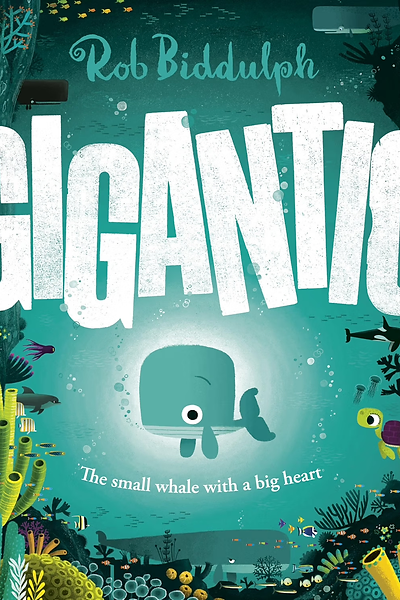
Gigantic
by Rob Biddulph
Pacing MaterialA small whale named Gigantic learns that being little doesn't mean you can't do big things.
Big Idea
Size doesn't determine your worth — courage and kindness make you grow in ways that matter.
Discussion Questions
- 1.Why is Gigantic's name funny?
- 2.How does Gigantic feel about being small?
- 3.What big thing does Gigantic do?
- 4.What does this story teach about growing?
Classroom Activity
My Big Moment
Draw a picture of a time you did something big even though you felt small. Write one sentence about how it felt.
Lesson Plan
Learning Goals
- Explain how being small doesn't limit what you can do
- Identify one big moment in the story and what Gigantic learned
- Draw and write about a time they did something big even when they felt small
Activity Steps
- 1.Read the story, pausing when Gigantic feels small and again when he acts bravely.
- 2.Discuss: 'Why is Gigantic's name funny? What big thing does he do?'
- 3.Model drawing a 'big moment' with a picture and one sentence about how it felt.
- 4.Students draw their own big moment and write one sentence.
- 5.Share in a circle and celebrate each 'big moment.'
Standards Connections
- ELA: RL.K.1 — Ask and answer questions about key details
- ELA: RL.K.2 — Retell stories, including key details
- ELA: RL.K.3 — Describe characters, setting, and events
- ELA: RL.3.6 — Acknowledge differences in characters' points of view
- ELA: SL.K.1 — Participate in collaborative conversations about the text
- ELA: W.K.3 — Write narratives recounting events with descriptive details
- SEL: Social Awareness
- SEL: Relationship Skills
- Art: VA:Re7 — Perceive and analyze artistic work
Pace-Write-Read Study with Pace-Write It!
Focus question: How does an author make a small character’s big journey feel exciting and meaningful? In Gigantic by Rob Biddulph, a tiny whale proves that size does not decide what you can do. The pacing moves smoothly from Gigantic’s smallness and doubt to moments of challenge, action, and triumph, helping readers feel his personal growth step by step.
| Element | How to notice or teach it in the novel |
|---|---|
| Pace | Read: Notice how Rob Biddulph keeps the story moving quickly with clear events as Gigantic goes from being a little whale to doing something big and brave. The pace helps readers feel his growth without slowing down too much. Classroom Activity: Write 4 short sentences showing a character who starts small, faces a problem, tries something brave, and succeeds. |
| Plot | Read: Notice the beginning, middle, and end of Gigantic’s journey—he starts as a small whale, faces a challenge, and shows that little creatures can do big things. The plot is simple but powerful for showing personal growth. Classroom Activity: Draw and label a 3-part plot map for Gigantic: beginning, middle, end, then write one sentence for each part. |
| Prosody | Read: Listen to how the words in Gigantic sound when read aloud, especially in exciting or emotional parts. Rob Biddulph’s phrasing helps the story feel gentle, then stronger as Gigantic becomes confident. Classroom Activity: Choose 3 lines to read aloud with expression, then write one new line that should be read in a proud voice. |
| Word pause | Read: Notice places where a reader might naturally pause to think about Gigantic being small or to wait for what he will do next. These pauses help the important moments stand out. Classroom Activity: Write 3 sentences about a tiny hero and add slash marks / where a reader should pause. |
| Concept | Read: Think about the big idea in Gigantic: being little does not stop someone from doing something important. The concept of personal growth is built into both the character and the action. Classroom Activity: Finish this idea in writing: 'Even though I am small at ____, I can still ____.' |
| Voice & World View | Read: Notice how the story’s voice feels warm, encouraging, and playful, making readers believe in Gigantic. The world view of the book suggests that courage and kindness matter more than size. Classroom Activity: Write 2-3 sentences in a kind, encouraging voice about a character who doubts themselves but keeps going. |
| Setting & Place | Read: Notice how the ocean setting makes Gigantic seem even smaller at first, which makes his actions feel bigger later. The watery world supports the theme of growing brave in a huge place. Classroom Activity: Write 3 describing sentences about a setting that makes your character feel tiny. |
| Point of View | Read: Notice that readers watch Gigantic from outside the story, which helps us see both what he does and how others may see him. This point of view lets the lesson feel broad and clear. Classroom Activity: Rewrite one moment from the story idea in first person, starting with 'I am Gigantic, and I...'. |
| Original Characters | Read: Notice the clever contrast in the name Gigantic for a very small whale. Rob Biddulph creates a memorable main character whose difference connects directly to the theme. Classroom Activity: Invent a character with a surprising name that does not match how they look, and write 2 sentences about them. |
| Dialogue | Read: Notice how any spoken moments or imagined speech can reveal how Gigantic is seen and how he sees himself. Dialogue can make the theme of believing in yourself feel more immediate. Classroom Activity: Write 4 lines of dialogue between Gigantic and a sea creature who doubts him at first. |
| Details | Read: Look for small details that show Gigantic’s size, feelings, and actions in the ocean. These details help readers understand the challenge before the big moment arrives. Classroom Activity: Make a list of 5 tiny details about a character, then use 3 of them in a short paragraph. |
| Descriptions | Read: Notice how descriptions of Gigantic and the sea help the reader picture a little whale in a very big world. Description supports the emotional pacing by making the challenge feel real. Classroom Activity: Write 3 descriptive sentences about a small animal in a huge place. |
| Strong First Lines | Read: Notice how the opening quickly introduces Gigantic and the central idea that he is small. A strong start sets up the whole journey right away. Classroom Activity: Write an opening line for a story about a tiny hero that makes readers want to keep reading. |
| Immediacy & Engagement | Read: Notice how the story quickly gives readers someone to care about—Gigantic—and a problem connected to his size. This makes us want to see what he will do. Classroom Activity: Write 2 sentences that introduce a character and a problem right away. |
| Story Scenes & Summaries & Unique Structures | Read: Notice how some parts likely feel like close-up story moments while other parts move more quickly to the next event. This balance keeps Gigantic’s journey clear and well-paced. Classroom Activity: Write one 'scene' sentence showing a big moment and one 'summary' sentence that skips ahead in time. |
| Flashback & Flash Forward & Cliffhangers | Read: Think about how this story mostly stays in the present, which keeps the pacing simple for young readers. You can also imagine where a tiny cliffhanger could make readers want to turn the page and see if Gigantic can help. Classroom Activity: Write one cliffhanger sentence ending with an ellipsis about Gigantic facing a challenge. |
| Tension & Suspense & Surprise | Read: Notice how tension grows because Gigantic seems too small to do something big, so readers wonder if he can succeed. The surprise comes when he proves that size does not decide bravery or impact. Classroom Activity: Write 3 sentences that build suspense about a small character trying to solve a big problem. |
| Page Turns and Chapter Breaks | Read: As a picture book, Gigantic uses page turns to hold suspense and reveal new moments in his journey. Turning the page can make a small action suddenly feel big. Classroom Activity: Plan a 4-page mini picture book and write what happens before and after one exciting page turn. |
| Performance | Read: Notice how Gigantic would sound in a read-aloud—gentle at first, stronger and prouder later. The performance of the story helps show his emotional growth. Classroom Activity: Mark one short passage with emojis or notes to show how to read it aloud, then write one line for the proudest part. |
| Personality | Read: Notice Gigantic’s personality traits, such as determination, courage, or quiet strength. His personality, not his size, is what drives the story forward. Classroom Activity: Write 3 personality words for Gigantic and 1 sentence explaining each one with evidence from the story. |
| Humor | Read: Notice the playful humor in naming a tiny whale Gigantic. This light touch makes the story fun while also deepening the theme that appearances can fool us. Classroom Activity: Create a funny mismatch character name like 'Mighty' for a tiny ant and write 2 sentences about them. |
| Pause | Read: Notice where a reader might pause after an important moment, such as when Gigantic tries something brave or when others finally notice what he can do. Pauses help big ideas sink in. Classroom Activity: Write a 4-sentence mini story and underline the sentence after which a reader should pause to think. |
| Poetry and Poetic Devices | Read: Listen for any musical, patterned, or image-rich language that makes the ocean and Gigantic’s journey feel lyrical. Poetic language can make a simple story feel grand. Classroom Activity: Write 2 lines about the sea using alliteration or rhyme, and include Gigantic in one line. |
| Repetition | Read: Notice whether words or ideas about being small and doing big things come up more than once. Repetition helps the message stay strong and memorable. Classroom Activity: Write a 3-sentence piece that repeats the phrase 'too small' and then changes it in the last sentence. |
| Rhythm | Read: Notice the beat of the language when the story is read aloud. A steady rhythm helps the book feel smooth and helps young readers follow Gigantic’s journey. Classroom Activity: Write 3 short sentences with a strong beat about swimming, trying, and succeeding. |
| Punctuation | Read: Notice how punctuation can show excitement, calm, or surprise in Gigantic’s story. A question mark, comma, or exclamation point changes how a moment feels. Classroom Activity: Write the same sentence about Gigantic in 3 ways using a period, question mark, and exclamation point. |
| Questions | Read: Ask questions while reading: Why do others underestimate Gigantic? How does he feel? What makes him keep going? These questions deepen understanding of the theme of personal growth. Classroom Activity: Write 3 reading questions about Gigantic and answer 1 of them in a complete sentence. |
| Compare-Contrast | Read: Compare Gigantic’s small size with his big actions, and contrast how he may seem at first with who he really is by the end. This contrast is central to the story’s meaning. Classroom Activity: Complete a compare-contrast chart with 'Gigantic at the start' and 'Gigantic at the end,' then write 2 sentences. |
| Objects | Read: Notice any important objects or visual elements in the ocean world that help show scale, danger, or success. Objects can make Gigantic’s smallness and bravery easier to see. Classroom Activity: Choose one ocean object, like a wave or rock, and write 2 sentences about how it affects a tiny character. |
| Threes | Read: Look for patterns of three in actions, details, or examples, since groups of three often make stories feel complete and memorable. You can imagine Gigantic trying, trying, and then succeeding. Classroom Activity: Write 3 sentences in a pattern of three: first try, second try, third try. |
| Whitespace & Negative Space | Read: In a picture book like Gigantic, open space on the page can make the ocean feel huge and Gigantic feel tiny. This visual pacing slows readers down and helps them feel the scale of his world. Classroom Activity: On a page, draw or plan one tiny character with lots of empty space around them, then write 1 sentence explaining the feeling it creates. |
| Art & Graphics | Read: Notice how the illustrations in Gigantic likely help tell the story of size, movement, and courage alongside the words. The art supports pacing by showing when moments are quiet, big, or triumphant. Classroom Activity: Sketch one scene of Gigantic doing something brave and add a caption that matches the feeling of the picture. |
| Interactives & Gamification | Read: Think about ways readers can interact with Gigantic’s story by predicting what he will do next or acting out his brave moment. Interactive thinking keeps students engaged with the pacing and theme. Classroom Activity: Create a 'Brave Like Gigantic' challenge card where students write one small step and one big goal for a character. |
Pace-Write It!
20-Minute Classroom Flow\nRead (5 min): Read Gigantic by Rob Biddulph aloud. Pause briefly to let students notice how Gigantic seems small in a big ocean and how the story builds toward a big action.\nNotice (5 min): Ask: 'What does Rob Biddulph do to help us care about Gigantic right away?' and 'How does the story show that being little does not mean being powerless?' Chart student ideas such as small character/big setting, quick problem, page-turn suspense, and a strong ending.\nWrite (7 min): Students write a short 'small but mighty' mini-story inspired by Gigantic. Writing frame: 'My character is small because ____. At first, others think ____. Then a problem happens: ____. My character bravely ____. In the end, everyone learns ____.'' Encourage students to include one detail about setting and one sentence that builds suspense.\nShare (3 min): Partners read their mini-stories aloud with expression, making their voice stronger at the brave moment. Invite 2-3 students to share a sentence that shows personal growth.\nExit ticket: Write one sentence answering: 'How did Gigantic show that little characters can do big things?'
Pace-Write-Read Connection
Teach this book using the Pace-Write-Read method — Tool 30: Contrast.
Open the Mastery Manual