
 K-4
K-4P FLEMING
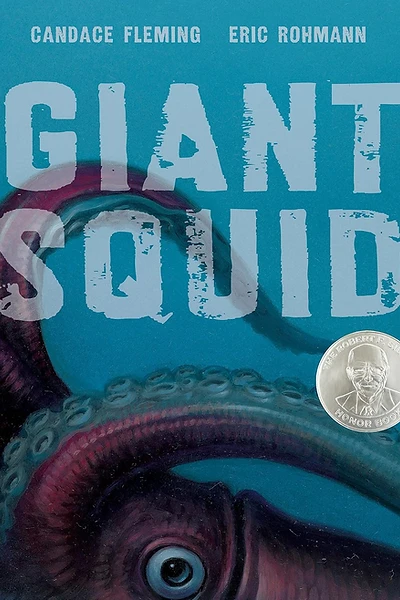
Giant Squid
by Candace Fleming
Pacing MaterialA mysterious picture book exploring the giant squid, one of the ocean's most elusive creatures, revealing what scientists know — and what remains a mystery — about this deep-sea giant.
Big Idea
The ocean holds creatures we barely understand, and scientific curiosity drives us to explore the unknown.
Discussion Questions
- 1.Why is the giant squid so difficult for scientists to study?
- 2.What do we know about how giant squids live in the deep ocean?
- 3.How do scientists learn about animals they can't easily observe?
- 4.What other ocean mysteries are scientists still trying to solve?
Classroom Activity
Deep Ocean Research Poster
Students research the giant squid and create a poster showing what is known and what remains mysterious.
Lesson Plan
Learning Goals
- Understand the biology and habitat of the giant squid
- Explore the challenges of deep-sea exploration
- Distinguish between known facts and scientific mysteries
- Develop research and presentation skills
Activity Steps
- 1.Read the book and discuss what we know vs. what's still unknown
- 2.Introduce the concept of the deep ocean and its challenges
- 3.Have students research the giant squid using books and videos
- 4.Students create posters with a 'What We Know' and 'What's Still a Mystery' section
- 5.Share posters and discuss how scientists study the unobservable
Standards Connections
- ELA: RL.K.1 — Ask and answer questions about key details
- ELA: RL.K.2 — Retell stories, including key details
- ELA: RL.K.3 — Describe characters, setting, and events
- ELA: RL.4.6 — Acknowledge differences in characters' points of view
- ELA: SL.K.1 — Participate in collaborative conversations about the text
- ELA: W.K.3 — Write narratives recounting events with descriptive details
- SEL: Responsible Decision-Making
- Art: VA:Re7 — Perceive and analyze artistic work
Pace-Write-Read Study with Pace-Write It!
Focus question: How does an author slow down and speed up information to build mystery about a real animal? In Giant Squid by Candace Fleming, readers learn facts about a deep-sea creature that scientists rarely see, so the book feels both informational and suspenseful. Fleming uses pacing by revealing details bit by bit, asking questions, and letting dramatic illustrations and page turns hold the mystery before giving readers more facts.
| Element | How to notice or teach it in the novel |
|---|---|
| Pace | Read: Notice how Giant Squid moves slowly through mystery at first, then gives readers new facts in carefully timed bursts. Candace Fleming paces the information so we feel how little humans know about this hidden ocean animal. Classroom Activity: Write 4 short sentences about an animal or nature object, revealing one new fact in each sentence instead of saying everything at once. |
| Plot | Read: Even though this is nonfiction, Giant Squid still has a kind of plot: readers begin with mystery, gather clues about the creature, and end knowing more while still wondering. The movement from unknown to partly known creates the book’s structure. Classroom Activity: Make a beginning-middle-end plan for an informational piece called “The Mystery of the ___,” with one clue in each part. |
| Prosody | Read: Listen to how the language in Giant Squid sounds dramatic and hushed, matching the deep ocean setting and the creature’s secretive life. The rhythm of the sentences helps the read-aloud feel suspenseful. Classroom Activity: Read one of your own nature sentences aloud 3 ways—fast, slow, and whispery—and rewrite it to sound the most mysterious. |
| Word pause | Read: Notice where Fleming’s wording makes readers pause on important ideas, such as what scientists do not know yet about the giant squid. These pauses help the mystery linger. Classroom Activity: Write a sentence about a hidden animal and add a dash or line break where you want your reader to pause and wonder. |
| Concept | Read: The big concept in Giant Squid is that nature still holds mysteries, and scientists keep learning from clues. The book teaches both animal facts and the idea that not everything is fully known. Classroom Activity: Write 2 sentences explaining one mystery in nature and why people still want to study it. |
| Voice & World View | Read: Fleming’s voice sounds curious, respectful, and full of awe for the giant squid and the ocean world it lives in. Her world view suggests that nature is powerful and humans are still discovering it. Classroom Activity: Write in a curious voice about an animal by starting with “Scientists know…” and “But they still wonder…”. |
| Setting & Place | Read: The deep ocean in Giant Squid is not just a place; it shapes the whole mood because it is dark, vast, and hard to explore. The setting helps explain why the squid remains so mysterious. Classroom Activity: Describe a setting that makes seeing an animal difficult, using 3 sensory details. |
| Point of View | Read: Giant Squid is told from an outside nonfiction point of view, but it stays close to what humans can observe and question about the creature. This perspective lets readers feel like investigators studying clues. Classroom Activity: Write 3 lines from the point of view of a scientist observing a hard-to-find animal. |
| Original Characters | Read: The giant squid itself becomes the central figure of the book, almost like a character in a suspense story, because its body, actions, and mystery are revealed so dramatically. Scientists also appear as knowledge-seekers trying to understand it. Classroom Activity: Turn a real animal into a story-like character by listing 4 traits that make it unforgettable. |
| Dialogue | Read: Giant Squid does not rely on character dialogue, which makes the factual narration and questioning stand out even more. The silence fits a deep-sea creature that cannot tell us its story directly. Classroom Activity: Add one imagined line of dialogue from a scientist discovering a clue about an animal, such as “Look at this…”. |
| Details | Read: Fleming includes carefully chosen details about the giant squid’s body, habitat, and mystery so readers stay focused on the most striking facts. These details build knowledge without overwhelming the audience. Classroom Activity: Pick one animal and write 5 exact details that would help a reader picture and understand it. |
| Descriptions | Read: The descriptions in Giant Squid help readers imagine a creature they will probably never see in real life. The language and illustrations work together to make the squid’s size, movement, and deep-sea world vivid. Classroom Activity: Write a 3-sentence description of an animal using size, color, and movement. |
| Strong First Lines | Read: The opening of Giant Squid grabs readers right away by creating mystery around a creature hidden in the ocean depths. A strong beginning makes readers want to keep turning pages to learn more. Classroom Activity: Write an opening line for an informational book that introduces an animal as a mystery. |
| Immediacy & Engagement | Read: Fleming keeps readers engaged by making it feel urgent to find out what this creature is, how it lives, and why so much remains unknown. The book pulls readers close through suspense and curiosity. Classroom Activity: Write 2 sentences that make a reader feel they are discovering something right now in nature. |
| Story Scenes & Summaries & Unique Structures | Read: Giant Squid blends scene-like moments of discovery and dramatic encounter with summary information about what scientists know. This structure helps the book feel both literary and informational. Classroom Activity: Write one scene sentence about spotting an animal and one summary sentence explaining a fact about it. |
| Flashback & Flash Forward & Cliffhangers | Read: While Giant Squid is not built around flashbacks, it does create cliffhanger-like moments by ending pages with mystery before revealing more. This keeps readers waiting for the next fact or image. Classroom Activity: Write 2 sentences where the first ends with a mystery and the second reveals part of the answer. |
| Tension & Suspense & Surprise | Read: The tension in Giant Squid comes from the unknown—what the squid looks like alive, how it behaves, and what scientists still cannot explain. Surprise grows as readers learn strange and amazing facts. Classroom Activity: Write a fact about an animal so that the surprising part comes at the end of the sentence. |
| Page Turns and Chapter Breaks | Read: In this picture book, page turns do important pacing work by holding back information and letting readers absorb dramatic art before learning more. The turn becomes part of the mystery. Classroom Activity: Plan a 2-page mini-book spread where page 1 asks a question and page 2 reveals a clue. |
| Performance | Read: Giant Squid invites expressive read-aloud performance because the language can be read in a slow, dramatic tone that matches the deep ocean mystery. Readers can use volume and pauses to heighten suspense. Classroom Activity: Mark one short paragraph of your writing with symbols for pause, slow down, and whisper. |
| Personality | Read: Even in nonfiction, the giant squid seems to have a strong presence—powerful, hidden, and strange—because of how the book presents it. The book’s personality is serious, curious, and awe-filled. Classroom Activity: Give an animal a personality in one sentence without making up false facts, such as “The owl seems watchful in the dark forest.” |
| Humor | Read: Giant Squid is mostly serious and mysterious rather than funny, which supports the tone of scientific wonder and ocean suspense. The lack of humor helps readers stay focused on awe and mystery. Classroom Activity: Revise a funny animal sentence into a more serious, mysterious one. |
| Pause | Read: The book uses pauses in ideas, layout, and phrasing to let big images and big questions sink in. These pauses help readers think about the giant squid before moving on. Classroom Activity: Write 3 short lines about an animal, leaving one line by itself to create a pause for effect. |
| Poetry and Poetic Devices | Read: Fleming’s nonfiction language has a poetic feel because it uses vivid imagery and dramatic phrasing to describe the giant squid and its dark habitat. This adds beauty to the science content. Classroom Activity: Write one simile or image about an ocean animal, such as comparing its movement to something readers know. |
| Repetition | Read: Notice how key ideas repeat in Giant Squid, especially the mystery of what scientists know and do not know. Repetition strengthens the theme that nature still holds secrets. Classroom Activity: Write 3 sentences that repeat the same starter, such as “Still, no one knows…” or “Deep in the ocean…”. |
| Rhythm | Read: The rhythm of the sentences helps the book alternate between suspenseful slowness and bursts of discovery. This rhythm mirrors the careful revealing of facts about the giant squid. Classroom Activity: Write one short sentence, one longer sentence, and one short sentence to create a dramatic rhythm. |
| Punctuation | Read: Punctuation in Giant Squid helps shape pacing by slowing readers with commas and pauses or emphasizing mystery with questions. Marks on the page help control the flow of information. Classroom Activity: Take one plain animal sentence and revise it using a question mark, dash, or ellipsis to change its pacing. |
| Questions | Read: Questions are central to Giant Squid because they reflect scientific curiosity and invite readers to wonder along with researchers. The book’s questions keep the mystery alive even while giving facts. Classroom Activity: Write 3 research questions about an animal before writing any facts about it. |
| Compare-Contrast | Read: Readers can compare what scientists know about the giant squid with what remains unknown, and contrast the hidden deep-sea world with the human world above. This deepens understanding of the theme of mystery in nature. Classroom Activity: Make a T-chart labeled “Known” and “Still a Mystery” for one animal. |
| Objects | Read: Important objects in Giant Squid include the squid’s tentacles, beak, body, and the scientific clues humans use to study it. These concrete objects help readers grasp a creature that is rarely seen. Classroom Activity: Choose one important object from an animal and write 2 sentences explaining why it matters. |
| Threes | Read: The book often groups information in memorable ways, and students can notice how listing details in threes makes facts sound strong and complete. This is useful in nature writing about the giant squid and beyond. Classroom Activity: Write 3 related details about an animal’s body, habitat, or behavior in one sentence. |
| Whitespace & Negative Space | Read: The spacing on the pages and the dark open areas in the illustrations help create the feeling of the giant squid’s huge, empty ocean home. What is not shown is part of the mystery. Classroom Activity: Make a simple page plan for your writing that leaves space around one important sentence or picture idea. |
| Art & Graphics | Read: The illustrations in Giant Squid are essential to pacing because they reveal mood, scale, and darkness in ways the words alone cannot. The art helps readers feel the giant squid’s mystery and power. Classroom Activity: Sketch one quick image to go with your animal writing and add one label that teaches a fact. |
| Interactives & Gamification | Read: Giant Squid naturally invites guessing, predicting, and clue-finding because readers collect facts as if solving a mystery about the deep sea. This makes the book easy to turn into an interactive reading experience. Classroom Activity: Create a 3-clue “Mystery Animal” card that reveals the animal only at the end. |
Pace-Write It!
20-Minute Classroom Flow\nRead (5 min): Read aloud a short section of Giant Squid by Candace Fleming that introduces the creature’s mystery and a later section that reveals key facts. Ask students to listen for places where the author slows down, asks questions, or saves information for later.\nNotice (5 min): Discuss: How does the book make a real animal feel mysterious? Chart student observations under these headings: Questions, Pauses, Revealed Clues, Strong Words, Page Turns.\nWrite (7 min): Students write a 4-6 sentence mini nonfiction mystery about an animal or nature object. Writing frame: “Deep in/Under/Inside ____, there is a _____. Scientists/People know _____. But they still wonder _____. One clue is _____. Another clue is _____. Could it be _____?” Encourage students to reveal one fact at a time.\nShare (3 min): Partners read their pieces aloud using dramatic pacing, with one pause after the mystery sentence. Listeners say which line created the most suspense.\nExit ticket: Write one sentence answering: “What is one way Candace Fleming paced Giant Squid to keep readers curious?”