 K-2
K-2E CAN READ-FOX
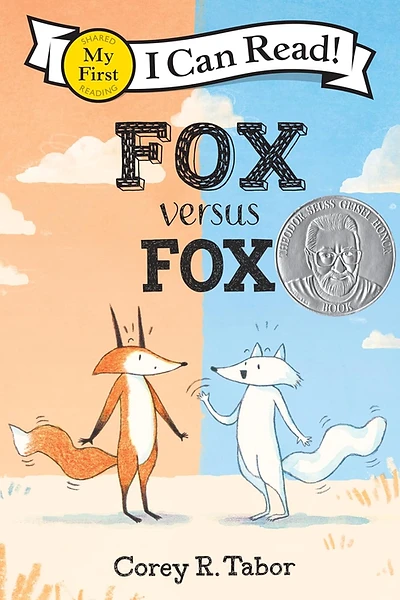
Fox versus Fox
by Corey R. Tabor
Pacing MaterialTwo very different foxes face off in this Geisel Honor-winning easy reader about competition, differences, and finding friendship in unexpected places.
Big Idea
Even when we're different, we can find common ground — and sometimes a friendly competition brings out the best in everyone.
Discussion Questions
- 1.What happens when two foxes meet?
- 2.How are the two foxes different?
- 3.How do they resolve their conflict?
- 4.Have you ever disagreed with a friend?
Classroom Activity
Two of a Kind Stories
Write a story about two characters who are very different but must work together, then illustrate the moment they find common ground.
Lesson Plan
Learning Goals
- Analyze character conflict and resolution
- Build reading fluency with dialogue patterns
- Explore themes of empathy and understanding
Standards Connections
- ELA: RL.K.1 — Ask and answer questions about key details
- ELA: RL.K.2 — Retell stories, including key details
- ELA: RL.K.3 — Describe characters, setting, and events
- ELA: RL.2.6 — Acknowledge differences in characters' points of view
- ELA: SL.K.1 — Participate in collaborative conversations about the text
- ELA: W.K.3 — Write narratives recounting events with descriptive details
- SEL: Relationship Skills
- SEL: Social Awareness
- Art: VA:Re7 — Perceive and analyze artistic work
Pace-Write-Read Study with Pace-Write It!
Focus question: How does an author make a simple competition feel exciting, funny, and then warm and friendly? In Fox versus Fox by Corey R. Tabor, two very different foxes compete and clash before discovering an unexpected friendship. The pacing moves quickly through short lines, page turns, repeated face-offs, and playful pauses that help young readers feel the conflict build and then soften.
| Element | How to notice or teach it in the novel |
|---|---|
| Pace | Read: Notice how Fox versus Fox moves fast with short sentences, quick exchanges, and one contest after another between the two foxes. The quick pace matches their competition, and the slower moments help show the change toward friendship. Classroom Activity: Write 4 short sentences about two animal characters having a contest, using only a few words in each sentence to make the action feel fast. |
| Plot | Read: Notice the clear plot in Fox versus Fox: two foxes meet, compete, try to outdo each other, and then move toward connection instead of conflict. The plot is easy to follow, but the emotional change gives it depth. Classroom Activity: Make a beginning-middle-end chart for the two foxes, then write one sentence for each part. |
| Prosody | Read: Listen to how the lines in Fox versus Fox sound when read aloud. Corey R. Tabor uses phrasing and line breaks that help readers hear the attitude, challenge, and humor in the foxes’ rivalry. Classroom Activity: Choose one contest moment and rehearse reading it in a bold, competitive voice, then write one new line that sounds dramatic when read aloud. |
| Word pause | Read: Notice where you naturally stop for a beat in Fox versus Fox, especially before a reveal, reaction, or comeback from one fox to the other. These tiny pauses make the competition funnier and more suspenseful. Classroom Activity: Write 3 short lines for a face-off scene and put one line all by itself to create a pause before the last line. |
| Concept | Read: Notice that the big idea in Fox versus Fox is that being different does not have to lead to staying enemies; conflict can change into friendship. The contests help young readers understand comparison, feelings, and how relationships can shift. Classroom Activity: Write a sentence that starts, "At first they were rivals, but then..." and finish it with a friendship idea. |
| Voice & World View | Read: Notice Corey R. Tabor’s playful voice in Fox versus Fox. The story treats the foxes’ conflict with humor instead of meanness, showing a world where differences can be funny, important, and finally connecting. Classroom Activity: Write 2 lines in a playful narrator voice about two characters who think they are very different. |
| Setting & Place | Read: Notice how the simple outdoor setting in Fox versus Fox keeps the focus on the two foxes and their actions. The place does not crowd the story; it gives space for the contest, movement, and changing relationship to stand out. Classroom Activity: Draw or describe a simple place where two characters can have a challenge, and write 2 sentences about why that setting fits the action. |
| Point of View | Read: Notice that Fox versus Fox is told from an outside narrator’s point of view, so readers can watch both foxes instead of being inside only one fox’s mind. This helps the book balance both sides of the conflict. Classroom Activity: Write one sentence about the same contest from Fox A’s view and one from Fox B’s view. |
| Original Characters | Read: Notice that the two foxes in Fox versus Fox are both foxes, yet they feel distinct because of their behavior, attitude, and how they respond to competition. Corey R. Tabor makes familiar animals feel fresh through contrast. Classroom Activity: Invent two characters from the same animal group who are very different, and write 3 ways they are not alike. |
| Dialogue | Read: Notice how the dialogue in Fox versus Fox helps build the rivalry between the foxes. Their spoken lines keep the pace moving and let readers hear challenge, pride, and surprise directly. Classroom Activity: Write a 4-line dialogue between two characters trying to prove who is better at something. |
| Details | Read: Notice the small details in Fox versus Fox that show the foxes’ differences and reactions during their competition. These details help readers understand the conflict without long explanations. Classroom Activity: Write 3 tiny details about each of two characters, such as how they move, look, or react during a contest. |
| Descriptions | Read: Notice that the descriptions in Fox versus Fox are simple and exact, fitting an easy reader while still making each fox and each moment clear. The brief descriptions leave room for readers to infer feelings and humor. Classroom Activity: Describe one character in 2 short sentences using simple words that still show personality. |
| Strong First Lines | Read: Notice how the opening of Fox versus Fox quickly introduces the face-off feeling between the two foxes. A strong beginning helps readers know right away that this story will involve conflict and comparison. Classroom Activity: Write a first line for a story about two characters who instantly become rivals. |
| Immediacy & Engagement | Read: Notice how Fox versus Fox pulls readers in right away through action, challenge, and the curiosity of what each fox will do next. The direct, lively style keeps young readers engaged from page to page. Classroom Activity: Write 3 opening lines that begin with action instead of explanation. |
| Story Scenes & Summaries & Unique Structures | Read: Notice how Fox versus Fox uses short scenes rather than long summaries, letting readers experience each competitive moment step by step. The structure feels like a series of face-offs that build the relationship. Classroom Activity: Plan 3 mini-scenes for a rivalry story: challenge, surprise, and change of heart. |
| Flashback & Flash Forward & Cliffhangers | Read: Notice that Fox versus Fox does not rely on flashbacks or flash forwards; instead, it keeps readers in the present moment. Small cliffhanger-like page endings make readers want to turn the page to see how one fox will answer the other. Classroom Activity: Write a page-end line that makes a reader wonder what a rival will do next. |
| Tension & Suspense & Surprise | Read: Notice how the tension in Fox versus Fox comes from the competition between the two foxes and from not knowing who will win or how they will get along. Surprise helps the story shift from simple conflict to friendship. Classroom Activity: Write 3 sentences that build tension in a contest and end with a surprise. |
| Page Turns and Chapter Breaks | Read: Notice how page turns in Fox versus Fox help deliver reactions, reversals, and jokes. As an easy reader, it does not need chapters; the page turns do the pacing work of keeping the rivalry lively. Classroom Activity: Fold a paper into 4 parts and write one sentence in each part so the last part reveals a funny or surprising ending. |
| Performance | Read: Notice that Fox versus Fox invites performance because the foxes’ rivalry can be acted out with facial expressions, pauses, and dramatic voices. The story becomes even more lively when students perform the contest. Classroom Activity: With a partner, act out a 4-line rivalry scene, then write one extra line for each character to perform. |
| Personality | Read: Notice how each fox in Fox versus Fox has a clear personality, and that is what keeps the conflict interesting. Their different ways of acting matter as much as the actual contest. Classroom Activity: Write a T-chart for two characters and list 3 personality traits for each. |
| Humor | Read: Notice the humor in Fox versus Fox as the two foxes try to outdo each other. The fun comes from their seriousness about the competition and the contrast between them, even as the story points toward friendship. Classroom Activity: Write a funny rivalry moment where both characters think they are winning. |
| Pause | Read: Notice how Fox versus Fox uses pauses between actions and lines to let readers enjoy a reaction, a stare, or a joke. These quiet beats make the pacing stronger because not every moment is rushed. Classroom Activity: Write a 5-line scene and place one single-word line in the middle to create a pause. |
| Poetry and Poetic Devices | Read: Notice that while Fox versus Fox is prose, it still uses sound, pattern, and tight phrasing that can feel poetic when read aloud. The repeated rivalry structure gives the story a kind of chant-like energy. Classroom Activity: Write two short lines about a contest using alliteration, such as repeated beginning sounds. |
| Repetition | Read: Notice how repetition in Fox versus Fox helps young readers follow the back-and-forth between the two foxes. Repeated patterns also make the conflict feel bigger and funnier each time. Classroom Activity: Write a pattern of 3 repeated starter lines, such as "I can..." or "Then Fox..." for a rivalry scene. |
| Rhythm | Read: Notice the rhythm of Fox versus Fox in its short bursts of action and response. The back-and-forth rhythm mirrors the contest between the foxes and keeps readers moving through the story. Classroom Activity: Write 4 short lines with the pattern action-response, action-response. |
| Punctuation | Read: Notice how punctuation in Fox versus Fox helps show excitement, challenge, and stopping points during the foxes’ conflict. Marks like periods, question marks, and exclamation points affect how fast or strongly a line is read. Classroom Activity: Write the same line three ways using a period, a question mark, and an exclamation point, then read each aloud. |
| Questions | Read: Notice how readers may ask questions while reading Fox versus Fox: Who will win? Why are the foxes so different? Will they stay rivals or become friends? These questions help keep the pacing strong. Classroom Activity: Write 3 questions a reader might ask during a story about two competing characters. |
| Compare-Contrast | Read: Notice that compare-contrast is central in Fox versus Fox because the two foxes are alike in being foxes but different in style, attitude, and approach. Their contrasts create the conflict and make the friendship meaningful. Classroom Activity: Complete a compare-contrast chart with "same" and "different" for two characters. |
| Objects | Read: Notice any objects in Fox versus Fox that help shape the contest, action, or visual humor. In a simple text, even small objects can become important because they focus the reader’s attention on what the foxes are doing. Classroom Activity: Choose one object for a rivalry story, such as a hat, stick, or berry, and write 2 sentences showing how both characters use it differently. |
| Threes | Read: Notice whether moments in Fox versus Fox build in groups of three, a pattern that often feels satisfying and funny in children’s books. Repeating a challenge or reaction three times can help readers predict and enjoy the pacing. Classroom Activity: Write a sequence where a character tries 3 times to beat a rival, with the third try ending differently. |
| Whitespace & Negative Space | Read: Notice how Fox versus Fox uses space on the page to keep the text uncluttered and to highlight the foxes’ actions, expressions, and pauses. The open space helps early readers focus and gives pacing room to breathe. Classroom Activity: Write a short 3-line scene and leave space between each line to show separate beats. |
| Art & Graphics | Read: Notice how the illustrations in Fox versus Fox help tell the story of conflict and friendship by showing the foxes’ expressions, movement, and differences. The art carries pacing too, because readers can pause on a picture and then move quickly to the next action. Classroom Activity: Draw two character expressions for a rivalry scene and write one matching caption for each. |
| Interactives & Gamification | Read: Notice that Fox versus Fox feels a little like a game because readers can predict, compare, and keep score in their minds as the two foxes compete. This game-like feeling helps make the pacing playful and engaging. Classroom Activity: Create a simple "versus" chart for two original characters and write one sentence for Round 1, Round 2, and Friendship Round. |
Pace-Write It!
20-Minute Classroom Flow\nRead (5 min): Read aloud a few pages from Fox versus Fox by Corey R. Tabor that show the two foxes competing and reacting to each other. Ask students to listen for quick parts, funny pauses, and places where the rivalry starts to change.\nNotice (5 min): Make a class list: short sentences, repeated face-offs, page-turn surprise, dialogue, and character contrast. Ask: How do these choices make the conflict feel fast? How do they help the ending feel warmer?\nWrite (7 min): Students write their own tiny rivalry scene that turns toward friendship. Writing frame: "___ versus ___. At first, ___ said, '___!' Then ___ said, '___!' They tried to ___. They both ___. At last, ___ and ___ ___." Encourage students to use at least one short line, one repeated word or phrase, and one pause line by itself.\nShare (3 min): Partners read their scenes aloud with dramatic voices for each character. Invite 2-3 students to share how they used fast pacing or a funny pause.\nExit ticket: Write one sentence answering: "How did short lines or repetition make your scene sound fast or exciting?"
Pace-Write-Read Connection
Teach this book using the Pace-Write-Read method — Tool 20: Play.
Open the Mastery Manual