 K-2
K-2E CAN READ-FOX
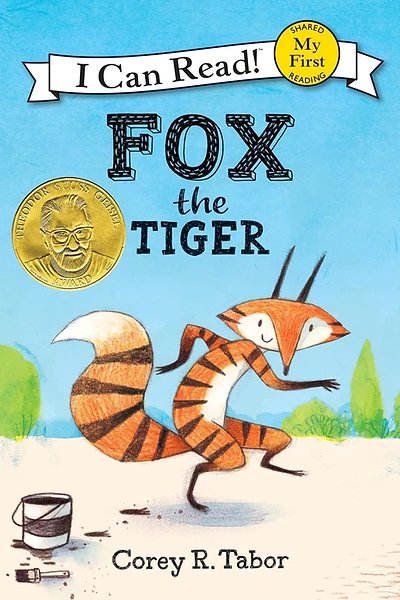
Fox the Tiger
by Corey R. Tabor
Pacing MaterialFox decides he'd rather be a tiger — painting on stripes and practicing his growl — in this Geisel Award-winning easy reader about being yourself.
Big Idea
Being yourself is the bravest thing you can be — even if you're a fox who wants to be a tiger.
Discussion Questions
- 1.Why does Fox want to be a tiger?
- 2.How does Fox change himself?
- 3.What happens when Fox tries being someone else?
- 4.What makes you uniquely you?
Classroom Activity
Mixed-Up Animal Characters
Create a new animal character by combining two animals, then write a story about their first day being themselves.
Lesson Plan
Learning Goals
- Explore themes of identity and self-acceptance
- Build reading fluency with patterned text
- Practice character analysis
Standards Connections
- ELA: RL.K.1 — Ask and answer questions about key details
- ELA: RL.K.2 — Retell stories, including key details
- ELA: RL.K.3 — Describe characters, setting, and events
- ELA: RL.2.6 — Acknowledge differences in characters' points of view
- ELA: SL.K.1 — Participate in collaborative conversations about the text
- ELA: W.K.3 — Write narratives recounting events with descriptive details
- SEL: Self-Awareness
- SEL: Social Awareness
- Art: VA:Re7 — Perceive and analyze artistic work
Pace-Write-Read Study with Pace-Write It!
Focus question: How does an author make a simple story move in a fun, lively way while also helping us think about being ourselves? In Fox the Tiger by Corey R. Tabor, Fox decides he wants to be a tiger, so the story moves through quick actions, funny attempts, and short, easy-reader sentences that keep the pace brisk. The pacing helps young readers feel Fox’s excitement, silliness, and final understanding that being himself matters most.
| Element | How to notice or teach it in the novel |
|---|---|
| Pace | Read: Notice how Fox the Tiger moves quickly from Fox’s idea to his painting stripes, practicing his growl, and trying to act like a tiger. The short sentences and quick scene changes help the story feel fast and playful. Classroom Activity: Write 3 short sentences about an animal pretending to be another animal, making each sentence show one quick action. |
| Plot | Read: Notice the clear beginning, middle, and end in Fox the Tiger: Fox wants to be a tiger, he tries to become one, and then he learns something about who he really is. The plot is simple but satisfying for early readers. Classroom Activity: Write a 3-part mini-plot using the frame: First __ wanted to be __. Next __ tried __. Last __ learned __. |
| Prosody | Read: Listen to how Fox’s words and the repeated tiger talk can be read with expression, changing your voice to sound proud, loud, or silly. Corey R. Tabor’s easy-reader style invites readers to perform the lines. Classroom Activity: Choose one line Fox might say as a tiger and rewrite it with stage directions in parentheses, such as (loudly) or (proudly). |
| Word pause | Read: Notice where short sentences and line breaks make you pause, especially when Fox shows off his stripes or his growl. These little pauses help the humor land. Classroom Activity: Write 2 short lines about Fox looking at himself, using a period after each line to create a pause. |
| Concept | Read: Notice that the big idea in Fox the Tiger is identity and self-acceptance. Fox thinks becoming a tiger will make him better, but the story gently shows that being Fox matters. Classroom Activity: Write one sentence telling what Fox learns about himself at the end of the story. |
| Voice & World View | Read: Notice the cheerful, playful voice of the book and the child-friendly world view that treats Fox’s idea seriously while also making it funny. The story understands how children experiment with who they are. Classroom Activity: Write 2 sentences in a playful voice about a character who says, “Today I am a __!”. |
| Setting & Place | Read: Notice that the setting is simple and uncluttered, keeping the focus on Fox, his actions, and his idea about becoming a tiger. The simple place helps the pacing stay clear and fast. Classroom Activity: Draw or write 2 details about a simple place where Fox could practice being a tiger. |
| Point of View | Read: Notice that the story is told so readers stay close to Fox and his tiger plan. We mostly follow what Fox does and thinks, which helps us understand his feelings and choices. Classroom Activity: Write 2 sentences from Fox’s point of view using the frame: I want to be __ because __. |
| Original Characters | Read: Notice how Fox is an original character because he is confident, funny, and determined to become something he is not. His unusual idea makes the book memorable. Classroom Activity: Invent a character who wants to become a different animal and write 3 details to make that character feel original. |
| Dialogue | Read: Notice how dialogue in Fox the Tiger is brief and powerful, helping reveal Fox’s excitement and the reactions around him. The talk moves the story along quickly. Classroom Activity: Write a 2-line dialogue between Fox and another animal about Fox’s stripes. |
| Details | Read: Notice the specific details about tiger traits, like stripes and growling, that make Fox’s pretending easy to understand. These small details build the joke and the theme. Classroom Activity: List 3 small details a character could add to pretend to be another animal. |
| Descriptions | Read: Notice that descriptions are simple, visual, and easy for young readers to picture, such as Fox changing how he looks and sounds. The descriptions do not slow the story down. Classroom Activity: Write one describing sentence about Fox after he paints on stripes. |
| Strong First Lines | Read: Notice how the opening quickly introduces Fox and his big idea, pulling readers into the story right away. A strong beginning helps the pace start fast. Classroom Activity: Write a first line for a story about an animal who suddenly wants to become something else. |
| Immediacy & Engagement | Read: Notice how readers feel close to Fox’s actions because the story gets right to the problem and keeps us watching what he will do next. That immediacy helps children stay engaged. Classroom Activity: Write 2 sentences that begin with action, such as “Fox grabbed…” or “Fox roared…”. |
| Story Scenes & Summaries & Unique Structures | Read: Notice that the book mostly uses short scenes instead of long summaries, showing Fox painting, posing, and acting like a tiger moment by moment. This scene-based structure fits the easy-reader format. Classroom Activity: Write a 3-sentence scene showing one moment when Fox practices being a tiger. |
| Flashback & Flash Forward & Cliffhangers | Read: Notice that Fox the Tiger does not rely on flashbacks or flash forwards. Instead, it keeps readers interested by ending pages at just the right moment so we want to see Fox’s next tiger move. Classroom Activity: Write a cliffhanger page-ending sentence for Fox, such as “Then Fox heard…”. |
| Tension & Suspense & Surprise | Read: Notice the small suspense in wondering whether Fox can really become a tiger and what others will think. The surprise comes from the funny difference between what Fox believes and what readers can see. Classroom Activity: Write 2 sentences that build suspense before another character reacts to Fox’s tiger costume. |
| Page Turns and Chapter Breaks | Read: Notice how page turns in this picture book help jokes and reveals happen at the right time, especially when Fox shows his new tiger self. There are no chapters, so each page turn helps control pacing. Classroom Activity: Plan a 2-page mini-book idea and write what happens before the page turn and after the page turn. |
| Performance | Read: Notice how Fox the Tiger is fun to act out because Fox performs tiger behavior with his body, voice, and confidence. The book invites dramatic reading. Classroom Activity: Write 3 stage directions for a student acting as Fox, such as (stomps), (growls), or (poses proudly). |
| Personality | Read: Notice Fox’s big personality—bold, imaginative, and a little stubborn. His personality keeps the story moving because he commits fully to his tiger plan. Classroom Activity: Write 3 personality words for Fox and then use one in a sentence: Fox is __ because __. |
| Humor | Read: Notice the humor in Fox taking his pretend tiger identity so seriously even though readers can see he is still Fox. The mismatch between appearance and reality makes the book funny. Classroom Activity: Write one funny sentence about an animal pretending to be another animal but getting one part wrong. |
| Pause | Read: Notice where a pause before or after a funny line gives readers time to think and laugh. In Fox the Tiger, pauses help us notice Fox’s confidence and the silliness of the moment. Classroom Activity: Rewrite one short sentence about Fox and add an ellipsis or a line break to create a dramatic pause. |
| Poetry and Poetic Devices | Read: Notice that even though this is prose, the repeated sounds and playful animal words can feel musical when read aloud. The sound of words like growls and repeated phrases helps the pacing. Classroom Activity: Write one alliterative line for Fox, such as “Fox flicked his fake fierce fur.” |
| Repetition | Read: Notice how repetition of Fox’s tiger idea, tiger actions, and tiger words helps early readers follow the story and builds humor. Repetition also reinforces the theme of trying on an identity. Classroom Activity: Write 3 repeating lines for a character who keeps saying what they want to be. |
| Rhythm | Read: Notice the rhythm created by short, patterned sentences and repeated actions in Fox the Tiger. The rhythm helps new readers predict language and stay with the story. Classroom Activity: Write 3 short sentences with the same pattern, such as “I can __. I can __. I can __.”. |
| Punctuation | Read: Notice how periods, exclamation marks, and dialogue punctuation shape the pace and expression of the story. Exclamation marks can make Fox sound especially proud or fierce. Classroom Activity: Write one sentence from Fox using a period, then rewrite it with an exclamation mark and notice how it changes the feeling. |
| Questions | Read: Notice the questions readers might ask while reading: Is Fox really a tiger? Will anyone believe him? Questions help keep the pages turning. Classroom Activity: Write 2 questions a reader or another character might ask Fox about his tiger plan. |
| Compare-Contrast | Read: Notice how the story invites us to compare a real tiger with Fox pretending to be a tiger. This compare-contrast structure supports the theme that looking like something does not make you that thing. Classroom Activity: Make a T-chart with “Fox” and “Tiger” and write 2 details for each. |
| Objects | Read: Notice how important objects, such as paint or anything Fox uses to make stripes, help tell the story quickly. Objects make his transformation visible. Classroom Activity: Choose one object Fox uses and write 2 sentences explaining how it helps his plan. |
| Threes | Read: Notice whether actions or ideas come in a satisfying small pattern, such as trying a look, a sound, and a behavior. Groups of three often feel complete and help pacing. Classroom Activity: Write 3 things Fox does to seem more like a tiger. |
| Whitespace & Negative Space | Read: Notice how open space on the page keeps attention on Fox, the words, and the joke. White space also helps early readers move easily through the story without feeling crowded. Classroom Activity: Create a 1-page story idea with only 1 sentence and a picture, leaving lots of blank space so the main action stands out. |
| Art & Graphics | Read: Notice how the illustrations in Fox the Tiger carry much of the storytelling by showing Fox’s painted stripes, poses, and expressions. The art works with the short text to control pacing and humor. Classroom Activity: Draw Fox in one scene and add a caption that matches what the picture shows. |
| Interactives & Gamification | Read: Notice how the book invites children to join in by growling, posing, and deciding whether Fox really seems like a tiger. That playful participation keeps readers engaged. Classroom Activity: Make a class game called “Fox or Tiger?” and write 3 clue sentences classmates can use to guess which one is being described. |
Pace-Write It!
20-Minute Classroom Flow\nRead (5 min): Read Fox the Tiger by Corey R. Tabor aloud. Pause to let students notice how quickly Fox moves from wanting to be a tiger to painting stripes and practicing his growl.\nNotice (5 min): Ask: What makes this story feel fast and funny? Chart student ideas such as short sentences, repeated ideas, page turns, dialogue, and pictures that show Fox’s feelings. Revisit the focus question: How does pacing help us understand Fox and his lesson about being himself?\nWrite (7 min): Students write their own mini easy-reader scene about a character pretending to be something else, using quick actions and repetition. Writing frame: “I am a ____. I have ____. I can ____. But really, I am a ____. And that is ____. ” Encourage students to use 4-5 short sentences and one picture idea.\nShare (3 min): Partners read their writing aloud with expression, especially on repeated lines. Invite 2-3 volunteers to share how their pacing sounded fast, funny, or clear.\nExit ticket: Write one sentence answering: What does Fox learn, and how do the short sentences help tell that lesson?