
 K-2
K-2E CAN READ-FOX
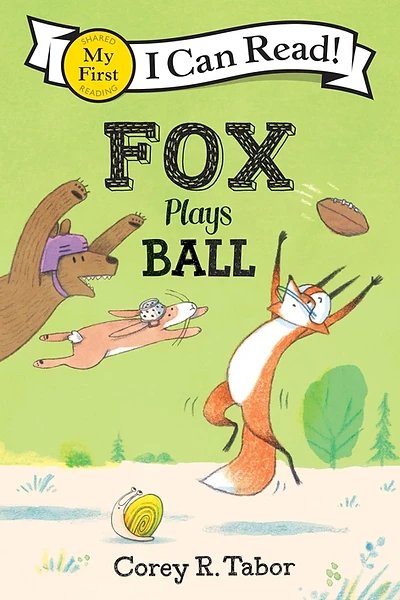
Fox Plays Ball
by Corey R. Tabor
Pacing MaterialFox and his friends learn to play ball together in this funny, action-packed easy reader about teamwork, fair play, and the joy of the game.
Big Idea
The best games are the ones where everyone gets to play.
Discussion Questions
- 1.How does Fox play ball with his friends?
- 2.What makes a game fair for everyone?
- 3.How do the illustrations show action and movement?
- 4.What's your favorite game to play with friends?
Classroom Activity
Invent a Sport
Invent a new sport and write the rules, then illustrate the game being played.
Lesson Plan
Learning Goals
- Build reading fluency with action verbs
- Explore themes of teamwork and fair play
- Practice writing procedural text (rules)
Standards Connections
- ELA: RL.K.1 — Ask and answer questions about key details
- ELA: RL.K.2 — Retell stories, including key details
- ELA: RL.K.3 — Describe characters, setting, and events
- ELA: RL.2.6 — Acknowledge differences in characters' points of view
- ELA: SL.K.1 — Participate in collaborative conversations about the text
- ELA: W.K.3 — Write narratives recounting events with descriptive details
- SEL: Social Awareness
- SEL: Relationship Skills
- Art: VA:Re7 — Perceive and analyze artistic work
Pace-Write-Read Study with Pace-Write It!
Focus question: How does an author make a simple ball game feel fast, funny, and full of teamwork? In Fox Plays Ball by Corey R. Tabor, Fox and his friends play a lively game that is full of motion, talk, and quick changes. Tabor uses short sentences, playful repetition, expressive dialogue, and page-by-page action to create strong pacing while showing teamwork and fair play.
| Element | How to notice or teach it in the novel |
|---|---|
| Pace | Read: Notice how Fox Plays Ball moves quickly from one play to the next so the game feels active and exciting. Corey R. Tabor uses short action moments with Fox and his friends to keep the story moving while still showing teamwork and fair play. Classroom Activity: Write 4 short sentences about a playground game, making each sentence show one fast action in order. |
| Plot | Read: Notice the clear beginning, middle, and end in Fox Plays Ball: the friends start the game, face challenges as they play together, and learn about teamwork and fair play by the end. The simple plot helps young readers follow the action easily. Classroom Activity: Draw and label 3 boxes for beginning, middle, and end, then write one sentence in each box about a game story. |
| Prosody | Read: Listen to how the words in Fox Plays Ball sound when read aloud. The lively sports action, repeated phrases, and character talk help readers use expression, changing their voices as Fox and his friends react to the game. Classroom Activity: Choose one page or moment from the story and practice reading it aloud with an excited, game-day voice, then write one sentence you would read with strong expression. |
| Word pause | Read: Notice where you naturally stop for a moment in Fox Plays Ball because of punctuation, line breaks, or surprise in the action. These tiny pauses help readers keep up with Fox, the ball, and the funny game moments. Classroom Activity: Write 3 short sports sentences and add a slash mark where a reader should pause. |
| Concept | Read: Notice that the big idea in Fox Plays Ball is not just playing ball, but learning how to play together fairly. Fox and his friends show that a game works better when everyone has a turn and follows the rules. Classroom Activity: Write one sentence that tells the lesson of a game, using this frame: “A good team ______.” |
| Voice & World View | Read: Notice the playful, child-friendly voice in Fox Plays Ball. Corey R. Tabor presents the game as exciting, funny, and important, showing a world where friendship, fun, and fairness matter. Classroom Activity: Write 2 sentences about a game using a cheerful, playful voice like the one in Fox Plays Ball. |
| Setting & Place | Read: Notice how the playing space in Fox Plays Ball helps the action. The game setting gives Fox and his friends room to run, throw, miss, and try again, making the pacing feel open and energetic. Classroom Activity: Write 3 details that describe a place where children could play a ball game. |
| Point of View | Read: Notice that Fox Plays Ball tells the story from an outside point of view, so readers can watch Fox and his friends together. This helps us see the whole team and understand how each character adds to the game. Classroom Activity: Rewrite one game moment from the point of view of one friend using “I.” |
| Original Characters | Read: Notice how Fox and his friends each help make the game funny and lively. Their different reactions and ways of playing make the team story more interesting than if everyone acted the same. Classroom Activity: Invent one new animal teammate for Fox’s game and write 2 sentences about how that character would play. |
| Dialogue | Read: Notice how dialogue in Fox Plays Ball speeds up the story and shows how Fox and his friends react in the moment. Their words can sound excited, surprised, or determined, helping readers feel inside the game. Classroom Activity: Write 4 lines of dialogue between two animal friends during a ball game. |
| Details | Read: Notice the small details in Fox Plays Ball that help readers picture the ball game and understand what is happening. Little clues about movement, turns, and reactions help the action stay clear. Classroom Activity: Write 3 small details that would help a reader picture a kick, throw, or catch. |
| Descriptions | Read: Notice that the descriptions in Fox Plays Ball are simple but strong, matching the easy-reader style. Corey R. Tabor uses just enough description so readers can quickly picture Fox, his friends, and the game without slowing the pace too much. Classroom Activity: Describe one moment in a game using 2 describing words and 1 action word. |
| Strong First Lines | Read: Notice how the opening of Fox Plays Ball quickly brings readers into the game and prepares them for action. A strong start helps the pacing feel immediate from the very beginning. Classroom Activity: Write 3 different first lines for a story about animals starting a game. |
| Immediacy & Engagement | Read: Notice how Fox Plays Ball makes readers feel close to the action right away. The quick game events, expressive character reactions, and simple language help young readers stay engaged with Fox and his friends. Classroom Activity: Write 2 sentences that make a reader feel like a game is happening right now. |
| Story Scenes & Summaries & Unique Structures | Read: Notice how some parts of Fox Plays Ball feel like full scenes, where we can imagine the exact play happening, while other parts move more quickly through the game. This balance helps Corey R. Tabor keep the story clear and fast. Classroom Activity: Write one sentence as a scene with a specific action and one sentence as a summary of several game actions. |
| Flashback & Flash Forward & Cliffhangers | Read: Notice that Fox Plays Ball mostly stays in the present action of the game instead of using flashbacks or flash-forwards. You can still think about how an author could create a cliffhanger right before a big throw, catch, or score. Classroom Activity: Write 2 sentences ending the first sentence with a cliffhanger, such as “Fox kicked the ball, and then…” |
| Tension & Suspense & Surprise | Read: Notice how a game can create tension in Fox Plays Ball when readers wonder what Fox and his friends will do next. Surprise can come from a funny mistake, an unexpected play, or a problem that teamwork helps solve. Classroom Activity: Write 3 sentences about a game moment that makes a reader wonder what will happen next. |
| Page Turns and Chapter Breaks | Read: Notice how page turns in Fox Plays Ball can make readers eager to see the next play or reaction. Because it is an easy reader, the story depends on page-by-page movement instead of chapter breaks to build momentum. Classroom Activity: Fold a paper into 4 parts and plan a mini game story with one action surprise saved for page 2 or 3. |
| Performance | Read: Notice how Fox Plays Ball is great for performing aloud because the game action is physical and the characters’ reactions are expressive. Readers can use voices, motions, and pauses to make Fox and his friends come alive. Classroom Activity: Write one line a narrator could read and one line a character could say during a game. |
| Personality | Read: Notice how Fox’s personality helps shape the energy of Fox Plays Ball. The characters’ feelings about the game—whether eager, competitive, silly, or cooperative—make the pacing feel more alive. Classroom Activity: Write 2 sentences that show an animal player’s personality during a game without saying the feeling word. |
| Humor | Read: Notice the humor in Fox Plays Ball, where the game is not just about winning but about funny moments with Fox and his friends. The playful tone keeps the pacing light and enjoyable even when the game gets tricky. Classroom Activity: Write a funny sports moment for an animal character in 2 sentences. |
| Pause | Read: Notice that even in a fast story like Fox Plays Ball, a short pause can make a big moment stand out. A pause before a kick, catch, or reaction can build excitement and help readers notice the teamwork. Classroom Activity: Write 3 sentences about a big play and make the middle sentence a pause moment, such as “Everyone stared.” |
| Poetry and Poetic Devices | Read: Notice that Fox Plays Ball is prose, but it still uses sound and repetition in ways that can feel playful and musical. Short repeated game words and lively action can create a chant-like feeling for young readers. Classroom Activity: Write a 3-line sports chant for Fox and his friends using repetition. |
| Repetition | Read: Notice how repetition in Fox Plays Ball helps young readers follow the action and enjoy the humor. Repeated words, actions, or game patterns can make the story feel rhythmic and easy to join. Classroom Activity: Write 4 sentences about a game and repeat one important word in each sentence. |
| Rhythm | Read: Notice the rhythm of Fox Plays Ball in its short sentences and quick back-and-forth action. The rhythm helps the game feel bouncy, active, and fun, just like children at play. Classroom Activity: Write 3 short game sentences that all have a quick rhythm, such as 3 to 5 words each. |
| Punctuation | Read: Notice how punctuation in Fox Plays Ball helps show excitement, stops, and character reactions during the game. Periods, question marks, and exclamation points all help shape the pace and feeling of the story. Classroom Activity: Write the same game sentence 3 times, ending once with a period, once with a question mark, and once with an exclamation point. |
| Questions | Read: Notice how readers may ask questions while reading Fox Plays Ball, such as who will get the ball, what will happen next, or how the friends will solve a problem fairly. Questions help keep the story moving in our minds. Classroom Activity: Write 3 reading questions you could ask during a ball game story. |
| Compare-Contrast | Read: Notice what stays the same and what changes in Fox Plays Ball. At first, the game may feel like simple play, but by the end Fox and his friends better understand teamwork and fair play. Classroom Activity: Write 2 sentences comparing the beginning and ending of a team game. |
| Objects | Read: Notice how the ball is an important object in Fox Plays Ball because it connects all the players and drives the action. A simple object can create movement, problems, and teamwork in a story. Classroom Activity: Choose one game object and write 3 sentences showing how it changes a story. |
| Threes | Read: Notice whether actions or ideas in Fox Plays Ball can be grouped in threes, such as three tries, three players, or three quick game moments. Groups of three often sound satisfying and help young writers organize ideas. Classroom Activity: Write a 3-sentence sequence about a player who tries three times. |
| Whitespace & Negative Space | Read: Notice how the uncluttered pages in an easy reader like Fox Plays Ball help readers focus on the words, pictures, and action. Space on the page can make a play, a reaction, or a joke stand out more clearly. Classroom Activity: Make a mini page with one short sentence and a simple sketch, leaving lots of blank space to highlight the action. |
| Art & Graphics | Read: Notice how the illustrations in Fox Plays Ball help show motion, emotion, and humor during the game. The art supports the pacing by letting readers quickly understand what Fox and his friends are doing. Classroom Activity: Draw one sports scene from your own story and add labels for the action words. |
| Interactives & Gamification | Read: Notice that Fox Plays Ball invites readers to think like players and watchers of the game, predicting what Fox and his friends might do next. The sports theme makes it easy to turn reading into a playful classroom challenge. Classroom Activity: Create a “Guess the Next Play” card for your story by writing one clue sentence and one hidden next-action sentence. |
Pace-Write It!
20-Minute Classroom Flow\n\nRead (5 min): Read Fox Plays Ball by Corey R. Tabor aloud. Pause briefly to notice quick action words, funny dialogue, and moments when Fox and his friends have to work together fairly during the game.\n\nNotice (5 min): Ask students: “How did the author make the game feel fast and fun?” Chart student observations such as short sentences, repeated words, dialogue, page turns, and character reactions. Revisit the theme by asking how Fox and his friends show teamwork and fair play.\n\nWrite (7 min): Students write a short 4-sentence game story about animal characters playing fairly together. Encourage them to use quick pacing, one line of dialogue, and a clear teamwork moment. Writing frame: “___ and ___ played ___. First, ___. Then, ‘___!’ said ___. Next, ___. At the end, ___.”\n\nShare (3 min): Students read their 4-sentence stories to a partner using expressive voices. Invite 1-2 volunteers to share with the class and name one pacing move they used, such as repetition, dialogue, or a pause.\n\nExit ticket: Write one sentence answering: “How did Corey R. Tabor make Fox Plays Ball feel fast and fun?”
Pace-Write-Read Connection
Teach this book using the Pace-Write-Read method — Tool 20: Play.
Open the Mastery Manual