 K-2
K-2E CAN READ-FOX
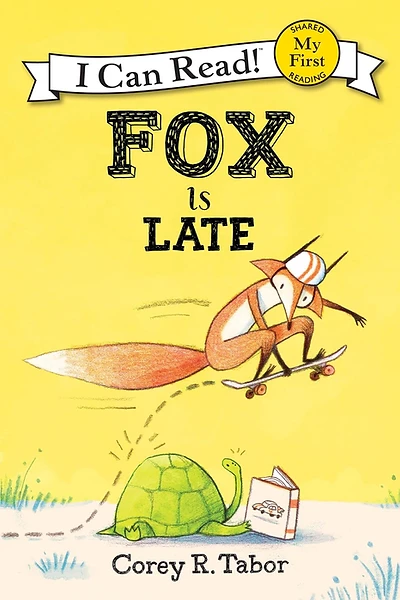
Fox is Late
by Corey R. Tabor
Pacing MaterialFox is late — but where is he going and why? A funny, fast-paced easy reader about the unexpected detours of a fox on a skateboard.
Big Idea
Sometimes being late leads to the most unexpected adventures.
Discussion Questions
- 1.Why is Fox late?
- 2.What happens when Fox finally arrives?
- 3.How does the author use humor in the story?
- 4.Have you ever been late for something important?
Classroom Activity
Late Again Stories
Write a short story about a time you were late and what happened, then draw the scene.
Lesson Plan
Learning Goals
- Build reading fluency with repetition and pattern
- Explore cause and effect in storytelling
- Practice sequencing events
Standards Connections
- ELA: RL.K.1 — Ask and answer questions about key details
- ELA: RL.K.2 — Retell stories, including key details
- ELA: RL.K.3 — Describe characters, setting, and events
- ELA: RL.2.6 — Acknowledge differences in characters' points of view
- ELA: SL.K.1 — Participate in collaborative conversations about the text
- ELA: W.K.3 — Write narratives recounting events with descriptive details
- SEL: Social Awareness
- SEL: Relationship Skills
- Art: VA:Re7 — Perceive and analyze artistic work
Pace-Write-Read Study with Pace-Write It!
Focus question: How does an author make a simple story feel fast, funny, and full of surprises? In Fox is Late by Corey R. Tabor, Fox zooms through the story on a skateboard while readers keep wondering where he is going and why he is in such a hurry. The pacing stays lively through quick page turns, short sentences, repeated ideas about being late, and funny delays that build consequence and surprise.
| Element | How to notice or teach it in the novel |
|---|---|
| Pace | Read: Notice how Fox moves quickly from one moment to the next, and how the short text matches his rushing on the skateboard. Classroom Activity: Write 3 short sentences about a character hurrying somewhere, using quick action words like zoomed, dashed, and raced. |
| Plot | Read: Track the simple but strong plot: Fox is late, hits one delay after another, and readers wait to find out where he is going. Classroom Activity: Draw and label beginning, middle, and end boxes for a ‘late’ story about a character who keeps getting delayed. |
| Prosody | Read: Listen to how the story sounds when read aloud, especially the repeated idea that Fox is late and the lively, playful phrasing. Classroom Activity: Read one page aloud with a partner, then write one sentence that should be read fast and one that should be read slowly. |
| Word pause | Read: Notice where a word or short phrase makes you stop for a beat before the next surprise about Fox’s trip. Classroom Activity: Write a sentence about a rushing character and add a pause word or phrase, such as ‘But then...’ or ‘Wait...’. |
| Concept | Read: Think about the big idea that being late can lead to consequences, but stories can make that problem funny instead of scary. Classroom Activity: Finish this sentence in writing: ‘When someone is late, ________, but sometimes ________.’ |
| Voice & World View | Read: Notice the playful, child-friendly voice that treats Fox’s rushing and mistakes with humor and warmth. Classroom Activity: Write 2 sentences in a funny storyteller voice about a character who thinks being late is a huge problem. |
| Setting & Place | Read: Pay attention to where Fox travels on his skateboard and how each place helps keep the story moving. Classroom Activity: Create a path map of 3 places your character passes on the way to an important event, then write a sentence for each place. |
| Point of View | Read: Notice that readers watch Fox from the outside, which helps build curiosity because we do not know everything right away. Classroom Activity: Rewrite one moment from Fox’s trip in first person starting with ‘I am late, and...’. |
| Original Characters | Read: Study how Fox feels familiar and also memorable because of his skateboard, his hurry, and the funny mystery of his destination. Classroom Activity: Invent an animal character who is late in a surprising way and write 3 details that make the character original. |
| Dialogue | Read: Notice how any spoken words in the story can speed up the action and show character reactions quickly. Classroom Activity: Write 2 lines of dialogue between Fox and another character during a delay, using quotation marks. |
| Details | Read: Look for small details about Fox’s movement, timing, and obstacles that make the short story feel full. Classroom Activity: Write a sentence about being late that includes 2 exact details, such as what the character carries or what gets in the way. |
| Descriptions | Read: Notice how the descriptions stay simple but vivid so early readers can picture Fox zooming and stopping. Classroom Activity: Describe a skateboard ride in one or two strong sentences using motion words. |
| Strong First Lines | Read: Pay attention to how the opening quickly tells readers the problem that Fox is late, pulling them in right away. Classroom Activity: Write a first line for a new story that begins with a problem the character must solve immediately. |
| Immediacy & Engagement | Read: Notice how the story begins with urgency so readers care at once about Fox’s problem and destination. Classroom Activity: Write 2 opening sentences that make a reader ask, ‘What will happen next?’. |
| Story Scenes & Summaries & Unique Structures | Read: Think about how the book uses quick scenes from Fox’s trip rather than long explanations, which keeps the action brisk. Classroom Activity: Plan a short story as 4 tiny scenes on sticky notes, each showing one delay on the way somewhere. |
| Flashback & Flash Forward & Cliffhangers | Read: Notice that the story mostly stays in the present rush, but page-by-page waiting creates a small cliffhanger because readers still do not know where Fox is headed. Classroom Activity: Write an ending to a page that makes readers turn the page, such as ‘He looked up and gasped.’ |
| Tension & Suspense & Surprise | Read: Feel the tension in Fox’s lateness, the suspense of not knowing why he is hurrying, and the surprise when the reason is revealed. Classroom Activity: Write 3 sentences that build suspense about a character racing to an event without naming the event until the last sentence. |
| Page Turns and Chapter Breaks | Read: Notice how page turns help deliver new delays and funny reveals in a picture-book-style easy reader. Classroom Activity: Fold a paper into 4 pages and plan what surprise or problem will happen after each page turn. |
| Performance | Read: Imagine acting out Fox’s fast ride, stops, and reactions to make the pacing visible with your body and voice. Classroom Activity: Write stage directions in parentheses for one sentence, such as ‘(zooms fast)’ or ‘(skids to a stop)’. |
| Personality | Read: Notice Fox’s personality through his hurry, determination, and the silly way he keeps going despite problems. Classroom Activity: Write 3 personality words for Fox, then write one sentence showing one of those traits in action. |
| Humor | Read: Look for how Corey R. Tabor uses the problem of being late, silly detours, and the final reveal to make readers laugh. Classroom Activity: Write a funny delay for a character on the way somewhere, such as losing a shoe or meeting a goose in the road. |
| Pause | Read: Notice where the story gives readers a tiny pause before a reveal or reaction, making the next moment funnier. Classroom Activity: Write a 3-sentence mini-story and use one line all by itself to create a pause. |
| Poetry and Poetic Devices | Read: Listen for playful sound and repeated phrases that give the text a lively, almost chant-like feel for young readers. Classroom Activity: Write a 2-line poem for Fox’s ride using alliteration, such as ‘Fox flew fast.’ |
| Repetition | Read: Notice how repeating the idea that Fox is late helps build rhythm, humor, and urgency. Classroom Activity: Write a mini-story that repeats one sentence starter, such as ‘I was late for...’ three times. |
| Rhythm | Read: Feel the beat made by short sentences and quick actions as Fox rides and reacts. Classroom Activity: Clap the rhythm of one page, then write a sentence with 5 to 7 words that sounds quick when read aloud. |
| Punctuation | Read: Pay attention to punctuation marks that help show speed, surprise, or stopping in Fox’s adventure. Classroom Activity: Write 3 short sentences about rushing and use a period, an exclamation point, and an ellipsis. |
| Questions | Read: Think about the question the story keeps alive: Where is Fox going, and why is he so late? Classroom Activity: Write 2 reader questions about a character who is in a hurry, then answer one at the end of your story. |
| Compare-Contrast | Read: Compare the fast movement of Fox’s skateboard with the slowing effect of each obstacle or detour. Classroom Activity: Write 2 sentences comparing ‘fast’ and ‘slow’ moments in a trip to an important place. |
| Objects | Read: Notice how the skateboard is an important object because it helps define Fox’s motion, style, and the speedy tone of the story. Classroom Activity: Choose one object your character carries or rides and write how it changes the story’s pace. |
| Threes | Read: Look for patterns of events or details that could be grouped in threes to make the story feel satisfying and easy to follow. Classroom Activity: Plan 3 delays that happen to a character who is late, then write one sentence for each delay. |
| Whitespace & Negative Space | Read: Notice how an easy reader can use short text and open space on the page so the action feels clear, quick, and not crowded. Classroom Activity: Make a page with one big action picture idea and only one short sentence to match it. |
| Art & Graphics | Read: Study how the illustrations help show Fox’s speed, direction, and funny trouble, adding to the pacing beyond the words. Classroom Activity: Sketch one scene of a character rushing and add arrows or motion lines, then write a caption. |
| Interactives & Gamification | Read: Treat Fox’s trip like a game by noticing each obstacle as a new level on the way to the final reveal. Classroom Activity: Design a simple ‘Fox is Late’ style board path with 4 spaces labeled start, delay, bigger delay, and surprise ending, then write one sentence for each space. |
Pace-Write It!
20-Minute Classroom Flow\nRead (5 min): Read Fox is Late by Corey R. Tabor aloud. Stop once or twice to let students notice how quickly the story moves and to ask, ‘What makes this feel fast?’\nNotice (5 min): Chart student observations: short sentences, repeated idea that Fox is late, skateboard action, funny delays, surprise destination, and page turns that make us wonder what comes next. Highlight how pacing helps show the theme of time and consequence.\nWrite (7 min): Students write their own mini ‘late’ story with one character, one destination, and three delays. Writing frame: ‘___ was late for ___. First, ___. Then, ___. Next, ___. At last, ___.’ Encourage students to use at least one repeated phrase such as ‘I’m late!’ or ‘Oh no!’ and one punctuation mark that shows feeling.\nShare (3 min): Partners read their stories aloud with expression, making the fast parts sound fast and the pause before the ending sound slow. Invite 2 volunteers to share how they built suspense before the final reveal.\nExit ticket: Write one sentence answering: ‘How did Corey R. Tabor make Fox is Late feel fast and funny?’
Pace-Write-Read Connection
Teach this book using the Pace-Write-Read method — Tool 20: Play.
Open the Mastery Manual