 K-2
K-2E CAN READ-FOX
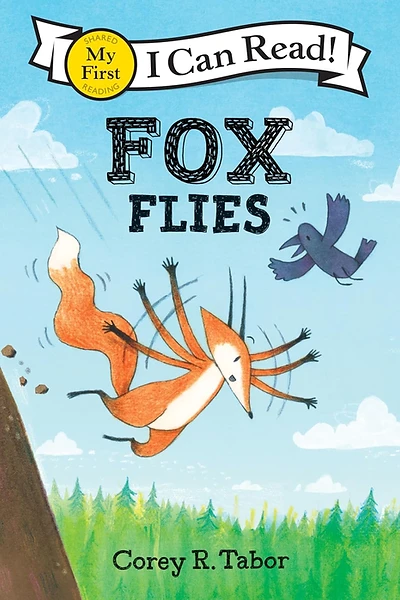
Fox Flies
by Corey R. Tabor
Pacing MaterialFox dreams of flying — but what happens when he actually tries? A funny, uplifting easy reader about daring to try and finding your wings.
Big Idea
Sometimes you have to take a leap — and trust that you'll find your wings.
Discussion Questions
- 1.What happens when Fox tries to fly?
- 2.How does Fox feel when he's falling?
- 3.What would you do if you could fly?
- 4.How do the illustrations show movement?
Classroom Activity
Daring Leap Stories
Write a story about a character who takes a daring leap, then illustrate the moment before and after.
Lesson Plan
Learning Goals
- Build reading fluency with repeated patterns
- Explore themes of courage and perseverance
- Practice sequencing events in a story
Standards Connections
- ELA: RL.K.1 — Ask and answer questions about key details
- ELA: RL.K.2 — Retell stories, including key details
- ELA: RL.K.3 — Describe characters, setting, and events
- ELA: RL.2.6 — Acknowledge differences in characters' points of view
- ELA: SL.K.1 — Participate in collaborative conversations about the text
- ELA: W.K.3 — Write narratives recounting events with descriptive details
- SEL: Self-Management
- SEL: Responsible Decision-Making
- Art: VA:Re7 — Perceive and analyze artistic work
Pace-Write-Read Study with Pace-Write It!
Focus question: How does an author slow down and speed up a story to show a character being brave? In Fox Flies by Corey R. Tabor, Fox dreams about doing something amazing and then must face what happens when he actually tries. The book uses pacing through short sentences, funny pauses, expressive page turns, and changing action speed to help young readers feel Fox’s courage, worry, and perseverance.
| Element | How to notice or teach it in the novel |
|---|---|
| Pace | Read: Notice how Fox Flies moves quickly during Fox’s exciting attempts and slows down at key moments when Fox thinks, hesitates, or reacts. The changing speed helps readers feel both the daring adventure and the hard work of trying again. Classroom Activity: Write 3 short sentences about a character trying something brave—make the first sentence slow and thoughtful, the second fast action, and the third a reaction. |
| Plot | Read: Notice the clear plot arc in Fox Flies: Fox has a big dream, takes a risk, faces the result, and keeps going with courage. The simple easy-reader structure helps young readers track perseverance step by step. Classroom Activity: Make a 4-box plot map labeled dream, try, problem, keep going, and write one sentence for each box about Fox or a new animal character. |
| Prosody | Read: Notice how the short phrases and repeated ideas in Fox Flies invite expressive reading aloud. Readers can change their voices to match Fox’s confidence, worry, surprise, and determination. Classroom Activity: Choose 4 lines you imagine Fox might say during the story and mark each one with an emotion word such as brave, scared, hopeful, or proud, then read them aloud. |
| Word pause | Read: Notice how brief words and simple sentence patterns create natural stopping places in Fox Flies. These pauses help readers linger on Fox’s risky choices and funny moments before moving on. Classroom Activity: Write 2 easy-reader lines about a character getting ready to jump, glide, or try, using a slash / to show where a reader should pause. |
| Concept | Read: Notice that the big concept in Fox Flies is that courage does not mean everything goes perfectly right away. Fox’s experience shows that perseverance matters when a dream feels difficult. Classroom Activity: Write one sentence that teaches the lesson of the story using the frame: Being brave means ______ even when ______. |
| Voice & World View | Read: Notice the playful, encouraging voice in Fox Flies that treats Fox’s big dream seriously while still making the adventure funny. The story’s world view suggests that trying something hard is worthwhile, even if the first attempt is messy. Classroom Activity: Write 3 sentences in a cheerful, supportive voice about a character who wants to do something almost impossible. |
| Setting & Place | Read: Notice how the outdoor world around Fox feels open and full of possibility, which fits a story about flying. The setting helps readers imagine height, movement, and the challenge of stepping into a bigger space. Classroom Activity: Write 2-3 sentences describing a place where an animal could try something brave, using words about sky, wind, ground, or trees. |
| Point of View | Read: Notice that Fox Flies keeps readers close to Fox’s experience so we feel his hopes and setbacks with him. This close focus strengthens the theme of perseverance because we stay with Fox through each stage of trying. Classroom Activity: Rewrite one moment from the story idea in first person using the frame: I wanted to ______. I felt ______. Then I ______. |
| Original Characters | Read: Notice how Fox is an original character because he has a bold dream, emotional reactions, and a funny determination that makes him memorable. Fox is not just an animal in a joke—he is a dreamer who keeps going. Classroom Activity: Invent a new animal character with one surprising dream and write 3 sentences that show the character’s personality. |
| Dialogue | Read: Notice that dialogue in a book like Fox Flies can make the action feel immediate and let Fox’s feelings come out in a simple, child-friendly way. Spoken lines can show excitement before a try and surprise after it. Classroom Activity: Write a 4-line dialogue between Fox and another animal before Fox tries to fly, with one line of encouragement and one line of worry. |
| Details | Read: Notice the small details that help readers picture Fox’s attempts, reactions, and changing feelings. In an easy reader, a few strong details do a lot of work to keep the story clear and lively. Classroom Activity: Write 3 detail words for how a brave try might look, sound, and feel, then use all 3 in one sentence. |
| Descriptions | Read: Notice that descriptions in Fox Flies are likely short and exact, matching the easy-reader style while still showing motion and emotion. Simple description keeps the pacing brisk but meaningful. Classroom Activity: Describe Fox at one key moment using the frame: Fox was ______, ______, and ______. |
| Strong First Lines | Read: Notice how an effective beginning in Fox Flies would quickly introduce Fox’s big wish and pull readers into the adventure. A strong first line creates immediate curiosity about whether Fox can do what seems impossible. Classroom Activity: Write an opening line for a story about an animal with a big dream, making readers want to know what happens next. |
| Immediacy & Engagement | Read: Notice how Fox Flies makes readers want to stay close to the action by focusing on what Fox is about to do right now. The story feels engaging because each moment leads quickly to the next brave choice. Classroom Activity: Write 3 present-tense sentences about a character trying something challenging right now, starting each sentence with the character’s name. |
| Story Scenes & Summaries & Unique Structures | Read: Notice how a short book like Fox Flies may zoom into important scenes—like preparing, trying, and reacting—while summarizing less important time in between. This structure keeps attention on the most meaningful moments of courage. Classroom Activity: Write one scene sentence and one summary sentence about an animal learning a hard skill. Label them Scene and Summary. |
| Flashback & Flash Forward & Cliffhangers | Read: Notice that even if Fox Flies stays simple, readers can still think about what Fox hoped before the attempt and what might happen next after a page turn. Suspense grows when the book makes us wait to see the result of Fox’s brave action. Classroom Activity: Write a cliffhanger line that ends with Fox about to try something, using the frame: Fox took a breath and ______. |
| Tension & Suspense & Surprise | Read: Notice the tension in Fox Flies when Fox’s dream meets real danger, uncertainty, or unexpected results. Surprise can make the story funny while also showing that perseverance includes dealing with what you did not plan. Classroom Activity: Write 2 sentences—first build tension before a jump or launch, then add a surprising result. |
| Page Turns and Chapter Breaks | Read: Notice how page turns in an easy reader like Fox Flies can hold a funny reveal or make readers wait one extra beat to see whether Fox succeeds. Even without chapters, the turn itself becomes part of pacing. Classroom Activity: Fold a paper into 2 pages and write a setup sentence on page 1 and a reveal sentence on page 2 about a brave animal attempt. |
| Performance | Read: Notice how Fox Flies is a strong performance text because readers can act out Fox’s hope, wobble, leap, and reaction. Physical reading helps children feel the rhythm of courage and perseverance. Classroom Activity: Write 3 action lines for a partner read-aloud and add a motion for each line, such as look up, crouch, or spread arms. |
| Personality | Read: Notice how Fox’s personality drives the whole story—his dreaminess, boldness, and willingness to keep going shape every page. The pacing feels lively because Fox is not passive; he acts. Classroom Activity: Write 3 sentences that show a character’s personality through actions instead of just saying traits. |
| Humor | Read: Notice the gentle humor in Fox Flies, where the idea of a fox trying to fly can be both earnest and funny. Humor keeps the story light while still honoring the serious work of being brave. Classroom Activity: Write a funny line about an animal trying something it was not expected to do, but make the line kind, not mean. |
| Pause | Read: Notice how pauses before or after Fox’s attempts give readers time to feel suspense, shock, or pride. Those quiet beats are part of pacing because they let emotions land. Classroom Activity: Write 2 sentences about a big moment and place an ellipsis in one sentence to create a pause. |
| Poetry and Poetic Devices | Read: Notice how even simple prose in Fox Flies can sound poetic through repeated sounds, strong images, and careful line-like phrasing. This helps a short text feel memorable and musical. Classroom Activity: Write one alliterative sentence about Fox using the same beginning sound at least 3 times, such as f or s. |
| Repetition | Read: Notice how repetition can support early readers and strengthen the theme in Fox Flies by echoing Fox’s wish, effort, or determination. Repeated words make the story easier to follow and more powerful to hear. Classroom Activity: Write 3 lines that repeat the same starter words, such as Fox will or I can, to show perseverance. |
| Rhythm | Read: Notice the rhythm created by short, balanced sentences in Fox Flies. The beat of the language can speed up during action and slow down during thinking, helping readers track Fox’s journey. Classroom Activity: Write 3 very short sentences in a row to create a strong rhythm for an action moment. |
| Punctuation | Read: Notice how punctuation in Fox Flies likely helps show excitement, stopping points, and surprise—especially when Fox makes a bold move or reacts to what happens. Marks on the page shape the reader’s pace and voice. Classroom Activity: Write the same sentence 3 ways—one with a period, one with an exclamation mark, and one with a question mark—and tell how the feeling changes. |
| Questions | Read: Notice the questions readers naturally ask in Fox Flies: Can Fox do it? What will happen when he tries? Will he give up? These questions keep the pages turning and connect to the theme of perseverance. Classroom Activity: Write 3 questions a reader might ask before, during, and after Fox’s attempt. |
| Compare-Contrast | Read: Notice how Fox changes from dreamer to doer, and how hoping to fly is different from actually trying to fly. Comparing those stages helps readers understand growth and courage. Classroom Activity: Complete a compare-contrast chart with two columns: Before the try and After the try, writing at least 2 ideas in each. |
| Objects | Read: Notice any important objects in Fox Flies that help tell the story of trying, falling, moving, or imagining. In a simple text, one object can carry a lot of meaning about Fox’s goal. Classroom Activity: Choose one object an animal would need for a brave attempt and write 2 sentences explaining how it helps the character. |
| Threes | Read: Notice how stories for young readers often feel satisfying when actions or ideas come in threes, such as three tries, three thoughts, or three reactions. A pattern of three can build momentum for Fox’s perseverance. Classroom Activity: Write a set of 3 lines showing three attempts by a character, making each attempt slightly different. |
| Whitespace & Negative Space | Read: Notice how space on the page in Fox Flies can make a moment feel bigger, quieter, funnier, or more suspenseful. White space helps early readers focus on Fox’s action and emotional beats. Classroom Activity: Write one short sentence in the middle of a blank page to create a dramatic moment, then explain why the empty space matters. |
| Art & Graphics | Read: Notice how the illustrations in Fox Flies likely do important pacing work by showing Fox’s body, facial expressions, and movement across the page. The art helps readers understand bravery, setbacks, and humor even when the words stay simple. Classroom Activity: Draw 3 small panels of Fox before, during, and after a brave attempt, then write one caption for each panel. |
| Interactives & Gamification | Read: Notice how Fox Flies invites participation because readers can predict, act out, and cheer for Fox’s next step. Turning the reading into a game helps children connect with the theme of trying again. Classroom Activity: Create a class challenge called Cheer for Fox—students write one encouraging sentence on a card, and each time a card is read aloud the class adds a new action Fox could try next. |
Pace-Write It!
20-Minute Classroom Flow\nRead (5 min): Read Fox Flies by Corey R. Tabor aloud, stopping at one or two key moments before Fox’s big attempt so students can predict what might happen next. Use expression to show when the story speeds up and when it pauses.\nNotice (5 min): Ask: Where did the story feel fast? Where did it feel slow? Chart student ideas under Fast Action and Slow Thinking. Point out short sentences, page turns, repeated ideas, and funny pauses that help readers feel Fox’s courage and perseverance.\nWrite (7 min): Students write a tiny easy-reader scene about an animal trying something brave. Writing frame: ______ wanted to ______. ______ took a breath. ______ tried. At first, ______. But ______ kept going. In the end, ______. Encourage students to use one pause mark, one repeated word or phrase, and one feeling word.\nShare (3 min): Partners read their scenes aloud with expression. Listeners name one place where the pacing felt fast and one place where the pacing paused for effect.\nExit ticket: Write one sentence answering: How did Corey R. Tabor make Fox’s brave try feel exciting in Fox Flies?
Pace-Write-Read Connection
Teach this book using the Pace-Write-Read method — Tool 20: Play.
Open the Mastery Manual