
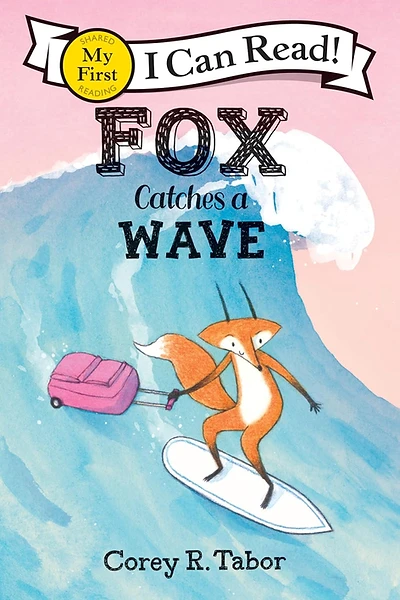
 K-2
K-2E CAN READ-FOX
Fox Catches a Wave
by Corey R. Tabor
Pacing MaterialFox grabs a surfboard and rides the wave of a lifetime in this funny, splashy easy reader about courage, adventure, and catching the perfect wave.
Big Idea
Sometimes you just have to catch the wave — and ride it for all it's worth.
Discussion Questions
- 1.How does Fox learn to surf?
- 2.What challenges does Fox face on the wave?
- 3.How does the author use humor in the story?
- 4.What's something new you'd like to try?
Classroom Activity
Try Something New Stories
Write a story about a character who tries something new and exciting, then illustrate the moment of triumph.
Lesson Plan
Learning Goals
- Build reading fluency with action sequences
- Explore themes of courage and trying new things
- Practice descriptive writing about water and motion
Standards Connections
- ELA: RL.K.1 — Ask and answer questions about key details
- ELA: RL.K.2 — Retell stories, including key details
- ELA: RL.K.3 — Describe characters, setting, and events
- ELA: RL.2.6 — Acknowledge differences in characters' points of view
- ELA: SL.K.1 — Participate in collaborative conversations about the text
- ELA: W.K.3 — Write narratives recounting events with descriptive details
- SEL: Self-Management
- SEL: Responsible Decision-Making
- Art: VA:Re7 — Perceive and analyze artistic work
Pace-Write-Read Study with Pace-Write It!
Focus question: How does an author make a simple adventure feel exciting and fast? In Fox Catches a Wave by Corey R. Tabor, Fox sets out to ride a surfboard and faces the big, splashy challenge of the ocean. The book uses pacing through short sentences, page turns, funny pauses, and energetic illustrations so young readers feel Fox’s courage and the rush of the wave.
| Element | How to notice or teach it in the novel |
|---|---|
| Pace | Read: Notice how Fox’s adventure moves quickly with short actions as Fox grabs the surfboard, heads to the water, and tries to catch a wave. The fast pacing matches the exciting theme of courage and adventure. Classroom Activity: Write 3 short action sentences about a character trying something brave, using no more than 5 words in each sentence. |
| Plot | Read: Follow the clear sequence in this easy reader: Fox wants to surf, Fox tries, and Fox rides the wave of a lifetime. The simple plot helps the exciting parts stand out. Classroom Activity: Draw and label beginning, middle, and end for a new adventure story about an animal trying something bold. |
| Prosody | Read: Listen to how the words in Fox Catches a Wave by Corey R. Tabor sound when read aloud, especially during the splashy, exciting surfing moments. The phrasing helps readers know when to speed up and when to pause. Classroom Activity: Reread one page aloud and mark it with a happy face where your voice should get louder and a hand where your voice should pause. |
| Word pause | Read: Notice places where a single word or very short line slows you down before the next big action, helping the wave feel bigger and more dramatic for Fox. These tiny pauses build anticipation. Classroom Activity: Write a 4-line mini scene and make one line just one word long to create suspense. |
| Concept | Read: The central concept is courage—Fox is willing to try something adventurous and a little risky. Surfing becomes a way to show bravery, fun, and determination. Classroom Activity: Finish this sentence frame: “My character is brave because ___, and then ___.” |
| Voice & World View | Read: Corey R. Tabor creates a playful, funny voice that sees adventure as exciting, not scary for long. The story’s world feels bright, light, and full of possibility, even when Fox faces a big wave. Classroom Activity: Write 2 sentences in a playful voice about a character who thinks a challenge looks fun. |
| Setting & Place | Read: Notice how the beach and ocean setting shape the pacing in Fox Catches a Wave. The open water, surfboard, and wave make the action feel active and wide. Classroom Activity: Write 3 setting details for a place where your character could have an adventure. |
| Point of View | Read: Think about how the story stays focused on Fox’s experience as the adventure unfolds. Readers stay close to Fox’s actions and feelings, which keeps the pacing clear and immediate. Classroom Activity: Write 2 sentences from the point of view of one animal on an adventure, using “I.” |
| Original Characters | Read: Fox is a lively, memorable character because Fox is eager, bold, and a little funny while trying to surf. The character’s strong personality helps the fast plot feel fresh. Classroom Activity: Invent an animal character who wants to try one surprising activity and write 2 details about that character. |
| Dialogue | Read: Notice how any spoken words in the story are brief and purposeful, helping keep Fox’s adventure moving instead of slowing it down. Short dialogue can add humor and energy. Classroom Activity: Write 2 lines of dialogue between two animals before one of them tries something brave. |
| Details | Read: Small details like the surfboard, the water, and Fox’s actions help readers picture the adventure without too many extra words. In an easy reader, details are chosen carefully to support quick pacing. Classroom Activity: Make a list of 4 important details for a short beach adventure story. |
| Descriptions | Read: Look for descriptions that make the wave and Fox’s movement feel big, splashy, and exciting. The description is simple, but it still helps readers feel the action. Classroom Activity: Write one sentence describing a wave, wind gust, or splash using strong describing words. |
| Strong First Lines | Read: Notice how the opening quickly introduces Fox and the adventure so readers are pulled in right away. A strong beginning helps young readers know the story is starting fast. Classroom Activity: Write an opening line for an adventure story that introduces a character and a challenge on the same line. |
| Immediacy & Engagement | Read: Fox Catches a Wave feels immediate because readers jump right into Fox’s surfing attempt and want to know what will happen next. The quick movement and humor keep children engaged. Classroom Activity: Write 2 sentences that begin with action instead of explanation. |
| Story Scenes & Summaries & Unique Structures | Read: Most of the book unfolds in clear little scenes of Fox getting ready and riding the wave, rather than long explanations. This scene-by-scene structure supports a fast, accessible read. Classroom Activity: Plan a 3-scene story on a topic card: get ready, try it, celebrate. |
| Flashback & Flash Forward & Cliffhangers | Read: This story stays mostly in the present moment, which makes Fox’s surfing feel direct and exciting, but page endings can still work like tiny cliffhangers. Readers turn the page to see if Fox will succeed. Classroom Activity: Write one cliffhanger line ending with the idea of a big moment coming next, such as “Then Fox saw…” |
| Tension & Suspense & Surprise | Read: Notice how suspense builds as Fox faces the wave and readers wonder if courage will lead to success or a funny surprise. The wave itself becomes the source of tension. Classroom Activity: Write 3 sentences that build suspense before a character makes a big jump, ride, or leap. |
| Page Turns and Chapter Breaks | Read: In this easy reader, page turns do the work that chapter breaks might do in a longer book. Each turn can reveal a new action, a joke, or the next step in Fox’s adventure. Classroom Activity: Fold a paper into 4 pages and write one short sentence per page so the last page reveals the big adventure moment. |
| Performance | Read: This book invites performance because Fox’s surf adventure can be acted out with body motions, sound effects, and expressive reading. The pacing becomes even clearer when students perform the rises and pauses. Classroom Activity: Perform one page using a surfing motion and a matching voice, then write one action line to go with it. |
| Personality | Read: Fox’s personality drives the story—confident, curious, and ready for adventure. That lively personality helps every page feel energetic. Classroom Activity: Write a sentence that shows personality without naming the feeling, such as a character grabbing gear and rushing outside. |
| Humor | Read: Corey R. Tabor uses humor to keep the surfing adventure light and fun, even when Fox faces a big challenge. Funny moments help pacing by giving readers quick bursts of delight. Classroom Activity: Add one funny detail to a brave scene, such as a silly hat, wobbly board, or surprised crab. |
| Pause | Read: Notice where the story pauses just before or after an exciting surfing moment so readers can feel the anticipation or enjoy the result. A pause can make the next splash feel bigger. Classroom Activity: Write 3 sentences and put an extra-short middle sentence between two action sentences to create a pause. |
| Poetry and Poetic Devices | Read: Listen for language that feels musical or playful as Fox meets the ocean and the wave. Even in simple prose, sound and image can make an easy reader feel poetic. Classroom Activity: Write one line with alliteration about the sea, such as words starting with the same sound. |
| Repetition | Read: Repetition in an easy reader helps new readers follow the story and feel the rhythm of Fox’s adventure. Repeated words or patterns can also make the wave ride feel bigger each time. Classroom Activity: Write a 3-line pattern poem that begins each line with “Fox can…” or “I can…” |
| Rhythm | Read: The rhythm of short lines and quick page turns helps Fox Catches a Wave feel bouncy and active, like water moving. The reading rhythm supports the action. Classroom Activity: Clap the beats in one sentence from the story style, then write your own sentence with a similar beat. |
| Punctuation | Read: Notice how punctuation helps show excitement, stopping points, and dramatic moments as Fox takes on the wave. Marks like periods, exclamation points, and question marks affect pacing. Classroom Activity: Write the same action sentence three times, ending it with a period, an exclamation point, and a question mark, and discuss how the feeling changes. |
| Questions | Read: Readers naturally ask questions while Fox surfs: Will Fox catch the wave? What will happen in the water? These questions keep the story moving in the reader’s mind. Classroom Activity: Write 2 reader questions that could come before the most exciting page of an adventure story. |
| Compare-Contrast | Read: Compare the calm before the wave with the fast action of the ride, or compare being on land with being in the ocean. These contrasts help the exciting moments stand out. Classroom Activity: Write one sentence comparing a quiet moment and a loud, exciting moment in your own adventure scene. |
| Objects | Read: The surfboard is an important object because it carries Fox into the adventure and helps shape the plot. Important objects can move a story forward quickly. Classroom Activity: Choose one object for your character—like boots, a kite, or a board—and write 2 sentences showing why it matters. |
| Threes | Read: Notice whether actions or details can be grouped in threes to make Fox’s adventure feel complete and satisfying, such as three tries, three splashes, or three quick observations. Groups of three often sound strong in storytelling. Classroom Activity: Write a sentence with three action words for an animal adventurer, such as “Fox ran, leaped, and rode.” |
| Whitespace & Negative Space | Read: The open space on easy reader pages helps young readers focus on Fox, the wave, and the most important words. Whitespace also controls pacing by slowing the eye and making each moment stand out. Classroom Activity: Create a one-page story with only one picture idea and one short sentence, leaving lots of blank space around it. |
| Art & Graphics | Read: The illustrations in Fox Catches a Wave by Corey R. Tabor add movement, humor, and splashy action that deepen the pacing beyond the words alone. The art helps readers feel the size of the wave and Fox’s bravery. Classroom Activity: Draw a before-and-after picture of your character facing a challenge, then add one sentence under each picture. |
| Interactives & Gamification | Read: This story invites playful interaction because students can predict, act out, and retell Fox’s wave ride step by step. The adventure structure makes it easy to turn reading into a game. Classroom Activity: Make a 4-step adventure path for a character and let a partner roll a die or move a marker as they orally tell the story. |
Pace-Write It!
20-Minute Classroom Flow Read (5 min): Read Fox Catches a Wave by Corey R. Tabor aloud with expression. Pause before key page turns and ask students to listen for how the story speeds up when Fox gets closer to the wave. Notice (5 min): Chart what students notice about pacing: short sentences, page turns, funny pauses, exciting pictures, and action words. Ask: “How did Corey R. Tabor make Fox’s surfing adventure feel fast and brave?” Write (7 min): Students write a 3-5 sentence mini adventure about an animal trying something brave. Encourage one very short sentence for suspense and one action sentence with strong verbs. Writing frame: “___ saw ___. ___ wanted to ___. But ___. Then ___. At last, ___.” Share (3 min): Partners read their mini adventures aloud with expression, making their voices faster on the action part and slower on the suspense part. Exit ticket: Write one sentence answering: “One way I can make my story’s pacing exciting is ___.”
Pace-Write-Read Connection
Teach this book using the Pace-Write-Read method — Tool 20: Play.
Open the Mastery Manual