 K-2
K-2E CAN READ-FOX
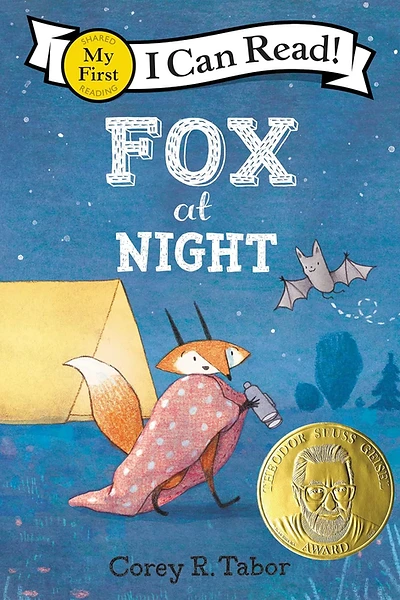
Fox at Night
by Corey R. Tabor
Pacing MaterialFox camps under the stars and discovers that the night is full of surprises in this Geisel Award-winning easy reader about bravery and wonder.
Big Idea
The dark isn't scary when you're brave enough to explore it.
Discussion Questions
- 1.What does Fox discover at night?
- 2.How does Fox feel about the dark?
- 3.What would you bring on a night adventure?
- 4.How do the illustrations show nighttime?
Classroom Activity
Night Adventure Backpack
Go on a pretend night adventure in the classroom — pack a 'backpack' with things you'd bring and write about what you might see.
Lesson Plan
Learning Goals
- Build reading confidence with patterned text
- Explore themes of courage and curiosity
- Practice descriptive language for settings
Standards Connections
- ELA: RL.K.1 — Ask and answer questions about key details
- ELA: RL.K.2 — Retell stories, including key details
- ELA: RL.K.3 — Describe characters, setting, and events
- ELA: RL.2.6 — Acknowledge differences in characters' points of view
- ELA: SL.K.1 — Participate in collaborative conversations about the text
- ELA: W.K.3 — Write narratives recounting events with descriptive details
- SEL: Self-Management
- SEL: Responsible Decision-Making
- Art: VA:Re7 — Perceive and analyze artistic work
Pace-Write-Read Study with Pace-Write It!
Focus question: How does an author slow down and speed up a story to help readers feel brave, curious, and surprised? In Fox at Night by Corey R. Tabor, Fox goes camping and discovers that nighttime sounds, shadows, and surprises can feel both spooky and wonderful. Tabor uses short sentences, page turns, dialogue, and expressive illustrations to pace the story so readers feel Fox’s nervousness, curiosity, and growing courage.
| Element | How to notice or teach it in the novel |
|---|---|
| Pace | Read: Notice how Fox at Night moves slowly when Fox listens to the dark and more quickly when he reacts to surprising sounds or sights. Corey R. Tabor uses simple language and quick beats to match Fox’s changing feelings of caution, curiosity, and bravery. Classroom Activity: Write 3 short sentences about a character outside at night—one slow sentence, one fast sentence, and one final sentence that shows the character becoming brave. |
| Plot | Read: Notice the clear adventure plot in Fox at Night: Fox sets up camp, experiences surprising nighttime moments, and learns the night is full of discovery. Each event builds from wondering to worrying to understanding. Classroom Activity: Make a beginning-middle-end chart for Fox’s night adventure, then write your own 3-part plot about a small nighttime surprise. |
| Prosody | Read: Listen to how Fox’s words and the storyteller’s short lines invite expressive reading. The pacing changes with Fox’s emotions, so readers may whisper during quiet night scenes and sound more excited during surprising moments. Classroom Activity: Choose 4 lines you would read softly, loudly, slowly, or quickly, then write 2 new lines for Fox and mark how they should sound when read aloud. |
| Word pause | Read: Notice where single words or very short lines in Fox at Night create little stops that make readers wait and wonder. These pauses help build suspense before Fox discovers what is really happening in the night. Classroom Activity: Write a 4-line mini-scene about hearing a sound outside, and place one line with only 1 or 2 words to create a dramatic pause. |
| Concept | Read: Notice that the big idea in Fox at Night is that courage can grow when we stay curious about things that seem scary at first. Fox learns that the night is not only dark—it is also full of life and wonder. Classroom Activity: Write 2 sentences explaining what Fox learns, then write 2 sentences about something a child might learn by being curious instead of afraid. |
| Voice & World View | Read: Notice the gentle, playful voice in Fox at Night that sees the nighttime world through wonder instead of danger. Even when Fox feels uneasy, the story’s voice stays warm and inviting. Classroom Activity: Write 3 sentences in a warm, curious voice about walking outside at night and noticing something surprising but not harmful. |
| Setting & Place | Read: Notice how the campsite and nighttime outdoors shape every part of Fox’s adventure. The stars, darkness, sounds, and open space make the setting feel both mysterious and exciting. Classroom Activity: Draw or list 5 setting details from a nighttime campsite, then write a short scene using at least 3 of those details. |
| Point of View | Read: Notice that readers stay close to Fox’s experience, so we discover the nighttime surprises as Fox does. This close point of view helps us feel his questions, worries, and courage. Classroom Activity: Write 3 sentences about a dark night from the point of view of one animal, using words that show what that animal sees or hears. |
| Original Characters | Read: Notice how Fox is a memorable easy-reader character because he is brave, funny, and still a little unsure. His personality helps readers connect to the theme that courage does not mean never being scared. Classroom Activity: Invent an animal character who goes outside at night and write 4 sentences that show the character’s feelings and one surprising discovery. |
| Dialogue | Read: Notice how dialogue in Fox at Night helps reveal Fox’s reactions in the moment. The spoken words are short and clear, which keeps the pace moving while showing emotion. Classroom Activity: Write a 4-line dialogue between Fox and a night creature in which Fox first feels worried and then feels curious. |
| Details | Read: Notice the small details in Fox at Night that make the nighttime world feel real, such as sounds, shadows, and things Fox notices while camping. These details help readers picture the adventure and feel the pacing of each moment. Classroom Activity: Make a list of 5 nighttime details, then use 3 of them in a short paragraph about camping after dark. |
| Descriptions | Read: Notice how Corey R. Tabor keeps descriptions simple but vivid, fitting the easy-reader style while still making the night feel alive. The descriptions support the theme of courage by showing that the unknown can become interesting when we look closely. Classroom Activity: Write 3 describing sentences about the night sky, the ground near a tent, and a sound in the dark. |
| Strong First Lines | Read: Notice how the opening of Fox at Night quickly places Fox in a nighttime adventure and sparks curiosity about what he will discover. A strong beginning helps readers step right into the story’s mood and pace. Classroom Activity: Write 2 different opening lines for a story about an animal outside at night—one calm and one suspenseful. |
| Immediacy & Engagement | Read: Notice how short sentences and close attention to Fox’s moment-by-moment reactions make Fox at Night feel immediate. Readers stay engaged because they want to know what Fox hears, sees, and learns next. Classroom Activity: Write 4 sentences that each begin with an action or observation, such as “I heard…” or “Fox saw…,” to make a scene feel immediate. |
| Story Scenes & Summaries & Unique Structures | Read: Notice that Fox at Night uses brief scenes to show important moments instead of long explanations. The story moves through small nighttime discoveries that keep the structure clear for young readers. Classroom Activity: Write one sentence that summarizes a whole night, then write 3 scene sentences that zoom in on one surprising moment from that night. |
| Flashback & Flash Forward & Cliffhangers | Read: Notice that Fox at Night mostly stays in the present moment, which helps the pacing feel direct and easy to follow. You can also notice how some page endings act a little like cliffhangers because readers must turn the page to find out what startled or interested Fox. Classroom Activity: Write a 3-sentence scene that ends with a cliffhanger line, such as “Then Fox heard something behind the tent…”. |
| Tension & Suspense & Surprise | Read: Notice how the dark setting, unexpected noises, and Fox’s uncertain reactions build tension in Fox at Night. The surprises do not become too scary; instead, they help Fox and the reader move toward wonder and courage. Classroom Activity: Write 5 short sentences that build from quiet to suspense to a surprising but friendly ending. |
| Page Turns and Chapter Breaks | Read: Notice how page turns in Fox at Night are important because the illustrations and short text often make readers pause before a reveal. In an easy reader, page turns do the work of creating suspense instead of long chapters. Classroom Activity: Fold a paper into 4 pages and plan a tiny book where page 3 ends with a question and page 4 reveals the answer. |
| Performance | Read: Notice that Fox at Night works well as a performance read-aloud because readers can use facial expressions, whispers, pauses, and surprised voices. Fox’s changing emotions make the pacing fun to act out. Classroom Activity: Practice reading 3 lines as Fox with different expressions, then write 2 new performance lines and add directions like whisper, gasp, or smile. |
| Personality | Read: Notice how Fox’s personality shapes the pacing of the story. Because Fox is curious as well as cautious, the story lingers on discoveries instead of ending quickly after each surprise. Classroom Activity: Write 4 sentences about a character whose personality is shy, bold, or curious, and show how that personality changes what the character does at night. |
| Humor | Read: Notice the gentle humor in Fox at Night as Fox responds to nighttime surprises in ways that are relatable and a little silly. The humor softens the suspense and helps the theme of bravery feel joyful. Classroom Activity: Write a funny nighttime moment for Fox, such as being startled by something harmless, and end with a line that makes the reader smile. |
| Pause | Read: Notice how Corey R. Tabor creates pauses with line breaks, page turns, and Fox’s moments of listening. These pauses help readers feel the quiet of night and wait with Fox. Classroom Activity: Write a short scene with 5 lines, and include one line that tells the character to stop and listen before the next surprise. |
| Poetry and Poetic Devices | Read: Notice that even though Fox at Night is a story, some lines may feel poetic because of repeated sounds, simple imagery, and the quiet mood of the night. The language helps make the setting feel peaceful and full of wonder. Classroom Activity: Write 3 poetic lines about night using sound words, repeating a beginning phrase, or comparing the stars to something bright. |
| Repetition | Read: Notice how repetition in Fox at Night can help early readers follow the story and feel the pacing of Fox’s repeated noticing and reacting. Repeated words or sentence patterns also make the story more playful and easier to read aloud. Classroom Activity: Write 4 sentences that repeat a starter such as “Fox heard…” or “In the night…” to build rhythm and suspense. |
| Rhythm | Read: Notice the rhythm created by short sentences, repeated structures, and turns between quiet noticing and quick reactions in Fox at Night. This rhythm helps young readers move smoothly through the story. Classroom Activity: Write 6 very short sentences about a night walk, alternating calm and exciting beats. |
| Punctuation | Read: Notice how punctuation in Fox at Night helps control pacing and feeling. Periods slow the reader, question marks show Fox’s wondering, and exclamation points can mark surprise. Classroom Activity: Write 3 versions of the same line about a nighttime sound—one with a period, one with a question mark, and one with an exclamation point—and explain how each feels different. |
| Questions | Read: Notice how questions help readers connect to Fox’s uncertainty and curiosity in the night. Questions make the reader pause and think about what Fox might discover next. Classroom Activity: Write 5 questions Fox might ask while camping at night, then choose 1 and answer it in 2 sentences. |
| Compare-Contrast | Read: Notice how Fox at Night lets readers compare what night seems like at first with what it is really like after Fox explores it. The contrast between fear and wonder supports the theme of courage and curiosity. Classroom Activity: Make a T-chart comparing “What Fox expects at night” and “What Fox discovers at night,” then write 3 sentences using both sides. |
| Objects | Read: Notice the importance of objects in Fox at Night, such as camping items and the things Fox notices around him outdoors. Objects help ground the story and give Fox something specific to react to. Classroom Activity: Choose 3 objects from a campsite and write a short scene showing how one object helps a character feel safe or brave. |
| Threes | Read: Notice whether the story groups actions or discoveries in memorable sets, a pattern that often helps easy readers follow pacing and sequence. Fox’s adventure can be retold clearly by naming three key nighttime moments. Classroom Activity: Write about 3 things a character hears in the dark, making the third one the biggest surprise. |
| Whitespace & Negative Space | Read: Notice how the open space on the pages in Fox at Night gives young readers time to breathe, notice the art, and feel the quiet of the night. Whitespace slows the pace in a helpful way and makes each surprise stand out more. Classroom Activity: Create a one-page story scene with only 1 sentence and a simple drawing, leaving lots of space to make the moment feel quiet. |
| Art & Graphics | Read: Notice how the illustrations in Fox at Night help tell the story by showing Fox’s expressions, the dark setting, and the surprising beauty of nighttime. The art works with the text to control pacing, especially before and after page turns. Classroom Activity: Draw Fox reacting to one nighttime surprise, then write 2 captions: one before the reveal and one after the reveal. |
| Interactives & Gamification | Read: Notice that Fox at Night invites participation because readers can predict sounds, act out Fox’s reactions, and guess what will happen after each pause or page turn. This playful quality matches the book’s adventurous, easy-reader style. Classroom Activity: Create a classroom guessing game with 3 clue cards about a nighttime sound or creature, then write a final reveal sentence in the style of Fox’s adventure. |
Pace-Write It!
20-Minute Classroom Flow\nRead (5 min): Read Fox at Night aloud, pausing to let students notice when Fox feels unsure, curious, and brave. Stop at 2-3 page turns and ask students to predict what Fox might discover next.\nNotice (5 min): Guide students to notice how Corey R. Tabor uses short sentences, pauses, dialogue, and illustrations to control pacing. Ask: Where does the story slow down? Where does it speed up? How do page turns help create surprise?\nWrite (7 min): Students write their own short nighttime scene about a character who hears or sees something surprising outside. Writing frame: “At night, I was ____. I heard/ saw ____. I stopped and listened. Then I discovered ____. I felt ____ because ____.” Encourage students to use one question, one sound detail, and one short pause line.\nShare (3 min): Partners read their scenes aloud with expression, using a whisper voice, a pause, or a surprised voice to show pacing. Invite 2-3 students to share how their character changed from worried to curious or brave.\nExit ticket: Write one sentence answering: “How did Corey R. Tabor make Fox at Night feel suspenseful and full of wonder?”