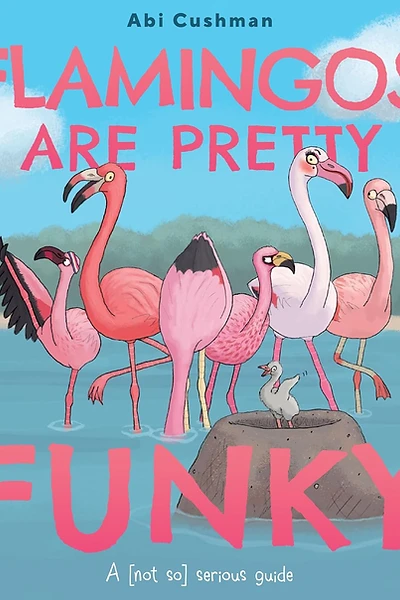
 K-3
K-3P CUSHMAN
Flamingos Are Pretty Funky
by Abi Cushman
Pacing MaterialA fun and funky guide to flamingos, full of surprising facts about these pink, one-legged, upside-down-eating birds.
Big Idea
Nature is full of surprising and funky facts — learning about animals is fun!
Discussion Questions
- 1.What is the funkiest thing you learned about flamingos?
- 2.Why are flamingos pink? What would happen if they ate different food?
- 3.How do flamingos stand on one leg? Why do they do it?
- 4.What other animals have surprising or funky features?
- 5.Why do you think the author called this a 'not so serious guide'?
Classroom Activity
Funky Flamingo Fact Cards
Students create a 'funky flamingo fact card' featuring one interesting fact about flamingos and a colorful illustration.
Lesson Plan
Learning Goals
- Learn factual information about flamingos
- Practice writing informational sentences
- Develop curiosity about animal adaptations
- Make text-to-world connections about wildlife
Activity Steps
- 1.Read the book and discuss the fun facts about flamingos.
- 2.Each student chooses one flamingo fact that surprised them.
- 3.On card stock, students write their fact: 'Did you know? ___.'
- 4.Students illustrate their fact with a colorful flamingo drawing.
- 5.Students share their fact cards with a partner.
- 6.Create a 'Funky Flamingo Facts' display wall.
Standards Connections
- ELA: RI.K-3.1 (Ask and Answer Questions)
- ELA: RI.K-3.7 (Illustrations)
- ELA: W.K-3.2 (Informative Writing)
- Science: LS1.A (Structure and Function — Adaptations)
Pace-Write-Read Study with Pace-Write It!
Focus question: How does a writer make nonfiction facts feel playful, surprising, and fun to read? In Flamingos Are Pretty Funky by Abi Cushman, readers learn amazing facts about flamingos through lively language, humorous pacing, and exciting page-by-page surprises. The book speeds up with funny reveals, pauses on fascinating details, and uses art and structure to keep young readers curious about nature.
| Element | How to notice or teach it in the novel |
|---|---|
| Pace | Read: Notice how Flamingos Are Pretty Funky moves quickly from one surprising flamingo fact to the next, then slows down to let readers enjoy a funny or amazing detail about these pink birds. Classroom Activity: Write 4 short sentences about an animal, making 2 sentences quick fact bursts and 2 sentences slow, detailed moments. |
| Plot | Read: Even though this is an informational picture book, Abi Cushman creates a loose story-like path as readers discover one funky flamingo fact after another. Classroom Activity: Make a beginning-middle-end plan for an animal information page set, where each part reveals a new surprising fact. |
| Prosody | Read: Listen to how the words in Flamingos Are Pretty Funky sound lively and playful when read aloud, matching the silly and curious tone of the book. Classroom Activity: Read a favorite page aloud with expression, then write 2 sentences about an animal that are fun to say out loud. |
| Word pause | Read: Notice where a surprising fact makes you stop for a second, such as learning something unexpected about flamingos’ bodies or behavior. Classroom Activity: Write a fact sentence about an animal and add a dash or line break to create a strong pause before the surprising part. |
| Concept | Read: The big idea in Flamingos Are Pretty Funky is that nature is full of animals that may look funny but have amazing features that help them live. Classroom Activity: Write a sentence starter that teaches one big idea about an animal, such as “This animal may seem ___, but really it is ___.” |
| Voice & World View | Read: Abi Cushman’s voice is cheerful, curious, and full of wonder, showing readers that learning about animals can be joyful and funny. Classroom Activity: Write 3 animal facts in a voice that sounds excited and amazed, as if you cannot wait to share them. |
| Setting & Place | Read: Pay attention to the places where flamingos live and feed, and how those natural habitats help explain their bodies and behaviors. Classroom Activity: Write 2-3 sentences describing an animal’s habitat and tell how that place helps the animal survive. |
| Point of View | Read: The book is told from an informative narrator’s point of view, guiding readers directly through flamingo facts with a playful attitude. Classroom Activity: Rewrite one animal fact from the animal’s point of view, beginning with “I am…” or “I…”. |
| Original Characters | Read: The flamingos feel almost like characters because of the way their unusual looks and habits are presented with personality and humor. Classroom Activity: Invent an animal character based on a real animal and write 3 traits that make it memorable. |
| Dialogue | Read: Notice how the book’s playful style could inspire imagined talking moments, even while it teaches real facts about flamingos. Classroom Activity: Write a short 2-line dialogue between two flamingos talking about one of their funky features. |
| Details | Read: Abi Cushman chooses specific facts about flamingos, like the strange and special things they do, to make the reading memorable. Classroom Activity: List 5 exact details about one animal, then choose the 2 most interesting ones to turn into sentences. |
| Descriptions | Read: Notice how the book helps readers picture flamingos’ pink bodies, long legs, curved beaks, and unusual eating habits. Classroom Activity: Write a descriptive paragraph about an animal using color, shape, and movement words. |
| Strong First Lines | Read: Think about how the opening of Flamingos Are Pretty Funky grabs attention right away by promising something unusual and fun about flamingos. Classroom Activity: Write 3 different opening lines for an animal book that make readers want to know more. |
| Immediacy & Engagement | Read: The book keeps readers engaged by sharing facts that feel fresh, funny, and instantly interesting. Classroom Activity: Write one sentence that begins with “Did you know…?” and one sentence that begins with “Imagine…” to hook your reader. |
| Story Scenes & Summaries & Unique Structures | Read: Notice how the book mixes short explanatory parts with visually exciting moments that spotlight one especially funky flamingo fact at a time. Classroom Activity: Create a mini page plan with one scene-like page showing an animal action and one summary page giving facts. |
| Flashback & Flash Forward & Cliffhangers | Read: While the book is not told as a time-jumping story, page-to-page reveals can still create a feeling of “wait until you see the next fact!” Classroom Activity: Write 3 fact sentences about an animal and end the first two with a cliffhanger phrase like “But that is not the strangest part…”. |
| Tension & Suspense & Surprise | Read: Surprise is a big pacing tool in Flamingos Are Pretty Funky because readers keep discovering odd and fascinating truths about flamingos. Classroom Activity: Write a short paragraph that saves the most surprising animal fact for the last sentence. |
| Page Turns and Chapter Breaks | Read: Notice how picture book page turns can hold back a fact just long enough to build curiosity before the next reveal about flamingos. Classroom Activity: Fold a paper into 4 pages and plan where to place a page turn right before your most exciting fact. |
| Performance | Read: This book invites dramatic read-aloud performance because the facts and humor sound lively when a reader uses gestures, pauses, and expression. Classroom Activity: Practice reading one fact dramatically, then write one sentence that would be fun to perform aloud. |
| Personality | Read: The flamingos seem full of personality because the art and wording highlight how quirky and unusual they are. Classroom Activity: Write 3 sentences that give an animal personality while still keeping the facts true. |
| Humor | Read: Humor helps the pacing in Flamingos Are Pretty Funky because funny phrasing and silly flamingo features make readers want to keep going. Classroom Activity: Write a humorous fact sentence about an animal using a playful comparison or silly observation. |
| Pause | Read: Notice where you naturally pause to laugh, wonder, or look closely at the illustration after learning a strange flamingo fact. Classroom Activity: Mark 3 pause spots in your own writing with ellipses, line breaks, or short one-word sentences. |
| Poetry and Poetic Devices | Read: Some lines in Flamingos Are Pretty Funky may feel musical or image-rich because of playful word choice and repeated sounds. Classroom Activity: Write a 4-line animal poem using alliteration, such as repeating the first sound in “fluffy fox” or “slippery snake.” |
| Repetition | Read: Notice how repeated ideas about flamingos being funky, unusual, or surprising help unify the book and support its rhythm. Classroom Activity: Choose one describing word for an animal and repeat it in 3 different sentences for emphasis. |
| Rhythm | Read: The rhythm of the sentences helps facts feel bouncy and energetic, matching the fun tone of the flamingo book. Classroom Activity: Write 3 short sentences and 1 longer sentence about an animal to create a varied rhythm. |
| Punctuation | Read: Notice how punctuation can help the narrator sound excited, playful, or amazed while sharing facts about flamingos. Classroom Activity: Rewrite one fact sentence 3 ways using a period, a question mark, and an exclamation mark. |
| Questions | Read: Questions help readers stay curious about why flamingos look and act the way they do. Classroom Activity: Write 4 wondering questions about an animal that could guide your own nonfiction writing. |
| Compare-Contrast | Read: Readers may naturally compare flamingos to other birds because flamingos stand out with their color, shape, and habits. Classroom Activity: Write 2 sentences comparing flamingos to another bird or comparing one animal to another animal. |
| Objects | Read: The book highlights body parts and natural features, such as beaks, legs, and feathers, almost like important objects in the text. Classroom Activity: Pick 3 important animal body parts or objects in its habitat and explain why each matters. |
| Threes | Read: Grouping facts in threes can make information sound complete and satisfying, especially in a playful informational text like this one. Classroom Activity: Write a sentence that names 3 things an animal does, has, or needs. |
| Whitespace & Negative Space | Read: Notice how open space on the page can make one flamingo fact or one illustration stand out more strongly. Classroom Activity: Design a page with only one fact sentence and one drawing, leaving lots of white space to spotlight your idea. |
| Art & Graphics | Read: The illustrations in Flamingos Are Pretty Funky work with the words to make the facts clearer, funnier, and more memorable. Classroom Activity: Draw an animal and add labels or captions that teach 3 facts about it. |
| Interactives & Gamification | Read: The book invites readers to react, guess, and notice unusual flamingo facts almost like a game of surprising discoveries. Classroom Activity: Create a “Guess the animal” card with 3 clues, saving the funniest or most surprising clue for last. |
Pace-Write It!
20-Minute Classroom Flow\nRead (5 min): Read aloud a section of Flamingos Are Pretty Funky by Abi Cushman that shares several surprising flamingo facts. Pause briefly at page turns so students can predict what funky fact might come next.\nNotice (5 min): Ask: “How did the author keep us interested?” Chart student ideas such as funny facts, surprising reveals, playful voice, strong pictures, and pauses before exciting information. Highlight how the book mixes quick facts with slower moments to enjoy details.\nWrite (7 min): Students write their own mini “funky animal” paragraph about a real animal. Writing frame: “___ are pretty ___. They may look ___, but they can ___. One surprising fact is ___. Another amazing thing is ___. That makes them ___!” Encourage students to use one pause mark, one strong detail, and save the best fact for the end.\nShare (3 min): Students read their paragraph to a partner using lively expression. Partners listen for the most surprising fact and tell where the writer used pacing well.\nExit ticket: Write one sentence answering: “What is one way I can make facts sound more exciting for a reader?”