 K-3
K-3P BOOK-HARE
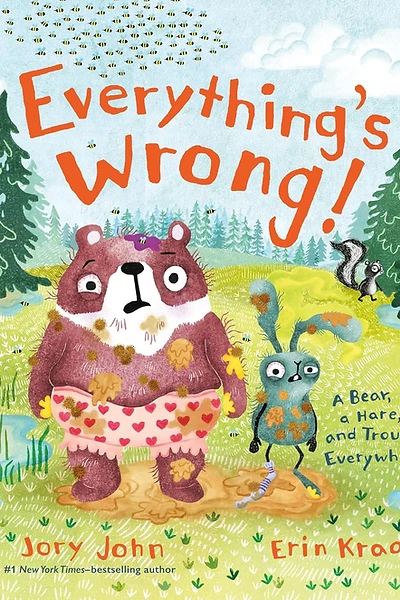
Everything's Wrong!
by Jory John
Pacing MaterialWhen everything goes wrong for Bear and Hare — burrs, bees, and a runaway skunk — they discover that friendship makes even the worst days better.
Big Idea
When everything goes wrong, friendship and humor can turn a bad day around.
Discussion Questions
- 1.What went wrong for Bear and Hare in this story?
- 2.How did Bear and Hare help each other when things went wrong?
- 3.Have you ever had a day where everything went wrong? What happened?
- 4.What can you do when you're having a bad day?
- 5.How does having a friend make bad days better?
Classroom Activity
Trouble to Treasure Comic Strip
Students create a 'trouble to treasure' comic strip, showing a character who turns a bad day around by finding one good thing.
Lesson Plan
Learning Goals
- Develop resilience and coping strategies
- Understand the role of humor in difficult situations
- Practice sequencing events in a narrative
- Make text-to-self connections about bad days
Activity Steps
- 1.Give each student a 3-panel comic strip template.
- 2.In panel 1, students draw a character having a bad day.
- 3.In panel 2, students draw the character finding one good thing.
- 4.In panel 3, students draw the character feeling better.
- 5.Students write one sentence under each panel.
- 6.Volunteers share their comic strips.
Standards Connections
- ELA: RL.K-3.3 (Character Development)
- ELA: RL.K-3.7 (Illustrations)
- ELA: W.K-3.3 (Narrative Writing — Sequencing)
- SEL: Self-Regulation and Resilience
Pace-Write-Read Study with Pace-Write It!
Focus question: How does an author make a bad day feel fast, funny, and finally heartwarming? In *Everything's Wrong!* by Jory John, Bear and Hare stumble through one problem after another, and the pacing helps readers feel each mishap pile up quickly. The book uses humorous problem-after-problem structure, expressive language, and well-timed pauses to show that even when everything seems wrong, friendship can steady the day.
| Element | How to notice or teach it in the novel |
|---|---|
| Pace | Read: Notice how *Everything's Wrong!* moves quickly from one disaster to the next for Bear and Hare—burrs, bees, and a runaway skunk—so the day feels chaotic and funny. Classroom Activity: Write a 4-sentence mini-story about a character having a terrible morning, making each new problem come faster than the last. |
| Plot | Read: Notice that the plot stacks small troubles into a bigger emotional journey, ending with the idea that friendship helps Bear and Hare handle hard moments. Classroom Activity: Make a beginning-middle-end plot map for Bear and Hare, then write your own short plot where two friends solve a bad day together. |
| Prosody | Read: Listen to how the words would sound aloud during the silly disasters, with lively rises and falls that match Bear's frustration and Hare's reactions. Classroom Activity: Choose one trouble from the story and rewrite it for a dramatic read-aloud, marking where your voice should get louder, softer, faster, or slower. |
| Word pause | Read: Notice where a single important word or short phrase can make readers pause and feel Bear's exasperation before the next funny problem appears. Classroom Activity: Write 3 short lines about a bad day, ending each line with one strong final word such as 'buzzing,' 'stuck,' or 'sprayed.' |
| Concept | Read: The big concept is that everything can seem wrong at once, but friendship changes how we face trouble. Bear and Hare do not stop the bad day immediately; they endure it together. Classroom Activity: Write one sentence that states the lesson of the story, then write 2 examples from your own life or imagination that match that lesson. |
| Voice & World View | Read: Notice the humorous, exaggerated voice that treats Bear and Hare's misfortunes as both dramatic and playful, helping readers laugh while also caring about them. Classroom Activity: Write a complaint-filled paragraph in the voice of a character who thinks every little problem is the worst problem ever. |
| Setting & Place | Read: Notice how the outdoor setting makes the troubles possible—burrs can stick, bees can chase, and a skunk can run wild. The natural setting becomes part of the pacing because each place brings a new problem. Classroom Activity: Invent an outdoor setting for a funny disaster story and list 5 place-based problems your character could meet there. |
| Point of View | Read: Notice how the story lets readers stay close to Bear and Hare's experience so the bad day feels immediate and personal. Their reactions help shape the pacing because readers feel each moment alongside them. Classroom Activity: Rewrite one bad-day event from Hare's point of view using 'I' statements. |
| Original Characters | Read: Bear and Hare feel familiar as friends, but their pairing becomes original through their different reactions to trouble and the comic way they handle one awful event after another. Classroom Activity: Create 2 animal friends with different personalities and write how each reacts when a day goes wrong. |
| Dialogue | Read: Notice how dialogue can speed up scenes by showing quick reactions, complaints, encouragement, or surprise between Bear and Hare. Their talk helps reveal friendship during the mess. Classroom Activity: Write 6 lines of dialogue between two friends after one gets chased by bees. |
| Details | Read: Notice the carefully chosen details—burrs, bees, skunk—that make the trouble vivid, specific, and memorable instead of generic. These details help each scene feel funny and sharp. Classroom Activity: Write a sentence about a bad day using 3 exact details instead of broad words like 'stuff' or 'things.' |
| Descriptions | Read: Pay attention to how descriptions can make discomfort funny by showing how Bear and Hare look, move, or sound during each mishap. Description adds energy without slowing the story too much. Classroom Activity: Describe a character after a disaster using what we can see, hear, and smell. |
| Strong First Lines | Read: Notice how a strong opening in a humorous picture book quickly sets the tone that something is already wrong or about to go wrong. That kind of beginning pulls readers into Bear and Hare's day right away. Classroom Activity: Write 3 possible first lines for a story called 'The Worst Picnic Ever.' |
| Immediacy & Engagement | Read: The story feels immediate because problems happen now, one after another, and readers want to know what could possibly go wrong next for Bear and Hare. Classroom Activity: Write 5 short sentences that begin with action right away, with no setup, to start a high-energy scene. |
| Story Scenes & Summaries & Unique Structures | Read: Notice how the book likely leans on quick scenes of one trouble after another instead of long summaries, creating a chain-reaction structure. This pattern keeps pacing lively and supports the humor. Classroom Activity: Plan a story in 4 quick scenes, each with a new problem, and write scene 1 in full. |
| Flashback & Flash Forward & Cliffhangers | Read: Even in a playful picture book like *Everything's Wrong!*, writers can imagine using a tiny cliffhanger before a page turn—what bad surprise will Bear and Hare meet next? Classroom Activity: End 3 sentences with a cliffhanger setup, such as 'But then they heard...' or 'Until the skunk...' |
| Tension & Suspense & Surprise | Read: Notice how tension stays light and funny: readers feel worry when bees swarm or the skunk runs off, but surprise keeps the story entertaining instead of scary. Classroom Activity: Write a 5-sentence scene that builds from calm to surprise when an animal causes trouble. |
| Page Turns and Chapter Breaks | Read: In a picture book, page turns matter because each turn can reveal the next comic disaster for Bear and Hare. The turn acts like a drumbeat in the pacing. Classroom Activity: Sketch a 4-page book dummy and decide what surprise should be saved for each page turn. |
| Performance | Read: This book invites performance through groans, gasps, buzzing sounds, and dramatic reactions. Reading it aloud can make Bear and Hare's bad day even funnier. Classroom Activity: Practice reading one imagined scene with a partner, adding sound effects for bees, burrs, and a skunk. |
| Personality | Read: Notice how personality affects pacing: one friend may react strongly, while the other helps steady the moment, making the emotional rhythm richer. Bear and Hare's friendship matters because their personalities bounce off each other. Classroom Activity: Write 2 speech bubbles for each of two friends—one dramatic and one calm—during the same problem. |
| Humor | Read: Humor grows from exaggeration, piling-up problems, and the silly mismatch between a terrible day and the loyal comfort of friendship. Bear and Hare's troubles are frustrating, but also delightfully over-the-top. Classroom Activity: Write a list of 5 funny bad-luck events that could happen to an animal character. |
| Pause | Read: Notice that a well-placed pause before the next disaster can make the reveal funnier, giving readers a second to think things might finally be okay for Bear and Hare. Classroom Activity: Write a 4-line scene and place an ellipsis or line break right before the final surprise. |
| Poetry and Poetic Devices | Read: Listen for sound play you could add to a story like this—buzzing bees, scratchy burrs, stinky skunks—because poetic devices can make humorous pacing stronger. Classroom Activity: Write 3 lines about Bear and Hare's day using alliteration or onomatopoeia. |
| Repetition | Read: Notice how repeating an idea like 'everything's wrong' can build rhythm and emphasize Bear's mood while making the story funnier each time trouble returns. Classroom Activity: Write a short refrain your character says every time something goes wrong, then use it 3 times in a paragraph. |
| Rhythm | Read: The rhythm of repeated troubles can feel almost like beats in a song: problem, reaction, problem, reaction, comfort. That rhythm helps the book move briskly. Classroom Activity: Clap out a 4-beat pattern for a bad-day story, then write one sentence to match each beat. |
| Punctuation | Read: Notice how punctuation in a story like *Everything's Wrong!* can show frustration, urgency, and comedy—especially exclamation points, commas, and dashes. Classroom Activity: Rewrite a plain sentence 3 ways using different punctuation to show annoyance, surprise, and relief. |
| Questions | Read: Readers naturally ask, 'What will go wrong next?' and 'How will Bear and Hare get through this?' Those questions keep the pages turning. Classroom Activity: Write 4 reader questions that could pop up during a bad-day story, then answer 1 in your own scene. |
| Compare-Contrast | Read: Compare the problems themselves—burrs, bees, skunk—and contrast Bear and Hare's responses to see how pacing changes with each event. Classroom Activity: Make a T-chart comparing how two characters react to the same disaster, then write a sentence about why that matters. |
| Objects | Read: Small objects and creatures in the story matter because they trigger action: burrs cling, bees chase, and the skunk causes chaos. These concrete troublemakers shape the pacing. Classroom Activity: Choose 3 objects or animals that could ruin a picnic and write one sentence for each. |
| Threes | Read: The summary itself gives a satisfying pattern of three troubles—burrs, bees, and a runaway skunk—which creates momentum and makes the humor memorable. Classroom Activity: Write your own 'rule of three' sequence of problems for a character on a bad day. |
| Whitespace & Negative Space | Read: In a picture book, open space on the page can slow readers just enough to notice Bear and Hare's expressions or to prepare for the next comic beat. Classroom Activity: Plan one page of a story and decide where you would leave empty space to make a moment feel bigger or funnier. |
| Art & Graphics | Read: Illustrations in a humorous picture book like this help pace the story by showing facial expressions, motion, and the size of each problem. Bear and Hare's feelings can be understood before any words are read. Classroom Activity: Draw a before-and-after sketch of a character at the start and end of a terrible day, then write one caption for each. |
| Interactives & Gamification | Read: Readers can interact with the pattern of the story by predicting the next mishap and noticing how each new event tops the last one for Bear and Hare. Classroom Activity: Create a 'What Goes Wrong Next?' spinner or choice chart with 4 possible funny disasters, then write the scene that lands on your choice. |
Pace-Write It!
20-Minute Classroom Flow\nRead (5 min): Read *Everything's Wrong!* by Jory John aloud. Pause after each big mishap—burrs, bees, and the runaway skunk—and ask students to listen for how the problems pile up quickly.\nNotice (5 min): Chart what students notice about pacing: fast problem-after-problem structure, repeated feeling that 'everything is wrong,' funny reactions, and the way friendship softens the hard moments. Ask: Which part felt fastest? Which part made you pause?\nWrite (7 min): Students write their own short 'bad day' scene for two friends. Writing frame: 'First, ___ went wrong for ___ and ___. Then, ___ made the day worse. Next, ___ happened fast! At last, ___ helped them feel better because ___." Encourage students to include 3 troubles, strong punctuation, and one line of dialogue.\nShare (3 min): Partners read their scenes aloud with expression. Listeners name one pacing move they heard, such as repetition, quick problems, or a pause before the final surprise.\nExit ticket: Write one sentence answering: 'How did Jory John make Bear and Hare's bad day feel funny instead of just sad?'