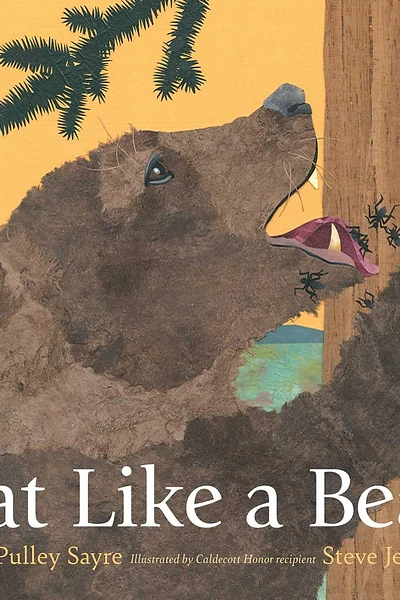
 PreK-3
P SAYRE
Eat Like a Bear
by April Pulley Sayre
Pacing MaterialFollow a grizzly bear through a full year of foraging, from spring's first greens to autumn's pre-hibernation feast, discovering the remarkable variety of foods that sustain a bear's massive appetite.
Big Idea
Every creature's survival depends on a deep connection to the rhythms of the natural world.
Discussion Questions
- 1.What different foods does the bear eat throughout the year?
- 2.How do the seasons change what the bear can find to eat?
- 3.Why is it important for the bear to eat so much before winter?
- 4.How do the illustrations help us understand what the bear is doing?
- 5.What would happen if the bear's habitat changed?
Classroom Activity
Seasonal Bear Menu
Students create a four-season chart showing what a bear eats in each season, then compare it to their own seasonal eating habits.
Lesson Plan
Learning Goals
- Identify seasonal changes in animal diets
- Understand the relationship between habitat and survival
- Observe and describe visual details in informational text
- Make connections between animal and human needs
Activity Steps
- 1.Read the book aloud, pausing to note what the bear eats in each season.
- 2.Create a four-column chart labeled Spring, Summer, Fall, Winter.
- 3.Have students draw or list the foods the bear eats in each season.
- 4.Discuss why the bear eats differently in different seasons.
- 5.Compare the bear's seasonal diet to how humans eat seasonally.
Standards Connections
- ELA: RL.K.1 — Ask and answer questions about key details
- ELA: RL.K.2 — Retell stories, including key details
- ELA: RL.K.3 — Describe characters, setting, and events
- ELA: RL.3.6 — Acknowledge differences in characters' points of view
- ELA: SL.K.1 — Participate in collaborative conversations about the text
- ELA: W.K.3 — Write narratives recounting events with descriptive details
- SEL: Responsible Decision-Making
- Art: VA:Re7 — Perceive and analyze artistic work
Pace-Write-Read Study with Pace-Write It!
Focus question: How does an author use pacing to show a year in the life of a hungry bear? In Eat Like a Bear by April Pulley Sayre, readers follow a grizzly bear as it searches for food from spring through fall before hibernation. The book uses pacing by moving quickly through lists of foods and actions, then slowing down with vivid words and page-by-page discoveries that help us feel the bear’s growing appetite and the changing seasons.
| Element | How to notice or teach it in the novel |
|---|---|
| Pace | Read: Notice how the pacing in Eat Like a Bear speeds through many foods the grizzly eats and then slows to highlight important seasonal changes, from spring greens to the huge autumn feast before hibernation. Classroom Activity: Write 3 short sentences that speed through foods an animal eats, then 1 longer sentence that slows down on the biggest meal. |
| Plot | Read: Notice that the plot is not a problem-solution story but a yearlong sequence of foraging as the grizzly bear eats, grows stronger, and prepares for winter sleep. Classroom Activity: Make a beginning-middle-end map of the bear’s eating year and write one sentence for each part. |
| Prosody | Read: Listen to how April Pulley Sayre’s language sounds when read aloud, with energetic food words and changing sentence lengths that create a lively, hungry feeling. Classroom Activity: Read one page aloud with expression, then write your own 2-line animal-food section that sounds good when spoken. |
| Word pause | Read: Notice where you naturally stop on food names, action words, or line breaks to take in each thing the grizzly bear finds and eats. Classroom Activity: Write a sentence about an animal eating and use slashes to show 3 places a reader should pause. |
| Concept | Read: Think about the big science concept: animals need different foods across seasons, and a grizzly must eat a lot to survive and prepare for hibernation. Classroom Activity: Write 2 sentences explaining how food helps the bear live through the year. |
| Voice & World View | Read: Notice the lively, curious voice that treats the bear’s eating habits with wonder and respect, helping readers see nature as active, surprising, and connected. Classroom Activity: Write 3 sentences in an excited nature-expert voice about what a wild animal does to survive. |
| Setting & Place | Read: Watch how the natural setting shapes the story, with mountains, streams, meadows, and seasonal wild places providing different foods for the grizzly bear. Classroom Activity: Choose one setting from nature and write a sentence explaining what food an animal could find there. |
| Point of View | Read: Notice that the book is told from an outside narrator’s point of view, but the close focus on the grizzly’s actions helps readers stay near the bear’s experience. Classroom Activity: Rewrite one moment from the bear’s point of view starting with “I sniff…” or “I find…”. |
| Original Characters | Read: The main character is a real grizzly bear, yet the book makes this animal memorable by showing its enormous appetite, strength, and steady searching through the seasons. Classroom Activity: Create an original wild animal character and list 3 foods it must find in one season. |
| Dialogue | Read: Notice that Eat Like a Bear does not rely on character dialogue; instead, the action and descriptive language carry the book forward. Classroom Activity: Add one imagined line of dialogue the bear might say while searching for food, then write one factual sentence beside it. |
| Details | Read: Pay attention to the specific details about what the grizzly eats, because these precise food choices make the science realistic and interesting. Classroom Activity: Write a factual sentence with at least 3 specific foods an animal might eat. |
| Descriptions | Read: Notice how the descriptions help readers picture the bear’s movements, the plants, and the rich variety of food across the year. Classroom Activity: Describe one animal food using 3 vivid describing words. |
| Strong First Lines | Read: Look at how the opening quickly introduces the bear’s hunger and pulls readers right into its search for food. Classroom Activity: Write a strong first line for an informational story about an animal getting ready for a season. |
| Immediacy & Engagement | Read: Notice how the close-up action of sniffing, digging, chomping, and roaming keeps the grizzly’s search immediate and exciting for young readers. Classroom Activity: Write 2 present-tense action sentences that make a reader feel close to an animal. |
| Story Scenes & Summaries & Unique Structures | Read: Notice how the book mixes scene-like moments of the bear finding food with summary sections that move readers through a whole year of eating. Classroom Activity: Write one detailed scene of an animal finding one food, then one summary sentence about what it eats all season. |
| Flashback & Flash Forward & Cliffhangers | Read: Although this book mostly moves forward through the seasons, readers can feel a kind of forward pull as the bear keeps eating toward the important future event of hibernation. Classroom Activity: Write a sentence that hints at what your animal will need later, starting with “Soon…”. |
| Tension & Suspense & Surprise | Read: Notice that the tension comes from the question of how the grizzly will keep finding enough food, and the surprise comes from the wide variety and quantity of foods it eats. Classroom Activity: Write a sentence that creates suspense about whether an animal will find food, then a second sentence that reveals the surprise. |
| Page Turns and Chapter Breaks | Read: Notice how page turns help reveal new foods, new actions, or a new part of the season, keeping the grizzly’s foraging journey moving. Classroom Activity: Fold a paper into 3 pages and plan what new food or action will be revealed after each page turn. |
| Performance | Read: This book invites dramatic read-aloud performance with strong eating verbs, changing pace, and expressive emphasis on the bear’s endless hunger. Classroom Activity: Practice reading one section like a storyteller, then mark 3 words in your own writing to emphasize aloud. |
| Personality | Read: Even in a factual nature book, the grizzly seems determined, powerful, and always busy because of the way its actions are presented. Classroom Activity: Write 2 sentences that show an animal’s personality through actions, not feelings words. |
| Humor | Read: Notice the playful humor in imagining just how much a giant grizzly can eat and how its nonstop foraging can amaze readers. Classroom Activity: Write one funny but factual sentence about an animal’s appetite. |
| Pause | Read: Notice where a pause lets readers absorb a surprising food item, a seasonal change, or the size of the bear’s appetite. Classroom Activity: Write a short line about an animal, then add a dash or line break to create a dramatic pause. |
| Poetry and Poetic Devices | Read: Listen for poetic qualities in the patterned language, sound play, and strong sensory words that make this informational picture book feel musical. Classroom Activity: Write a 3-line poem about a bear or another animal eating, using one sound word and one image word. |
| Repetition | Read: Notice how repeated eating actions and food-focused phrasing build the feeling that the grizzly is always searching, always chewing, always preparing. Classroom Activity: Write 3 sentences that repeat the same beginning, such as “It eats…”. |
| Rhythm | Read: Feel the rhythm created by short bursts of action and longer descriptive phrases, which mimic the steady, active work of foraging. Classroom Activity: Write one short sentence and one longer sentence about the same animal to create rhythm. |
| Punctuation | Read: Notice how punctuation helps control the speed of reading, separating foods, actions, and ideas as the bear moves through its year. Classroom Activity: Write a list sentence of foods with commas, then add an exclamation point to show excitement. |
| Questions | Read: As you read, ask questions such as why the grizzly eats different foods in different seasons and how it knows where to search. Classroom Activity: Write 2 science questions about the bear’s eating habits, then answer one with a fact sentence. |
| Compare-Contrast | Read: Notice how spring and autumn can be compared and contrasted, since the grizzly’s food choices and eating urgency change across the year. Classroom Activity: Write 2 sentences comparing what the bear eats in one season to what it eats in another season. |
| Objects | Read: Pay attention to the important natural objects in the book—berries, roots, fish, plants, and other foods—that tell the story of survival. Classroom Activity: Choose 3 food objects an animal uses and write a sentence about each one. |
| Threes | Read: Look for places where ideas can be grouped in threes, such as three foods, three actions, or three seasonal changes, to make the information memorable. Classroom Activity: Write a sentence that names 3 things a bear does to find food. |
| Whitespace & Negative Space | Read: Notice how the space around the words and illustrations can slow readers down and help them focus on the bear, the food, and the setting. Classroom Activity: Create a one-page mini-book page with one sentence and lots of blank space around your main idea. |
| Art & Graphics | Read: Study how the illustrations support the science by showing the grizzly’s size, movement, habitat, and the foods it finds through the seasons. Classroom Activity: Draw an animal in one season and label 3 foods around it. |
| Interactives & Gamification | Read: This book invites interactive noticing, such as hunting for each new food the grizzly eats or tracking the changing seasons. Classroom Activity: Make a “Bear Food Hunt” checklist with 5 foods from the book and check them off as they appear. |
Pace-Write It!
20-Minute Classroom Flow\nRead (5 min): Read aloud a section of Eat Like a Bear by April Pulley Sayre that shows the grizzly finding and eating different foods across one or more seasons. Pause to emphasize action words and food words.\nNotice (5 min): Ask: How does the book move quickly in some parts and slowly in others? Chart student ideas under “Fast Pace” and “Slow Pace.” Notice how lists of foods speed up the reading, while description and page turns slow us down to help us picture the bear and its habitat.\nWrite (7 min): Students write their own short seasonal animal piece. Writing frame: “In the ______, the ______ looks for food. It eats ______, ______, and ______. Then it finds ______. Soon, it must ______.” Encourage students to make the first 3 foods quick and the last idea slower and more detailed.\nShare (3 min): Partners read their pieces aloud and snap or tap when they hear a part that sounds fast and a part that sounds slow. Invite 1-2 students to share how they used pacing.\nExit ticket: Write one sentence answering: “How did April Pulley Sayre help readers feel the bear’s busy year of eating?”