
 K-3
K-3P HALE
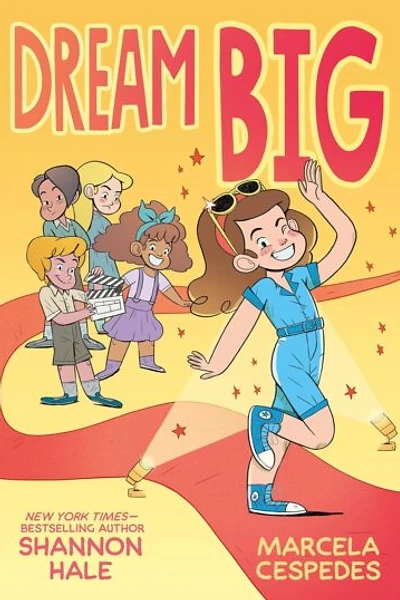
Dream Big
by Shannon Hale
Pacing MaterialA joyful celebration of dreaming big — encouraging every child to imagine, create, and pursue the future they want, no matter who they are.
Big Idea
Big dreams start with believing in yourself — and every dream is worth pursuing.
Discussion Questions
- 1.What does it mean to dream big?
- 2.What's a big dream you have for your future?
- 3.Who supports your dreams?
- 4.What's one step you could take toward your dream?
Classroom Activity
Dream Poster
Create a poster showing your biggest dream. Draw yourself achieving it and write one sentence about what you'll do to get there.
Lesson Plan
Learning Goals
- Identify how Dream Big encourages children to imagine their futures and believe in themselves.
- Describe a personal dream and explain why it matters to them.
- Create a poster showing themselves working toward or achieving their dream.
- Write, dictate, or complete one sentence naming a practical first step toward their dream.
- Show respect for classmates’ dreams, recognizing that people can have different hopes and interests.
Activity Steps
- 1.Read Dream Big aloud. Pause to ask: “What does this book encourage us to imagine?” and “How can believing in yourself help you try something new?” Invite students to connect their answers to words or illustrations in the book.
- 2.Discuss the book’s message that every child can dream big. Brainstorm dreams about learning, creating, exploring, or helping others. Explain that dreams may change as we grow.
- 3.Model a Dream Poster: draw yourself achieving a dream, then add a realistic action sentence, such as “To work toward my dream of exploring space, I will learn about the planets.”
- 4.Give students paper and drawing supplies. Have them draw themselves achieving their biggest dream, including details that show what they are doing and where they are.
- 5.Ask students to add one sentence using “To work toward my dream of ___, I will ___.” Younger students may dictate to an adult or use labels and a sentence starter; older students write independently.
- 6.Invite students to share their posters with a partner or the class. Partners name one detail they notice and offer encouragement. Display the posters as an “Every Dream Matters” gallery.
Standards Connections
- ELA: CCSS.ELA-LITERACY.RL.K.1–RL.3.1 — Ask and answer questions about the book’s message and supporting words or illustrations, with grade-appropriate support.
- ELA: CCSS.ELA-LITERACY.SL.K.1–SL.3.1 — Participate in collaborative conversations about dreams and listen respectfully to classmates.
- ELA: CCSS.ELA-LITERACY.SL.K.5–SL.3.5 — Use drawings or visual displays to clarify and add detail to shared ideas.
- SEL: Self-awareness — Identify personal interests, hopes, and strengths.
- SEL: Self-management — Set a meaningful goal and identify an achievable first step.
Pace-Write-Read Study with Pace-Write It!
Focus question: How does a writer keep a big dream feeling exciting and possible from page to page? In Dream Big by Shannon Hale, the text and illustrations move with joyful, encouraging energy as children imagine brave futures and bold adventures. The pacing feels lively because the book uses short inspiring lines, page turns, repetition, and visual momentum to help readers feel courage building one moment at a time.
| Element | How to notice or teach it in the novel |
|---|---|
| Pace | Read: Notice how Dream Big moves quickly with short, uplifting lines that keep the reader traveling from one possibility to the next, helping courage feel active instead of slow. Classroom Activity: Write 4 short lines about a child chasing a dream, with each line showing the dream growing bigger. |
| Plot | Read: Even though Dream Big is a picture book, it still builds a simple arc: imagining, trying, becoming brave, and moving toward a hopeful future. Classroom Activity: Draw and label a beginning, middle, and end for a character who starts with a dream and takes one brave step toward it. |
| Prosody | Read: Listen to how the language in Dream Big sounds when read aloud—the phrasing is smooth, warm, and encouraging, matching the theme of resilience. Classroom Activity: Practice reading one page aloud with a partner, then write 2 sentences that sound musical and inspiring. |
| Word pause | Read: Notice where the wording makes you naturally slow down to think about a dream, a feeling, or a brave choice. Classroom Activity: Write a sentence about a child pausing before a brave moment, and mark where a reader should stop and breathe. |
| Concept | Read: The big idea in Dream Big is that every child can imagine a meaningful future, no matter who they are. Classroom Activity: Finish the sentence stem 'A big dream matters because…' and add one example from your own life or a made-up character. |
| Voice & World View | Read: Shannon Hale uses a hopeful, inclusive voice that tells children their ideas and futures matter. Classroom Activity: Write 3 encouraging lines in a voice that cheers on a child who feels unsure about a dream. |
| Setting & Place | Read: The book suggests many imaginative places where dreams can grow, letting the world feel wide and full of possibility. Classroom Activity: Create a setting for a dream adventure and write 3 details showing why that place helps a character feel brave. |
| Point of View | Read: Notice how Dream Big speaks in a way that feels close to the child reader, inviting them directly into the message of courage. Classroom Activity: Rewrite one idea as if you are saying it to 'you,' then rewrite it as 'I' to compare the feeling. |
| Original Characters | Read: The children in Dream Big represent many identities and possibilities, making each future feel open, welcoming, and special. Classroom Activity: Invent an original child character with a surprising dream, and write 3 facts about what makes that character memorable. |
| Dialogue | Read: Even when the book is more lyrical than chatty, readers can imagine what a child might say while dreaming or trying something hard. Classroom Activity: Write a 4-line dialogue between a child and a supportive friend before a brave adventure. |
| Details | Read: Small details in Dream Big help each dream feel real instead of generic, supporting the themes of courage and imagination. Classroom Activity: List 5 tiny details that would make a character’s big dream feel believable. |
| Descriptions | Read: Notice how the descriptions create a bright, uplifting mood and make possibility feel vivid. Classroom Activity: Write 3 descriptive sentences about a future dream using color, movement, and feeling words. |
| Strong First Lines | Read: Think about how the opening of Dream Big immediately invites children into a mindset of imagination and hope. Classroom Activity: Write 2 different first lines for a picture book about courage, and choose the one that makes readers want to turn the page. |
| Immediacy & Engagement | Read: The book feels immediate because it quickly connects to what children might want, fear, or hope for right now. Classroom Activity: Write a sentence that begins with a child in the middle of a feeling, such as excitement or nervousness, before a brave choice. |
| Story Scenes & Summaries & Unique Structures | Read: Dream Big blends broad inspiring ideas with scene-like moments, so the pacing moves between reflection and action. Classroom Activity: Write one short scene of a child trying something brave and one summary sentence that explains the dream behind it. |
| Flashback & Flash Forward & Cliffhangers | Read: The book leans toward looking ahead, helping readers imagine future possibilities and what a child may become. Classroom Activity: Write 1 flash-forward sentence that shows a child’s future after today’s brave step, then end with a question that makes readers wonder what happens next. |
| Tension & Suspense & Surprise | Read: In Dream Big, tension is gentle—the suspense comes from wondering whether a child will believe in themself and keep going. Classroom Activity: Write 3 sentences showing a character feeling scared, trying anyway, and discovering a happy surprise. |
| Page Turns and Chapter Breaks | Read: As a picture book, Dream Big uses page turns to reveal new possibilities, making each spread feel like another doorway into a future. Classroom Activity: Plan 3 page turns for your own picture book by writing what readers see before the turn and what surprise appears after it. |
| Performance | Read: Dream Big invites expressive reading with changing volume, pauses, and energy to match its uplifting message. Classroom Activity: Mark one short passage with symbols for louder, softer, and pause, then perform it for a partner. |
| Personality | Read: The book’s personality is joyful, brave, and reassuring, never giving up on the child dreamer. Classroom Activity: Write 3 lines for a book with a bold personality that sounds like a cheerful coach for young adventurers. |
| Humor | Read: Even in an inspiring book like Dream Big, playful imagination can create lightness and delight that keeps the pacing buoyant. Classroom Activity: Add one funny or surprising detail to a child’s dream scene, such as a silly helper or unexpected problem. |
| Pause | Read: Some moments in Dream Big feel like places to stop and reflect on what kind of person a child wants to become. Classroom Activity: Write a 2-line reflective pause in which a character stops, thinks, and chooses courage. |
| Poetry and Poetic Devices | Read: The language of Dream Big is lyrical, using poetic phrasing to make dreams feel powerful and memorable. Classroom Activity: Write 4 lines using imagery or alliteration about a child reaching toward a dream. |
| Repetition | Read: Notice how repeated ideas in Dream Big strengthen the message that children should keep imagining and keep going. Classroom Activity: Write a refrain that begins with 'I can…' and repeat it 3 times with a different ending each time. |
| Rhythm | Read: The rhythm of the sentences helps the story feel steady and encouraging, like a march toward possibility. Classroom Activity: Clap the beat of an inspiring sentence, then write your own sentence with a strong, even rhythm. |
| Punctuation | Read: Look for punctuation that helps shape excitement, emphasis, and thoughtful pauses in Dream Big. Classroom Activity: Write one sentence about a dream using a period, one using an exclamation mark, and one using a dash or ellipsis to change the pacing. |
| Questions | Read: The ideas in Dream Big invite readers to ask what they want, who they can become, and what bravery looks like. Classroom Activity: Write 3 questions a child might ask themself before beginning a difficult adventure. |
| Compare-Contrast | Read: The book helps readers compare fear and courage, small beginnings and big futures, hesitation and action. Classroom Activity: Make a T-chart comparing a character before they believe in their dream and after they take a brave step. |
| Objects | Read: Imagine the tools, treasures, or symbols that might stand for a child’s dream in Dream Big, like a map, sketchbook, cape, or notebook. Classroom Activity: Choose one object that represents a dream and write 3 sentences explaining how it helps the character keep going. |
| Threes | Read: Groups of three ideas often sound satisfying and memorable in encouraging writing like Dream Big. Classroom Activity: Write a sentence naming 3 actions a child takes to follow a dream, such as 'She imagined, practiced, and tried again.' |
| Whitespace & Negative Space | Read: In a picture book like Dream Big, open space on the page can slow readers down and make a hopeful line stand out. Classroom Activity: Design a page with one important sentence in the middle and explain why the empty space helps the message feel strong. |
| Art & Graphics | Read: The illustrations in Dream Big work with the text to expand each adventure, showing emotion, movement, and possibility. Classroom Activity: Sketch one spread for a dream scene and add 2 labels explaining how the art helps pace the moment. |
| Interactives & Gamification | Read: Dream Big naturally invites students to join in by imagining their own futures and trying out repeated encouraging lines. Classroom Activity: Create a class 'Dream Ladder' game where students write one brave step on each rung and read them aloud in order. |
Pace-Write It!
20-Minute Classroom Flow\nRead (5 min): Read Dream Big by Shannon Hale aloud. Pause at a few page turns so students can predict what new dream, brave moment, or possibility might come next.\nNotice (5 min): Ask: How do the short lines, repetition, page turns, and illustrations make the book feel exciting and hopeful? Chart student observations such as 'The words are short,' 'The pages reveal new ideas,' and 'The pictures help the dream grow.'\nWrite (7 min): Students write their own mini picture-book page about resilience and courage. Writing frame: 'I dream of being a ________. At first, I feel ________. But I ________. Then I ________. I will keep going because ________.' Encourage students to use one repeated phrase such as 'I can be brave.'\nShare (3 min): Students read their writing to a partner or small group with expression, pausing at exciting or meaningful parts. Invite listeners to name one pacing move they heard, such as repetition, a pause, or a strong ending.\nExit ticket: Write one sentence answering: 'How did Shannon Hale make big dreams feel exciting in Dream Big?'
Pace-Write-Read Connection
Teach this book using the Pace-Write-Read method — Tool 20: Play.
Open the Mastery Manual