 K-3
K-3P SHARPSON
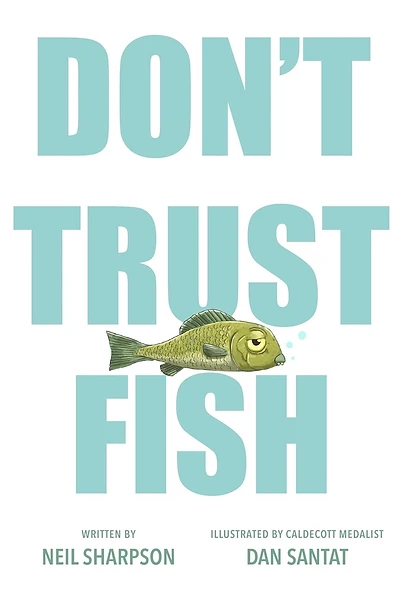
Don't Trust Fish
by Neil Sharpson
Pacing MaterialA hilarious, deadpan warning about why fish are absolutely not to be trusted — they're slippery, they're secretive, and they're up to something.
Big Idea
Humor comes from exaggeration, and playing with suspicion and surprise makes a story funny.
Discussion Questions
- 1.What makes the warnings about fish so funny?
- 2.How does the author use exaggeration?
- 3.Which fish 'suspicion' made you laugh most?
- 4.What animal would you write a suspicious warning about?
Classroom Activity
Don't Trust ___
Choose an animal and write three hilarious, exaggerated reasons not to trust it. Illustrate your warnings.
Lesson Plan
Learning Goals
- Identify how Don't Trust Fish uses exaggerated warnings, suspicion, and surprise to make readers laugh.
- Distinguish real animal traits from invented, humorous accusations.
- Create three exaggerated reasons not to trust a chosen animal, using its appearance or behavior as inspiration.
- Combine words and illustrations to communicate a funny warning.
Activity Steps
- 1.Read Don't Trust Fish aloud. Pause at selected warnings to ask: 'What makes this funny?' and 'Is this a fact, an exaggeration, or something invented?' Point out how a serious-sounding voice makes silly accusations funnier.
- 2.Discuss how the book turns fish traits, such as being slippery or living underwater, into suspicious behavior. Explain that these warnings are pretend humor, not reasons to fear or mistreat animals.
- 3.Model the activity 'Don't Trust ___' with a different animal: 'Don't trust squirrels. They bury snacks because they're hiding evidence!' Identify the real trait and the exaggerated accusation.
- 4.Have students choose an animal and brainstorm three hilarious reasons not to trust it. Offer the frame 'Don't trust ___. They ___!' Encourage unexpected explanations for ordinary animal behavior.
- 5.Ask students to create an illustrated warning poster titled 'Don't Trust [Animal].' Include all three reasons and pictures that make the warnings even funnier. Younger students may dictate their reasons or use labeled drawings; older students write complete sentences.
- 6.Invite students to present their posters in a serious, warning-style voice. Have classmates identify one exaggeration or surprise that made them laugh.
Standards Connections
- ELA: CCSS RL.K.1 / RL.1.1 / RL.2.1 / RL.3.1 — Ask and answer questions about the book's humorous warnings, using details to explain responses.
- ELA: CCSS W.K.1 / W.1.1 / W.2.1 / W.3.1 — Express a playful opinion about an animal and support it with reasons through drawing, dictation, or writing.
- ELA: CCSS SL.K.1 / SL.1.1 / SL.2.1 / SL.3.1 — Participate in collaborative discussions about exaggeration and humor.
- ELA: CCSS SL.K.5 / SL.1.5 / SL.2.5 / SL.3.5 — Use drawings or visual displays to clarify and enhance shared ideas.
Pace-Write-Read Study with Pace-Write It!
Focus question: How does an author make a silly warning feel serious and suspenseful at the same time? In Don’t Trust Fish by Neil Sharpson, the narrator uses deadpan language, surprising page turns, and careful pauses to build a mock-serious case against fish. The pacing moves between short claims, visual reveals, and dramatic warnings, which keeps readers laughing while also making them wonder what accusation will come next.
| Element | How to notice or teach it in the novel |
|---|---|
| Pace | Read: Notice how Don’t Trust Fish moves quickly through bold accusations and then slows down for visual reveals of fish staring, lurking, or slipping away. The fast-slow pattern helps the joke land. Classroom Activity: Write 4 short warning sentences about an animal or object no one should trust, making one line very short for emphasis. |
| Plot | Read: Track the book’s growing argument: fish seem ordinary at first, but the narrator keeps adding evidence that they are secretive and suspicious. The plot builds like a case file instead of a traditional adventure. Classroom Activity: Create a mini plot ladder with 3 steps: first suspicion, stronger evidence, final warning about something silly. |
| Prosody | Read: Listen to how the text sounds when read aloud in a serious, official voice even though the idea is ridiculous. That contrast between tone and meaning creates humor. Classroom Activity: Read one page in a stern voice, then write 2 sentences that sound very serious about a very silly problem. |
| Word pause | Read: Notice where single words or short phrases make readers stop and think before the next accusation about fish. These little pauses add drama. Classroom Activity: Write a warning paragraph and insert one one-word line, such as “Watching.” or “Waiting.” to create a pause. |
| Concept | Read: The central concept is that fish cannot be trusted, and the whole book commits fully to that absurd idea. The pacing works because every page strengthens the joke from a new angle. Classroom Activity: Invent one wild concept for a book, such as why clouds are suspicious, and list 3 reasons that build the idea. |
| Voice & World View | Read: The narrator’s voice is confident, suspicious, and completely convinced fish are up to something. This strong worldview pushes the pacing because every line sounds like another urgent piece of proof. Classroom Activity: Write 3 sentences in the voice of a narrator who strongly believes something unbelievable. |
| Setting & Place | Read: The watery world matters because fish live underwater where people cannot easily see them, which makes them seem mysterious. The setting helps the narrator turn ordinary fish behavior into suspicious behavior. Classroom Activity: Choose a setting that could make something seem sneaky, and write 2 sentences explaining why. |
| Point of View | Read: The book uses a direct, opinionated narrator who talks to the reader as if sharing important information. This point of view creates immediacy and makes the warnings feel personal. Classroom Activity: Write from a narrator’s point of view who speaks directly to “you” about a thing to avoid. |
| Original Characters | Read: The fish are not developed like one main character; instead, they become a funny group of suspects. Their originality comes from being treated like a secretive team with hidden plans. Classroom Activity: Turn a group of ordinary animals into unusual characters with one suspicious trait each. |
| Dialogue | Read: Even without much back-and-forth conversation, the book feels like the narrator is talking right to the reader. That spoken quality helps the pace feel brisk and engaging. Classroom Activity: Write 2 lines of dialogue in which a narrator warns a friend not to trust something harmless. |
| Details | Read: Notice the specific details the narrator uses as ‘evidence,’ such as fish being slippery, hard to read, and always underwater where they cannot be watched closely. These details keep the joke moving forward. Classroom Activity: List 5 tiny details about an ordinary animal and turn each one into suspicious evidence. |
| Descriptions | Read: The descriptions are simple but loaded with attitude, making normal fish traits sound alarming. This kind of description keeps the pacing tight while still building the idea. Classroom Activity: Describe an everyday creature in 3 sentences so it sounds mysterious or dangerous. |
| Strong First Lines | Read: Pay attention to how the opening quickly grabs attention by making a bold claim about fish. A strong first line sets the comic pace right away. Classroom Activity: Write 3 different opening lines for a silly warning book, each making a strong claim. |
| Immediacy & Engagement | Read: The narrator speaks as if readers need this information right now, which pulls them into the joke immediately. The urgent feeling keeps pages turning. Classroom Activity: Write a 3-sentence warning that makes the reader feel they must pay attention at once. |
| Story Scenes & Summaries & Unique Structures | Read: The book does not unfold as one long scene; instead, it stacks short claims, examples, and visual moments into a unique argument structure. This keeps the pace lively and varied. Classroom Activity: Make a page plan for a 4-page warning book using claim, example, stronger evidence, and final warning. |
| Flashback & Flash Forward & Cliffhangers | Read: The book mostly stays in the present warning voice, but it creates mini cliffhangers by ending pages with ideas that make readers want to see the next reveal. That page-by-page suspense matters more than time shifts here. Classroom Activity: End 2 short pages with a cliffhanger line like “And that’s not even the worst part...” or “But then I noticed...”. |
| Tension & Suspense & Surprise | Read: The tension comes from the narrator acting certain that fish are planning something, while the surprise comes from each exaggerated reason. Readers laugh because the suspense is so overdramatic. Classroom Activity: Write 3 escalating suspicious clues about a harmless thing, saving the funniest for last. |
| Page Turns and Chapter Breaks | Read: In this picture book, page turns do the work that chapter breaks might do in a longer text. Notice how one page sets up an idea and the next page reveals the funny image or next charge against fish. Classroom Activity: Create a 2-page spread idea with a setup sentence on page 1 and the reveal on page 2. |
| Performance | Read: Don’t Trust Fish begs to be performed with a grave face, narrowed eyes, and dramatic pauses. The performance style changes the pacing and makes the humor stronger. Classroom Activity: Practice reading one warning line dramatically, then write a new line meant to be performed with a pause. |
| Personality | Read: The narrator’s personality is suspicious, bold, and oddly calm, which makes the outrageous message funnier. That clear personality keeps every page feeling connected. Classroom Activity: Write a short warning in a narrator voice with a strong personality such as bossy, worried, or overly confident. |
| Humor | Read: The humor comes from treating fish like secret villains while using a serious, logical-sounding tone. The pacing supports the humor by layering ridiculous evidence bit by bit. Classroom Activity: Write 4 serious-sounding sentences about why an innocent thing is actually a problem. |
| Pause | Read: Notice how the author leaves room for readers to stop, look at the pictures, and let the joke sink in. Those pauses are part of the pacing, especially after a strong accusation. Classroom Activity: Draft 3 warning lines and mark where a reader should pause for effect. |
| Poetry and Poetic Devices | Read: Even though it is prose, the book uses sound, rhythm, and playful phrasing to make the warnings memorable. Repeated structures and sharp wording help the text feel almost chant-like. Classroom Activity: Write 2 lines about a suspicious animal using alliteration, such as slippery, silent, secretive. |
| Repetition | Read: The repeated return to the idea that fish should not be trusted helps build the joke and keeps the pacing steady. Repetition also makes the message feel funnier each time. Classroom Activity: Write a short piece that repeats one warning phrase 3 times, each with new evidence. |
| Rhythm | Read: The sentences often have a punchy rhythm that moves readers quickly from one idea to the next. That rhythm helps the mock-lecture style feel energetic. Classroom Activity: Write 3 short sentences and 1 longer sentence about a suspicious creature to create a varied rhythm. |
| Punctuation | Read: Look at how punctuation helps control seriousness, urgency, and stopping points in the narrator’s claims about fish. Commas, periods, and question marks help shape the pace. Classroom Activity: Rewrite one warning sentence three ways using a period, an exclamation mark, and a question mark. |
| Questions | Read: The idea of suspicion invites readers to ask, “What are fish hiding?” or “Why are they acting like that?” Questions keep the pacing active in the reader’s mind. Classroom Activity: Write 3 rhetorical questions a narrator might ask to make readers suspicious of something ordinary. |
| Compare-Contrast | Read: The humor grows when readers compare what fish really are—ordinary animals—to what the narrator claims they are—untrustworthy schemers. That contrast powers the whole book. Classroom Activity: Make a T-chart comparing what an animal really does and how a suspicious narrator would describe it. |
| Objects | Read: Fish themselves are the central objects of attention, but every fish trait becomes a clue in the narrator’s case. Objects can carry meaning when the narrator assigns them one. Classroom Activity: Choose one object, like a backpack or spoon, and list 3 reasons it might seem suspicious in a funny story. |
| Threes | Read: Notice whether the author groups ideas in satisfying sets, such as several examples of why fish seem sneaky. Groups of three often make humor and pacing feel complete. Classroom Activity: Write 3 reasons no one should trust an animal, ending with the strongest reason last. |
| Whitespace & Negative Space | Read: The space on the page helps important lines stand out and gives readers time to absorb the deadpan joke. In a picture book like this, blank space can act like a dramatic pause. Classroom Activity: Plan one page with only a short warning sentence in the middle to show how space can slow the reader down. |
| Art & Graphics | Read: The illustrations help sell the joke by showing fish in ways that can seem blank, slippery, or oddly secretive depending on the narrator’s words. The art and text work together to control what readers notice first. Classroom Activity: Sketch or describe one illustration that would make a normal animal look suspicious next to a serious caption. |
| Interactives & Gamification | Read: Readers can play along by collecting the narrator’s clues and deciding whether the case against fish is convincing. This interactive feeling keeps engagement high. Classroom Activity: Make a “Trust It / Don’t Trust It” checklist with 4 clues for a silly classroom guessing game based on your own suspicious subject. |
Pace-Write It!
20-Minute Classroom Flow\nRead (5 min): Read Don’t Trust Fish by Neil Sharpson aloud in a very serious voice. Pause at page turns so students can predict the next reason the narrator distrusts fish.\nNotice (5 min): Ask: How does the book sound serious while being funny? Chart student noticings such as short warning sentences, repetition, page-turn surprises, suspicious narrator voice, and pauses for the illustrations.\nWrite (7 min): Students write their own mini warning text about an ordinary animal or object. Writing frame: “Do not trust ________. At first, it seems ________. But look closer. It is ________, ________, and ________. Worst of all, ________. So if you see a ________, ________.” Encourage students to use one very short sentence for drama.\nShare (3 min): Partners read their warnings in a deadpan, serious voice. Listeners name one pacing move they heard, such as repetition, a pause, or a strong final line.\nExit ticket: Write one sentence answering: How did Neil Sharpson use pacing in Don’t Trust Fish to make the book funny?
Pace-Write-Read Connection
Teach this book using the Pace-Write-Read method — Tool 23: Humor.
Open the Mastery Manual