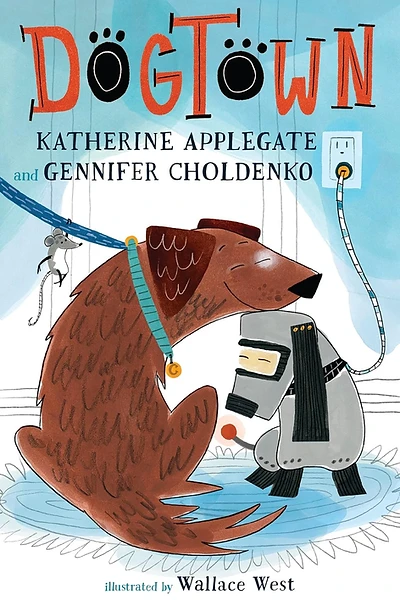
 3-7
3-7M DOGTOWN
Dogtown
by Katherine Applegate and Gennifer Choldenko
Pacing MaterialIn a shelter for unadoptable dogs, a lovable mutt befriends a robot dog and a mouse as they embark on a heartwarming adventure to find a forever home.
Big Idea
Friendship and belonging can be found in the most unexpected places — and everyone deserves a home.
Discussion Questions
- 1.Why does Chance live at the shelter?
- 2.How does Chance's friendship with the robot dog change him?
- 3.What does 'home' mean to the characters in the story?
- 4.What makes someone or something 'unadoptable'?
Classroom Activity
Design a Shelter
Design your dream animal shelter. Draw the layout, write the rules, and describe how you would make every animal feel at home.
Lesson Plan
Learning Goals
- Explain how Chance, Metal, and Mouse demonstrate friendship and a desire to belong, using details from Dogtown.
- Design an animal shelter that addresses animals’ physical needs, emotional comfort, and opportunities for companionship.
- Write clear shelter rules and explanations that connect design choices to the book’s message that everyone deserves a home.
- Present a shelter design and respond respectfully to classmates’ ideas.
Activity Steps
- 1.Discuss belonging in Dogtown: How do Chance, Metal, and Mouse help one another? Identify two moments from the reading that show friendship or the need for a home, and record what these moments suggest about a welcoming shelter.
- 2.Brainstorm what a dream shelter would need. Consider food, water, safe sleeping areas, exercise, medical care, quiet spaces, and adoption visits. Ask: How could your shelter welcome a three-legged dog like Chance, a robot dog like Metal, and a small animal like Mouse?
- 3.Draw and label a shelter floor plan with at least five spaces. Include accessible pathways for Chance, a maintenance or charging area for Metal, and a safe small-animal space for Mouse. Show how animals could enjoy companionship without compromising safety.
- 4.Write four to six shelter rules that protect animals and help them feel valued. Add a short explanation of how staff would welcome new arrivals, build trust, and help animals find suitable forever homes. Grades 3–4 may use sentence starters; grades 5–7 should explain design choices with supporting book details.
- 5.Share designs in pairs or a gallery walk. Each student explains one feature inspired by Dogtown and receives feedback about safety, comfort, or belonging. Revise one feature and finish with the sentence: 'My shelter helps every animal belong by…'
Standards Connections
- ELA: CCSS RL.3.3–RL.7.3 — Analyze characters, their relationships, and how their actions shape events, with grade-appropriate expectations.
- ELA: CCSS RL.3.1–RL.7.1 — Support interpretations of friendship and belonging with details or textual evidence.
- ELA: CCSS W.3.2–W.7.2 — Write informative explanations of shelter features, rules, and care practices.
- ELA: CCSS SL.3.1–SL.7.1 — Participate in collaborative discussions, build on others’ ideas, and express ideas clearly.
- SEL: Social awareness and relationship skills — Practice empathy, recognize differing needs, and give respectful feedback.
Pace-Write-Read Study with Pace-Write It!
Focus question: How do authors speed up and slow down a story to help readers feel friendship, hope, and suspense? In Dogtown by Katherine Applegate and Gennifer Choldenko, readers enter a shelter where abandoned dogs, including the kindhearted Chance, dream of finding connection and home. The authors use short chapters, vivid character moments, humor, dialogue, and cliffhangers to create pacing that moves quickly through action but slows down for feelings, kindness, and friendship.
| Element | How to notice or teach it in the novel |
|---|---|
| Pace | Read: Notice how Dogtown moves quickly during escape, problem-solving, and shelter action, but slows down when Chance thinks about friendship, belonging, and what makes a real home. Classroom Activity: Write two short paragraphs about a character trying to help a friend—make the first fast-paced with action and the second slow-paced with thoughts and feelings. |
| Plot | Read: Follow how the plot in Dogtown grows from life in the shelter to the friendship among Chance, Metal Head, and Mouse, and then toward their efforts to change their future. Classroom Activity: Create a 5-step plot ladder for a story about an animal in a shelter who takes one brave risk to help another character. |
| Prosody | Read: Listen to the way the language in Dogtown sounds when read aloud, especially in scenes with humor, worry, and tenderness between Chance and his friends. Classroom Activity: Choose 4 lines you imagine Chance might say and rehearse reading them with changing tone—hopeful, nervous, excited, and gentle—then write one new line for each tone. |
| Word pause | Read: Notice where the authors use short sentences and separated ideas to make readers pause and feel Chance’s uncertainty, longing, or surprise. Classroom Activity: Write 6-8 lines from the point of view of a dog waiting to be chosen, using one- or two-word pauses on separate lines for emphasis. |
| Concept | Read: Think about the big idea in Dogtown that kindness and friendship can matter even in a hard place like a shelter for unadoptable dogs. Classroom Activity: Write a short scene that shows the concept of kindness through actions only, featuring two animal characters and no direct explanation. |
| Voice & World View | Read: Notice how Dogtown balances warmth, humor, and sadness, showing a world where abandoned animals still notice loyalty, fairness, and hope. Classroom Activity: Write a journal entry in a voice that sees the world as both difficult and full of small chances for kindness, as Chance often does. |
| Setting & Place | Read: Study how the shelter setting in Dogtown shapes the story’s pace, rules, and emotions, making every cage, hallway, and adoption moment feel important. Classroom Activity: Describe a shelter, rescue, or care center from an animal’s point of view, showing how the place affects what the character wants. |
| Point of View | Read: Notice how the point of view helps readers understand Chance’s heart and also the unusual friendship with Metal Head and Mouse. Classroom Activity: Rewrite one adoption-day moment from three points of view—a dog, a robot dog, and a mouse—to show how pacing changes with each perspective. |
| Original Characters | Read: Pay attention to how Chance, Metal Head, and Mouse each feel distinct, with their own strengths, worries, and ways of showing friendship. Classroom Activity: Invent an original shelter character with one unexpected trait, one fear, and one kind action that will matter in the story. |
| Dialogue | Read: Notice how dialogue in Dogtown reveals personality, deepens friendship, and keeps scenes moving quickly, especially in exchanges between Chance, Metal Head, and Mouse. Classroom Activity: Write a 10-line dialogue in which two unlikely friends plan how to help a third character find safety or belonging. |
| Details | Read: Look for the small details that make Dogtown feel real, such as shelter routines, dog behavior, and the special qualities that make each character memorable. Classroom Activity: List 8 precise details you might find in an animal shelter, then use at least 5 in a short scene. |
| Descriptions | Read: Notice how the authors describe feelings, movement, and place clearly without overloading the page, helping the story keep its middle-grade pace. Classroom Activity: Write a description of a nervous character entering a new place, using sensory details that show fear and hope at the same time. |
| Strong First Lines | Read: Study how the opening of Dogtown quickly introduces curiosity, character, and the emotional world of the shelter. Classroom Activity: Write three possible first lines for a story about an animal who has almost given up but is about to meet an unexpected friend. |
| Immediacy & Engagement | Read: Notice how Dogtown makes readers care right away by placing Chance in meaningful situations where his choices matter. Classroom Activity: Write an opening paragraph that begins with a problem happening right now, using a character readers will instantly want to root for. |
| Story Scenes & Summaries & Unique Structures | Read: Observe how Dogtown mixes full scenes with quicker summary moments so the story can move through shelter life without losing emotional focus. Classroom Activity: Write one full scene of a rescue attempt, then add a 3-sentence summary that jumps the story ahead to the next important moment. |
| Flashback & Flash Forward & Cliffhangers | Read: Notice when the story hints at the past or ends a chapter with a question, worry, or discovery that pushes you to keep reading. Classroom Activity: End a short chapter with a cliffhanger about whether a character will be adopted, rescued, or left behind. |
| Tension & Suspense & Surprise | Read: Pay attention to how tension builds in Dogtown when friendship is tested, plans might fail, or danger and uncertainty enter the shelter world. Classroom Activity: Write a suspenseful scene in which an animal and a tiny helper must hide, wait, and decide when to act. |
| Page Turns and Chapter Breaks | Read: Notice how short chapters and well-timed breaks in Dogtown encourage page turns, especially after emotional reveals or risky choices. Classroom Activity: Draft a 2-part scene and place a chapter break after the biggest question, making readers want to continue. |
| Performance | Read: Think about how scenes from Dogtown could be performed with expression, using voice to show Chance’s kindness, Metal Head’s uniqueness, and Mouse’s quick energy. Classroom Activity: Turn a short scene into a mini script with stage directions for movement, pauses, and tone. |
| Personality | Read: Notice how each character’s personality affects pacing—Chance’s caring nature slows scenes for reflection, while Mouse’s quick thinking can speed them up. Classroom Activity: Write a character sketch for a helper character whose personality changes the speed of every scene they enter. |
| Humor | Read: Look for gentle humor in Dogtown, especially in the unlikely friendship between a mutt, a robot dog, and a mouse, and how humor softens harder emotions. Classroom Activity: Write a humorous moment in a serious setting where one character accidentally lightens the mood without trying to be funny. |
| Pause | Read: Notice how the authors pause after important emotional moments so readers can feel loneliness, loyalty, or hope with Chance. Classroom Activity: Write a scene that includes one action, then a pause for the character to think, then one small but meaningful decision. |
| Poetry and Poetic Devices | Read: Notice how some lines in Dogtown feel poetic because of imagery, rhythm, and emotionally powerful word choice about longing, home, and kindness. Classroom Activity: Write a 6-line free-verse poem from Chance’s point of view about what home sounds, smells, or feels like. |
| Repetition | Read: Look for repeated ideas in Dogtown—wanting a home, noticing kindness, returning to friendship—that strengthen the theme and emotional pacing. Classroom Activity: Write a paragraph that repeats one key phrase three times to show a character’s strongest wish. |
| Rhythm | Read: Hear how sentence rhythm changes in Dogtown, with quicker beats in active scenes and gentler flow in reflective ones. Classroom Activity: Write 4 short, fast sentences for a chase or rescue, then 4 longer, calmer sentences for the quiet moment after. |
| Punctuation | Read: Notice how punctuation in Dogtown helps control speed and feeling—dashes, commas, periods, and question marks shape how scenes sound in your mind. Classroom Activity: Rewrite the same 3-sentence moment twice, once with punctuation that makes it feel urgent and once with punctuation that makes it feel calm. |
| Questions | Read: Pay attention to the questions Dogtown raises for readers and characters: Who belongs? What makes someone adoptable? Can friendship change a future? Classroom Activity: Write 5 questions a shelter dog might ask about humans, friendship, or home, then choose one to answer in a scene. |
| Compare-Contrast | Read: Compare Chance and Metal Head, or life in the shelter versus the dream of a forever home, to see how differences create emotion and movement in the story. Classroom Activity: Write a compare-contrast paragraph about two unlikely friends whose differences help them solve a problem. |
| Objects | Read: Notice how objects in Dogtown can carry meaning, such as cages, bowls, toys, tools, or anything connected to care, waiting, and hope. Classroom Activity: Choose one object from a shelter and write about it as a symbol of loneliness first, then as a symbol of hope. |
| Threes | Read: Notice the power of the trio in Dogtown—Chance, Metal Head, and Mouse—and how three key attempts, details, or traits can make events feel complete and memorable. Classroom Activity: Write a scene using a group of three characters, three obstacles, or three repeated attempts before success. |
| Whitespace & Negative Space | Read: Observe how short chapters, spacing, and brief sections in Dogtown give readers room to feel emotion and keep pages turning. Classroom Activity: Write a one-page scene with intentional paragraph breaks and one single-line paragraph to emphasize a key feeling or realization. |
| Art & Graphics | Read: Think about how illustrations, chapter visuals, or simple sketches could support Dogtown’s emotional beats, humor, and shelter setting. Classroom Activity: Storyboard 4 boxes for a scene between Chance, Metal Head, and Mouse, adding one caption under each box. |
| Interactives & Gamification | Read: Imagine how Dogtown could become an interactive reading experience where readers make choices about helping friends, earning trust, or solving shelter problems. Classroom Activity: Design a choose-your-path plan with 3 decisions for a character trying to help a friend get closer to a forever home. |
Pace-Write It!
20-Minute Classroom Flow\nRead (5 min): Read aloud a short section from Dogtown that shows Chance with Metal Head or Mouse during a moment of problem-solving, hope, or worry. Ask students to listen for places where the story speeds up and places where it slows down.\nNotice (5 min): Students turn and talk: What words, sentence lengths, dialogue, or chapter-style breaks affect pacing? Chart student noticings under two headings: Speeds Up and Slows Down. Be sure students connect pacing to friendship, kindness, and suspense in the shelter setting.\nWrite (7 min): Students write their own short scene about an animal character helping an unlikely friend. Writing frame: “At first, ___ raced because ___. Then everything slowed when ___ noticed ___. ‘___,’ said ___. In that moment, ___ understood ___. But just as they decided to help, ___.” Encourage students to include one fast sentence, one slow descriptive sentence, and a cliffhanger ending.\nShare (3 min): Partners read their scenes aloud twice—first for expression, second to name where the pacing changed. Invite 1-2 volunteers to share examples of a sentence that sped the story up and a sentence that slowed it down.\nExit ticket: Write one sentence answering: How did you change pacing in your scene to help readers feel friendship, kindness, or suspense?