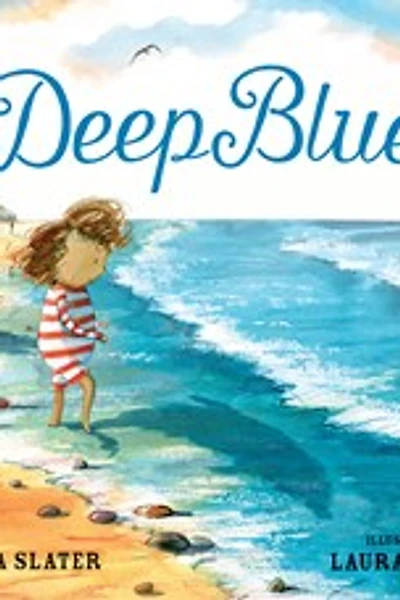
 K-3
K-3P SLATER
Deep Blue
by Dashka Slater
Pacing MaterialA young girl discovers the wonders of the ocean while gazing into the deep blue water.
Big Idea
The ocean holds endless mysteries waiting to be explored.
Discussion Questions
- 1.What do you think lives deep in the ocean?
- 2.What would you want to discover in the sea?
Classroom Activity
Ocean Imagination Art
Students paint what they imagine lives beneath the waves.
Lesson Plan
Learning Goals
- Use imagination to create art
- Describe ocean habitats
Activity Steps
- 1.Read the story
- 2.Discuss ocean animals
- 3.Paint an underwater scene
- 4.Share artwork
Standards Connections
- ELA: RL.K.1 — Ask and answer questions about key details
- ELA: RL.K.2 — Retell stories, including key details
- ELA: RL.K.3 — Describe characters, setting, and events
- ELA: RL.3.6 — Acknowledge differences in characters' points of view
- ELA: SL.K.1 — Participate in collaborative conversations about the text
- ELA: W.K.3 — Write narratives recounting events with descriptive details
- SEL: Responsible Decision-Making
- Art: VA:Re7 — Perceive and analyze artistic work
Pace-Write-Read Study with Pace-Write It!
Focus question: How does an author slow down a moment so readers can feel wonder growing page by page? In Deep Blue by Dashka Slater, a young girl gazes into the ocean and imagines the deep world beneath the water. The book uses gentle pacing, vivid language, and quiet page-by-page discoveries to help readers linger in the girl's sense of awe and imagination.
| Element | How to notice or teach it in the novel |
|---|---|
| Pace | Read: Notice how Deep Blue moves slowly and calmly, matching the girl's careful watching of the water and the growing feeling of wonder about the ocean. Classroom Activity: Write 3 short sentences that slow a moment down as a child looks into water and notices one new thing at a time. |
| Plot | Read: Notice that the plot in Deep Blue is simple but meaningful: the girl looks into the deep blue ocean and her imagination opens into discovery. Classroom Activity: Write a beginning, middle, and end for a tiny story about seeing something in nature and imagining more beneath the surface. |
| Prosody | Read: Listen to how the words in Deep Blue sound soft, flowing, and wave-like when read aloud, helping the ocean mood feel calm and dreamy. Classroom Activity: Write 2-4 lines about water using words that sound smooth when read aloud. |
| Word pause | Read: Notice where Deep Blue invites a small pause so readers can think about the girl's feelings and the quiet mystery of the ocean. Classroom Activity: Write a sentence about looking into the sea and place a dash or ellipsis where you want the reader to pause. |
| Concept | Read: Think about the big idea in Deep Blue that looking closely at nature can lead to imagination, wonder, and new understanding. Classroom Activity: Write one sentence telling the lesson a child might learn after staring into deep blue water. |
| Voice & World View | Read: Notice that Deep Blue presents the ocean through a child-centered sense of amazement, making the underwater world feel huge, magical, and inviting. Classroom Activity: Write 3 sentences in the voice of a curious child describing what the ocean might be hiding. |
| Setting & Place | Read: Notice how the ocean setting in Deep Blue is more than a backdrop; the deep blue water shapes the entire mood and action of the story. Classroom Activity: Write a place description of the shore or sea using at least 3 sensory details. |
| Point of View | Read: Notice how Deep Blue keeps readers close to the girl's experience so we discover the ocean through her eyes and imagination. Classroom Activity: Rewrite an ocean moment from the girl's point of view using the word I in every sentence. |
| Original Characters | Read: Notice that the young girl in Deep Blue becomes memorable because of her quiet curiosity and strong imagination, even in a gentle story. Classroom Activity: Create a child character who notices something ordinary and imagines an extraordinary world inside it. |
| Dialogue | Read: Notice whether Deep Blue relies more on observation and imagery than on lots of talking, which helps the mood stay hushed and reflective. Classroom Activity: Write 2 lines of dialogue between a child and the ocean, with the ocean answering in an imaginative way. |
| Details | Read: Notice the small details in Deep Blue that help readers picture the water, the light, and the girl's close attention. Classroom Activity: Make a list of 5 precise ocean details, then turn them into 2 descriptive sentences. |
| Descriptions | Read: Notice how descriptions in Deep Blue help the ocean feel rich, deep, and full of possibility. Classroom Activity: Write a description of blue water without using the word blue. |
| Strong First Lines | Read: Notice how the opening of Deep Blue quickly invites readers into a mood of looking, wondering, and entering the ocean world. Classroom Activity: Write a first line for a picture book that begins with a child noticing water. |
| Immediacy & Engagement | Read: Notice how Deep Blue pulls readers in right away by focusing on a familiar action—looking into water—and turning it into something magical. Classroom Activity: Write 2 sentences that make a reader feel they are right beside the girl at the edge of the ocean. |
| Story Scenes & Summaries & Unique Structures | Read: Notice how Deep Blue likely lingers in key scenes of observation instead of rushing through many events, creating a spacious structure. Classroom Activity: Write one scene in slow motion where a child notices something beneath the water, then one summary sentence that tells what happened next. |
| Flashback & Flash Forward & Cliffhangers | Read: Notice that Deep Blue builds interest through unfolding imagination rather than dramatic cliffhangers, but readers still want to turn pages to see what the girl will notice next. Classroom Activity: Write a cliffhanger line ending with the child seeing a shadow in the water and wondering what it is. |
| Tension & Suspense & Surprise | Read: Notice how Deep Blue creates gentle suspense through mystery and discovery, not danger, as the deep water holds hidden wonders. Classroom Activity: Write 3 sentences that build surprise as something unexpected appears beneath the waves. |
| Page Turns and Chapter Breaks | Read: Notice how picture-book page turns in Deep Blue can reveal new layers of the ocean and deepen the girl's imagination. Classroom Activity: Plan 3 page turns for your own ocean picture book, writing what the reader sees before and after each turn. |
| Performance | Read: Notice how Deep Blue can be performed with a calm voice, longer pauses, and expressive tone to match the deep, dreamy ocean mood. Classroom Activity: Mark a short passage you wrote with slash marks to show where to pause during a read-aloud. |
| Personality | Read: Notice the girl's personality in Deep Blue—quiet, observant, imaginative, and open to wonder. Classroom Activity: Write 4 sentences that show a character's personality through what they notice near water. |
| Humor | Read: Notice whether Deep Blue uses little or no humor, choosing wonder and beauty instead, and think about how that choice affects pacing. Classroom Activity: Add one light, playful ocean image to a calm description without ruining the peaceful mood. |
| Pause | Read: Notice how the story of Deep Blue gives readers time to stop, look, and imagine, just as the girl does. Classroom Activity: Write a 3-line piece with one very short line in the middle to create a pause. |
| Poetry and Poetic Devices | Read: Notice how Deep Blue uses poetic language, imagery, and possibly sound devices to make the ocean feel alive and mysterious. Classroom Activity: Write 4 lines about the sea using personification, making the ocean act like a living being. |
| Repetition | Read: Notice any repeated sounds, words, or ideas in Deep Blue that help build rhythm and emphasize the girl's ongoing wonder. Classroom Activity: Write 3 sentences that repeat a starter such as I looked or Deep down to create pattern and pacing. |
| Rhythm | Read: Notice how Deep Blue may use sentence rhythm that rises and falls like waves, helping readers feel the ocean's movement. Classroom Activity: Write a sentence with a wave rhythm by making it long, then short, then long again. |
| Punctuation | Read: Notice how punctuation in Deep Blue helps control the speed of reading, especially where the author wants us to linger over the ocean's mystery. Classroom Activity: Write one sentence about the sea using commas to slow it down and one using an exclamation mark to show sudden discovery. |
| Questions | Read: Notice how Deep Blue encourages readers to ask what might be hidden in the deep water and what the girl is imagining. Classroom Activity: Write 3 wonder questions a child might ask while staring into the ocean. |
| Compare-Contrast | Read: Notice the contrast in Deep Blue between the quiet child above the water and the vast, lively world imagined below it. Classroom Activity: Write 2 sentences comparing the world above the ocean to the world below it. |
| Objects | Read: Notice the importance of the water itself and any visible ocean objects that help the girl imagine a larger underwater world. Classroom Activity: Choose one object from the shore or sea and write how it could become the doorway to an imaginary ocean adventure. |
| Threes | Read: Notice how listing things in groups of three can make ocean images in a book like Deep Blue feel complete and musical. Classroom Activity: Write a sentence naming 3 things the child sees, 3 things she wonders, and 3 things she imagines beneath the waves. |
| Whitespace & Negative Space | Read: Notice how space on the page in Deep Blue can create calm, focus attention, and slow the reader so the ocean feels wide and deep. Classroom Activity: Write a short 4-line poem about the sea, leaving one line as a single word to create space. |
| Art & Graphics | Read: Notice how the illustrations in Deep Blue likely work with the words to expand the girl's imagination and show the beauty of the ocean. Classroom Activity: Sketch a simple ocean scene and add 2 captions that slow the reader down to notice details. |
| Interactives & Gamification | Read: Notice how Deep Blue invites active participation by encouraging readers to search for clues, notice changes in the water, and imagine what comes next. Classroom Activity: Create a 'Look, Notice, Imagine' chart with 3 boxes where students record what the girl sees, what details they notice, and what they imagine under the sea. |
Pace-Write It!
20-Minute Classroom Flow\nRead (5 min): Read Deep Blue by Dashka Slater aloud slowly. Pause at key pages where the girl gazes into the water and ask students to watch how the book stretches small moments into big wonder.\nNotice (5 min): Discuss: How does the author make the ocean feel deep, calm, and full of mystery? Chart student observations such as slow pace, descriptive words, repetition, pauses, page turns, and the girl's imaginative point of view.\nWrite (7 min): Students write their own short ocean-inspired passage about a child noticing water and imagining what is below. Writing frame: 'I looked into the ____. It was ____ and ____. I noticed ____. Then I imagined ____. Deep down, ____.' Encourage students to add one pause mark, one strong detail, and one imaginative idea.\nShare (3 min): Partners read their writing aloud with calm, wave-like expression. Listeners name one place where the writer slowed the moment down well.\nExit ticket: Write one sentence answering: How did Dashka Slater make a small moment feel important in Deep Blue?