 1-4
1-4R FLEMING
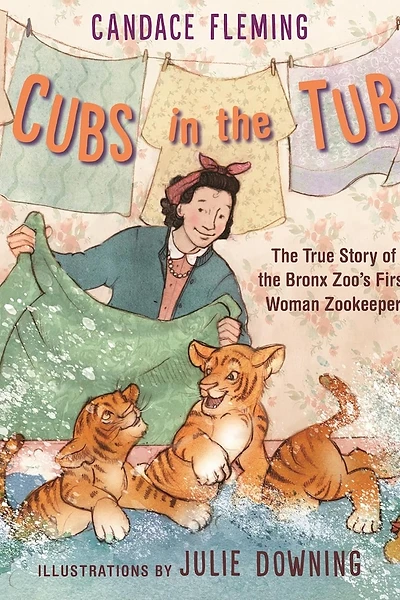
Cubs in the Tub
by Candace Fleming
Pacing MaterialThe true story of Helen Martini, the Bronx Zoo's first woman zookeeper, who began by raising orphaned animal cubs in her bathtub.
Big Idea
Passion and determination can lead you to break barriers and do work you love.
Discussion Questions
- 1.Why did Helen start raising cubs in her home?
- 2.What challenges did Helen face as a woman zookeeper?
- 3.How did Helen's love for animals change the zoo?
Classroom Activity
Animal Caretaker Journal
Students write a journal entry from Helen Martini's perspective about a day caring for the cubs.
Lesson Plan
Learning Goals
- Understand biography as a genre
- Practice perspective writing
- Learn about women in science
Activity Steps
- 1.Read the story and discuss Helen's journey
- 2.List the steps Helen took to become a zookeeper
- 3.Write a journal entry as Helen describing cub bath time
- 4.Illustrate the journal entry
Standards Connections
- ELA: RI.1.1 — Ask and answer questions about key details
- ELA: RI.1.2 — Identify main topic and retell key details
- ELA: RI.1.3 — Describe connection between events
- ELA: RI.4.6 — Acknowledge differences in characters' points of view
- ELA: SL.1.1 — Participate in collaborative conversations about the text
- ELA: W.1.3 — Write narratives recounting events with descriptive details
- SEL: Responsible Decision-Making
Pace-Write-Read Study with Pace-Write It!
Focus question: How can a true story about an ordinary person who does something extraordinary make readers feel discovery, tension, and warmth? Cubs in the Tub by Candace Fleming tells the true story of Helen Martini, the Bronx Zoo's first woman zookeeper, who began by raising orphaned tiger cubs in her own apartment. Fleming blends warmth, suspense, and carefully chosen details to show how one person's patience and love changed the way zoos care for baby animals.
| Element | How to notice or teach it in the novel |
|---|---|
| Pace | Read: The story moves from Helen's quiet home life to the excitement of raising cubs and finally to her place at the Bronx Zoo. Notice how Fleming speeds up when the cubs arrive and slows down for tender moments. Classroom Activity: Create a 5-step timeline of Helen's journey with one strong verb for each stage. |
| Plot | Read: The plot follows a real-life arc: longing, opportunity, challenge, discovery, achievement. Helen wants a family, finds unexpected purpose with the cubs, faces the challenge of caring for wild animals, and becomes a zookeeper. Classroom Activity: Write a biography arc: "She wanted… She found… She faced… She became…" |
| Prosody | Read: Fleming's language is warm and rhythmic, with soft sounds for tender moments and punchy phrases when the cubs are playful. Read a passage aloud and notice how the sound matches the mood. Classroom Activity: Read one sentence aloud and revise it so the sound matches the feeling you want. |
| Word pause | Read: Short sentences and line breaks let readers stop on important shifts—when Helen first holds a cub, when she must say goodbye. Classroom Activity: Place a line break before the moment your subject's life changes direction. |
| Concept | Read: The central idea is that love and patience can grow into expertise and change institutions. Helen's home care became the model for zoo nurseries. Classroom Activity: Write one sentence that explains the big idea of your biography. |
| Voice & World View | Read: The voice is warm, curious, and full of quiet admiration for Helen's determination. It treats ordinary acts of care as extraordinary. Classroom Activity: Write in a voice that sounds warm and admiring of your subject. |
| Setting & Place | Read: Settings shift from Helen's apartment to the zoo, each place shaping what Helen could do. The apartment is intimate; the zoo is vast and public. Classroom Activity: Use two different settings to show how your subject grows. |
| Point of View | Read: Third-person narration keeps the focus on Helen's choices and emotions, letting readers see both the cubs and the person caring for them. Classroom Activity: Write one paragraph in third person about a real person's turning point. |
| Original Characters | Read: The "characters" are real people: Helen, her husband Fred, zoo staff, and of course the cubs themselves. Classroom Activity: Make a real-person cast list: main person, helper, challenge, and the animals. |
| Dialogue | Read: Dialogue is used sparingly; action and narration carry the story. When words appear, they reveal Helen's feelings or the cubs' needs. Classroom Activity: Add one short quoted or paraphrased moment only if it teaches character. |
| Details | Read: Specific details make the story real: bottle-feeding schedules, cub noises, the warmth of a tub turned nursery. Fleming chooses details that show both the work and the love. Classroom Activity: Add three exact researched details to your biography draft. |
| Descriptions | Read: Descriptions contrast a cozy bathroom nursery with the wide, noisy world of the zoo. Fleming helps readers feel the difference between home care and public life. Classroom Activity: Describe two very different places your subject enters. |
| Strong First Lines | Read: A strong opening makes Helen feel real and relatable before the cubs even arrive. Fleming begins with who Helen was before she found her purpose. Classroom Activity: Begin with a surprising trait or desire. |
| Immediacy & Engagement | Read: Readers are pulled in by the question: what will happen to these tiny, fragile cubs? Fleming creates urgency without fear. Classroom Activity: Create a "what next?" feeling at the end of each paragraph. |
| Story scenes, summaries, unique structures | Read: The book blends quick summary of Helen's early life with key scenes of cub care, zoo challenges, and the turning point of her hiring. Classroom Activity: Write one scene and one summary sentence, then compare their speed. |
| Flashback, flash forward, cliffhangers | Read: The structure is mostly chronological, with suspense built around whether the cubs will survive and whether Helen will be allowed to keep them. Classroom Activity: End one section with a future-facing line: "But Helen wasn't finished." |
| Tension, suspense, surprise | Read: Tension comes from real stakes: fragile cubs, a zoo that wasn't ready for a woman zookeeper, and the question of whether home-raised cubs can thrive. Classroom Activity: Write a contrast: "People expected ___, but Helen ___" |
| Page turns and chapter breaks | Read: Page turns reveal new challenges—feeding, growing, moving to the zoo, finding a permanent place. Each turn widens the world. Classroom Activity: Mark three page turns: the cubs arrive, the challenge grows, the achievement lands. |
| Performance | Read: The warm, rhythmic language and cub sounds make the book good for expressive read aloud. Fleming's phrasing invites soft and lively voices. Classroom Activity: Read your draft aloud and emphasize the warm moments and the lively ones differently. |
| Personality | Read: Helen's personality comes through as patient, determined, gentle, and brave. She doesn't set out to be a pioneer—she becomes one through love. Classroom Activity: Choose three personality words and prove each with an action. |
| Humor | Read: Humor comes from the cubs themselves—their mischief, their size, their personality. Fleming lets the animals provide light moments. Classroom Activity: Add one light, true detail that makes readers smile. |
| Pause | Read: Pauses help big emotional shifts land—when a cub is healthy, when Helen must let go, when she is finally hired. Classroom Activity: Use a short sentence after a major turning point. |
| Poetry and poetic devices | Read: Fleming uses repetition, warmth, and sensory phrasing to give the biography a gentle, poetic energy. Classroom Activity: Add alliteration or repetition to one sentence. |
| Repetition | Read: Repeated ideas about care, patience, and growth build the theme. The rhythm of feeding, watching, and waiting structures the story. Classroom Activity: Repeat one phrase three times with changing details. |
| Rhythm | Read: The rhythm alternates between tender, slow moments and lively cub energy. Fleming mirrors the pace of caring for babies. Classroom Activity: Write one slow close-up paragraph, then one fast action paragraph. |
| Punctuation | Read: Fleming uses commas, dashes, and short sentences to control read-aloud speed and emotional weight. Classroom Activity: Revise one sentence using a dash or fragment for emphasis. |
| Questions | Read: The story invites questions about animal care, women's roles, and what makes someone an expert. Helen's own curiosity drove her learning. Classroom Activity: Write three questions your subject's life makes you ask. |
| Compare-Contrast | Read: The book contrasts Helen's small apartment with the vast zoo, home care with professional care, and an untrained woman with trained zoo staff. Classroom Activity: Compare two sides of your subject's life. |
| Objects | Read: Objects carry meaning: the bathtub that becomes a nursery, the bottles, the blankets. Each object shows Helen's resourcefulness. Classroom Activity: Pick one object that shows your subject changing. |
| Threes | Read: Three-part lists help organize the story: home, zoo, legacy. Fleming uses grouping to make Helen's growth feel inevitable. Classroom Activity: Write a three-part sentence about your subject. |
| Whitespace & negative space | Read: Picture book spacing gives readers time to absorb the art and the emotional weight of Helen's choices. Classroom Activity: Leave one important sentence standing alone. |
| Art & graphics | Read: The illustrations show scale, warmth, and the contrast between tiny cubs and the grown animals they become. Art helps readers feel both the tenderness and the wildness. Classroom Activity: Sketch a page plan: close-up, middle view, wide view. |
| Interactives & gamification | Read: Readers can track Helen's milestones like levels in a quest: first cub, first feeding, first zoo day, first official title. Classroom Activity: Create a milestone badge for one brave choice Helen made. |
Pace-Write It!
20-Minute Classroom Flow: 1. Read (5 min) — Read one spread or short section aloud. Students listen for warm moments, lively cub energy, and places where the pace changes. Then they look at the art and name what their eyes notice first, second, and third. 2. Notice (5 min) — Students mark: one repeated idea or phrase, one setting shift, one contrast, one strong verb, one page-turn moment. 3. Write (7 min) — Write a "small beginning, big change" biography paragraph using this frame: Helen wanted ___. One day, ___ needed ___. So Helen ___. It was hard because ___. But she kept ___. And that changed ___. Star Moment: ___. 4. Share (3 min) — Students read one line aloud. Classmates listen for the pacing move: repetition, contrast, surprise, or strong verb. Exit ticket: What makes Cubs in the Tub feel alive: the warm voice, the changing settings, the contrasts in Helen's life, or the page turns? Write one sentence explaining your choice.