
 2-6
2-6GN THAN
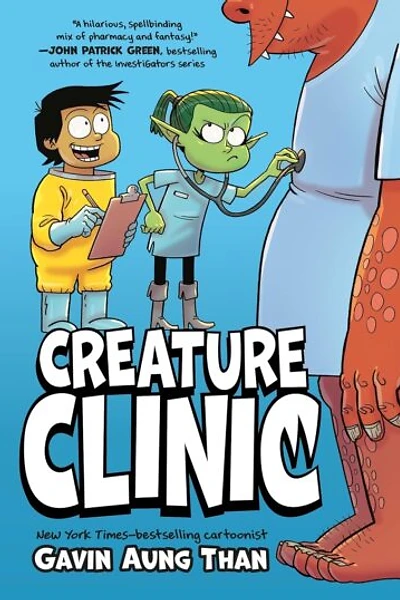
Creature Clinic
by Gavin Aung Than
Pacing MaterialA hilarious and heartwarming graphic novel about a clinic where monsters come to get better — and where a young apprentice learns that caring for others, no matter how strange, is the greatest magic of all.
Big Idea
Helping others — even those who seem different or scary — is what true kindness looks like.
Discussion Questions
- 1.What kinds of creatures come to the clinic?
- 2.How does the young apprentice learn to care for monsters?
- 3.What makes the clinic a special place?
- 4.How can you show kindness to someone who seems different from you?
Classroom Activity
Creature Care
Design your own creature patient. Draw them, describe their 'symptoms,' and write a kind prescription that would help them feel better.
Lesson Plan
Learning Goals
- Explain how the apprentice’s care for unusual creature patients in Creature Clinic connects to the idea that kindness includes people who seem different.
- Use details from words and illustrations to describe a creature patient’s feelings and needs.
- Invent and illustrate a creature patient with symptoms that suggest a physical discomfort or an emotional need.
- Write a kind, imaginative prescription that addresses the creature’s symptoms and explains how it could help.
Activity Steps
- 1.Read selected scenes from Creature Clinic aloud, displaying the panels. Discuss: How do the words, facial expressions, and pictures help us understand what a patient needs? How does the apprentice show care?
- 2.Introduce Creature Care: students will become apprentice caregivers at their own imaginary clinic. Brainstorm ways to help a creature who looks frightening but feels worried, lonely, or uncomfortable. Emphasize asking what someone needs rather than judging their appearance.
- 3.Have each student draw an original creature patient and label its name and distinctive features. Add a speech bubble showing what the creature says about how it feels.
- 4.Ask students to describe two or three symptoms and identify what their patient might need. Grades 2–3 can use labels and sentence frames; grades 4–6 can write a short patient profile explaining connections between symptoms and needs.
- 5.Have students write a fictional kindness prescription using the frame: 'To help you feel better, I recommend ___ because ___.' Include two or three caring actions, such as listening, offering reassurance, or helping the creature find a comfortable place to rest. Clarify that these are story prescriptions, not real medical advice.
- 6.Invite students to share their patients and prescriptions in pairs or a classroom clinic gallery. Close with a brief reflection: 'Like the apprentice in Creature Clinic, I can show kindness to someone different from me by ___. '
Standards Connections
- ELA: CCSS RL.2.3–RL.3.3 — Describe characters and explain how their responses or actions contribute to events in a story.
- ELA: CCSS RL.2.7–RL.6.7 — Explore how illustrations and visual presentation contribute to understanding a literary text, using the applicable grade-level standard.
- ELA: CCSS W.2.3–W.6.3 — Develop an imagined character and situation through descriptive details in the patient profile.
- ELA: CCSS SL.2.1–SL.6.1 — Participate in collaborative discussions, listen to classmates, and build on others’ ideas.
- SEL: Social awareness and relationship skills — Practice empathy, respect differences, and identify caring responses to another person’s needs.
Pace-Write-Read Study with Pace-Write It!
Focus question: How does an author and illustrator control the speed of a story so readers can feel both the silliness and the heart of caring for others? In Creature Clinic by Gavin Aung Than, readers enter a monster clinic filled with strange patients, funny problems, and a young apprentice learning how to help others. The graphic novel’s pacing moves quickly through visual jokes, dialogue, and page turns, then slows down in key caring moments so friendship and kindness stand out.
| Element | How to notice or teach it in the novel |
|---|---|
| Pace | Read: Notice how Creature Clinic moves fast during chaotic monster emergencies and slows down when the young apprentice pays close attention to a patient’s feelings or needs. Classroom Activity: Write a short scene with a problem at a clinic, then add one slow moment where your character stops to show kindness. |
| Plot | Read: Notice how the plot follows monster patients coming in with unusual troubles while the apprentice learns that healing others is more than using magic tricks or quick fixes. Classroom Activity: Make a 4-part plot ladder for a new Creature Clinic-style story: patient arrives, problem grows, kindness helps, patient leaves changed. |
| Prosody | Read: Notice how the dialogue and panel flow in Creature Clinic can be read with different expression—frantic for emergencies, gentle for comforting, and playful for funny monster mix-ups. Classroom Activity: Choose 4 lines for a mini script and mark how each line should sound: worried, relieved, excited, or calm. |
| Word pause | Read: Notice where a single word, short phrase, or sound effect makes you pause before the next panel, especially when a monster reveals a surprising symptom or when the apprentice hesitates before helping. Classroom Activity: Write 5 comic-style lines and use one-word pauses like “Wait.” or “Uh-oh.” to control the timing. |
| Concept | Read: Notice the central concept of a clinic for monsters, where scary-looking creatures still need care, patience, and friendship. Classroom Activity: Invent a new place based on one big caring idea, such as a repair shop for dragons or a library for ghosts, and write 3 sentences explaining how it works. |
| Voice & World View | Read: Notice how Creature Clinic presents a warm, funny world view: even creatures that look odd, messy, or frightening deserve tenderness and respect. Classroom Activity: Write a first-person reflection from the apprentice explaining why every patient matters. |
| Setting & Place | Read: Notice how the clinic setting shapes the pacing—waiting areas, exam rooms, magical tools, and monster visitors create quick action and short stops for care. Classroom Activity: Draw or describe a new room in the clinic and explain what happens there in 4-5 sentences. |
| Point of View | Read: Notice how the story centers the young apprentice’s experience, helping readers discover the clinic’s strange routines as the apprentice learns them too. Classroom Activity: Rewrite a clinic moment from the point of view of a nervous monster patient instead of the apprentice. |
| Original Characters | Read: Notice how the monsters in Creature Clinic feel original because their unusual bodies, problems, and personalities connect to humor as well as kindness. Classroom Activity: Create an original monster patient with a name, symptom, personality trait, and a kindness they need. |
| Dialogue | Read: Notice how dialogue keeps the story moving quickly—patients explain problems, helpers react, and caring words often solve as much as medicine does. Classroom Activity: Write 6 lines of dialogue between the apprentice and a worried patient, including one reassuring line. |
| Details | Read: Notice the small visual and story details that make the clinic feel alive, such as odd monster features, magical medical tools, and reactions from characters in the background. Classroom Activity: List 8 tiny details that could appear in a clinic panel, then use 3 of them in a short paragraph. |
| Descriptions | Read: Notice how descriptions in Creature Clinic are often shown through art and brief text, letting readers quickly understand a monster’s problem without long explanation. Classroom Activity: Describe a monster patient in 3 vivid sentences, focusing on what a doctor would notice first. |
| Strong First Lines | Read: Notice how an opening in a graphic novel needs to hook readers fast by introducing the weird, funny, and welcoming world of the clinic. Classroom Activity: Write 3 possible first lines for a new Creature Clinic chapter that would make readers want to turn the page. |
| Immediacy & Engagement | Read: Notice how readers feel pulled right into Creature Clinic because each new patient brings an immediate problem to solve and an emotional reason to care. Classroom Activity: Write an opening panel caption and first line of dialogue that make a patient’s problem feel urgent right away. |
| Story Scenes & Summaries & Unique Structures | Read: Notice how the book can shift between full scenes with dialogue and quicker summary moments that move readers from one patient case to another. Classroom Activity: Write one detailed scene of a patient visit and one 2-sentence summary that jumps ahead to the next case. |
| Flashback & Flash Forward & Cliffhangers | Read: Notice whether a character’s memory, a hint about what might happen next, or an end-of-page surprise changes the pace and builds curiosity in Creature Clinic. Classroom Activity: Add a 2-panel flashback or a cliffhanger ending to your clinic scene. |
| Tension & Suspense & Surprise | Read: Notice how the story creates tension when a monster’s condition seems strange or hard to fix, then surprises readers with a funny or heartfelt solution. Classroom Activity: Write a short problem-solution scene where the cure is unexpected but kind. |
| Page Turns and Chapter Breaks | Read: Notice how page turns in a graphic novel can hide a reveal, a joke, or a new patient entering the clinic, making readers want to keep going. Classroom Activity: Plan a 4-panel sequence and decide which moment should happen right after a page turn. |
| Performance | Read: Notice how characters in Creature Clinic perform feelings with their bodies—slumped shoulders, wide eyes, nervous hands, or bouncing excitement—which affects pacing even without many words. Classroom Activity: Write stage directions or panel notes for a character showing fear, relief, and gratitude. |
| Personality | Read: Notice how the apprentice’s growing compassion and the monsters’ different quirks make each interaction feel fresh and human, even in a fantasy clinic. Classroom Activity: Write a character card for the apprentice or a new patient that includes likes, fears, and how they act when they need help. |
| Humor | Read: Notice how Creature Clinic uses silly monster problems, visual jokes, and unexpected reactions to keep the pacing lively while still protecting the theme of kindness. Classroom Activity: Invent one funny but gentle clinic problem for a monster and write the joke without being mean. |
| Pause | Read: Notice the quiet beats where a character listens, notices pain, or offers comfort; these pauses make the story’s kindness feel important. Classroom Activity: Add a silent panel moment to your scene and explain what the reader learns from the pause. |
| Poetry and Poetic Devices | Read: Notice any sound words, repeated phrases, or image patterns that make the language in Creature Clinic feel playful and memorable. Classroom Activity: Write 4 lines about the clinic using alliteration or onomatopoeia, such as “slurp,” “sniff,” or “clink.” |
| Repetition | Read: Notice how repeated actions—patients arriving, being examined, and leaving cared for—create a pattern that helps readers follow the story’s rhythm. Classroom Activity: Write a repeated line a clinic helper could say to every patient, then use it 3 times in a comic script. |
| Rhythm | Read: Notice the rhythm created by quick panels, short dialogue bursts, and slower emotional beats when the apprentice connects with a patient. Classroom Activity: Draft a 6-panel comic outline with this rhythm: quick, quick, quick, slow, quick, calm. |
| Punctuation | Read: Notice how punctuation in Creature Clinic can speed up or slow down reading—exclamation points for alarm, ellipses for hesitation, question marks for confusion. Classroom Activity: Rewrite the same line 3 ways using different punctuation to change the feeling. |
| Questions | Read: Notice how questions from the apprentice or patients help uncover the real problem, especially when kindness means listening carefully. Classroom Activity: Write 5 questions the apprentice could ask a mysterious new patient to understand what is wrong. |
| Compare-Contrast | Read: Notice the contrast between scary appearances and gentle needs, or between fast magical fixes and patient, caring attention. Classroom Activity: Write 4 compare-contrast sentences about a monster who looks frightening but behaves sweetly. |
| Objects | Read: Notice how objects in the clinic—bandages, potions, clipboards, magical tools, waiting-room items—help tell the story and support the pacing of each visit. Classroom Activity: Choose one clinic object and write how it helps solve a patient’s problem. |
| Threes | Read: Notice how stories often feel satisfying in sets of three, such as three symptoms, three attempts, or three acts of kindness before a problem is solved. Classroom Activity: Plan a scene where the apprentice tries 3 different ways to help a patient before succeeding. |
| Whitespace & Negative Space | Read: Notice how empty space in panels or around speech bubbles can slow the reading pace and focus attention on one feeling, expression, or important moment of care. Classroom Activity: Sketch or describe a panel with extra empty space to show loneliness, worry, or relief. |
| Art & Graphics | Read: Notice how Gavin Aung Than’s graphic novel style uses character expressions, panel size, and visual humor to shape pacing and make the clinic world inviting instead of frightening. Classroom Activity: Create a 3-panel storyboard showing a patient arriving, being helped, and leaving happier. |
| Interactives & Gamification | Read: Notice how readers can almost play along by predicting the monster’s problem, the cure, or the kind choice the apprentice will make next. Classroom Activity: Design a “Guess the Symptom” card for a new monster patient with 3 clues and 1 caring solution. |
Pace-Write It!
20-Minute Classroom Flow Read (5 min): Read a short section of Creature Clinic by Gavin Aung Than that shows a monster patient arriving with a problem and the apprentice responding. Ask students to watch for where the story moves fast and where it slows down. Notice (5 min): Discuss: Which panel felt fastest? Which moment paused for kindness? How did the art, dialogue, and page turns control pacing? Chart student noticings under two headings: “Fast parts” and “Slow parts.” Write (7 min): Students write a short graphic-novel-style scene about a new patient visiting Creature Clinic. Writing frame: “When __________ burst into Creature Clinic, everyone __________. At first, the apprentice thought __________. Then the apprentice noticed __________. Instead of rushing, the apprentice paused and said, ‘__________.’ After that, __________. In the end, the patient left feeling __________ because __________.” Encourage students to include 1 funny detail, 1 pause, and 1 kind line of dialogue. Share (3 min): Partners read their scenes aloud with expression. Listeners name one place where the pacing was quick and one place where it slowed down effectively. Exit ticket: Write one sentence answering: How did you use pacing to show both humor and kindness in your scene?
Pace-Write-Read Connection
Teach this book using the Pace-Write-Read method — Tool 20: Play.
Open the Mastery Manual