
 K-3
K-3P GRAVEL
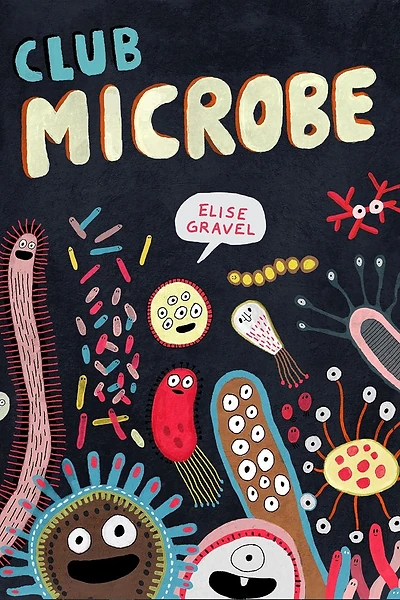
Club Microbe
by Elise Gravel
Pacing MaterialA playful, fact-filled tour of the microscopic world where bacteria, viruses, and other tiny organisms are introduced with Elise Gravel's signature humor and charm.
Big Idea
Microbes are everywhere — they keep us healthy, make us sick, and shape our world — and understanding them is the first step to good hygiene and scientific curiosity.
Discussion Questions
- 1.What is a microbe? Can you name three places they live?
- 2.How can microbes be both helpful and harmful?
- 3.Why is it important to wash our hands?
- 4.If you could design your own microbe, what would it look like?
Classroom Activity
Design-a-Microbe
Students create their own microbe characters with personalities, naming them and describing where they live and what they do.
Lesson Plan
Learning Goals
- Identify microbes as tiny living organisms too small to see.
- Explain the difference between helpful and harmful microbes.
- Practice proper handwashing technique.
- Create an original microbe character with a defined habitat.
Activity Steps
- 1.Read Club Microbe aloud, pausing to name each microbe.
- 2.Discuss how microbes are everywhere — helpful and harmful.
- 3.Students draw an original microbe character with a name and habitat.
- 4.Share microbe portraits in a 'gallery walk.'
Standards Connections
- ELA: RL.K.1 — Ask and answer questions about key details
- ELA: RL.K.2 — Retell stories, including key details
- ELA: RL.K.3 — Describe characters, setting, and events
- ELA: RL.3.6 — Acknowledge differences in characters' points of view
- ELA: SL.K.1 — Participate in collaborative conversations about the text
- ELA: W.K.3 — Write narratives recounting events with descriptive details
- SEL: Responsible Decision-Making
- Art: VA:Re7 — Perceive and analyze artistic work
Pace-Write-Read Study with Pace-Write It!
Focus question: How does an author make tiny scientific ideas feel lively, funny, and easy to follow? In Club Microbe by Elise Gravel, readers take a playful tour through the world of microbes, meeting bacteria, viruses, and other microscopic organisms through funny facts, cartoon illustrations, and direct explanations. The pacing moves quickly with short bursts of information, lively page turns, and well-timed jokes that help big science ideas feel exciting and clear.
| Element | How to notice or teach it in the novel |
|---|---|
| Pace | Read: Notice how Club Microbe moves at a quick, bouncy pace with short facts, labeled illustrations, and humorous asides about microbes. Classroom Activity: Write 4 short sentences that teach one science fact quickly, using one silly side comment to keep the pace lively like Elise Gravel. |
| Plot | Read: Notice that this book does not follow a traditional story plot; instead, it guides readers through connected ideas about the microbe world, building understanding step by step. Classroom Activity: Create a mini information-book plan with a beginning page introducing a tiny creature, a middle page teaching facts, and an ending page explaining why it matters. |
| Prosody | Read: Listen to how the playful wording in Club Microbe sounds lively and talkative when read aloud, especially when the text acts surprised, amused, or excited about microbes. Classroom Activity: Practice reading one page aloud with expression, then write 3 lines about a germ or microbe that should sound excited when read aloud. |
| Word pause | Read: Notice where a reader naturally pauses after a fact, a label, or a joke so the information about bacteria and viruses has time to sink in. Classroom Activity: Write 3 fact sentences about an invisible tiny organism and mark each place a reader should pause with a slash. |
| Concept | Read: Notice that the big concept in Club Microbe is that the microscopic world is everywhere and full of living things that can be helpful, harmful, or just fascinating. Classroom Activity: Write one big idea sentence about microbes and add 2 supporting facts that help explain that concept to younger readers. |
| Voice & World View | Read: Notice Elise Gravel’s friendly, curious voice that treats microbes as worth studying instead of just scary or gross. Classroom Activity: Write a short paragraph in a curious voice that teaches about a tiny organism without making it sound only dangerous. |
| Setting & Place | Read: Notice that the setting shifts to the hidden microscopic world in bodies, around us, and in nature, helping readers imagine places they cannot usually see. Classroom Activity: Write 3 sentences describing where a microbe lives, such as on skin, in soil, or in water, so readers can picture the place. |
| Point of View | Read: Notice that the book is told from an explanatory point of view, with the author speaking directly to readers like a guide into the microbe club. Classroom Activity: Rewrite one science fact from the point of view of a microbe saying, “I am...” and explain where it lives and what it does. |
| Original Characters | Read: Notice how bacteria, viruses, and other microbes are presented almost like quirky characters through cartoons, facial expressions, and funny labels. Classroom Activity: Invent an original microbe character with a name, a sketch idea, and 3 fact-based traits. |
| Dialogue | Read: Notice that even in an information book, the cartoon style makes it feel like microbes could be talking through captions and humorous comments. Classroom Activity: Write a 4-line dialogue between a bacterium and a virus where each one shares one true fact about itself. |
| Details | Read: Notice the specific science details Elise Gravel includes so the humor never replaces the learning about microorganisms. Classroom Activity: Write 5 precise details about one tiny organism and choose the 3 strongest ones to include in a mini book page. |
| Descriptions | Read: Notice how the text and art describe microbes in simple, vivid ways so readers can imagine tiny shapes, actions, and habitats. Classroom Activity: Write a description of a microbe using shape, size, movement, and where it lives. |
| Strong First Lines | Read: Notice how Club Microbe grabs attention right away by inviting readers into a surprising world they usually cannot see. Classroom Activity: Write 2 opening lines for a nonfiction page about a tiny creature that make readers curious immediately. |
| Immediacy & Engagement | Read: Notice how the book feels immediate because it talks directly to readers and makes the unseen world feel close, funny, and important. Classroom Activity: Write 3 sentences that speak to the reader using “you” to explain why microbes matter in everyday life. |
| Story Scenes & Summaries & Unique Structures | Read: Notice how the book blends quick summaries, fact bursts, labels, and comic-style moments instead of long scenes. Classroom Activity: Make one page that includes a heading, 2 fact sentences, 1 labeled drawing, and 1 funny caption about a microbe. |
| Flashback & Flash Forward & Cliffhangers | Read: Notice that this science book does not rely much on flashbacks or cliffhangers, but it does build curiosity by making readers want to find out what comes next in the microbe world. Classroom Activity: End a fact page with a teaser sentence such as “But not all microbes are alike...” and then write the next page topic. |
| Tension & Suspense & Surprise | Read: Notice the surprise in learning that some microbes help us while others can make us sick, which keeps the information interesting. Classroom Activity: Write a 3-sentence fact set that starts with a surprising idea about microbes, then explains it. |
| Page Turns and Chapter Breaks | Read: Notice how each page turn in Club Microbe reveals a new type of information, picture, or funny idea, helping readers keep moving. Classroom Activity: Plan a 2-page spread by writing what question goes on page 1 and what answer or surprise appears after the page turn on page 2. |
| Performance | Read: Notice how the exaggerated cartoons and energetic wording invite readers to perform the text with expression, voices, and gestures. Classroom Activity: Choose one fact from the book and rewrite it so it could be performed dramatically to a class. |
| Personality | Read: Notice that the book’s personality is playful, weird, bold, and smart, which helps science feel welcoming. Classroom Activity: Write a short nonfiction paragraph about germs, mold, or bacteria that shows a strong playful personality. |
| Humor | Read: Notice how Elise Gravel uses goofy drawings and light jokes to make bacteria, viruses, and other microbes memorable instead of frightening. Classroom Activity: Write one true science fact and add a funny comparison or caption that makes readers smile. |
| Pause | Read: Notice how readers may pause to study the illustrations, labels, and surprising facts before moving on to the next idea. Classroom Activity: Create a fact card with one sentence and one drawing, leaving a space where readers would stop and think, then add a question in that space. |
| Poetry and Poetic Devices | Read: Notice that even though Club Microbe is nonfiction, some lines use playful sound and word choice that feel musical and memorable. Classroom Activity: Write a 4-line microbe poem using alliteration, such as “busy bacteria” or “wriggly wee world.” |
| Repetition | Read: Notice how repeating the idea of tiny unseen life helps reinforce the big message that microbes are all around us. Classroom Activity: Write 3 sentences that repeat the starter phrase “So tiny, but...” and add a different fact each time. |
| Rhythm | Read: Notice the rhythm created by short sentences, quick labels, and bursts of explanation that keep the book moving. Classroom Activity: Write 5 short fact lines in a rhythm pattern of short-short-long-short-long about a microbe. |
| Punctuation | Read: Notice how punctuation such as exclamation points, commas, and question marks helps the scientific information sound excited and clear. Classroom Activity: Write 4 science sentences about microbes and revise them by adding punctuation that changes how the facts sound. |
| Questions | Read: Notice how the book makes readers wonder about invisible life, what microbes do, and where they live. Classroom Activity: Write 3 curious questions a reader might ask after reading about bacteria or viruses, then answer one of them. |
| Compare-Contrast | Read: Notice how readers can compare helpful microbes with harmful microbes, or bacteria with viruses, to understand the science more clearly. Classroom Activity: Make a compare-contrast chart for bacteria and viruses, then turn it into 3 complete sentences. |
| Objects | Read: Notice how tiny objects and visual details in the illustrations help represent things readers cannot see with their eyes alone. Classroom Activity: Choose one object a microbe might live on or in, like a toothbrush, puddle, or hand, and write 3 facts connected to that object. |
| Threes | Read: Notice how information is easy to follow when facts come in small groups, and three details often make an idea feel complete. Classroom Activity: Write a “Top 3 Things to Know” list about one microbe and expand each point into a sentence. |
| Whitespace & Negative Space | Read: Notice how the open page space in Club Microbe helps the facts, cartoons, and labels stand out so readers are not overwhelmed. Classroom Activity: Design a nonfiction page with only 2 short facts, 1 drawing, and plenty of blank space so the key ideas are easy to notice. |
| Art & Graphics | Read: Notice how Elise Gravel’s cartoon art, labels, and graphic layout do as much teaching as the words by making microbes look distinct and memorable. Classroom Activity: Create a labeled drawing of a made-up but science-based microbe and add 2 captions that teach facts. |
| Interactives & Gamification | Read: Notice how the book invites participation by making readers look closely, react, and sort ideas about different kinds of microbes. Classroom Activity: Create a simple “Helpful, Harmful, or Both?” microbe sorting game using 6 fact cards based on ideas from the book. |
Pace-Write It!
20-Minute Classroom Flow\nRead (5 min): Read aloud selected pages from Club Microbe by Elise Gravel that introduce bacteria, viruses, and other microbes. Pause to let students notice the quick facts, funny drawings, and direct way the author talks to readers.\nNotice (5 min): Ask: How does Elise Gravel keep the book moving fast while still teaching us a lot? Chart student observations such as short sentences, labeled pictures, jokes, questions, and surprising facts like some microbes help us and some harm us.\nWrite (7 min): Students create a mini nonfiction microbe card in the style of the book. Writing frame: “Meet ________. It is a _________. It lives in/on _________. One surprising fact is _________. Some people think _________, but actually _________." Encourage students to add one funny caption and one labeled sketch.\nShare (3 min): Partners read their microbe cards aloud using lively prosody and show where they added a pause, a fact, and humor. Invite 2 or 3 students to share examples that sound playful and informative.\nExit ticket: Write one sentence answering: How did short facts and humor help Elise Gravel teach you about microbes?