 K-3
K-3P GUGLIELMO
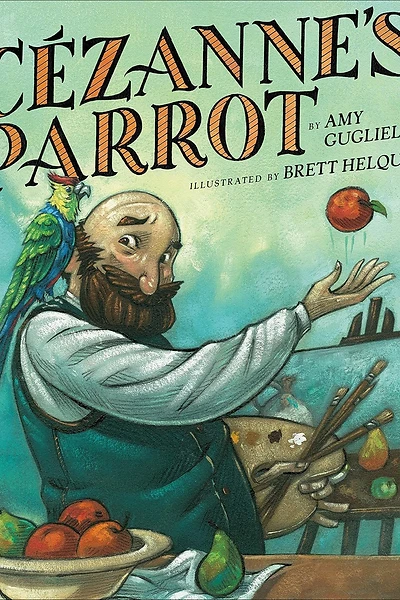
Cézanne's Parrot
by Amy Guglielmo
Pacing MaterialThe story of Paul Cézanne, the painter whose bold new way of seeing the world — with a parrot on his shoulder — changed art forever.
Big Idea
Seeing the world differently — in shapes, colors, and new perspectives — is what makes art revolutionary.
Discussion Questions
- 1.How did Cézanne's way of painting differ from other artists of his time?
- 2.What does the parrot symbolize in the story?
- 3.How can looking at things from a new angle change what you see?
- 4.Why is it important to keep trying even when others don't understand your work?
Classroom Activity
Still Life Studio
Set up a still life with fruit and objects, then paint it using bold colors and unusual angles, just like Cézanne.
Lesson Plan
Learning Goals
- Understand biographical narrative about artists
- Explore themes of perseverance and perspective
- Practice still life art techniques
Standards Connections
- ELA: RL.K.1 — Ask and answer questions about key details
- ELA: RL.K.2 — Retell stories, including key details
- ELA: RL.K.3 — Describe characters, setting, and events
- ELA: RL.3.6 — Acknowledge differences in characters' points of view
- ELA: SL.K.1 — Participate in collaborative conversations about the text
- ELA: W.K.3 — Write narratives recounting events with descriptive details
- SEL: Self-Management
- SEL: Responsible Decision-Making
- Art: VA:Re7 — Perceive and analyze artistic work
Pace-Write-Read Study with Pace-Write It!
Focus question: How does an author slow down and speed up a story to show a character’s perseverance and changing point of view? In Cézanne's Parrot by Amy Guglielmo, readers follow Paul Cézanne as he keeps painting even when others do not understand his art. The pacing moves between moments of struggle, practice, and discovery, helping us feel both his patience and the exciting shift in how he learns to see the world.
| Element | How to notice or teach it in the novel |
|---|---|
| Pace | Read: Notice how the story moves through Paul Cézanne’s long years of practice but slows down when he studies color, shape, and the world around him with the parrot nearby. The pace helps readers feel perseverance because some parts move quickly over time, while important seeing-and-painting moments take longer. Classroom Activity: Write 3-4 sentences about a time you kept trying at something, using one fast sentence to skip time and one slow sentence to zoom in on an important moment. |
| Plot | Read: Notice the plot arc in Cézanne's Parrot: Paul wants to paint in his own bold way, faces doubt and misunderstanding, keeps working, and eventually changes art with his new perspective. Each part of the plot builds his journey of perseverance. Classroom Activity: Make a 4-box plot map labeled beginning, problem, trying, and change, then write one sentence for each box about Paul’s journey. |
| Prosody | Read: Listen to how the sentences can be read smoothly, thoughtfully, or with excitement as Paul observes the world and keeps painting. The book’s phrasing supports a read-aloud voice that can sound quiet during reflection and stronger during moments of determination. Classroom Activity: Choose one page and mark it with arrows or symbols to show where your voice should get softer, slower, or stronger, then write one sentence explaining why. |
| Word pause | Read: Notice where individual words about art, color, looking, and thinking make you pause and picture what Paul Cézanne notices. These small pauses help the reader feel his careful perspective. Classroom Activity: Pick 3 important words from the story that make you stop and think, and write a sentence after each: “This word matters because…” |
| Concept | Read: Notice that the big idea is not just painting but perspective—seeing the world differently—and perseverance—continuing even when others do not understand. Paul’s art grows because he keeps working and trusts his vision. Classroom Activity: Finish this frame: “Paul teaches us that when __________, we can still __________ if we keep our own point of view.” |
| Voice & World View | Read: Notice how the author’s voice feels admiring, artistic, and encouraging, showing Paul Cézanne as someone who sees the world in a fresh way. The world view of the book values creativity, patience, and bold thinking. Classroom Activity: Write 2-3 sentences in an encouraging voice to Paul as if you believe in his new way of painting. |
| Setting & Place | Read: Notice how the places where Paul lives, looks, and paints matter because they give him colors, shapes, and scenes to study. Setting is not just background here; it helps form his artistic perspective. Classroom Activity: Draw or describe a place you know well, then write 3 sentences about how that place could inspire an artist the way Paul’s world inspired him. |
| Point of View | Read: Notice that the story is told from an outside narrator, but it stays close to Paul Cézanne’s experiences, helping readers understand his struggles and ideas. This point of view lets us watch him from the outside while still feeling his inner determination. Classroom Activity: Rewrite one moment from the book in first person, beginning with “I, Paul, looked at…” |
| Original Characters | Read: Notice how Paul Cézanne stands out as an original character because he does not want to paint like everyone else, and the parrot adds a memorable, surprising companion image. Together they make the story feel playful and unique while highlighting Paul’s unusual way of seeing. Classroom Activity: Invent an original artist character with an animal companion and write 3-4 sentences about how they see the world differently. |
| Dialogue | Read: Notice any spoken words or implied conversations that reveal whether people support Paul or question his art. Dialogue can speed up a scene and show conflict quickly. Classroom Activity: Write a short 4-line dialogue between Paul and someone who does not understand his paintings, showing Paul calmly defending his ideas. |
| Details | Read: Notice the small details about Paul’s painting process, his careful looking, and the things he notices in the world. These details help readers understand that perseverance often happens in quiet, repeated actions. Classroom Activity: Write 3 detailed observations about an ordinary object, the way Paul might study it before painting. |
| Descriptions | Read: Notice how descriptions help us picture colors, shapes, and the feeling of Paul’s artistic world. Description slows the pacing so readers can linger over the same kind of close looking that matters to Paul Cézanne. Classroom Activity: Describe a piece of fruit, a chair, or a tree in 4 vivid sentences without naming whether it is “pretty” or “ugly.” |
| Strong First Lines | Read: Notice how the opening invites readers into Paul Cézanne’s world quickly and sets up his different way of seeing. A strong beginning creates curiosity about both the painter and the parrot. Classroom Activity: Write your own strong first line for a story about an artist who notices something everyone else misses. |
| Immediacy & Engagement | Read: Notice how the book keeps readers engaged by making us wonder whether Paul’s unusual style will ever be understood. The focus on his effort and perspective makes his journey feel immediate and important. Classroom Activity: Write 2-3 sentences that begin in the middle of an important moment, such as Paul lifting his paintbrush or studying a scene closely. |
| Story Scenes & Summaries & Unique Structures | Read: Notice how some parts of the story are scenes we can picture closely, while other parts summarize longer stretches of Paul’s life and work. This balance helps the book cover big change over time without losing key moments. Classroom Activity: Write one summary sentence about many days of practice, then write two scene sentences about one exact moment of success or frustration. |
| Flashback & Flash Forward & Cliffhangers | Read: Notice whether the book mostly stays in order and how that steady structure supports young readers in following Paul Cézanne’s growth. Even without dramatic cliffhangers, the story builds curiosity about what will happen to his art. Classroom Activity: Add a flash forward sentence to Paul’s story using this frame: “One day, people would remember Paul because…” |
| Tension & Suspense & Surprise | Read: Notice the tension created when Paul’s art is different from what others expect, and how readers may wonder if he will keep going. The surprise comes from the power of a new perspective changing art itself. Classroom Activity: Write 3 sentences that build tension for a character trying something new that other people do not understand. |
| Page Turns and Chapter Breaks | Read: Notice how page turns in a picture book can hold a question, reveal a new image, or shift from struggle to discovery in Paul Cézanne’s journey. Since this is not a chapter book, page turns help control pacing in place of chapter breaks. Classroom Activity: Plan a two-page picture book moment by writing what happens before the page turn and what surprise or new idea appears after it. |
| Performance | Read: Notice how a reader could perform this story with thoughtful pauses, curious looks, and stronger emphasis when Paul persists. The book invites expressive reading because art and feeling are so closely connected. Classroom Activity: Practice reading 4-5 lines aloud as Paul, using your voice and face to show determination, then write one note to yourself about where to pause. |
| Personality | Read: Notice Paul Cézanne’s personality—observant, determined, and willing to stand apart. His personality shapes the pacing because he takes time to look deeply instead of rushing. Classroom Activity: Write a character sketch of Paul using this frame: “Paul is the kind of person who __________ because __________.” |
| Humor | Read: Notice how the parrot can add a light, playful feeling to a story about serious artistic struggle. That touch of humor keeps the pacing from feeling too heavy and makes Paul more memorable to young readers. Classroom Activity: Write a funny but kind sentence about what the parrot might say while watching Paul paint. |
| Pause | Read: Notice the places where the story invites a pause so readers can think about what Paul sees differently. These pauses help connect the theme of perspective to the reader’s own life. Classroom Activity: Put a slash mark where you would pause in one sentence from the story, then explain what the pause helps the reader notice. |
| Poetry and Poetic Devices | Read: Notice any lyrical language, repeated sounds, or image-rich phrases that make Paul’s world feel artistic and dreamlike. Poetic language can slow pacing and deepen the theme of seeing beyond the ordinary. Classroom Activity: Write a 3-line poem about colors and shapes from Paul’s point of view. |
| Repetition | Read: Notice repeated ideas of looking, painting, trying again, and seeing differently. Repetition reinforces Paul Cézanne’s perseverance and helps young readers hold onto the theme. Classroom Activity: Write a short paragraph that repeats the starter “He kept…” three times to show persistence. |
| Rhythm | Read: Notice how sentence lengths may change—some flowing gently, some short and firm—to match reflection and determination. Rhythm helps readers feel when the story is lingering and when it is moving ahead. Classroom Activity: Write one long sentence about looking carefully and one short sentence about refusing to quit. |
| Punctuation | Read: Notice how commas, periods, and exclamation points can shape how we hear Paul’s journey—calm, thoughtful, or triumphant. Punctuation quietly controls pacing in a read-aloud. Classroom Activity: Take a plain sentence about Paul painting and rewrite it two ways with different punctuation to change the feeling. |
| Questions | Read: Notice the questions readers may ask while listening: Why does Paul paint this way? Will others understand? How can one person’s perspective change the world? These questions keep the pages turning. Classroom Activity: Write 3 questions you would ask Paul Cézanne about his art and his perseverance. |
| Compare-Contrast | Read: Notice how the story invites us to compare Paul’s style with more traditional ways of painting and contrast how he sees with how others see. This comparison highlights both theme and character. Classroom Activity: Make a T-chart comparing “what others expected” and “what Paul wanted to paint.” |
| Objects | Read: Notice the importance of objects in an artist’s life—paintbrushes, canvases, colors, and the parrot itself. Objects carry meaning because they connect to Paul’s process and perspective. Classroom Activity: Choose one object from Paul’s world and write 3 sentences about how it helps tell his story. |
| Threes | Read: Notice whether ideas, actions, or descriptions come in groups of three, a pattern that often sounds satisfying and memorable in picture books. Threes can give a sense of build-up in Paul’s effort and discovery. Classroom Activity: Write a sentence with three actions Paul might do: “Paul looked, __________, and __________.” |
| Whitespace & Negative Space | Read: Notice how space on a page can slow the reading and direct attention to one image, one sentence, or one feeling. In a picture book about art, negative space can echo the act of noticing and framing what matters. Classroom Activity: Create a mini page design with one short sentence in the center and lots of empty space around it, then explain why the space matters. |
| Art & Graphics | Read: Notice how the illustrations and visual design help tell Paul Cézanne’s story by showing color, perspective, and mood. The art works with the words to shape pacing, especially when readers pause to study an image. Classroom Activity: Sketch a simple scene from the story and label 3 visual details that help show Paul’s perspective. |
| Interactives & Gamification | Read: Notice how readers can interact with this book by hunting for art details, tracking moments of perseverance, or spotting how the parrot appears across the story. These playful searches increase engagement while deepening comprehension. Classroom Activity: Create a 5-item “Paul’s Perspective Hunt” checklist for classmates to complete while rereading the book. |
Pace-Write It!
20-Minute Classroom Flow\nRead (5 min): Read aloud a section of Cézanne's Parrot by Amy Guglielmo that shows Paul Cézanne struggling, observing, and continuing to paint. Ask students to listen for places where the story speeds up over time and slows down to show an important moment.\nNotice (5 min): Discuss: Where did the author slow the story down? Where did the story move quickly? How did that help us understand Paul’s perseverance and perspective? Chart student ideas under two headings: “Fast time” and “Slow moment.”\nWrite (7 min): Students write a short response about a time they kept trying. Encourage them to copy the pacing pattern from the book by using one sentence that skips over time and one sentence that zooms in closely. Writing frame: “At first, I __________. Day after day, I __________. Then one important moment happened: __________. I looked/feared/noticed __________. I kept going because __________.”\nShare (3 min): Partners read their writing aloud and point to the sentence that moves quickly and the sentence that slows down. Invite 1-2 students to share how their pacing shows perseverance.\nExit ticket: Write one sentence answering: “How did Amy Guglielmo use pacing in Cézanne's Parrot to help us understand Paul Cézanne?”
Pace-Write-Read Connection
Teach this book using the Pace-Write-Read method — Tool 20: Play.
Open the Mastery Manual