
 K-3
K-3P LAVELLE
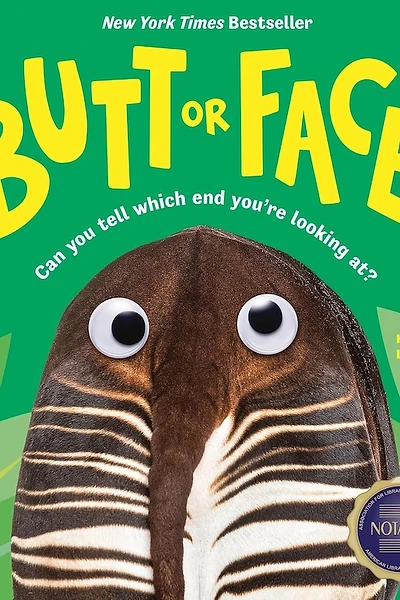
Butt or Face?
by Kari Lavelle
Pacing MaterialA hilarious interactive book challenging readers to guess whether they're looking at an animal's butt or its face — while learning fascinating animal facts.
Big Idea
Animals have amazing adaptations that help them survive — sometimes in surprising ways!
Discussion Questions
- 1.Which animal adaptation surprised you the most?
- 2.Why do some animals have markings that look like faces?
- 3.How do adaptations help animals survive?
Classroom Activity
Adaptation Design Challenge
Students invent a new animal with a surprising adaptation and explain how it helps the animal survive.
Lesson Plan
Learning Goals
- Understand animal adaptations
- Practice scientific reasoning
- Create an informational illustration
Activity Steps
- 1.Play the butt-or-face guessing game from the book
- 2.Discuss how each adaptation helps survival
- 3.Design a new animal with a unique adaptation
- 4.Present the animal to the class
Standards Connections
- ELA: RL.K.1 — Ask and answer questions about key details
- ELA: RL.K.2 — Retell stories, including key details
- ELA: RL.K.3 — Describe characters, setting, and events
- ELA: RL.3.6 — Acknowledge differences in characters' points of view
- ELA: SL.K.1 — Participate in collaborative conversations about the text
- ELA: W.K.3 — Write narratives recounting events with descriptive details
- SEL: Responsible Decision-Making
- Art: VA:Re7 — Perceive and analyze artistic work
Pace-Write-Read Study with Pace-Write It!
Focus question: How does an author slow readers down and speed them up to make a guessing game funny and exciting? In Butt or Face? by Kari Lavelle, readers study close-up animal pictures and clues to decide whether they are looking at an animal’s back end or front end. The book uses pacing by giving just enough information, pausing for a guess, and then revealing the answer on the page turn, which builds humor, suspense, and learning about animal adaptations.
| Element | How to notice or teach it in the novel |
|---|---|
| Pace | Read: Notice how Butt or Face? moves quickly from one animal mystery to the next, but slows down at the moment readers must guess. Kari Lavelle controls pace by giving a clue, holding the answer, and then revealing it after a pause. Classroom Activity: Write 3 short mystery pages about an animal body part, using one clue sentence, one guess question, and one reveal sentence. |
| Plot | Read: The plot of Butt or Face? is a repeating sequence: readers see a close-up, hear clues, make a guess, and discover the animal and its adaptation. Even without a traditional story problem, the book creates a playful pattern that keeps readers engaged from beginning to end. Classroom Activity: Make a simple plot ladder with 4 steps—look, clue, guess, reveal—and use it to plan your own animal guessing-book page. |
| Prosody | Read: Listen to how the text in Butt or Face? sounds when read aloud with surprise, curiosity, and laughter. The guessing questions and reveal lines invite expressive reading that changes in volume and tone. Classroom Activity: Practice reading one page aloud twice—once in a flat voice and once with playful guessing-book expression—then write a reveal line meant to be read dramatically. |
| Word pause | Read: Notice the places where a reader naturally pauses before the answer in Butt or Face? Those little stops give the brain time to wonder, predict, and laugh. Classroom Activity: Write 2 clue sentences about an animal and add a slash mark / where a reader should pause before the final guess question. |
| Concept | Read: The big concept in Butt or Face? is that animal bodies have adaptations that help them survive, even when those features look silly or surprising. The book teaches science through a game-like reading experience. Classroom Activity: Choose one animal adaptation and write a clue that teaches its job without naming the animal right away. |
| Voice & World View | Read: Kari Lavelle’s voice in Butt or Face? is playful, curious, and kid-friendly, treating strange animal features as fascinating rather than gross. The worldview suggests that nature is full of surprises worth noticing closely. Classroom Activity: Write 4 lines in a playful expert voice about an unusual animal body part, sounding both funny and informative. |
| Setting & Place | Read: Although Butt or Face? does not stay in one setting, the animals come from many natural places, such as land, water, and other habitats. Readers infer place from the animal facts and illustrations. Classroom Activity: Pick one animal from a habitat and add 2 setting clues to your mystery so readers can picture where it lives. |
| Point of View | Read: Butt or Face? speaks directly to the reader, using a questioning point of view that turns the audience into participants. This second-person feeling helps the book feel like a conversation and a challenge. Classroom Activity: Write 3 sentences that speak to the reader using you, ending with a guessing question about an animal. |
| Original Characters | Read: The ‘characters’ in Butt or Face? are real animals, but each one feels memorable because of its unusual body shape, adaptation, or surprising look. Their originality comes from nature and from the way the book frames them as mysteries. Classroom Activity: Invent an animal-inspired character card for one real animal, including its odd feature, its habitat, and one funny clue line. |
| Dialogue | Read: Butt or Face? does not use traditional character dialogue, but the text acts like the narrator is talking with readers through questions and reveals. This creates a back-and-forth feeling even without speech bubbles. Classroom Activity: Write a mini dialogue between a narrator and a student reader where the narrator gives clues and the reader makes a guess about an animal. |
| Details | Read: The clues in Butt or Face? depend on sharp details about textures, body parts, and adaptation facts. Small details help readers make close observations before the answer is revealed. Classroom Activity: Observe a photo of an animal and list 5 tiny details, then turn 2 of them into clue sentences. |
| Descriptions | Read: Descriptions in Butt or Face? are brief but vivid, helping readers picture odd features without giving away the answer too soon. The wording balances mystery and information. Classroom Activity: Write a 3-sentence description of an animal part that is clear enough to imagine but still keeps the animal secret. |
| Strong First Lines | Read: The opening of Butt or Face? grabs attention right away because the title and first guessing setup are surprising and funny. A strong first line makes readers instantly want to solve the mystery. Classroom Activity: Write 3 possible first lines for your own animal guessing page and choose the one that creates the most curiosity. |
| Immediacy & Engagement | Read: Butt or Face? feels immediate because readers are asked to look, think, and guess right now. The interactive challenge keeps attention high on every page. Classroom Activity: Write a clue page that includes a direct challenge to the reader, such as Look closely or Take your best guess. |
| Story Scenes & Summaries & Unique Structures | Read: Instead of a regular story with scenes, Butt or Face? uses a unique repeated structure of clue-summary-reveal across many animals. This pattern becomes the engine of the book’s pacing. Classroom Activity: Create a page plan for 3 animal entries using the same repeated structure so your writing feels organized and playful. |
| Flashback & Flash Forward & Cliffhangers | Read: Butt or Face? does not use flashbacks, but it does create mini cliffhangers by ending a clue section right before the answer. That withholding acts like a tiny suspenseful stop. Classroom Activity: End your clue page with a cliffhanger question that makes readers want to turn the page for the reveal. |
| Tension & Suspense & Surprise | Read: The tension in Butt or Face? comes from not knowing whether readers are seeing an animal’s face or rear end. The surprise reveal often makes readers laugh while also teaching an adaptation fact. Classroom Activity: Write one misleading clue and one helpful clue about the same animal so your reader feels suspense before the reveal. |
| Page Turns and Chapter Breaks | Read: In Butt or Face? the page turn is the perfect pacing tool because the answer waits on the next page. The turn itself becomes part of the joke and the learning. Classroom Activity: Fold a paper to make a clue side and a reveal side, then write your own animal mystery that depends on the page turn. |
| Performance | Read: This book is built for performance because readers can gasp, laugh, point, and call out guesses. A teacher’s dramatic timing makes the suspense stronger. Classroom Activity: Rehearse reading your clue page aloud, planning where to pause, where to smile, and where to reveal the answer for maximum effect. |
| Personality | Read: Butt or Face? has a bold, silly, confident personality that makes science feel playful. The book’s personality helps readers feel safe laughing while they learn real facts. Classroom Activity: Choose a personality for your own animal guessing text—silly, serious, dramatic, or excited—and write 3 clues that match it. |
| Humor | Read: Humor is central in Butt or Face? because the topic itself is unexpected and the mistaken guesses are funny. The humor never replaces the science; it helps readers remember the adaptation facts. Classroom Activity: Write a funny-but-true clue about an animal body part that could make classmates laugh and learn at the same time. |
| Pause | Read: Pause is one of the strongest pacing moves in Butt or Face?, especially before the guess and before the reveal. That silence gives the joke and the mystery room to grow. Classroom Activity: Mark your writing with parentheses that say (pause) in 2 places where you want listeners to stop and think. |
| Poetry and Poetic Devices | Read: Even though Butt or Face? is informational and playful, some lines use sound and pattern in ways that feel poetic, making them fun to say aloud. Repeated sounds and punchy wording help the clues stick. Classroom Activity: Write a clue using alliteration, such as fuzzy face or bumpy back, for an animal in your own mystery. |
| Repetition | Read: Repetition in Butt or Face? helps readers know what to expect: clue, guess, reveal, fact. This repeated pattern supports young readers and strengthens pacing. Classroom Activity: Use the same question stem in 3 entries, such as Butt or face?, while changing the clues and animal each time. |
| Rhythm | Read: The rhythm of Butt or Face? comes from short clue bursts followed by a guessing line and then a reveal. This steady beat helps the book feel lively and easy to follow. Classroom Activity: Draft a clue page with 3 short lines, each under 6 words, to create a snappy rhythm. |
| Punctuation | Read: Notice how question marks and exclamation points in Butt or Face? shape the reader’s voice and timing. Punctuation supports the surprise and interactive tone. Classroom Activity: Rewrite one clue set twice—once with only periods and once with exciting punctuation—then choose which version has better pacing. |
| Questions | Read: Questions drive Butt or Face? because the whole book is built around wondering and guessing. Each question invites prediction and keeps the reader involved. Classroom Activity: Write 4 strong questions about one mystery animal, starting broad and ending with the final guessing question. |
| Compare-Contrast | Read: The humor and challenge in Butt or Face? depend on comparing similar-looking animal ends and contrasting what each body part actually does. Readers must notice differences to solve the puzzle. Classroom Activity: Compare two animals by writing one sentence about how their body parts look alike and one sentence about how their functions differ. |
| Objects | Read: The key ‘objects’ in Butt or Face? are animal body parts such as tails, noses, shells, spikes, or markings. These objects are not random; they are adaptation clues. Classroom Activity: Pick one animal body part object and write a clue that tells what it does without naming it directly. |
| Threes | Read: Many playful books, including Butt or Face?, feel strong when clues come in groups of three because that number sounds complete and rhythmic. Three details can build a fair mystery without revealing too much. Classroom Activity: Write exactly 3 clues about an animal, with the third clue being the strongest hint. |
| Whitespace & Negative Space | Read: The open space around the close-up images and text in Butt or Face? helps readers focus on the important clue. Whitespace slows the eye and gives the mystery image room to stand out. Classroom Activity: Sketch a page layout for your clue page, deciding where to leave blank space so the clue image or words get attention. |
| Art & Graphics | Read: In Butt or Face? the illustrations and close-up views are essential to the joke, the guessing game, and the science learning. The art gives readers visual evidence while still hiding the full answer. Classroom Activity: Draw a close-up of only one part of an animal and write 2 clue sentences to go with your illustration. |
| Interactives & Gamification | Read: Butt or Face? feels like a game because readers are challenged to guess, check, and learn on every page. This interactive structure keeps motivation high and makes rereading fun. Classroom Activity: Create one game card for a class guessing game with this frame: Look at ___. I notice ___. My guess is ___. The answer is ___ because ___. |
Pace-Write It!
20-Minute Classroom Flow\nRead (5 min): Read aloud 3-4 animal entries from Butt or Face? by Kari Lavelle. Pause before each reveal so students can guess whether they are seeing the animal’s butt or face, and briefly name the adaptation after the answer is revealed.\nNotice (5 min): Ask students, ‘How did the author make us wait, wonder, and laugh?’ Chart these noticings: short clues, direct questions, pause before reveal, page turn surprise, and funny-but-true animal facts.\nWrite (7 min): Students create their own mini animal mystery page. Writing frame: ‘Look closely at the ____. It is ____. It helps the animal ____. Butt or face? It is the ____ of a ____.‘ Encourage students to add one extra fact about the adaptation.\nShare (3 min): Partners read their clue page aloud without saying the answer first. The listener guesses, then the writer reveals the animal and explains the adaptation.\nExit ticket: On a sticky note, complete this sentence: ‘A pause before the reveal helps pacing because ____.‘