 2-5
2-5R MCMURDIE
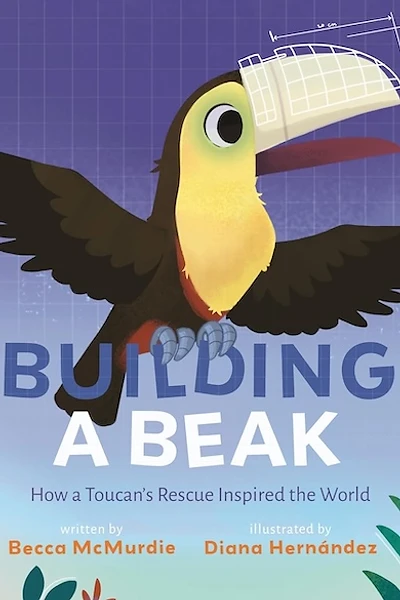
Building a Beak
by Becca McMurdie
Pacing MaterialThe true story of a toucan rescued and given a 3D-printed prosthetic beak, inspiring the world.
Big Idea
Science and compassion can change lives — even for animals.
Discussion Questions
- 1.How did technology help the toucan?
- 2.What problem in the world would you like to solve with science?
Classroom Activity
Design a Prosthetic
Students sketch and prototype a prosthetic limb for an animal using classroom materials.
Lesson Plan
Learning Goals
- Understand how engineers solve real-world problems
- Practice design thinking
Activity Steps
- 1.Read the story aloud
- 2.Discuss how the prosthetic beak was made
- 3.Choose an animal and sketch a prosthetic
- 4.Build a prototype from craft materials
Standards Connections
- ELA: RI.2.1 — Ask and answer questions about key details
- ELA: RI.2.2 — Identify main topic and retell key details
- ELA: RI.2.3 — Describe connection between events
- ELA: RI.5.6 — Acknowledge differences in characters' points of view
- ELA: SL.2.1 — Participate in collaborative conversations about the text
- ELA: W.2.3 — Write narratives recounting events with descriptive details
- SEL: Responsible Decision-Making
Pace-Write-Read Study with Pace-Write It!
Focus question: How does an author slow down and speed up a true story to help readers feel the problem, the hope, and the solution? In Building a Beak by Becca McMurdie, readers follow the real story of a toucan who is rescued after losing part of her beak and later receives a 3D-printed prosthetic beak. McMurdie uses pacing by stretching important moments, like the injury, rescue, and invention process, while moving more quickly through background information so readers stay emotionally connected and curious about what will happen next.
| Element | How to notice or teach it in the novel |
|---|---|
| Pace | Read: Notice how Building a Beak moves quickly through the big facts of Grecia’s story but slows down during key moments, such as when people realize she cannot live normally without her beak and when innovators work toward a prosthetic solution. Classroom Activity: Write 4-5 sentences about an injured animal being helped, making one sentence fast and one sentence slow to control the pace. |
| Plot | Read: Track the true-story plot in Building a Beak: injury, rescue, problem, invention, testing, and hope. The order helps readers understand how a real-life problem leads to STEM innovation. Classroom Activity: Make a short plot ladder with 5 steps for a true or realistic problem-solving story, then write a paragraph following those steps. |
| Prosody | Read: Listen to how the story sounds when read aloud, especially in serious parts about Grecia’s injury and hopeful parts about the new beak. The phrasing supports both sadness and determination. Classroom Activity: Choose one important moment and rewrite it in a read-aloud voice that sounds gentle, worried, or hopeful. |
| Word pause | Read: Notice where the language in Building a Beak makes readers pause on important ideas, such as the damage to Grecia’s beak, the challenge of eating, or the excitement of 3D printing. Classroom Activity: Write 3 sentences about a rescue, underlining the word in each sentence where you want the reader to pause for meaning. |
| Concept | Read: The big concept in Building a Beak is that people can use science, compassion, and creativity to solve real problems. Grecia’s prosthetic beak shows innovation in action. Classroom Activity: Write a topic sentence explaining how an invention can help a living thing, then add 2 supporting details. |
| Voice & World View | Read: Notice that McMurdie’s voice is caring, clear, and respectful of both the animal and the people helping her. The worldview of the book suggests that humans have a responsibility to help and protect living creatures. Classroom Activity: Write 3-4 sentences in a caring, informative voice about helping an animal or person in need. |
| Setting & Place | Read: Pay attention to where Grecia’s story happens and how the real-world setting shapes the events, from the rescue situation to the place where experts create the prosthetic beak. The setting makes the STEM work feel real and urgent. Classroom Activity: Describe a real place where a problem is solved, using details that show why that setting matters. |
| Point of View | Read: Building a Beak is told from an outside narrator’s point of view, which helps readers learn the facts of Grecia’s true story while also understanding the efforts of the people who rescue and help her. Classroom Activity: Rewrite one event from the story from Grecia’s point of view, using first-person words like I, my, and me. |
| Original Characters | Read: Even though this is nonfiction, Grecia stands out as a memorable central figure, and the rescuers, veterinarians, and innovators each have an important role in the story. Their real actions make the book feel inspiring. Classroom Activity: Create a character list for a realistic problem-solving story and write one sentence about how each character helps solve the problem. |
| Dialogue | Read: If the book includes quoted speech or moments that suggest what people might say, notice how those lines would highlight worry, teamwork, and hope around Grecia’s care. In nonfiction, even limited dialogue can sharpen important moments. Classroom Activity: Write a short dialogue between a rescuer and an inventor planning how to help an injured toucan. |
| Details | Read: Notice the factual details in Building a Beak about toucans, beaks, injuries, and 3D printing. These details help readers understand why Grecia’s situation was so serious and why the solution mattered so much. Classroom Activity: Write 3 precise details about an animal body part and explain why each detail matters to survival. |
| Descriptions | Read: Pay attention to how Grecia, her damaged beak, and the prosthetic are described so readers can picture both the problem and the solution. Description helps the science feel visual and understandable. Classroom Activity: Write a before-and-after description of an object that gets repaired or improved. |
| Strong First Lines | Read: Think about how the opening of Building a Beak likely introduces Grecia’s problem quickly so readers care right away. A strong beginning sets the emotional and informational pace of the whole book. Classroom Activity: Write 2 different opening lines for a true-story article about an animal rescue—one dramatic and one informative. |
| Immediacy & Engagement | Read: Notice how the book makes readers feel close to Grecia’s struggle by showing the immediate effects of losing part of her beak and the urgent need to help her survive. That urgency keeps readers engaged. Classroom Activity: Write a short paragraph that makes a problem feel urgent by showing what could happen if no one helps. |
| Story Scenes & Summaries & Unique Structures | Read: Building a Beak likely balances scene-like moments, such as rescue or testing the prosthetic, with summary sections that explain background facts about toucans and technology. This structure helps readers learn while staying in the story. Classroom Activity: Write one scene about a problem and one summary sentence that explains the science behind it. |
| Flashback & Flash Forward & Cliffhangers | Read: In a true story like Building a Beak, the author may refer back to what happened to Grecia and forward to what might happen if the prosthetic works. These time shifts can build curiosity without changing the facts. Classroom Activity: Write a paragraph that starts with a present problem, flashes back to how it happened, and ends with a question about what comes next. |
| Tension & Suspense & Surprise | Read: Notice the tension in wondering whether Grecia can survive and whether a 3D-printed beak can really help. The surprising part is that modern technology offers a solution for a wild bird. Classroom Activity: Write 4 sentences that build suspense about whether an invention will work in time. |
| Page Turns and Chapter Breaks | Read: Think about where readers naturally want to turn the page in Building a Beak—often after a problem is introduced or right before the prosthetic solution is revealed. In informational narratives, these breaks help manage pacing and curiosity. Classroom Activity: Plan a 3-page mini-book and write a page-ending line that makes the reader want to keep going. |
| Performance | Read: This book can be performed through expressive reading, especially in moments of worry, teamwork, and success. The pacing changes should be heard when the reader slows down for emotional moments and speeds up through explanation. Classroom Activity: Mark a short excerpt with slash marks for pauses and arrows for where your voice should speed up or slow down. |
| Personality | Read: Grecia’s personality may be shown through her struggle to eat, adapt, and live, while the helpers’ personalities are shown through persistence, kindness, and creativity. These traits make a true story feel personal. Classroom Activity: Write 3 character traits for an animal helper and support each trait with one action. |
| Humor | Read: Building a Beak is mostly serious, but readers can notice whether the author includes any light moments of relief, wonder, or amazement when describing toucans or the unusual idea of printing a beak. Even small moments of brightness can balance a heavy topic. Classroom Activity: Write one gentle, respectful sentence that adds lightness to a science story without making fun of the problem. |
| Pause | Read: Notice where the story invites readers to stop and reflect, especially after learning how much Grecia lost and before seeing how innovation helps her. These pauses deepen empathy. Classroom Activity: Write a paragraph about a hard moment and include one short sentence by itself to create a pause. |
| Poetry and Poetic Devices | Read: Even in nonfiction, McMurdie may use vivid language, comparison, or sound patterns to make Grecia’s story memorable. Poetic touches can make scientific ideas feel more alive. Classroom Activity: Write 3 lines about a bird using one simile or metaphor to describe its beak. |
| Repetition | Read: Notice any repeated words or ideas in Building a Beak, such as help, beak, survival, or innovation. Repetition can emphasize the importance of the problem and the hope of the solution. Classroom Activity: Write a short paragraph that repeats one key word 3 times for emphasis. |
| Rhythm | Read: Listen for the rhythm of sentences—some may be short and urgent when Grecia is in danger, while others may be longer to explain the science of 3D printing. This rhythm affects pacing. Classroom Activity: Write one short sentence, one medium sentence, and one long sentence about the same event to create rhythm. |
| Punctuation | Read: Notice how punctuation could shape the pacing of this true story: commas to slow readers down, periods to make facts clear, and question marks to highlight uncertainty about Grecia’s future. Classroom Activity: Rewrite a 3-sentence passage twice, once with slow pacing using commas and once with faster pacing using shorter sentences. |
| Questions | Read: Building a Beak naturally raises questions such as: How will Grecia eat? Can a printed beak really work? How do people invent solutions for animals? Questions keep readers thinking and turning pages. Classroom Activity: Write 3 research or story questions about an animal problem, then answer one in complete sentences. |
| Compare-Contrast | Read: Compare Grecia before and after the prosthetic beak, and contrast a natural beak with a 3D-printed one. This helps readers understand both damage and recovery. Classroom Activity: Use a compare-contrast frame to write about an animal before help and after help. |
| Objects | Read: The beak itself is the most important object in the book because it is both the source of the problem and the focus of the solution. Tools, models, and printed parts also carry the story forward. Classroom Activity: Choose one important object in a problem-solving story and write 3 sentences explaining how it changes the action. |
| Threes | Read: Look for groups of three ideas that strengthen understanding, such as problem, plan, solution or rescue, design, recovery. Grouping ideas in threes makes information easier to follow. Classroom Activity: Write a sentence that names three steps people took to help an injured animal. |
| Whitespace & Negative Space | Read: Notice how space on the page, short paragraphs, and image placement may slow readers down so they can absorb the emotional and scientific importance of Grecia’s story. White space can create a pause around big moments. Classroom Activity: Draft a short page about an invention and leave space before the most important sentence to make it stand out. |
| Art & Graphics | Read: In a book like Building a Beak, illustrations, photographs, diagrams, or labeled visuals can help readers understand Grecia’s injury and how the prosthetic was made. Graphics support pacing by letting readers stop and study the idea. Classroom Activity: Draw and label a simple diagram of a helpful invention for an animal, then write 2 explanatory captions. |
| Interactives & Gamification | Read: Think about how readers could interact with the ideas in Building a Beak by sequencing events, matching problems to solutions, or designing their own animal aid. These activities deepen understanding of the true story and its STEM theme. Classroom Activity: Create a 4-step card sort or game in which classmates put Grecia’s rescue and prosthetic story events in the correct order. |
Pace-Write It!
20-Minute Classroom Flow\nRead (5 min): Read aloud a key section of Building a Beak by Becca McMurdie that includes Grecia’s injury, the problem of survival, and the invention of the 3D-printed beak. Ask students to listen for where the story speeds up and where it slows down.\nNotice (5 min): Discuss: Where did the author slow down to help us feel worried or hopeful? Where did the author move quickly through facts? Chart two columns: Fast Pace and Slow Pace. Add examples such as the rescue, the explanation of the problem, and the moment the prosthetic solution is introduced.\nWrite (7 min): Students write a short realistic or true-to-life problem-solution paragraph about helping an animal, person, or object. Writing frame: First, __________ had a serious problem. At first, __________. This mattered because __________. Then, __________ worked carefully to help. Slowly, __________. Finally, __________, and __________. Encourage students to use one short urgent sentence and one longer detailed sentence to control pacing.\nShare (3 min): Partners read their paragraphs aloud and identify one place where the pace feels fast and one place where it feels slow. Invite 1-2 students to share how they used pacing like McMurdie does in Building a Beak.\nExit ticket: Write one sentence answering: How did slowing down an important moment make your writing stronger?