 K-3
K-3P STURGIS
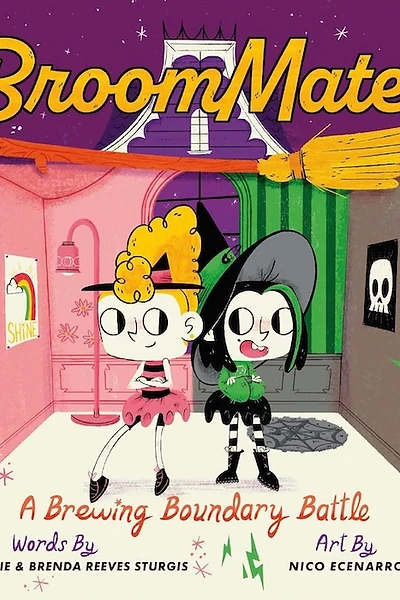
BroomMates
by Lynne Marie and Brenda Reeve Sturgis
Pacing MaterialTwo very different witches must share one broom — and one room — in a magical roommate comedy about compromise.
Big Idea
Living together means making room for each other's differences, and compromise makes a shared home.
Discussion Questions
- 1.Why is sharing hard for the two witches?
- 2.How do they solve their problem?
- 3.What makes a good roommate?
- 4.When have you had to compromise with someone?
Classroom Activity
Roommate Rules
Write three rules for sharing a space with someone different from you. Illustrate each rule.
Lesson Plan
Learning Goals
- Describe how the two witches’ differences create challenges when sharing one broom and one room.
- Use details from the story to explain how compromise helps the witches share their home.
- Write or dictate three fair rules that help people with different preferences share a space.
- Illustrate each rule to show what respectful sharing looks like.
Activity Steps
- 1.Read BroomMates aloud. Pause to ask: “What does each witch want?” and “What makes sharing a broom or room difficult for them?”
- 2.Create a class chart labeled “Different Wishes” and “Ways to Compromise.” Record examples supported by the story, and discuss how a fair solution can make room for both witches’ needs.
- 3.Introduce “Roommate Rules”: Invite students to imagine helping the witches share their home. Brainstorm rules about taking turns with the broom, caring for shared belongings, and respecting different preferences.
- 4.Have students divide a sheet of paper into three sections. In each section, write or dictate one specific sharing rule, using a starter such as “We will…” or “When we both want…, we can….”
- 5.Ask students to illustrate each rule with the witches following it. Encourage drawings that show what both roommates do to make the rule work.
- 6.Invite partners to share their rules and explain why each is fair to both witches. Close by choosing one rule students could use when sharing classroom materials or space.
Standards Connections
- ELA: RL.1.3 — Describe characters and major events using key details from the witches’ sharing challenges.
- ELA: SL.1.1 — Participate in collaborative conversations about differences, fairness, and compromise.
- ELA: W.1.8 — Recall information from the read-aloud to develop rules for the witches’ shared home.
- SEL: Social awareness — Recognize and respect another person’s preferences and perspective.
- SEL: Relationship skills — Practice creating fair agreements and resolving conflicts through compromise.
Pace-Write-Read Study with Pace-Write It!
Focus question: How do authors speed up and slow down a story to show characters learning to cooperate? In BroomMates by Lynne Marie and Brenda Reeve Sturgis, two very different witches are forced to share space, routines, and one broom, creating a funny story full of little conflicts and problem-solving. The pacing moves quickly through lively roommate troubles and then slows at key moments so readers can notice compromise, character differences, and the growing teamwork between the witches.
| Element | How to notice or teach it in the novel |
|---|---|
| Pace | Read: Notice how BroomMates moves briskly through the witches’ clashing habits and shared-space problems, then slows when they begin to adjust and compromise. The fast-slow pattern helps the comedy land and highlights the theme of cooperation. Classroom Activity: Write 4 short sentences about two characters sharing one magical object; make the first 2 fast problem sentences and the last 2 slower solution sentences. |
| Plot | Read: Track the story problem: two very different witches must share one broom and one room. Each new conflict builds the plot until compromise becomes the solution. Classroom Activity: Make a beginning-middle-end plot strip showing conflict, bigger conflict, and compromise for two roommates. |
| Prosody | Read: Listen to how the story sounds when read aloud, especially in playful lines about the witches’ mismatched preferences and magical routines. The lively sound supports the humorous pacing. Classroom Activity: Read a favorite page aloud twice and mark where your voice should speed up, slow down, or sound dramatic; then write 2 expressive lines for your own witch scene. |
| Word pause | Read: Notice places where a single important word or short phrase makes readers pause and picture the witches’ disagreement or surprise. These little stops help emphasize the conflict. Classroom Activity: Write 3 short lines about a roommate problem, placing one important word alone at the end of each line for emphasis. |
| Concept | Read: The big idea in BroomMates is that cooperation and compromise can help very different people live and work together. The pacing gives time for both conflict and change. Classroom Activity: Write one sentence naming a shared-space problem and one sentence explaining the compromise that solves it. |
| Voice & World View | Read: Notice the playful, magical, slightly exaggerated voice that treats roommate troubles in a funny way while still showing that each witch’s feelings matter. The story’s world view suggests differences do not have to stop friendship. Classroom Activity: Write a mini-scene in a cheerful, magical voice about two characters who disagree but both have good reasons. |
| Setting & Place | Read: Pay attention to the shared room and broom as important places and objects that create conflict. The close, shared setting keeps the pacing tight because the witches keep bumping into each other’s needs. Classroom Activity: Draw and label a shared magical room, then write 3 sentences explaining how that place creates problems and solutions. |
| Point of View | Read: Notice how the story presents both witches’ experiences so readers understand each side of the conflict. This balanced view helps the compromise feel fair. Classroom Activity: Write 2 sentences from one witch’s point of view and 2 from the other witch’s point of view about sharing the same broom. |
| Original Characters | Read: The witches are memorable because they are clearly different from each other in habits, preferences, and style. Their contrasts create the story’s humor and keep the pacing active. Classroom Activity: Invent 2 magical roommates with opposite traits and write a character card for each with one conflict they might have. |
| Dialogue | Read: Notice how imagined or spoken exchanges between the witches would sharpen the back-and-forth feeling of the story. Dialogue can make pacing feel quicker because readers hear the conflict directly. Classroom Activity: Write 4 lines of dialogue between two witches arguing about how to use one broom, ending with a compromise. |
| Details | Read: Look for specific details about the witches’ routines, belongings, and magical habits that show how different they are. These concrete details make the conflicts believable and funny. Classroom Activity: List 5 tiny details two magical roommates might disagree about, then turn 2 of them into complete sentences. |
| Descriptions | Read: Notice how descriptions help readers picture the witches, their room, and the broom-sharing chaos. Good description slows the pacing just enough for readers to imagine the scene. Classroom Activity: Write 3 describing sentences about a crowded magical room using color, sound, or texture words. |
| Strong First Lines | Read: Think about how the opening quickly introduces a magical problem and invites readers into the witches’ unusual living arrangement. A strong beginning sets the pacing in motion right away. Classroom Activity: Write an opening line for a story about two magical characters forced to share something important. |
| Immediacy & Engagement | Read: The story quickly pulls readers in because the problem is easy to understand: sharing one broom and one room is sure to cause trouble. Readers stay engaged to see whether the witches will work it out. Classroom Activity: Write 2 opening sentences that immediately show a problem between roommates. |
| Story Scenes & Summaries & Unique Structures | Read: Notice how some moments feel like clear scenes of conflict while others move more quickly to summarize ongoing roommate troubles. This mix keeps the story from feeling too slow or too crowded. Classroom Activity: Write one detailed scene of a broom-sharing argument and one summary sentence telling how arguments kept happening all week. |
| Flashback & Flash Forward & Cliffhangers | Read: Picture where a storyteller could pause before the solution or hint at what might happen next to increase anticipation. Even in a picture book, stopping before the resolution can make readers eager to turn the page. Classroom Activity: Write a cliffhanger sentence that ends with the witches about to discover a new shared-space problem. |
| Tension & Suspense & Surprise | Read: Notice how tension grows from repeated clashes between the very different witches, and how readers wonder whether they can possibly live together peacefully. Humor softens the tension, while compromise brings satisfying surprise. Classroom Activity: Write 3 sentences that build tension around sharing one magical object, then add a surprise solution in the 4th sentence. |
| Page Turns and Chapter Breaks | Read: In a picture book like BroomMates, page turns can act like tiny suspense moments, especially after a problem or funny disagreement. Readers pause, then discover the next complication or step toward compromise. Classroom Activity: Fold a paper into 4 pages and plan what problem or surprise happens on each page turn. |
| Performance | Read: This story invites dramatic reading with witchy voices, annoyed expressions, and happy compromise at the end. Performance choices help students feel where the pacing speeds up and slows down. Classroom Activity: Practice reading one conflict moment and one solution moment aloud, changing your volume, speed, and expression. |
| Personality | Read: The witches’ strong personalities drive the story because each one has clear preferences and habits. Their personality differences create the need for compromise. Classroom Activity: Write 2 personality traits for each of two magical roommates and explain in 2 sentences how those traits might cause a problem. |
| Humor | Read: The comedy in BroomMates comes from exaggeration, magical mishaps, and the familiar silliness of roommates who are complete opposites. Humor makes the pacing feel light even when the characters are frustrated. Classroom Activity: Write a funny sentence about what happens when two witches try to use one broom at the same time. |
| Pause | Read: Notice where readers may naturally pause to think about each witch’s feelings before the next conflict begins. These pauses create space for empathy and for the idea of compromise to grow. Classroom Activity: Write a short scene and add slash marks where a reader should pause for feeling or suspense. |
| Poetry and Poetic Devices | Read: Listen for playful language, sound patterns, and any chant-like phrasing that fits the magical mood of the witches’ world. Poetic touches can make parts of the story memorable and musical. Classroom Activity: Write a 4-line witch roommate poem using alliteration about sharing a broom or room. |
| Repetition | Read: Notice how repeated roommate troubles or repeated reminders of sharing one broom and one room help build rhythm and theme. Repetition shows that the conflict keeps coming back until the witches learn to compromise. Classroom Activity: Write 3 sentences that begin the same way, such as “We shared…” and show growing problems. |
| Rhythm | Read: The pattern of problem, reaction, and next problem creates a steady rhythm in the story. That rhythm helps readers follow the witches’ journey from annoyance to cooperation. Classroom Activity: Clap out a problem-solution rhythm, then write 4 lines that follow the same pattern. |
| Punctuation | Read: Look for punctuation that might signal excitement, frustration, or surprise in the witches’ shared adventures. Strong punctuation can speed up a line or make readers stop. Classroom Activity: Write the same roommate sentence three ways using a period, exclamation mark, and question mark to change the pacing. |
| Questions | Read: Readers may ask, “How will these two very different witches ever share?” Questions keep attention on the problem and move the pacing forward. Classroom Activity: Write 3 reader questions about a story in which two characters must share one magical item, then answer one in a complete sentence. |
| Compare-Contrast | Read: BroomMates depends on comparing and contrasting the witches’ styles, habits, and wishes. Their differences create conflict, and their similarities make compromise possible. Classroom Activity: Make a T-chart comparing the two witches, then write 2 sentences explaining how one difference causes a problem. |
| Objects | Read: The broom is not just a prop; it is a central object that drives the plot, pacing, and theme. The shared room and magical belongings also help create conflict. Classroom Activity: Choose one important object for a shared story and write 3 sentences about how it causes trouble and helps solve it. |
| Threes | Read: Notice whether the story groups troubles, reactions, or attempts in patterns that feel satisfying and easy to follow. Sets of three often create strong pacing in picture books. Classroom Activity: Write 3 connected problems two magical roommates have before they finally find one compromise. |
| Whitespace & Negative Space | Read: In a picture book, open space on the page can make a funny moment, a surprise, or a feeling stand out. Whitespace can slow readers down so they notice the witches’ expressions and the room-sharing tension. Classroom Activity: Create a one-page scene with only one sentence and a lot of empty space to highlight a big roommate feeling. |
| Art & Graphics | Read: Study how the illustrations likely show the witches’ contrasting personalities, their crowded shared room, and the silliness of sharing one broom. The art helps pace the story by showing action quickly and emotion clearly. Classroom Activity: Sketch two opposite witches in one room and add caption sentences showing their conflict and compromise. |
| Interactives & Gamification | Read: The story invites playful participation because students can predict problems, act out scenes, or sort compromises that fit each witch. Interactive thinking helps them notice pacing choices in the conflict-and-solution pattern. Classroom Activity: Create a “Roommate Compromise Spinner” with choices for problem, feeling, and solution, then use the spin results to write a 3-sentence story. |
Pace-Write It!
20-Minute Classroom Flow\nRead (5 min): Read BroomMates aloud, pausing to emphasize funny conflict moments about sharing one broom and one room. Ask students to listen for places where the story feels fast and places where it slows down.\nNotice (5 min): Make a quick class chart with two columns: “Fast Parts” and “Slow Parts.” Discuss how the witches’ differences, repeated conflicts, and final compromise change the pacing. Prompt: When did the story zoom? When did it pause so we could think about feelings or solutions?\nWrite (7 min): Students write a short magical roommate scene. Writing frame: “___ and ___ had to share ___. First, ___. Next, ___. Then, they both said, ‘___.’ Finally, they decided to ___ so they could work together.” Encourage students to make the first two parts quick problems and the last part a slower solution.\nShare (3 min): Partners read their scenes aloud with expression, speeding up during the conflict and slowing down at the compromise. Invite 2-3 students to share how they used pacing.\nExit ticket: Write one sentence answering: How did pacing help show cooperation and compromise in BroomMates?
Pace-Write-Read Connection
Teach this book using the Pace-Write-Read method — Tool 10: Dialogue.
Open the Mastery Manual