 PK-2
PK-2P WINDNESS
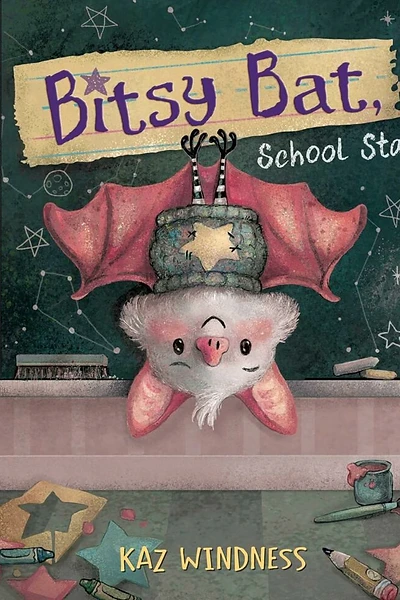
Bitsy Bat, School Star
by Kaz Windness
Pacing MaterialA little bat with big dreams navigates her first day at school, discovering that being different is exactly what makes her shine.
Big Idea
Everyone has a special light to share — our differences make the classroom brighter.
Discussion Questions
- 1.How do you think Bitsy felt on her first day of school? Have you ever felt that way?
- 2.What makes Bitsy special? What makes YOU special?
- 3.What does Bitsy do when things don't go the way she planned?
- 4.How do the other animals treat Bitsy? How could you make a new student feel welcome?
- 5.What does it mean to be a 'school star' in our classroom?
Classroom Activity
Star Shine Name Badges
Students create a star name badge featuring their personal strengths, then pair-share with a classmate to discover what makes each of them a 'school star'.
Lesson Plan
Learning Goals
- Identify personal strengths and unique qualities
- Recognize and name feelings of anxiety and excitement
- Develop empathy for new classmates
- Practice positive self-talk and perseverance
Activity Steps
- 1.Provide each student with a star-shaped cutout and coloring materials.
- 2.Have students write their name in the center of the star.
- 3.Around their name, students write or draw three things they are good at.
- 4.In pairs, students share their stars and find one thing they have in common with their partner.
- 5.Display all stars on a classroom 'Star Wall' to celebrate each student's unique strengths.
Standards Connections
- ELA: RL.K-2.3 (Character Analysis)
- ELA: RL.K-2.7 (Illustrations)
- SEL: Self-Awareness and Social Awareness
- Art: Visual Storytelling
Pace-Write-Read Study with Pace-Write It!
Focus question: How does an author slow down and speed up a story to show a character finding courage and belonging? In Bitsy Bat, School Star by Kaz Windness, a little bat’s first day of school is paced to highlight nervous moments, funny surprises, and brave choices. The story uses page-by-page action, expressive dialogue, and visual pauses to help young readers feel Bitsy’s worries and then celebrate how her differences help her shine.
| Element | How to notice or teach it in the novel |
|---|---|
| Pace | Read: Notice how the story moves quickly through parts of the school day but slows down when Bitsy feels worried, hopeful, or brave. Kaz Windness paces Bitsy’s first-day feelings so readers can really feel her journey toward belonging. Classroom Activity: Write 3 short sentences about a first day at school—one fast action sentence, one slow feeling sentence, and one brave ending sentence. |
| Plot | Read: Notice the clear beginning, middle, and end: Bitsy starts school with big dreams, faces problems because she is different, and discovers she can still be a star. The plot helps build courage and belonging step by step. Classroom Activity: Draw and label 3 boxes for Bitsy’s story—start, problem, solution—and then write one sentence for each box. |
| Prosody | Read: Listen to how the story sounds aloud with playful, expressive language that matches Bitsy’s emotions. The rhythm of the read-aloud helps readers hear nervousness, excitement, and pride. Classroom Activity: Choose one page and practice reading it in a worried voice, then in a proud voice, and write one feeling word for each way. |
| Word pause | Read: Notice where a reader naturally pauses on feeling words, dialogue, or important moments when Bitsy is unsure or surprised. These little pauses help the story breathe and make Bitsy’s courage stand out. Classroom Activity: Copy one sentence from the story pattern you remember and add slash marks where you would pause when reading aloud. |
| Concept | Read: Notice the big idea that being different can be a strength, not a problem. Bitsy’s first day shows the concept of belonging by helping readers see that courage grows when you are yourself. Classroom Activity: Finish this sentence frame: “Bitsy belongs because ______.” Then write one more sentence about a way you are special. |
| Voice & World View | Read: Notice the warm, encouraging voice of the story and its child-centered view of school. The book sees the classroom through Bitsy’s feelings, helping readers understand what it is like to be new and different. Classroom Activity: Write 2 sentences in a kind, encouraging voice to welcome a new classmate like Bitsy. |
| Setting & Place | Read: Notice how the school setting shapes the story—classroom spaces, school routines, and places where Bitsy must figure out how to fit in. The school becomes the place where belonging is tested and discovered. Classroom Activity: Draw a classroom or school place from the story and write one sentence about how Bitsy feels there. |
| Point of View | Read: Notice that readers stay close to Bitsy’s experience, so we understand her hopes, worries, and proud moments. This point of view makes her first day feel personal and immediate. Classroom Activity: Write a sentence starting with “Bitsy felt…” and a second sentence starting with “She wanted…” to show her point of view. |
| Original Characters | Read: Notice how Bitsy stands out as a memorable main character—a little bat with big dreams, bat traits, and a tender heart. Her classmates and teacher help show the challenges and joys of finding where she belongs. Classroom Activity: Invent an original school character who is different in a special way and write 3 describing words about that character. |
| Dialogue | Read: Notice how dialogue helps show school interactions, misunderstandings, and support. What characters say helps reveal whether Bitsy feels left out, noticed, or accepted. Classroom Activity: Write a 2-line dialogue between Bitsy and a classmate using quotation marks. Make the second line show kindness or courage. |
| Details | Read: Notice the small details that make Bitsy’s school day feel real, such as classroom moments, facial expressions, and actions that show she is trying hard. These details help readers connect to her feelings. Classroom Activity: Write one sentence with 3 details about Bitsy on her first day, such as what she does, sees, or feels. |
| Descriptions | Read: Notice how Bitsy and the school day are described in ways that help readers picture both the humor and the heart of the story. Descriptions make her differentness visible and meaningful. Classroom Activity: Complete this frame: “Bitsy was ______, ______, and ______ on her first day.” |
| Strong First Lines | Read: Notice how the opening quickly introduces Bitsy’s big dream and pulls readers into her first day of school. A strong beginning makes us want to know if she will feel like a school star. Classroom Activity: Write a strong first line for a story about a character starting school and feeling both excited and nervous. |
| Immediacy & Engagement | Read: Notice how the story keeps readers close to the action by showing Bitsy’s reactions right away. We stay engaged because each school moment matters to her. Classroom Activity: Write 2 short sentences that begin with action, such as “Bitsy hurried…” or “Bitsy looked…” to make your writing feel immediate. |
| Story Scenes & Summaries & Unique Structures | Read: Notice how some parts of Bitsy’s day feel like full scenes and other parts move more quickly like a summary. This structure helps the story spend more time on the most important moments of courage and belonging. Classroom Activity: Write one scene sentence about a big school moment and one summary sentence that tells several things that happened. |
| Flashback & Flash Forward & Cliffhangers | Read: Notice whether the story stays mostly in the present school day instead of using flashbacks or flash-forwards. Young writers can learn that even without those structures, a story can still build interest through what might happen next for Bitsy. Classroom Activity: Write a cliffhanger sentence for Bitsy, such as “But then Bitsy saw ______.” |
| Tension & Suspense & Surprise | Read: Notice the tension when Bitsy worries about fitting in and whether others will understand her. The suspense of her first day makes the happy, brave moments feel more powerful. Classroom Activity: Write 2 sentences: one that shows a problem for Bitsy and one that shows a surprising or hopeful turn. |
| Page Turns and Chapter Breaks | Read: Notice how page turns in this picture book help create curiosity about what Bitsy will face next. Because there are no chapters, each page turn helps control the pacing and emotional surprise. Classroom Activity: Fold a paper into 2 pages and write one sentence on the first page that makes a reader want to turn to the next page. |
| Performance | Read: Notice how this story invites expressive read-aloud performance through voice, face, and gesture, especially in Bitsy’s nervous and shining moments. Performing the text helps students feel the pacing of emotion. Classroom Activity: Act out one Bitsy moment with a face and body pose, then write a caption for that moment. |
| Personality | Read: Notice Bitsy’s personality—hopeful, sensitive, determined, and brave. Her personality shapes the pacing because her feelings make some moments feel big and important. Classroom Activity: Write 3 words that describe Bitsy’s personality and use one of them in a sentence. |
| Humor | Read: Notice the gentle humor in a little bat trying to navigate a human school world. Funny moments lighten the tension and help make Bitsy lovable while still honoring the theme of belonging. Classroom Activity: Write one funny school sentence about a bat student, using the pattern “At school, Bitsy tried to ______, but ______.” |
| Pause | Read: Notice the emotional pauses when readers stop to look at Bitsy’s expression or think about how she feels. These pauses help the theme of courage settle in. Classroom Activity: After hearing a key page, stop and write one sentence that begins, “I think Bitsy is feeling ______ because ______.” |
| Poetry and Poetic Devices | Read: Notice any musical language, sound play, or image-rich wording that gives the story a gentle poetic feel. Even in prose, Kaz Windness uses words that make Bitsy’s experience vivid and memorable. Classroom Activity: Write a short 2-line poem about Bitsy using one comparison, such as “Bitsy was as ______ as ______.” |
| Repetition | Read: Notice any repeated ideas, feelings, or school patterns that remind us how much Bitsy wants to belong and shine. Repetition helps young readers follow the emotional journey. Classroom Activity: Write a 3-line piece that repeats the starter “Bitsy wanted…” on each line with a different ending. |
| Rhythm | Read: Notice the rhythm created by short sentences, action beats, and repeated school-day patterns. The rhythm helps move readers through nervous moments and hopeful moments. Classroom Activity: Clap a simple rhythm and write 3 short sentences to match it about Bitsy’s day. |
| Punctuation | Read: Notice how punctuation such as periods, commas, question marks, and exclamation points can change how Bitsy’s feelings sound. Punctuation helps pace excitement, worry, and relief. Classroom Activity: Write one sentence about Bitsy three ways—with a period, a question mark, and an exclamation point—and read each aloud. |
| Questions | Read: Notice the questions readers may ask while listening: Will Bitsy fit in? Will she make friends? Will her differences help her? These questions keep the story moving. Classroom Activity: Write 2 wondering questions about Bitsy’s first day, starting with “Will…” or “How…”. |
| Compare-Contrast | Read: Notice how the story invites readers to compare Bitsy to her classmates and compare the beginning of the day to the end. These contrasts help show growth in courage and belonging. Classroom Activity: Complete this frame: “At first Bitsy felt ______, but later she felt ______.” |
| Objects | Read: Notice any school objects and bat-related details that help tell Bitsy’s story and show how she moves through the classroom world. Objects can reveal what feels easy or hard for her. Classroom Activity: Pick one object Bitsy might use at school and write a sentence about how it helps or challenges her. |
| Threes | Read: Notice how groups of three can make ideas sound complete, such as three feelings, three actions, or three hopes for school. Using threes can help young writers organize ideas about Bitsy. Classroom Activity: Write 3 words for Bitsy’s feelings at the start, middle, and end of the story. |
| Whitespace & Negative Space | Read: Notice how open space on picture-book pages can slow readers down and draw attention to Bitsy, her emotions, or a big moment. The space around the words and pictures helps pacing. Classroom Activity: On a blank page, write one short feeling sentence in the middle and leave lots of space around it to show a big emotion like Bitsy’s. |
| Art & Graphics | Read: Notice how the illustrations work with the words to show Bitsy’s expressions, differences, and changing confidence. The art helps readers feel the pacing by showing when a moment is busy, funny, quiet, or brave. Classroom Activity: Draw Bitsy in one school moment and add one speech bubble and one feeling label. |
| Interactives & Gamification | Read: Notice how students can interact with the story by tracking Bitsy’s feelings, acting out page turns, or spotting moments of courage and belonging. This kind of participation helps readers pay attention to pacing. Classroom Activity: Make a simple feelings path with 4 boxes for Bitsy—excited, worried, brave, proud—and write one sentence in each box. |
Pace-Write It!
20-Minute Classroom Flow Read (5 min): Read Bitsy Bat, School Star by Kaz Windness aloud. Pause briefly at key moments when Bitsy feels excited, worried, or brave so students can notice how the story speeds up and slows down. Notice (5 min): Ask: “Where did the story feel fast? Where did it feel slow?” Chart student ideas under two headings: Fast action and Slow feelings. Highlight how page turns, dialogue, and pictures help us feel Bitsy’s journey toward belonging. Write (7 min): Students write a tiny first-day story about a character who feels different but finds courage. Use this writing frame: “On the first day, ______ felt ______. When ______ happened, ______ wanted to ______. Then ______ took a brave step and ______. In the end, ______ knew ______.” Encourage students to add one line of dialogue and one strong feeling word. Share (3 min): Partners read their stories aloud with expression. Listeners name one place where the story slowed down to show a feeling and one place where it sped up to show action. Exit ticket: Complete this sentence on a sticky note: “Pacing helps readers feel ______ because ______.”