
 PreK-2
P ALL WELCOME
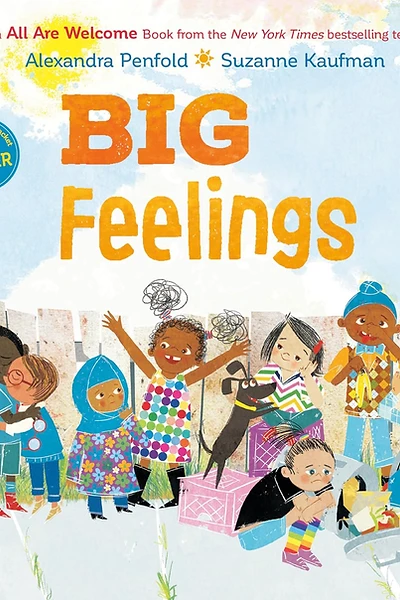
Big Feelings
by Alexandra Penfold
Pacing MaterialThis book follows children as they navigate overwhelming emotions, helping them understand that big feelings are normal. It provides gentle strategies for calming down and reconnecting with others after a disagreement.
Big Idea
All feelings are okay, and we can use healthy strategies to navigate them when they feel too big.
Discussion Questions
- 1.Have you ever felt so angry you wanted to scream?
- 2.What are some ways our bodies tell us we are having a big feeling?
- 3.What can you do when your feelings feel too big to handle?
- 4.Is it okay to feel sad or mad sometimes?
- 5.How can we show kindness to a friend who is having a big feeling?
Classroom Activity
Feeling Color Wheels
Students will create a color-coded wheel to help them identify their current emotion and choose a self-regulation strategy.
Lesson Plan
Learning Goals
- Develop emotional vocabulary
- Identify physical signs of emotions
- Learn self-regulation techniques
Activity Steps
- 1.Identify colors for different emotions (e.g., Red for mad, Blue for sad, Green for calm).
- 2.Give each student a paper plate divided into four sections.
- 3.Have students draw faces matching those emotions in each section.
- 4.Discuss one calming strategy for each color.
- 5.Attach a clothespin that the child can move to their current feeling.
Standards Connections
- CCSS.ELA-LITERACY.SL.K.3
- CASEL Self-Management
- National Core Arts Standard VA:Cr2.3.1
Pace-Write-Read Study with Pace-Write It!
Focus question: How does an author slow down and speed up a story to help us understand big feelings? In Big Feelings by Alexandra Penfold, children move through moments of anger, sadness, frustration, and reconnection as they learn that strong emotions are normal and manageable. The pacing gently stretches out emotional moments, calming strategies, and relationship repair so young readers can feel the problem, pause with the characters, and notice the steps toward belonging.
| Element | How to notice or teach it in the novel |
|---|---|
| Pace | Read: Notice how Big Feelings moves slowly during emotional moments and calming moments, then more quickly when children return to play and connection. Alexandra Penfold uses pacing to show that big feelings take time, and so does feeling better. Classroom Activity: Write 3 short sentences about a child having a big feeling; make the middle sentence slower by adding what the child does to calm down. |
| Plot | Read: The plot centers on children having overwhelming emotions, working through them, and reconnecting after hard moments. The events are simple, but each step matters: feeling, pausing, calming, and belonging again. Classroom Activity: Draw and label a 4-box plot map: big feeling, pause, calm-down step, return to others. |
| Prosody | Read: Listen to how the words in Big Feelings sound when read aloud; the rhythm is gentle and soothing, matching the book’s caring tone about acceptance and belonging. The phrasing helps readers pause and breathe with the children. Classroom Activity: Read one page aloud with a partner and mark where your voice should get softer, slower, or stronger. |
| Word pause | Read: Notice places where individual words or short phrases create a natural stop, helping readers sit with a feeling before moving on. These pauses mirror the children’s need to slow down when emotions feel too big. Classroom Activity: Write a feeling sentence and add a word pause with a dash or line break, such as “I felt mad—so I stopped.” |
| Concept | Read: The central concept is that everyone has big feelings and that those feelings do not make someone bad or alone. Alexandra Penfold builds this idea step by step so children can understand both self-acceptance and belonging with others. Classroom Activity: Finish this idea in one or two sentences: “Big feelings are normal because ___.” |
| Voice & World View | Read: The voice is warm, reassuring, and inclusive, showing a world where children are supported as they make mistakes and repair relationships. Big Feelings presents emotions as part of being human, not something to hide. Classroom Activity: Write 2 sentences in a kind, comforting voice to a classmate who is upset. |
| Setting & Place | Read: Notice the everyday child-centered spaces where the emotions happen, such as shared community or classroom-like spaces where children interact, disagree, and come back together. These familiar places make the emotional journey feel real and close to readers’ own lives. Classroom Activity: Write and draw a place where a child might have a big feeling and then feel safe enough to calm down. |
| Point of View | Read: The book speaks broadly about children’s experiences, creating a shared point of view that includes many readers. Instead of focusing on just one child, Big Feelings invites everyone into the emotional experience. Classroom Activity: Rewrite one moment from the book frame as “I felt…” so the shared feeling becomes a first-person moment. |
| Original Characters | Read: The children in Big Feelings are not superheroes or fantasy figures; they are recognizable, diverse children whose emotions and conflicts feel true. Their originality comes from how honestly they show anger, sadness, frustration, and repair. Classroom Activity: Invent a child character with one big feeling, one calming strategy, and one way they reconnect with others. |
| Dialogue | Read: Even when exact spoken dialogue is limited, the book suggests the kinds of things children and caregivers or peers might say during hard moments and after disagreements. The emotional action feels conversational and relational. Classroom Activity: Write 2 lines of dialogue: one line a child says during a big feeling, and one kind line someone says to help. |
| Details | Read: Small details about body language, closeness, and children’s actions help readers understand the feelings in Big Feelings. These details slow pacing so readers notice what emotions look like before and after calming down. Classroom Activity: Make a list of 3 body details for one feeling, such as clenched fists, tears, or a turned-away face, then use them in a sentence. |
| Descriptions | Read: Alexandra Penfold uses clear, child-friendly descriptions of emotional experiences so readers can name what feels big inside them. The descriptions support the theme that feelings can be recognized, handled, and shared safely. Classroom Activity: Describe one feeling without naming it first, using what the body, face, and heart might do. |
| Strong First Lines | Read: The opening of Big Feelings quickly introduces the emotional focus and invites readers into a topic they know from real life. A strong beginning matters because it immediately tells children this story understands them. Classroom Activity: Write an opening line for your own story about a big feeling that makes a reader want to know what happened next. |
| Immediacy & Engagement | Read: The book feels immediate because the emotional situations are familiar: children get upset, feel overwhelmed, and need help finding their way back. Readers stay engaged because they want to see how the children move from disconnection to belonging. Classroom Activity: Write 2 sentences about a problem happening right now, using words like “now,” “today,” or “right then.” |
| Story Scenes & Summaries & Unique Structures | Read: Big Feelings blends scene-like emotional moments with summary-like reflections that speak to many children at once. This structure helps the book feel both personal and universal. Classroom Activity: Write one scene sentence about a child crying on the rug, then one summary sentence such as “Sometimes big feelings happen to everyone.” |
| Flashback & Flash Forward & Cliffhangers | Read: This picture book does not rely heavily on flashbacks or cliffhangers, but readers can still think about what happened before a disagreement and what may happen after repair. The calm structure fits the gentle emotional theme. Classroom Activity: Add a before-and-after to a feeling moment: “Before ___ happened. After I calmed down, ___.” |
| Tension & Suspense & Surprise | Read: The tension in Big Feelings comes from emotional uncertainty: Will the children be understood? Will they reconnect after conflict? The resolution is comforting rather than shocking, which fits the book’s message of acceptance and belonging. Classroom Activity: Write 2 sentences that build emotional tension, then 1 sentence that resolves it kindly. |
| Page Turns and Chapter Breaks | Read: In a picture book like Big Feelings, page turns help pace emotion by giving readers a beat between a hard feeling and the next response. There are no chapter breaks, so each page turn becomes an important pause. Classroom Activity: Fold a paper into 4 pages and plan what a reader sees before and after each page turn in a mini feeling story. |
| Performance | Read: This book invites expressive reading with changes in speed, volume, and facial expression to match anger, sadness, calming, and relief. Performing the text helps young children feel the pacing in their bodies. Classroom Activity: Practice reading one part aloud using an upset voice first and a calm voice second; then write which sounded more fitting and why. |
| Personality | Read: The personalities of the children come through in their reactions, expressions, and ways of reconnecting, even in a brief picture-book format. Different children may need different ways to move through big feelings. Classroom Activity: Write a character card for one child: “When upset, ___; to calm down, ___; after that, ___.” |
| Humor | Read: Humor is not the main feature of Big Feelings, but gentle child moments and familiar emotional truth can create warmth that keeps the story from feeling too heavy. This balance helps readers feel safe. Classroom Activity: Add one light, kind detail to a feeling story, such as a silly stuffed animal, funny sock, or comforting pet. |
| Pause | Read: Pause is essential in Big Feelings because the children need a moment between the feeling and the next choice. Alexandra Penfold shows that pausing can be part of healing and reconnecting. Classroom Activity: Write a 3-step sequence using pause language: “I felt ___. I stopped. Then I ___.” |
| Poetry and Poetic Devices | Read: The language in Big Feelings has a poetic softness, using rhythm and emotionally resonant wording to make hard feelings feel manageable. The lyrical style slows readers down and supports reflection. Classroom Activity: Write a 2-line poem about one feeling and one calming action, using repeating sounds or gentle rhythm. |
| Repetition | Read: Repetition helps reinforce that big feelings happen to many children and that calming and reconnecting can happen again and again. Repeated ideas create comfort and predictability. Classroom Activity: Write 3 lines that begin the same way, such as “Sometimes I feel…” or “When I pause…”. |
| Rhythm | Read: The rhythm of the sentences in Big Feelings helps balance intensity with calm, often easing readers through hard emotional beats. The steady flow supports the theme that strong feelings can settle. Classroom Activity: Clap out the rhythm of one sentence you write about a feeling, then revise it to make it smoother to read aloud. |
| Punctuation | Read: Notice how punctuation can shape the emotional pace of a read-aloud, making some parts feel urgent and others feel calm and reflective. In a book about overwhelming emotions, punctuation helps control speed and tone. Classroom Activity: Write the same feeling sentence two ways, one with an exclamation point and one with a period, and tell how the pacing changes. |
| Questions | Read: Big Feelings makes readers ask internal questions: What am I feeling? What can I do? How can I come back to others? These questions deepen engagement with acceptance and belonging. Classroom Activity: Write 2 questions a child might ask during a big feeling and 1 answer that helps. |
| Compare-Contrast | Read: Readers can compare a child before calming down and after calming down, or contrast disconnection with belonging. This shift is a key pacing move in Big Feelings. Classroom Activity: Make a T-chart labeled “Before I paused” and “After I paused,” then write 2 details in each side. |
| Objects | Read: Notice how familiar objects in children’s spaces can support emotional storytelling, whether they are toys, classroom materials, blankets, or comforting items. Everyday objects help make the feelings concrete. Classroom Activity: Choose one object that helps a child calm down and write 2 sentences showing how it is used in the story moment. |
| Threes | Read: The pattern of three works well in books like Big Feelings because young readers can follow simple emotional sequences: feel, pause, reconnect. Groups of three also help pacing feel organized and memorable. Classroom Activity: Write a set of three actions for a child with a big feeling: “First ___. Next ___. Finally ___.” |
| Whitespace & Negative Space | Read: In a picture book about emotions, open space on the page can give readers breathing room and help a feeling stand out. Big Feelings uses visual calm to support emotional calm and reflection. Classroom Activity: Create a page design for one sentence about a big feeling, leaving extra blank space around the most important words. |
| Art & Graphics | Read: The illustrations in Big Feelings are crucial for showing facial expressions, movement, and reconnection among the children. The art works with the text to pace emotional intensity and relief. Classroom Activity: Draw two quick sketches of the same child, one during a big feeling and one after reconnecting, then label each with a sentence. |
| Interactives & Gamification | Read: Big Feelings naturally invites participation because children can act out feelings, pauses, and calming strategies as they read. This makes the pacing physical and memorable for young learners. Classroom Activity: Create a class “Feel-Pause-Reconnect” card game with 3 cards: one feeling, one calming action, and one repair action; then write a sentence using your three cards. |
Pace-Write It!
20-Minute Classroom Flow\nRead (5 min): Read Big Feelings by Alexandra Penfold aloud. Pause to let students notice when the story slows down during a big feeling and when it moves forward as children calm down and reconnect.\nNotice (5 min): Ask: “Where did the book slow down?” “What did the children do when feelings felt too big?” Chart student ideas under three headings: Big feeling / Pause / Reconnect. Point out how the pacing helps readers feel the emotion and then feel relief.\nWrite (7 min): Students write a short 3-part feeling story using this frame: “I felt ____. I stopped and ____. Then I ____ with others again.” Encourage them to add one body detail and one setting detail, such as “at recess” or “in the classroom.”\nShare (3 min): Partners read their 3-part stories aloud with expression, making the middle sentence slower to show the pause. Invite 1-2 volunteers to share how their pacing changed from the first sentence to the last.\nExit ticket: Complete this sentence on a sticky note: “Pacing helps a reader understand big feelings because ____.”